


Hot HatchTop Gear
One of the coolest Group B cars is back: welcome to the tri-motor Peugeot E-T16
Peugeot rediscovers its wild rallying roots with this wild reimagining of a proper hero
Eighties, Nineties, Noughties… who knows which decade is currently most fashionable. What’s apparent is that the past is offering refuge from the unpleasant present, and if we’re residing in a post-post modern cultural pick’n’mix then we may as well go all-in on an Eighties Group B immersion.
We each have our favourites but the Peugeot 205 T16 is arguably king of the hill, and the original snarled its way to consecutive manufacturers’ titles in the WRC in 1985 and ’86. As per the rules, Peugeot homologated 200 for the road, severely detuned for civilian use to a sub-optimal but still lively circa-200bhp but looking magnificently jacked all the same.
Advertisement - Page continues below
The E-T16 concept is not short of power. Oh no. In fact it has 805bhp courtesy of three electric motors, one mounted at the front, two at the rear, and can vary the torque distribution between them according to the conditions and selected drive mode. There are also three of those, governing all the usual parameters including suspension set-up and power delivery, up to and including a Track mode for more extrovert driving. The sort of thing, in fact, that the great Ari Vatanen used to get up to back when world rallying was as big a draw as F1.
The E-T16’s numbers are nutty: 0-62mph in 2.5 seconds, 186mph in 16, whilst a simulation suggests that it can complete three laps of the Nordschleife at full tilt without the 85kWh NMC battery derating. It uses an 800 volt architecture for 10 to 80 per cent charging in 15 minutes using 350kW fast charging; Peugeot claims a range of 248 miles WLTP, but not while you’re hammering round the Nürburgring.
The E-T16 has suitably mighty brakes: four 380mm diameter discs, shod with chunky Michelin rubber – 275mm wide at the front, 315mm at the rear. There’s also a vertically mounted hydraulic handbrake inside… because that’s the law.
Let’s get into the exterior design. The regular 205 was designed by Gérard Welter and the great Paul Bracq; the GTI iteration was a rolling manifesto for well managed proportions and clever graphics. The T16, though, was deliberately unpretty, like all those Group B cars, when function beat the crap out of form in the aim of optimum cooling and performance. Fugly, you could say. (NB: the French have a more decorous phrase for this, jolie laide – unconventionally attractive.)
Advertisement - Page continues below
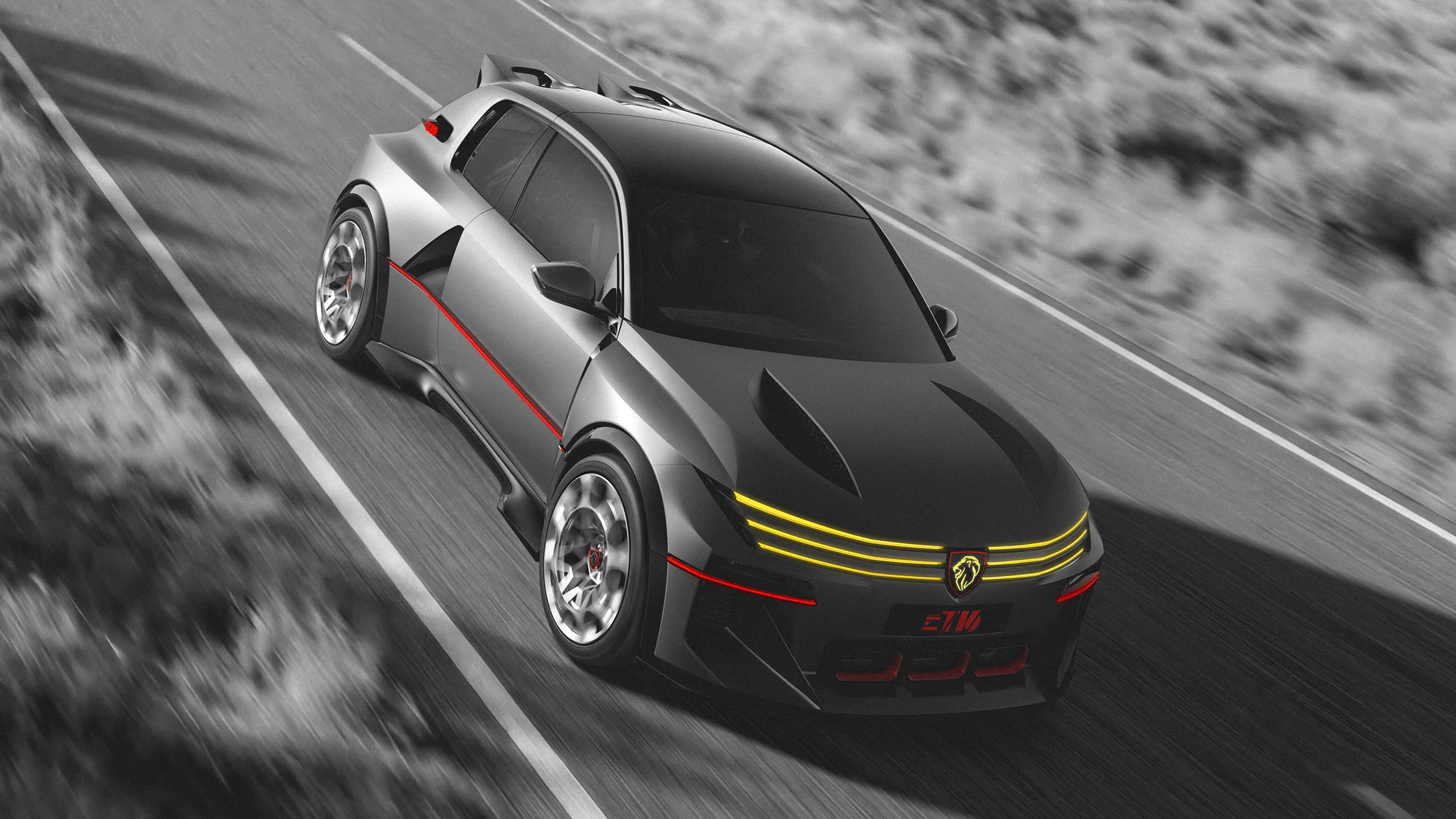
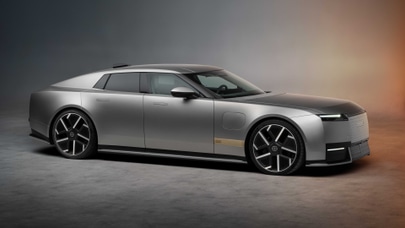
The E-T16 is too considered for that, but still pushes things to the limit. Peugeot wants to get more expressively extrovert as it reasserts itself, and the so-called ‘three-claw light signature’ gets a thorough horizontal remix here. The front end is dominated by a trio of slim light bars with an illuminated Peugeot logo centre stage. They glow yellow, like old-school French car headlights, but the tail-lights and side pin stripe are red – as they were on the original 205 GTI and T16.
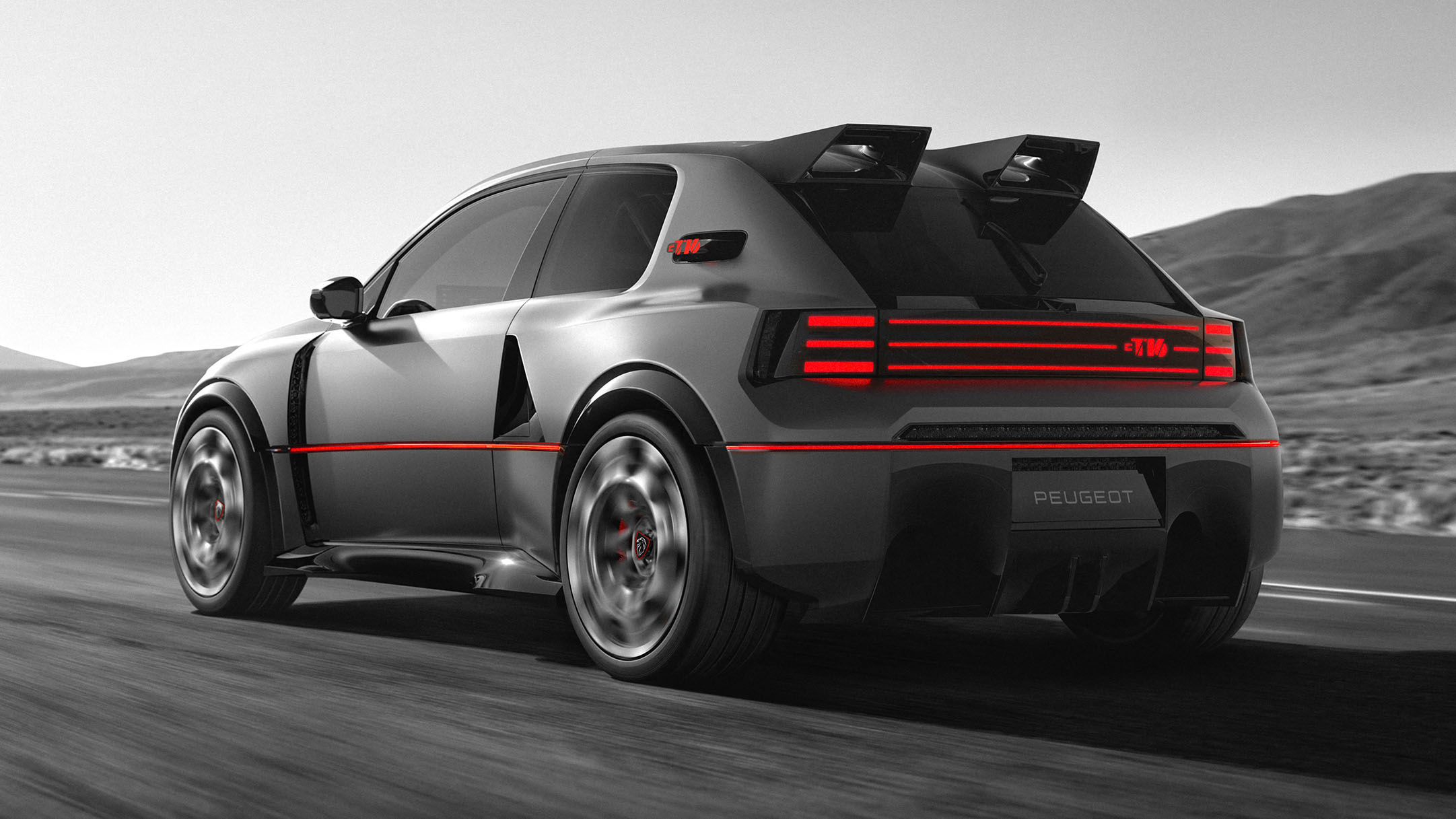
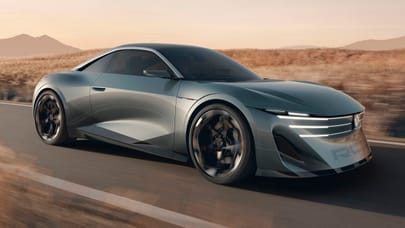
If not quite as tumescent as the Eighties car, the homage is still an aggressive little number. There are fat wheelarches, a sculpted bonnet punctured by two big air outlets, and a sensationally OTT front bumper with three cooling intakes. Notice also the air extractors behind the front wheels, and the aero at the rear whose diffuser incorporates two adjustable blades. It’s all topped off with a ‘cat ear’ rear wing, that should look silly but doesn’t.
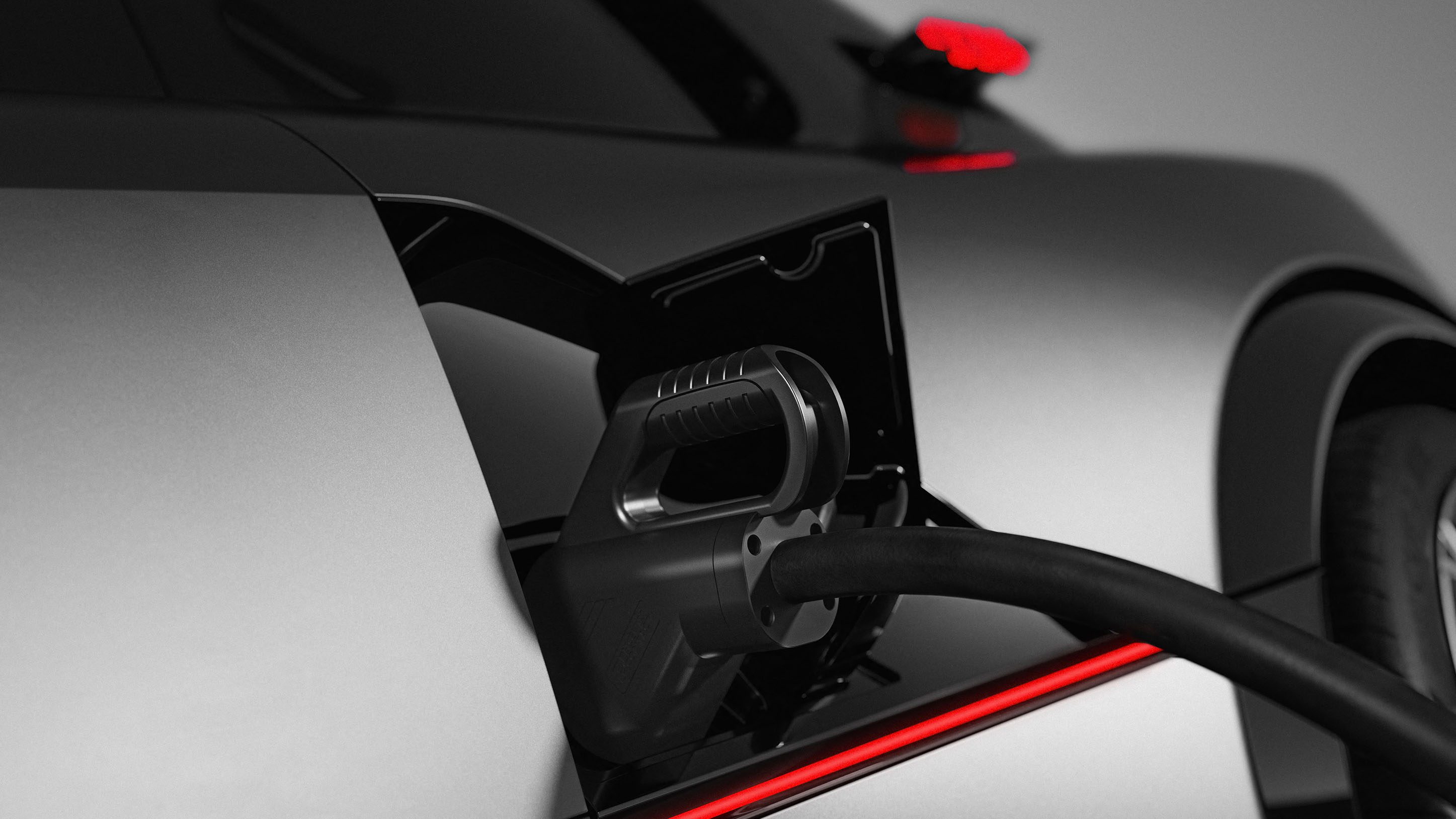
The bulk of the car is finished in a matte grey, known as gris Winchester, another evocative nod to the E-T16’s famous forebear, though it doesn’t sound very French. The wheels are a micro-blasted silver and look magnificent. The entire rear section opens, as it did on the original, though as it’s 2026 and not 1986 the view is of a pair of electric motors, instead of a combustion engine and turbo, and the carbon tub. Rather than a cooling duct for said engine, the air intake ahead of the rear wheel is now home to the charging port and a button to open the door.
Inside, you’ll find an evolved version of Peugeot’s initially perplexing but rather useful i-Cockpit. There’s a 21in panoramic display, but never mind that, it’s time to prepare for the Hypersquare, a reinvention of the wheel – and the steering itself – that you’ll also see in the new RCZ concept. (It’ll make production landfall first in the next-gen E-208).
Top Gear
Newsletter
Get all the latest news, reviews and exclusives, direct to your inbox.
By using ‘steer-by-wire’ tech, it does away with the physical steering column and mechanical linkages, has a variable ratio, and uses four circular pods to house various controls. It looks amazing, especially in the E-T16 where it gains a few extra bells and whistles, but in reality will also eliminate vibrations and torque steer. Just 170 degrees is required to go from straight-ahead to full lock.
Drag your eyeballs away from that and you’ll find carbon fibre, anodised aluminium, recycled Pelinova leather, and Plexiglas in the wild-looking bucket seats.
As with the Renault 5 Turbo 3E, the Eighties energy is strong indeed with this one. Its big local rival is building 1980 of those; can we suggest that Peugeot might go six better on the E-T16?