


47
F1 has seen some clangers during its time. As we shall now showcase
The new F1 season is upon us, and the annual regulations refresh inevitably means some, shall we say, ‘interesting’ interpretations of the new rules when it comes to the cars, with aesthetics usually taking a back seat. And yes, we are aware that F1 cars only have the one. Just go with it.
Has it always been thus? History teaches us that, yes, F1 is indeed an outlet for the fever dreams of deranged designers, and we are forever doomed to repeat mistakes, albeit in ever-more advanced carbon-fibre composites. Of course, we are yet to re-experience anything as traumatic as 2014’s collective, but by God there have been some recent years when gouging our eyes out felt like the sanest option.
Misty-eyed nostalgia descended upon us as we pined for a more elegant age of racers. But then we did our research and discovered the past is as littered with abominations as the present. So, in the spirit of exposure therapy, just in case the 2026 crop are truly revolting, we present a selection of Formula One’s harder to love children.
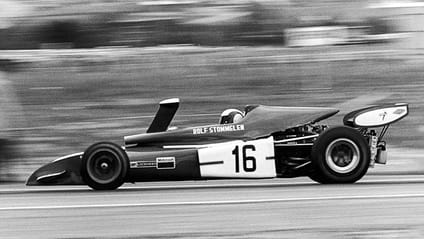
Guenther Hennerici was a German man who had a company that made caravans. Guenther's company that made caravans was very successful and made Guenther some money.
Guenther decided he should enter a Formula One car into the 1972 season. This car was the result. It had problems with overheating and reliability. It also had a bigger problem in that... well, we won't spell it out for you.
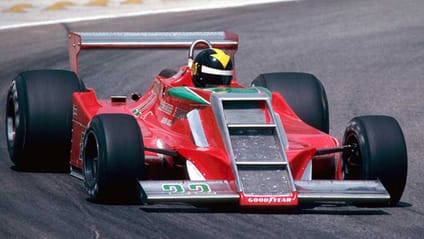
This was the Ensign team's effort for the 1979 season. And no, it's not a stepladder on the front, or a washboard ready for a skiffle band to bust one out, but rather the car's radiators. Well, where else would you put them? Oh, that's right. NOT ON THE NOSE. Surprisingly, it scored nil points in '79.
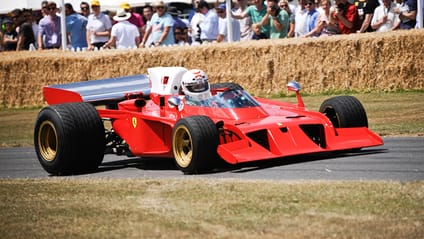
It pains us to include a Ferrari on this list but there can be no doubt the ‘Spazzaneve' wasn't one of the Scuderia's finest aesthetic creations. But, despite the car originally being discarded and its designer Mauro Forghieri given the boot, it was revised for 1974 (with Forghieri returning) and scored a one-two in Buenos Aires in the hands of Niki Lauda and Clay Regazzoni. But still.
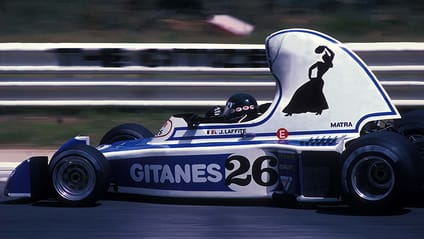
The Ligier JS5 is pleased to see you. Shame we are not pleased to see it. Despite looking like a steroidal Smurf, it managed three podium finishes in '76 and its driver Jacques Laffite earned the team's first F1 victory the following year.
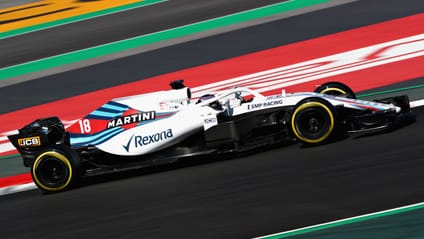
In 2018 the safety-first cockpit halo became mandatory. Drivers and fans despised it, and despite its necessity and obvious benefits, still bestowed the worst-application-of-a-halo award on the Williams FW41.
Not even the iconic Martini livery could disguise this obtrusive beam of carbon fibre. Its effectiveness at preventing serious injuries since have quietened most of the critics…
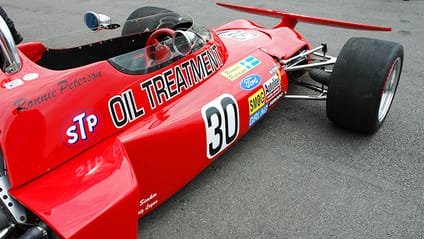
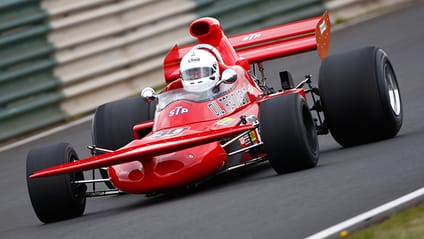
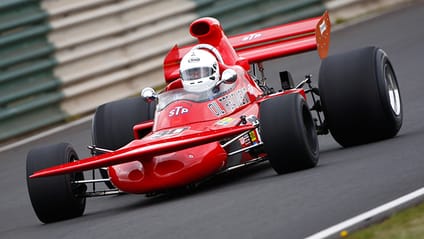
Good thing about the March 711? It had a wing inspired by the Spitfire. Spitfires sound excellent and are cool. Bad thing about the March 711? Said Spitfire-esque wing was mounted ON THE FRONT. Like a tea-tray.
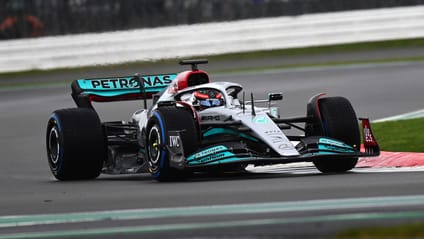
New regs around aerodynamics and dirty air meant teams embraced curves in 2022 – and Mercedes being Mercedes went all in. Shrinking the sidepods to nothing and rounding out virtually every flat surface resulted in a car that looked like it had been left in the sun too long.
Worse, its radical redesign didn’t actually work, leaving Hamilton and Russell to battle with ‘porpoising’, aka the bouncy opposite of ground effect. Nice job, designers…
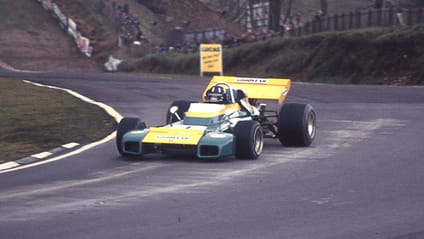
Double world champion Graham Hill was signed to drive the new, ‘lobster-claw' racer for the '71 F1 season. That nickname referred to the twin-radiators mounted at the front on either side. The fact it was then liveried in green and yellow did not help its cause. It only scored seven points that year.
Pic credit: Gerald Swan
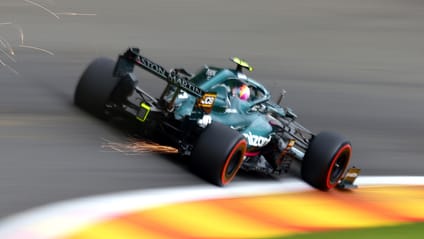
Maybe it’s the bizarre, wavy front fin, maybe it’s the dash of pink clashing with the queasy green livery that has us gripping the railings – either way, it’s clear our sea legs deserted us as we watched this stomach-churning combo whip around the track like a back-to-front mermaid.
OK, excuse us while we run to the bogs again…
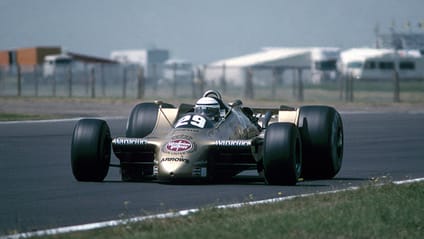
This ran with ground effect aero, which is very technical and clever and quite cool. The car itself, however, was not cool. For one thing, the all-gold paint job made it look like a massive Twix. It was also a bit of a mess to drive, too, with the team reverting to an earlier chassis for the remainder of the season.
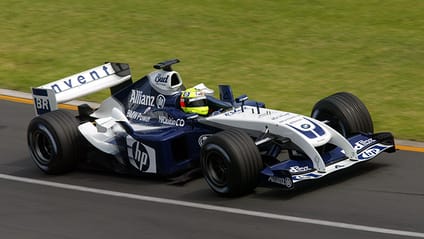
Not the most horrific on this list, but offensive enough to warrant inclusion. Driven by Ralf Schumacher and Juan Pablo Montoya, it had a very lovely BMW 3.0-litre V10 engine, and early tests proved it to be right on the money for pace. But, that front wing: it was nicknamed ‘walrus nose', and proved to be so bad, it was redesigned 12 races in.
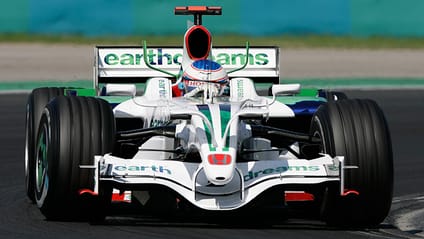
At the start of 2008, Jenson Button had no idea Honda would leave the sport at the end of the season (nor did he realise this misfortune would later result in him winning the 2009 F1 world championship), but the writing was on the wall quite early on.
Actually, it was all on the front wing. Just check out that ‘dumbo wing' on the nose. And why is it bristling with antennae, like a mutant grasshopper? Thankfully, his Brawn racer in 2009 was a bit cleaner. And miles better.
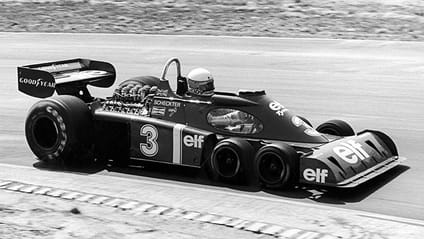
Well, safe to say the world didn't see this one coming. You could say it was a radical innovation that helped Jody Scheckter finish first (with his teammate Patrick Depailler coming in second) at the Swedish GP.
Or you could just say what you're thinking. And that is the correct reaction.
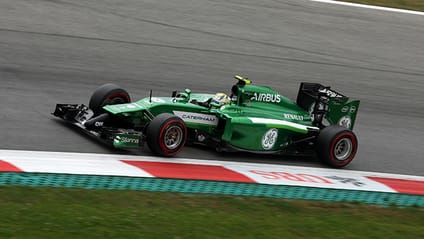
In the infamous year of the car-cum-marital-aid, there were many, many offenders. But the CT05 ‘nosed’ ahead of its competition in the visual vileness stakes. F1 designers were not gripped by some mass mania, of course – the blame can be placed squarely on the updated regs for that year, which required nosecones to be 365mm lower.
The general interpretation of this rule led to ant-eater-isation for the sake of aerodynamics, and so these troubling appendages abounded. Still feeling un-nauseated? Revisit the close second to the horror of Caterham’s bulbous protuberance: the Force India VJM07s shudder-inducing overhang…
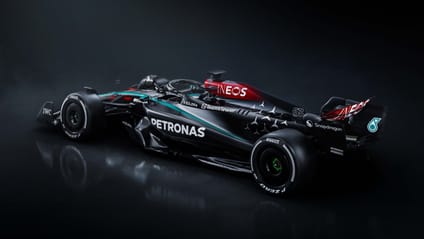
There’d been hints of it in 2023, but 2024 was the year ‘Dark Mode’ made for the most boring F1 lineup of all time. Were there new fins? Tweaked aero? Radical monocoques? We have no idea, because you couldn’t bloody see anything.
We’re all about the quest for incremental gains, but not painting the carbon fibre because it’ll save you a couple of grams seems a little much. Especially as it made the cars indistinguishable from each other (and the track, if viewed from above).
Get all the latest news, reviews and exclusives, direct to your inbox.