

37
Start your screaming in three... two... one...
The new F1 season is imminent, and like the concurrent Paris Fashion Week (which we know you’re all equally excited for, of course), the races are not just a chance to clutch at laurel wreaths, but to showcase the top secret, cutting-edge (i.e. bonkers) designs the teams have been cooking up.
Thanks to changes to the technical regulations that have governed innovation with an iron fist, the first races of 2026 will showcase some of the most advanced car design on the planet. However. Will these shorter, more nimble cars with ‘cleaner’, less cluttered profiles be deathly boring to watch doing laps? Or worse, actively unpleasant to behold? (Troubling nose-cone wangs of 2014, we are looking at you. Or not, if we can possibly help it.)
While we wait for the new models to hit the world’s fastest catwalk, let’s take a tour of some of F1's previous sartorial successes. And since beauty is, of course, in the eye of the beholder, don’t be afraid to tell us whether we’ve selected some absolute car crashes, or if we’ve let a speedy stunner pass us by. So, in no particular order…
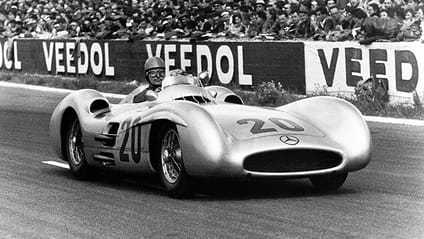
Let’s kick off with an undisputed looker: the W196. It came in both this swoopy streamlined number for faster tracks, and an open-wheeled variant that’s not exactly a slouch in the looks department, either. Sadly you'll know the history all too well: it crashed in that infamous 1955 Le Mans pile-up just a year or so after its debut, but the remaining models are museum-worthy for good reason.
The ‘Stromlinierwagen’ body car driven by Fangio and Sir Stirling Moss was sold in 2025 by the Indianapolis Motor Speedway Museum for an eye-watering £41 million, to fund its building renovation project.
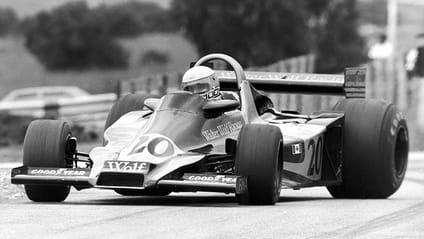
Austrian businessman Walter Wolf restructured his Formula One team going into 1977 – with Jody Scheckter on board – though nobody expected them to take victory in the first race of the season, with Scheckter ending up second in the drivers' championship behind some guy called Niki Lauda.
Emerging before ground-effect took hold of designers’ imaginations, this car relies on streamlining to keep it pinned to the track, and the result is unfussy and clean as a whistle.
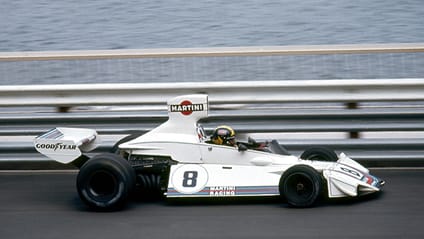
From the legendary pen of Gordon Murray comes the be-skirted BT44, and it looked rather excellent. An early attempt at ground effect aero came via those striking side nylons, while underneath sat a 3.0-litre Ford V8, good for around 430bhp.
Of course, the cherry on top (besides that awesome snorkel) is the iconic Martini livery – hands up who remembers when we got a whole bevvy of similarly bedecked cars into the old TG TV studio?
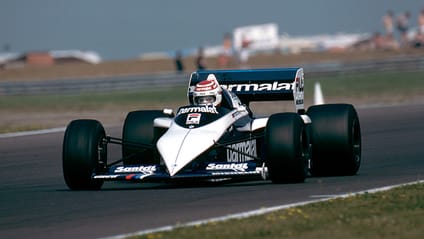
Another car from the extraordinary mind of Murray. The Brabham BT52 was the first turbocharged F1 car to win the world championship for a driver. The Brabham-BMW team had surprised everyone the year before by starting its car light and refuelling in the middle of the race, and the BT52 was similarly designed with a small tank requiring mid-race top-ups. "Ground effects" had been banned, so Murray saw no reason to continue with long and broad sidepods, which meant the radiators were packaged as close to the compact four-cylinder BMW engine as possible.
This tight frontal package allowed clean airflow to the rear, and the car had an extremely large rear wing. Not always reliable, it was however a joy to drive, apparently.
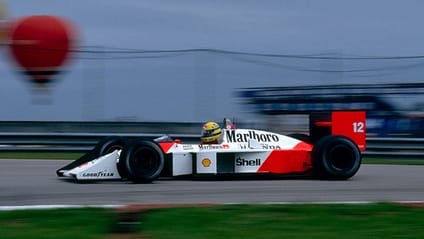
If anyone has any doubt as to the veracity of the old aphorism "if it looks good..." allow Gordon Murray and Steve Nichols to set you straight. The McLaren-Honda MP4/4 is now the second most successful racing car across a single season (the first being the utterly dominant RB19 from 2023). But for a stand-in driver with a rusty manner with his mirrors (and a somewhat impatient Ayrton Senna), the MP4/4 would have won every single race in 1988.
Yet it was never boring, as McLaren crewed the car with the two best drivers of the time, Alain Prost and new-to-the-team Senna. Murray picked up where he left off with the lie-flat Brabham-BMW and sat the Honda V6 turbo (also new-to-the-team) low in the chassis, its drivers more prone than they'd ever been.
The rest was history: 15 wins, 15 poles and only four retirements in 32 starts. And Senna's share were both accidents, the mistake at Monza which cost the team a clean sweep and out of the lead at Monaco.
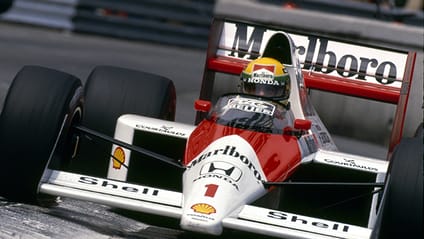
Big car, this. Not only did it look entirely brilliant, building on the legacy of the MP4/4, it also allowed McLaren to take ten victories during the season – six for Senna, four for Prost – giving ‘The Professor' (that's Alain Prost) the 1989 driver's title, and McLaren the Constructor's Championship.
Its successor in 1990 would become even more famous after that Japanese GP when Senna and Prost collided, handing the championship to Ayrton. Unbeatable in its day.
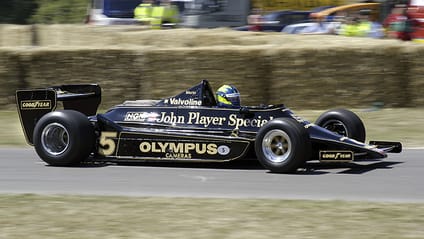
The car that helped Mario Andretti to the 1978 F1 title, and the one that pioneered proper ground effect aero, it's among the most famous – and important – Formula One cars in history. Wins in Belgium, Spain, France, Germany and the Netherlands meant it was quick in its day – though it was plagued by problems, with four retirements over 1978. But still. What a car. What a livery.
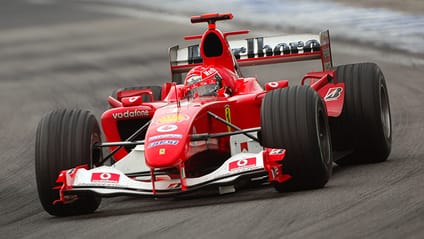
Ferraris are beautiful, a racing red single-seater Ferrari particularly so, though you may recognise the commercial dilution of pure rosso corsa over the 44 years between the oldest of the three Ferraris on this list and this, 2004's prosaically named F2004, the last car to take Michael Schumacher to a world championship and his most successful.
When Sebastian Vettel and the Red Bull RB9 notched up their 13th win of 2013 in Brazil, they were merely matching the record held since 2004 by Schuey and the F2004.
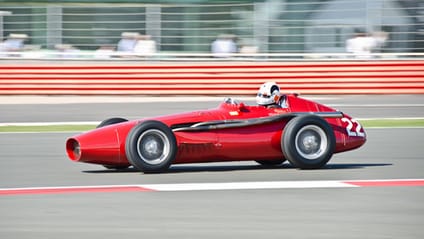
If you are of a certain age, to imagine an F1 car does not mean picturing a fat-tyred, carbon-fibre pencil with the garage door hanging off the back, but rather this: the Maserati 250F, the quintessential 1950s racing car that’s basically a tube on wheels. But what a tube. Back then, teams rarely threw cars away at the end of the season unless rule changes meant they absolutely had to, so the 250F raced in six seasons and scored two championships. Sort of.
In 1954 there was no Constructors' Championship and drivers still chased the fastest chassis of the moment. And if you were Juan Manuel Fangio you had first dibs. So having taken the 250F to two wins at the start of the year, Fangio defected to Mercedes to polish off his second title. His last – and fifth – was back at Maserati and back in the 250F for what's considered his greatest drive. Heck, maybe the greatest drive of all, to come from nearly a minute back and break the lap record on ten subsequent laps and ultimately take victory from Mike Hawthorn's Ferrari. On the last lap. At the Nürburgring.
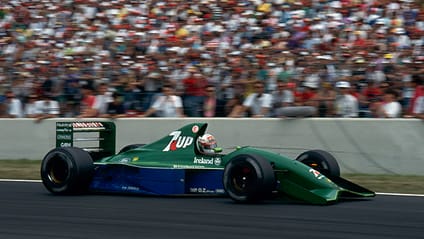
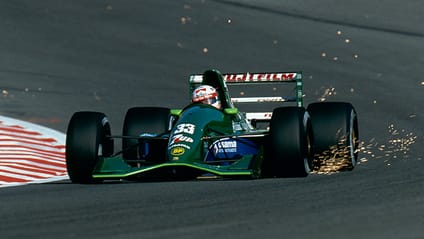
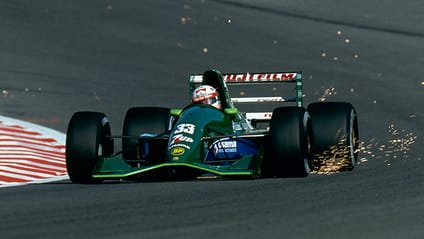
The late Eddie Jordan’s team had a reputation for producing very pretty cars, none more so than their first, the 191. The work of former racing car designer Gary Anderson, and a tiny team of just three (or so the legend goes), the mere appearance of the car at the first race of the season was considered something of a miracle. That it had sponsorship, even more so.
Though it failed to qualify for its first race, it soon became apparent the 191 was as good as it looked, taking the new team to fifth in the Constructors' Championship in its first year. The 191 was also famous for giving Michael Schumacher his first Grand Prix weekend, after the team's second driver Bertrand Gachot found himself unexpectedly detained at Her Majesty's Pleasure.
Resplendent in 7UP- and tic tac-green, someone liked it enough to cough up £1.3 million for Schuey’s first wheels at a Bonhams auction in 2023.
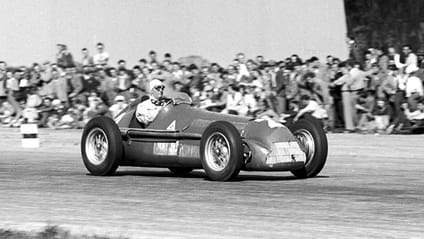
Alfa Romeo's quite extraordinarily beautiful 158 – and its successor the 159 – date back to the very start of the F1 World Championship in 1950. It handed Giuseppe Farina, and then Fangio (in 1951) the first of his five titles. What's extraordinary about the 158 (it takes its name from its swept capacity of 1.5-litres and its in-line eight-cylinder layout) is that it made its debut some 13 years earlier in 1938.
Development back then usually just meant strapping on an ever-bigger supercharger, but the 158 did have new rear suspension and, before the war at least, the attention of Enzo Ferrari who oversaw the development of the 158 before parting company with Alfa. Ferrari's first win in F1 came at the expense of the Alfa and the 158. Those massive superchargers made the 158 fast but also thirsty, significantly more so than Ferrari's 375 which took the marque's first win at Silverstone in July that year.
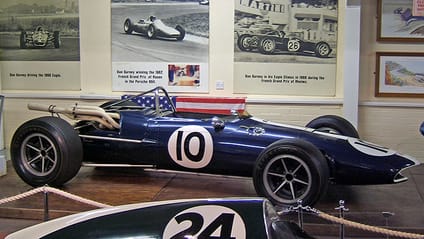
Dan Gurney's Eagle Mk1 is a thing of remarkable beauty. The product of the All American Racers collective that included Caroll Shelby, Gurney was inspired to build the Eagle by the likes of other drivers/constructors like Bruce McLaren and Jack Brabham, for whom he'd raced. Like the Kiwi and the Aussie, he was smart enough to locate the collective's F1 team in the UK where it was named Anglo American Racers.
It was designed around the British Weslake V12, which wasn't ready for the car's debut at the start of the 1966 season, so was raced at first with an altogether humbler four-cylinder Climax engine. Once the 12 was running, there was nothing humble about the Eagle, apart maybe from its results. Just one win in 26 starts. One win and 23 retirements.
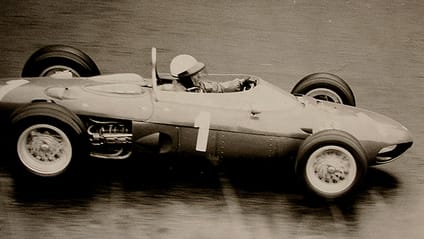
The second of our Ferraris, and one of the most famous racing cars of all time. Officially called the Tipo 156, the car that took American Phil Hill to his one and only Formula One World Championship is much better known as the Sharknose.
Created as a response to new rules for 1961 that specified 1.5-litre engines in place of 2.5s, the ever-pragmatic Ferrari simply upgraded his existing Formula Two car. The modifications included the distinctive new nose by which the car instantly became known.
Sadly, much of the car's renown comes from the horrible accident that killed Hill's teammate Wolfgang von Trips at the Italian Grand Prix in 1961. It's not known whether it was this, or Ferrari's legendary lack of sentiment, that meant all Sharknoses were trashed when the car was retired at the end of the 1963 season after its last and seventh win.
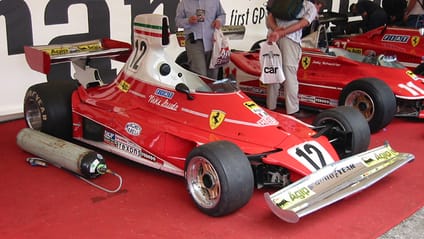
You know the Ferrari 312 T series from the movie Rush, but technically, that was the 312 T2 (the ‘T', if you’re wondering, stands for transversale, the new design of gearbox that finally liberated the enormous power and driveability of Ferrari's three-litre flat 12). In 1975, when the 312 T made its debut, it still sported the tall air intake chimney.
The original T was no walk in the park for Lauda, and Ferrari didn't even bother to race it for the first two rounds of the 1975 season. Lauda's skill, not to mention sheer bloody mindedness, soon had it sorted and, after a debut in South Africa, took it to five wins and the title in 1975. Its successor, the T3, would bag another title for Lauda in 1977 and the final version, the T5 with its awkward ground-effect ‘peplum', yet another for Jody Scheckter in 1979.
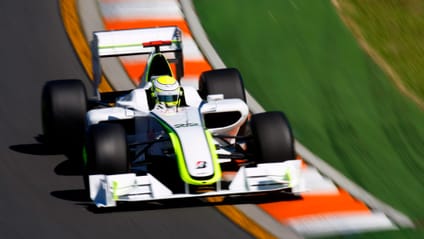
Some might say Brawn fully embraced ‘less is more’ aesthetics, some might say it simply didn’t have any sponsors to adorn the car with, but there’s no denying that this clean machine turned heads during the 2009 season.
And it wasn’t just a looker: it romped to victory in six of the first seven races, garnering enough early momentum that driver Jenson Button still took his first drivers’ championship despite not actually winning any more races.
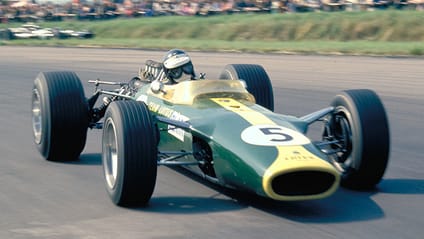
Best until last? Maybe so. Anyone lucky enough to have found themselves up-close to a Lotus 49 at Goodwood or similar will tell you of the car's overwhelming sense of engineering elegance. The car, like so many from the mind of Colin Chapman, would revolutionise Grand Prix racing. It wasn’t the first to be mid-engined, nor the first to use the engine as a fully stressed part of the structure, but it did pioneer an engine designed for that role, the Ford Cosworth ‘double four valve', the DFV.
Winning on its debut at the Dutch Grand Prix of 1967, the 49 would go on to take Graham Hill to his second world title in 1968, following the death of Jim Clark in an F2 Lotus. The 49 was a pioneer of aerodynamics in F1, remaining competitive until 1970 when Jochen Rindt would give the 49 its last win, at Monaco, en route to his posthumous world title.
Get all the latest news, reviews and exclusives, direct to your inbox.