





GamingTop Gear
Opinion: Summer Games Fest 2026 was "like a weeklong, unskippable ad"
Built on a historic E3 tradition that doesn’t make sense anymore, SGF is simply a week of noise
What is it?
Everyone knows how industry trade shows work. They are not a new concept. You turn up in a big room, show your product, and hope that people get excited about it. There are other people selling similar things in that big room too, and a crowd of press and influencers milling about. A few days later, the press and influencers tell the world what it was like in that big room and what they saw in it.
Summer Games Fest isn’t a new concept either. It follows the venerable tradition of E3 and Gamescom, where game developers, publishers, retailers and media would come together, perspire an incredible amount, and convince each other what the big important games of the next 12 months would be.
Advertisement - Page continues below
This was the sixth edition of the show, organised by veteran journalist and presenter Geoff Keighley, and through neither Keighley’s fault nor anyone else’s, it proved to be a spectacle of the entire games industry shouting over itself in a manner that felt like a weeklong, unskippable ad.
Why was this Summer Games Fest bad, then?
That’s the thing: it wasn’t. There were plenty of great games in attendance, and, when you zoom out a bit, it offered a much-needed moment of positivity for an extremely battered and bruised games industry. Proof that talented creators worldwide are still making amazing projects, under tough constraints.

With that in mind it feels a bit mean-spirited to point out its flaws, but it’s only because we care. So no, it wasn’t that there weren’t enough exciting games. It’s that there were too many games. And before you ask –
Too many games? Are you serious?
Yes, we thought you’d say that.
Advertisement - Page continues below
But let’s actually look at the numbers. Someone actually made a spreadsheet that tracked every game shown at every showcase, and when you start scrolling, you see the problem. There are 1,058 games on that list, across 26 different showcases.
A thousand games. We think that’s slightly too many to try and pay attention to in the space of a week.
Hasn’t it always been like that, though?
Nope. Summer Games Fest itself was created in response to the demise of E3, an LA summer trade show that had previously functioned as the industry’s marquee calendar event. It was where all the biggest games were announced, and all the important figures gave interviews.
But E3 was never actually intended as a consumer show. Back in the ‘90s when it began, games were a physical media form. That meant developers and publishers had to convince retailers to stock them in their shops, and maybe even make fancy displays for them, if they thought the game would warrant it. It was more of a B2B show than a place to catch the gamers’ eye. It didn’t even used to be open to journalists, let alone members of the public.
Top Gear
Newsletter
Get all the latest news, reviews and exclusives, direct to your inbox.
And then games went digital, so it had to evolve?
Exactly. Publishers started putting on showcase livestreams to market their games directly to gamers, who all of a sudden could just go to a storefront and buy games in a couple of clicks. Retailers were cut out of the process, and while E3 maintained some importance as a business networking event, it became more about the livestreams. AKA the bit you don’t actually need to gather thousands of people in a big conference hall for.
Publisher livestreams have been a thing for ages though?
They have. It’s the scale that’s changed. 20 years ago, there were about 200 games at E3 2006, according to IGN. Some of them were available only to media invitees in behind-closed-doors sessions, and a lot of press coverage at the time was in magazines, which meant a slow trickle of information about various games, online and in print, weeks after the event.
Flash forward to 2026, and you’ve got a thousand games vying for your attention, all at once.
So why do games do it?
Because it’s Summer Games Fest. It’s the most prestigious event on the industry calendar, like E3 was before it. Because there’s a strong cultural tradition going back decades that the games which appear in that June trade show, whatever it’s called, are the games that matter.
It’s old world thinking, and event organisers are more than happy to capitalise on it. Having your trailer featured in a showcase stream is – generally – something you pay for, so they’re effectively ad spots. The more games feature in a particular event’s showcase, the more money that event organiser makes.
And the studios who pay for it hope that you, having voluntarily watched one thousand ads, successfully processed the details of each of them, committed them all to memory, and will subsequently take further action, like joining their Discord or wishlisting their game.
Got a better idea?
Do you think we’d be writing this article if we did? If we knew how to manipulate the commercial winds of the games industry we’d be sipping caviar cocktails on the 300 SLR we’ve had converted into a yacht.
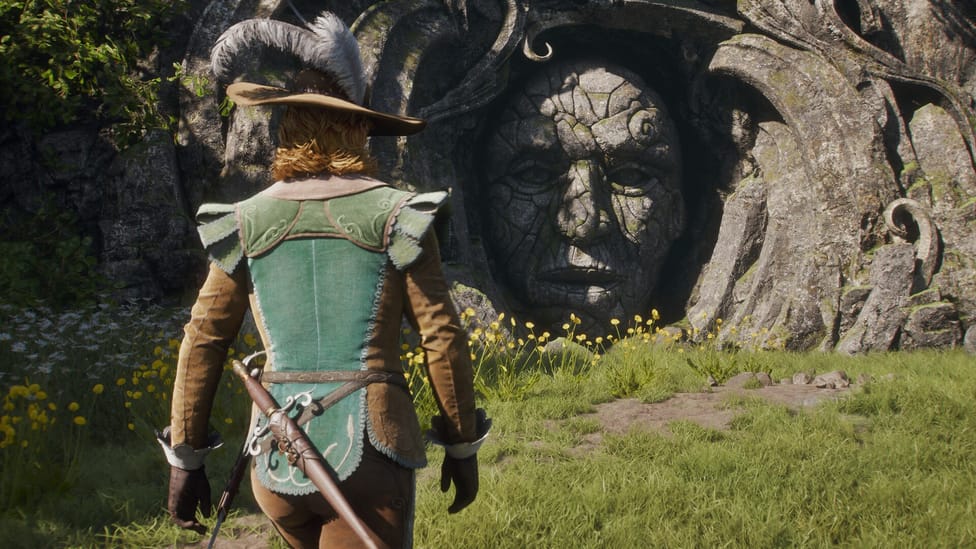
All we know is that the current model is a winner takes all one. You remember the biggest games: Fable, Alien Isolation 2, Crazy Taxi: World Tour… and forget the rest, who likely paid a fistful of cash to feature there, and built a multi-year marketing plan around it.
Fine, can you just tell me what the biggest games were then?
That’s probably easiest, yes. Aside from the ones we just mentioned, there were also all the cool announcements at Sony’s State of Play.
For RPG fans, there was the long-awaited third part in the Final Fantasy VII remake trilogy, Revelation and a new Mass Effect-style RPG called Exodus. Oh, and Persona 6.
And Silent Hill: Townfall, a rural Scottish minibreak expressed as a survival horror game. And The Lost Wild. And… well, you can see the problem, can’t you?

Trending this week
- Car Review
Porsche Taycan Cross Turismo