




Electric
Top Gear
Ferrari Luce prototype review: the internet isn’t ready to hear this, but…
… the Luce is pretty exquisite to drive. Does that redeem it, folks?
You’ve driven the Luce?
Yes. And exceptionally good it is, too. But first, some context. TG.com is at the Stellantis test track near Balocco, a sprawling facility that sits just off the A4 autostrada midway between Milan and Turin. Ferrari gets to use it, too. There are 26 different configurations here, across 50 miles, with really fast sections, horribly surfaced bits, and some that do a great approximation of a quintessential British B-road. Lumpy and bumpy, but often highly entertaining at the same time.
A good place to get a handle on the year’s most controversial new car.
Is it? We hadn’t noticed… Before we go any further, we can’t ignore the fact that the Luce’s arrival was less than rapturously received. To put it mildly. There are plenty of people who find the very idea of an electric Ferrari wholly unpalatable. Then the company doubled down in spectacular fashion by hiring an agency co-founded by former Apple creative visionary Sir Jonathan Ive to design the thing. Cue a car that resembles no Ferrari ever. Having covered the interior reveal in February and May’s launch in Rome, when even the Pope got involved, we had a ring side seat on the madness.
Advertisement - Page continues below
And?
Well, Ferrari can take heart from the fact that the entire world seems to be invested in its destiny. People really care. But it also raised the question of what a Ferrari should be – and indeed what it’s for. The company saw zero point in replicating what it does elsewhere in its range and electrifying that – from a brand or engineering perspective. The Luce is an opportunity to do something different, and boy does it have a singular point of view.
Unfortunately, it appears to be one that’s not shared by many others, at least not among those whose existence is predicated on starting fights on social media. Yep, like the Jaguar Type 00, the Luce has found itself as a lightning rod for the ‘culture wars’, a focal point for algorithm-driven global BS. Look, Ferrari didn’t get where it is today without challenging the status quo. And, as we keep saying, it’s not as if it’s abandoning combustion cars. Six-, eight- and 12-cylinder Ferraris are also still available.
Uh oh. Brace for impact…
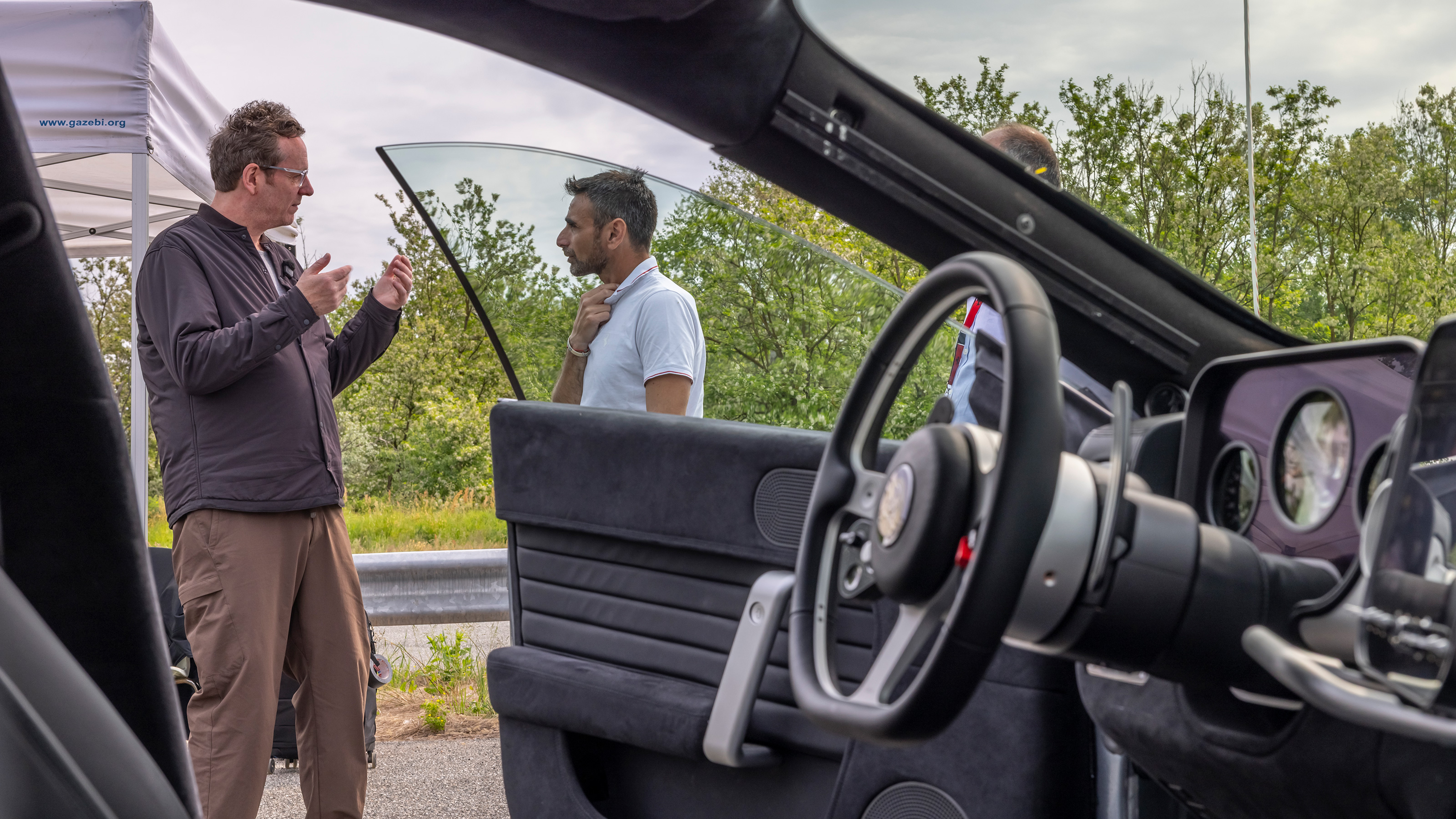
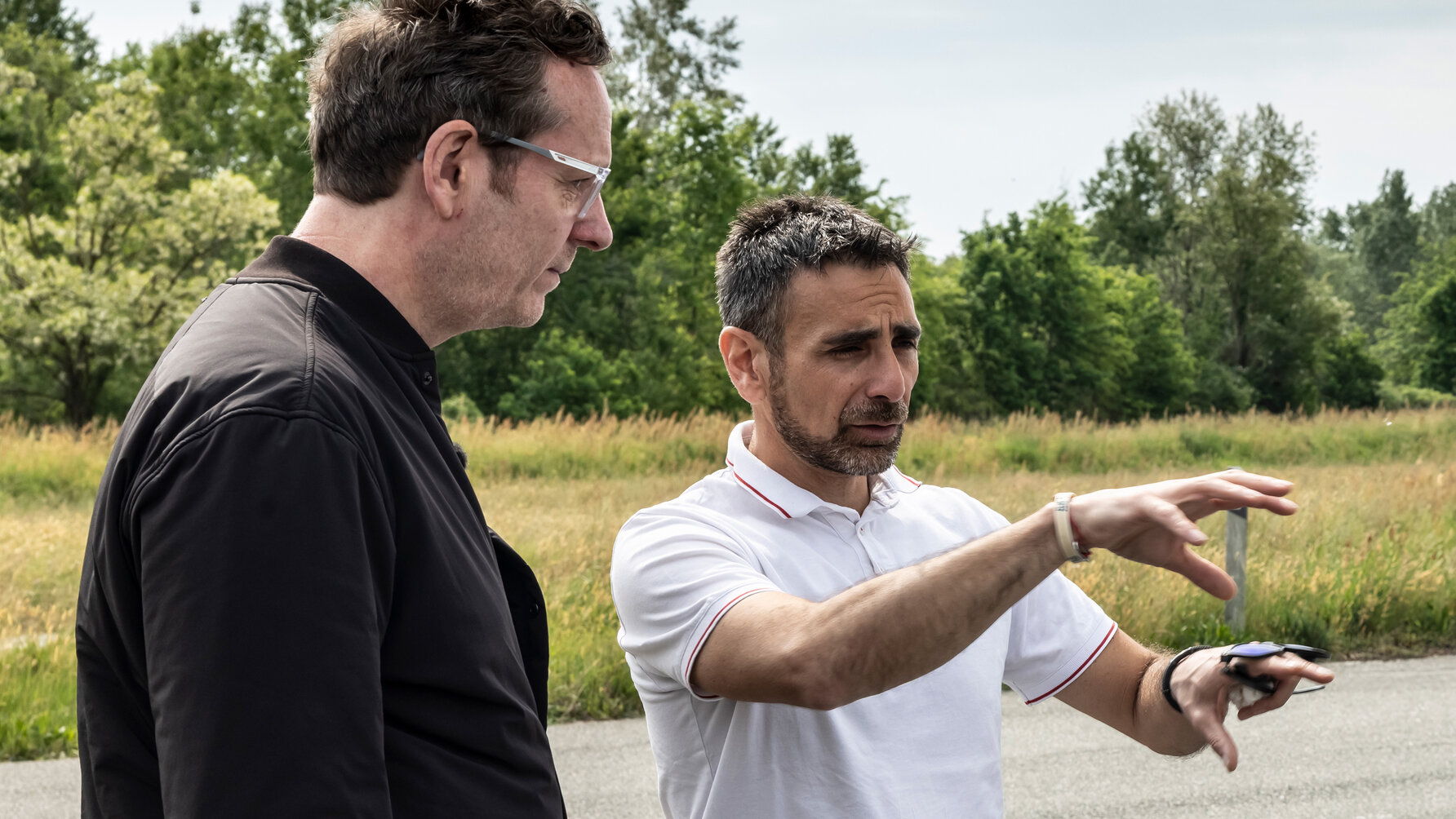
The Luce is meant to be Ferrari going off-piste, a feeling that’s amplified by the driving experience. This is a Ferrari, just not the sort we’re used to. “In the past 100 years, technology has changed for sure,” Raffaele de Simone, Ferrari’s chief test driver, tells us. “But what hasn’t changed is our bodies – we have two hands, two eyes and ears, and two feet. The interface is the same – steering, brakes and throttle – but the Luce has a different sort of driving emotion, and a different way of announcing driving thrills.
“People often talk about all the new possibilities that software and electrification bring. That’s true, of course. But for me the most important thing is that none of these possibilities ever feel artificial. I don’t want behaviour that feels disconnected from the driver’s inputs. There has to be a very direct relationship with what the driver asks and what the car does.”
Advertisement - Page continues below
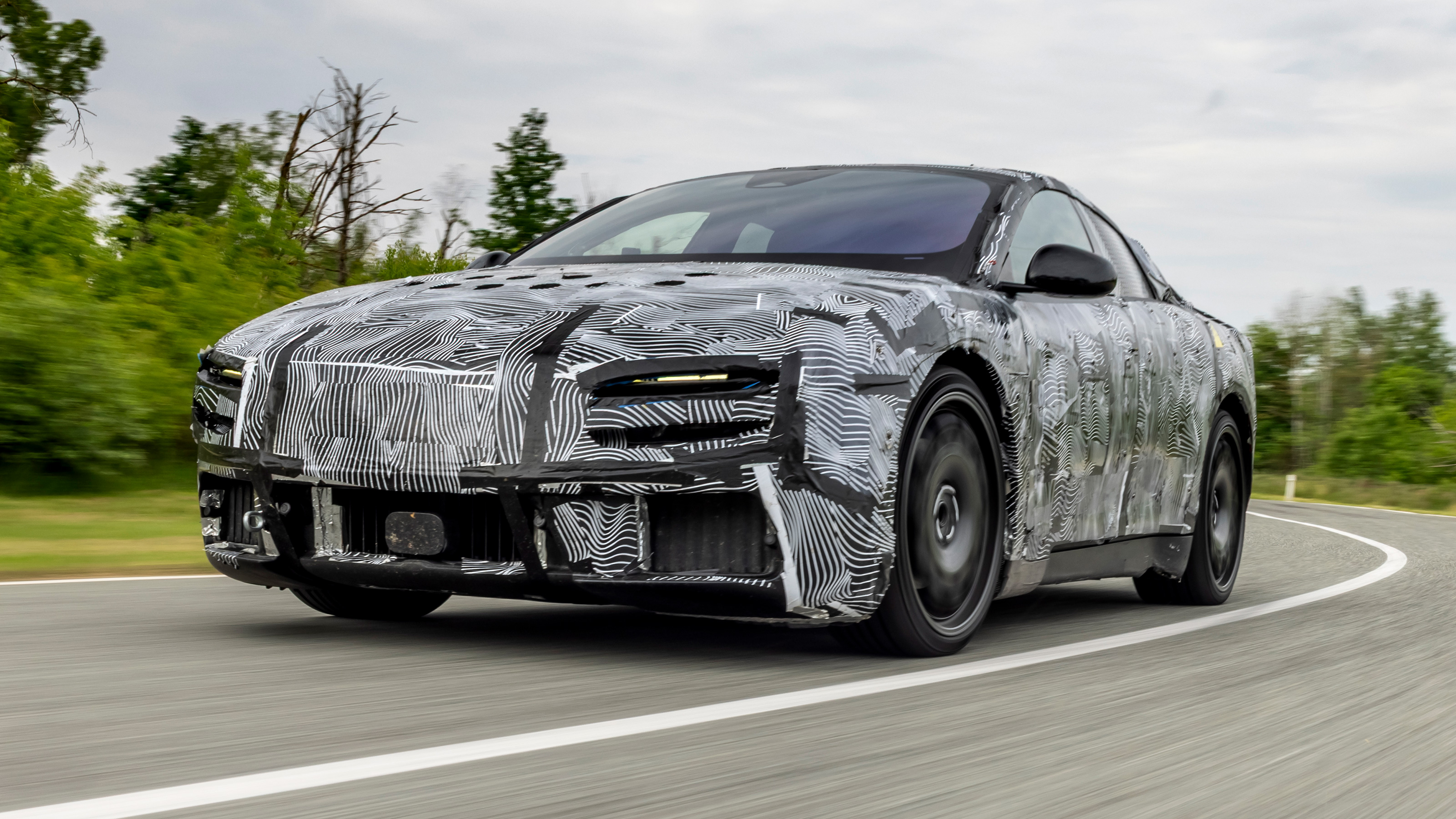
Also, it really does look more fascinating in the flesh than in images. The floating front wing is very cool.
Come on, then. What’s it like to drive?
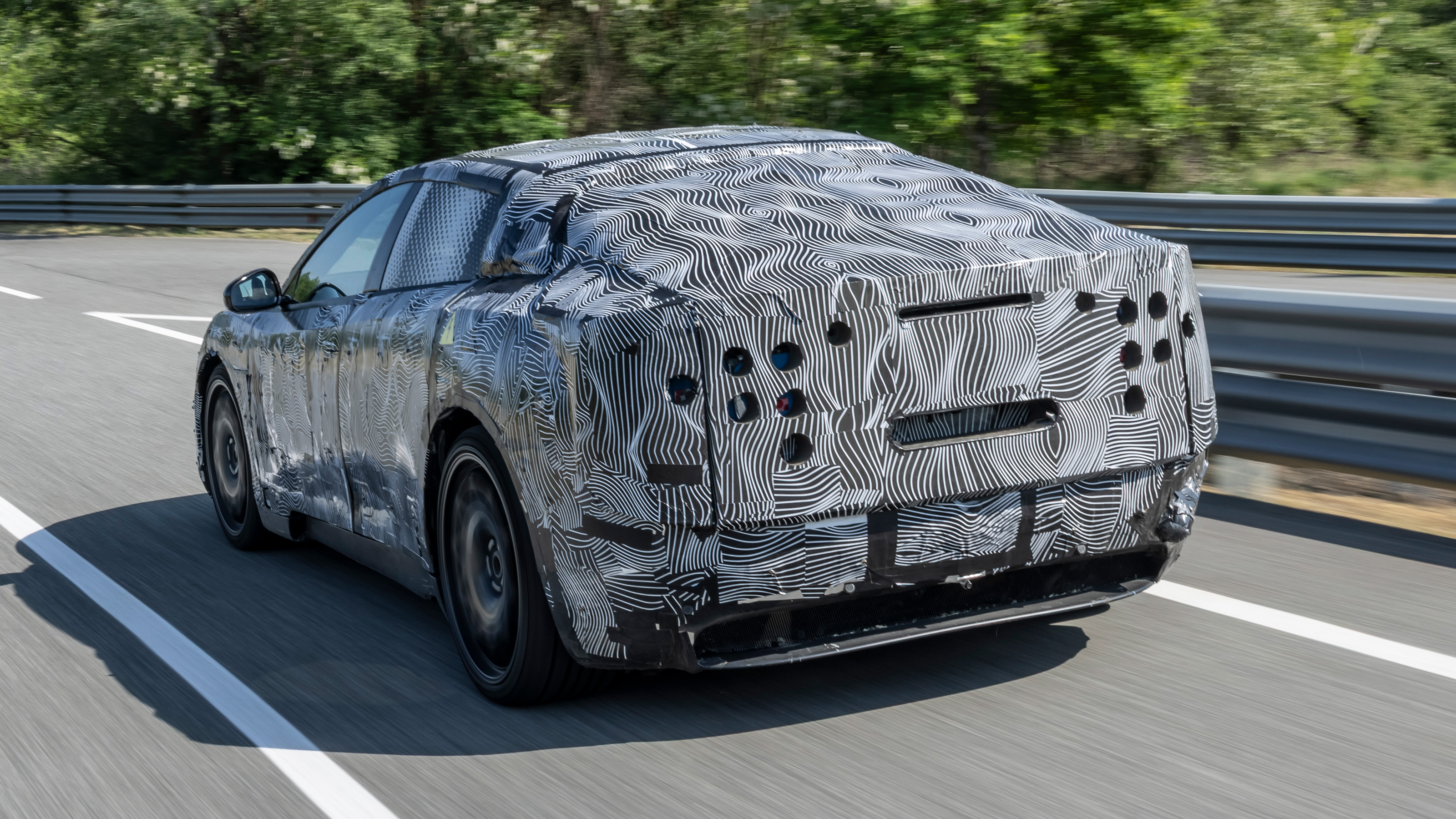
Intriguing. There are probably about 10 different cars within one here, but they all do their thing seamlessly. TG is in a pre-production car, still camo’d at the time of driving to deter the inquisitive.
There are some things you notice immediately. The Luce has ‘cab-forward’ proportions so you sit closer to the front axle, and obviously up higher than usual because there’s an enormous battery pack beneath you. The three-spoke wheel’s design is inspired by a classic Ferrari’s and feels great in the hands. As does the rest of an interior that’s pure Jony Ive.
You really would have to be an irredeemably miserable git to have any issues with the fit, finish and materials
Top Gear
Newsletter
Get all the latest news, reviews and exclusives, direct to your inbox.
Some have grumbled that the layout is overly simplistic, but one person’s simplicity is another’s clarity. And you really would have to be an irredeemably miserable git to have any issues with the fit, finish and materials used. To be clear, there’s fuzzy felt covering and plastic in this particular car, but it’s a hard-working prototype and things are still under wraps. We’ve also been in a fully finished car, and can confirm that it’s beautiful and brilliant.
Remind us of the car’s key technical points.
The structure is all new. The chassis consists of hollow castings, extrusions and aluminium sheets, to reduce weight and optimise load paths. The 800v battery architecture is integrated into the chassis, positioned as low in the Luce’s floorpan as the engineers could achieve. So it has a centre of gravity that’s 95mm lower than the Purosangue’s, and a yaw moment of inertia 15 per cent less than its SUV brother.
So it’s agile despite its size.
The Luce delivers unprecedented control of each wheel in all three axes – lateral, longitudinal and vertical – with particular emphasis on the lateral body dynamic. A new ‘vehicle control unit’ (VCU) oversees everything, and updates targets 200 times per second. The Luce has a 122kWh battery and four e-motors, two on each axle, and optimum weight distribution. The front motors deliver 282bhp, the rears 831bhp, so the total output is north of 1,000bhp. And there’s mammoth torque, of course, an almost meaningless amount – 5,900lb ft at the rear wheels.
Anything else?
The front motors can spin at up to 30,000rpm, and can go from nothing to full tilt in less than a second. The chassis and body consists of 75 per cent recycled aluminium, which dramatically reduces CO2 emissions. There’s also a separate rear subframe for the first time on a Ferrari; it’s connected to the rest of the chassis by elastomeric bushes – polymers with a high viscosity – which helps reduce noise and vibration.
And behind the wheel?
A new ‘e-manettino’ on the lower left side of the wheel joins the existing one on the right. There are three settings that govern the amount of power and traction available but also the torque curve’s shape. Remember, there are four independent motors, each of which is expertly managed. Select ‘Tour’ mode and the driver has 608bhp to enjoy and full all-wheel drive capability. In the ‘Performance’ setting that rises to 958bhp, and the 190mph top speed is available. This is a complicated car, and its bandwidth is enormous, but the key precept is that it’s always accessible.
But isn’t a Ferrari meant to immediately overwhelm you with sensation?
It depends which ones you’re talking about. Ferraris have become increasingly civilised everyday cars over the years, and it’s clear from the off that the Luce isn’t interested in pinning your body into the seat the nanosecond you hit the accelerator (more of a torque demand switch, to be pedantic). The Luce moves away effortlessly, telegraphing its massive potential with an impressively light touch.
Interesting way of putting it. Continue…
By being able to vector torque on both axles, as well as using the rear-wheel steering, the Luce’s cornering behaviour has terrific adjustability: the front end is positive without being darty, there’s lovely mid-corner balance, and unreal traction on the exit. This is hardware and software in perfect harmony. Go to Performance mode and switch the other manettino to ‘CT off’, and the Luce gets more extrovert. It’ll slide almost as intuitively as a 296 or 849 TR, with the same sublimely calibrated sort of response.
The company’s engineers love a graph and can empirically prove that the 2,260kg Luce feels precisely 400kg lighter. Non-empirically, it feels like it, although at 5m long and 2m wide (without mirrors), it’s a big machine to hustle. Still, it inspires huge confidence.
Fast electric cars are all well and good. But is this one you’d want to drive for the hell of it?
That’s where the Luce’s Torque Shift Engagement comes in. Pull the right paddle on the steering column and five power levels are available; the left one delivers five grades of regen braking. The main dial in that gorgeous instrument display shows you what’s going on.
This is Ferrari’s answer to one of the conundrums presented by an EV: rather than a relentless wall of energy, the Luce plays with the torque curve so that you feel like you’re fully in command during cornering entry and exit.
Basically, it’s designed to conjure the sensation you feel driving a car with a conventional transmission and engine braking. And it does. There’s also a fabulously natural amount of brake feel.
Is it complicated to use?
Not at all, although it’s a little tricky seeing what’s happening on the display as you increase the pace on the road, even if does illuminate in increments. The amount of energy corresponds with the available grip and the nature of the corner itself. It really works and it’s clear that some very clever people have thought long and hard about giving this electric Ferrari some extra layers. But the jury’s out on how often you’d actually use it.
Does it ride well?
It’s exemplary, even on 23 (front) and 24in (rear) wheels, and on the roughest surfaces. The Luce is fitted with the third generation of Ferrari’s active suspension, and controls its mass very elegantly. This 48-volt system helps keep the tyre contact patch consistent, while the motors manage the balance of the car on and off throttle. “It’s not really about creating more grip,” de Simone explains. “It’s about making the available grip easier and more intuitive to use.”
Then he encourages me to seek out the sections of track designed to rattle your fillings or dislodge bits of interior trim. The Luce just soaks up whatever you throw at it, communicates its impressive structural integrity through every touch-point, and feels plush without any hint of float.
How does it sound?
In ‘Performance’ mode, the Luce finds its voice. The note is fuller than a six-cylinder, not quite as rumbly as a V8. This is achieved by using an accelerometer and by equalising naturally occurring frequencies on the rear inverter. OK, so it doesn’t sound as sonorous as any combustion Ferrari, but it’s authentic rather than a fake sci-fi confection. And it responds to the throttle pedal perfectly. Hyundai and Porsche have both moved the game on here, of course, but the Luce is another few steps further on.
What’s the verdict?
In a car as finely considered as this, we need to drive the finished thing to experience the full effect. Because we can’t help thinking that a smartly-specced Luce – and it is somewhat spec-sensitive – is going to look impressive indeed swishing through Shanghai or San Francisco. There are definite Blade Runner 2049 vibes.
In all the key parameters, this is an incredible piece of engineering, a car with phenomenal dynamic properties
It’s also difficult to separate the often ill-considered noise that has engulfed the Luce from the machine itself. But in all the key parameters, this is an incredible piece of engineering, a car with phenomenal dynamic properties, an intensely clever neural network, and a transformative interior. It also has real character, and not just a simulacrum of a combustion Ferrari’s. We’re keen to revisit.
Trending this week
- Car Review
Mazda CX-6e