


InterviewTop Gear
Stellantis design boss Gilles Vidal: "I’m firmly against putting everything on a screen"
Plus: Vidal wants a 'breakthrough' with Maserati, and 'instant desirability' for Alfa Romeo
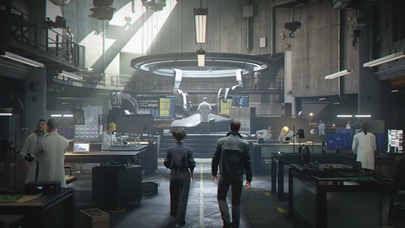
Citroën Méhari, Fiat Panda and, yes, Multipla, Lancia Delta Integrale, Maserati Ghibli – the original – and the actor Christophe Lambert jumping a 205 GTI over a ledge in 1985 French movie cult classic Subway… We’re watching a Stellantis sizzle reel, bordering on a fever dream, but also a reminder of the scale of the company’s achievements across multiple time-lines.
Now these names are intertwined, and fighting to remain relevant in a world that seems increasingly unbothered by legacy when you can have a tech-savvy new Chinese car for £250 per month. In which context, design assumes greater importance than ever, as Gilles Vidal, the man responsible for the visual trajectory of Stellantis’s European brands, is well aware.
Advertisement - Page continues below
You’ll know the name: after 24 years at Citroën and Peugeot, he defected to Renault in 2020, where he helped shepherd the 4, 5 and Twingo into critical and commercially acclaimed life. EVs with soul and snap, and resonance even for buyers who wouldn’t know an original R5 from the Eiffel Tower. Now new(-ish) Stellantis CEO Antonio Filosa has lured the amiable Frenchman back home to work his magic. Expect to see the first results at the Paris auto show in October.
As the short film concludes, Vidal lays it on the line. “We’re talking about Stellantis as a company, but the general public doesn’t care so much about that, they care about the brands themselves,” he tells TopGear.com. “We need to be super sharp about what our brands stand for. They are the company’s biggest asset.
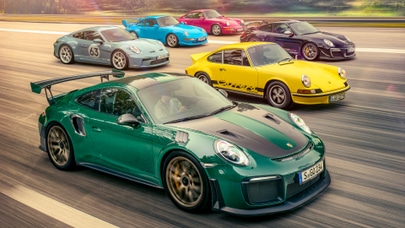
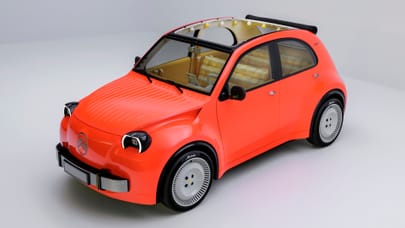

"What you saw there [on the film] was very pushy, very creative and very relevant for their brands and for the era they were in. What we want to do is push it as far as we can again. It’s a matter of finding the right balance, the sweet spot between shocking in a positive way with an execution that makes you want something the moment you see it.”
TopGear.com: How is it being back where you started? Is there a full circle feeling?
Gilles Vidal: Well, you know everybody, you know the place. But the company is super different now. It’s huge. I’m joining at a time when everything is changing anyway, with Antonio Filosa (CEO) and Emanuele Cappellano (head of Europe). So everything is new for me but it’s also new for those who never left, because there’s a new mindset. There’s an openness. Antonio is seeking more diversity to create more exciting versions of new products. A tonne of things were forbidden for the sake of simplicity, optimisation and efficiency, and now it’s reopened. It’s not 100 per cent an open bar but back to some… normal behaviour.
Advertisement - Page continues below
You have a lot on your plate. What’s the big plan?
Stellantis is still about creating synergies in terms of sharing platforms and components, but we also orchestrate differentiations. We will make sure we compete against the real competition and less between ourselves. So the branding is super important, and we need to avoid making clones, not just in terms of design but also in everything else you live and experience in the car.
Design itself is a very subjective topic, a matter of taste, although maybe you can also judge it without the emotion. We want to talk about emerging design, finding a breakthrough with shocking ideas – in a good way, of course, in a world that is accelerating novelty.
Can you give examples of how this approach could be applied?
Peugeot is exploring steer-by-wire and the hyper square steering wheel. It’s about strong design and innovation, more breakthroughs, typified in the Polygon concept. Citroën is accessible and affordable yet inventive. DS is now reaching a certain level of maturity. With Opel we want to push on the German quality and execution, Lancia can be very progressive.
There’s also a challenge in the way we build cars in the factories. They could be transformed into something more efficient.
Top Gear
Newsletter
Get all the latest news, reviews and exclusives, direct to your inbox.
Electrification and autonomous driving are putting more emphasis on interior design. You’ve always been progressive in that area.
Thirty years ago, when I started my career, there was only a dashboard and a steering wheel that we could give a bit of styling to. Now we are really designing an entire onboard experience, with an atmosphere and forms, materials, screen content, graphic design, user interaction. It’s actually a room you live inside that’s moving around. When you have 14 brands worldwide you put a lot of care and attention into crafting the experience of each one, so more driver-oriented for Peugeot or Alfa Romeo, more open and family-focused on a Fiat, Citroën or Vauxhall.
I’m firmly against putting everything on a screen, I think we need more physical buttons and direct access. We’re working on all sorts of things, some crazy stuff. The space you create can be another world. Services like Lyft or Uber will have specific use cases. But private cars can really be crafted.
The success you had at Renault with the 4, 5 and Twingo surely suggests that a new 2CV could work for Citroën. Or should it remain firmly future-focused?
It should be a clever mix of heritage, but we need to ask some basic questions first. Why was the original born? What was the brief, what was the context, and how does this idea make sense in the world of today? There’s room for lots of things with simple, affordable cars. If it’s a real car, rather than a quadricycle, how light should it be? What’s the minimum you can do so that’s super essential? There could be a car that’s 3.8m-ish, one at 4m and another with four seats. So three sizes into which you could deliver that kind of stuff.
Alfa Romeo deserves to be shaken up a little bit
Could you argue that the ELO concept is closer to a contemporary 2CV?
The ELO monobox is about habitability and modularity. If we manage to deliver an interior like this, maybe without the driver in the centre, it could be a hit because it’s relevant as a product, it’s functional. But we would need to trigger the love at first sight thing on the exterior, which at this point we don’t have because it’s too experimental. The power of what you see before any ‘thinking’ will trump anything else.
Further up the hierarchy we have DS. Surely there’s a temptation to a ‘new’ version of the original?
Retro futurism is a valid and relevant thing to do. But when the original DS appeared in 1955 it looked like a car from the future. Imagine it in the context of the time. If we do a new DS, it should be a spaceship, it should break the rules just as strongly as the original car did. Not science fiction weird, but as though a designer from 2100 did it. The circle is complete on the current range, so now we’re working on the next step and thinking about where we want to take it.
Then there’s Maserati…
Maserati is a bit like DS. We need to generate the next gen cars, the next two decades of Maserati styling. I’m not talking about what cars we’ll do, but the design cues, inside and out. We need a breakthrough, a big shift from what we have today. Every 20 years or so you can observe a complete shift in design language, and yet it’s always a Maserati. The wavy life of this brand is very interesting, so what’s next, because the loop is now theoretically finished. I’m not telling you today but we’ve started work on this.
And Alfa Romeo?
It’s a different question, for me. You know exactly what an Alfa Romeo should be. It’s more coherent, but it deserves to maybe be shaken up a little bit. It needs to be red! And to have muscle, sensuality and stance. We have presentations and discussions, but in the end whatever we do should trigger the feeling that this is something you want, without intellectualising it.
And you can trigger this emotion just as effectively with a €20,000 car. That’s what I mean when I say ‘iconic’, or whatever word you want to use. Instant desirability. It’s easy to say, but that’s what we want to achieve.