

12
Just because something’s not good, doesn’t mean it can’t be good
Some cars are good.
Some cars are bad.
But some cars are bad… yet somehow also good? There’s no scientific theory to explain this phenomenon. How can a car that, by rational criteria, is worse than its rivals – and in some cases worse than just taking the bus – somehow be a thing of unalloyed joy?
So let’s not even attempt to analyse it, and instead simply accept that – like the Pot Noodle sandwich, Takeshi’s Castle or the concept of this listicle itself – it’s possible for things to be bad yet also good.
Here, then, are 11 cars that we love, despite their many, many flaws.
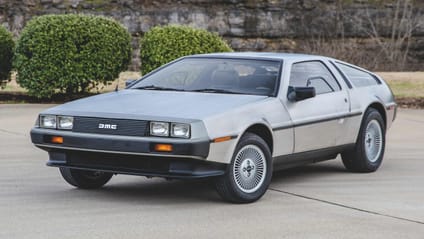
It gives us no pleasure to report that the DeLorean was, scientifically speaking, a snotter. Turns out an untrained workforce, in a new factory, building a car with a groundbreaking stainless-steel skin… yeah, that’s a reputation for epoch-defining unreliability right there.
But still… it’s the Time Machine! If it’s good enough for Doctor Emmett Lathrop Brown, it’s good enough for us. Nearly half a century after landing on Planet Earth, the DMC-12 remains deliciously deranged and we very much still want one.
Few DeLorean owners, of course, ever got the chance to discover if their cars would time-travel at 88mph. Most DMC-12s broke down long before that point.
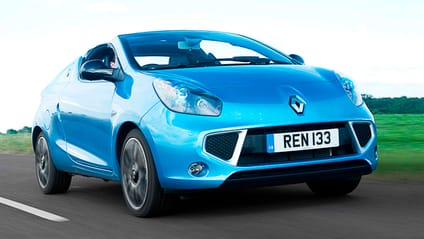
Would the Wind have been less embarrassing if it hadn’t been named, well, that? No question.
But it still would have been fairly embarrassing: a cutesy hard-top cabrio with the face of a surprised rodent and the underpinnings of a Renault city car.
Yet give us a good country road, a sunny afternoon, and a Wind – the 1.6, please, with its deceptively peppy 131bhp – and we would find ourselves contented indeed. So long as you also provided the glasses with fake nose and moustache attached. Wind: best unleashed incognito.
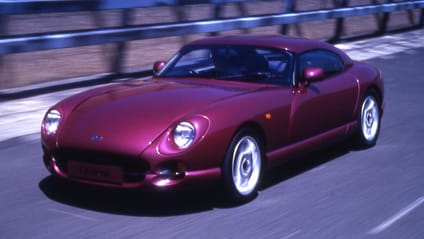
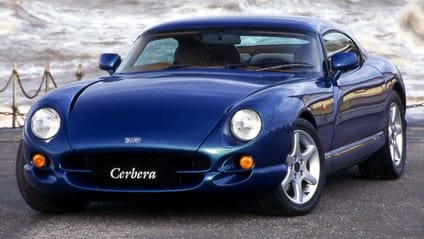
Blackpool’s most recalcitrant sports car manufacturer always prided itself on serving up excitement. With the Cerbera, that excitement began long before you’d reached your favourite sinuous B-road.
Would it… actually start today? Or would you head down to the garage to discover your fibreglass-bodied V8 sports car had somehow… disintegrated while also catching fire overnight? The jeopardy!
On those occasions your Cerbera wasn’t broken, however, it could be spectacularly pulse-quickening, delivering a properly raucous you’re-on-your-own-now experience. The Cerb was here for a good time, not a long time.
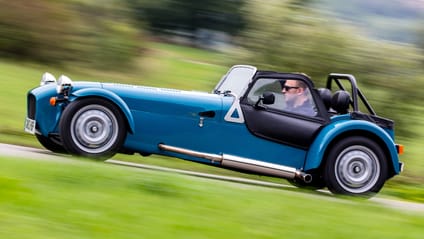
Taking a basic design that was approaching 60 years old, and joining it to one of the smallest, weediest new-car engines available – Suzuki’s 660cc kei car unit – shouldn’t have worked as a sports car.
And, in a strictly mathematical sense at least, the Caterham 160 didn’t really work as a sports car, its power and acceleration figures occupying the realm of ‘street-sweeping vehicle’ or ‘tired horse’.
Yes, the 160 was deeply flawed, deeply basic… and deeply fun. With skinny tyres and a live rear axle, it allowed you explore the ragged edge of handling while barely nudging double-figure speeds. Simpler pleasures come no simpler.
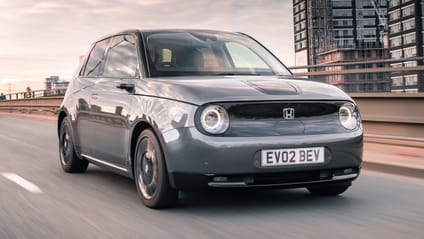
Even when new, the e’s range (a claimed 130 miles, more like 80 in the real world) was underwhelming. By 2026 standards, it looks pitiable.
As do those side cameras, which, while much more aerodynamic than wing mirrors, were also very much worse at revealing what was actually behind you.
And yet… innit cute? Distance-phobic it may have been, but the E represented optimism: the promise of a cleaner, innocent, less aggressive future. OK, so we didn’t get that future, but still, it was nice to dream.
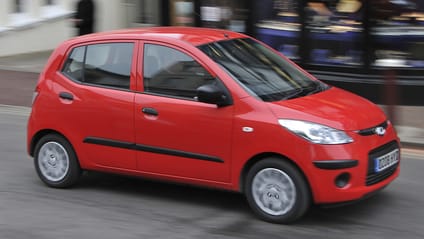
The first-gen i10 was not a thing of beauty to behold. It was also not a thing of beauty to drive, its skinny front tyres managing the impressive trick of being overwhelmed by the 1.0-litre’s feeble 60-something horsepower.
But as anyone who chooses their rental car by the correct criteria (absolute smallest and cheapest available, please) knows, there’s great delight to be found in hooning an under-powered, under-tyred, under-specced city car. The i10 was terrible to drive fast, and therefore a joy to drive fast. Don’t try and understand it, that’s just how it works.
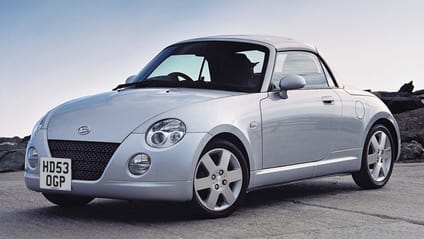
Philosophers may assert that all aesthetic judgements are subjective, but trust us on this: the Copen was objectively naff.
With styling that asked ‘what if original Audi TT, but wizened and also melted?’, and performance figures that asked an enormous amount of patience of the driver, the Copen was as slow as it was silly to behold.
But, roof down on a cloudless morning, burbling down a leafy lane, the cheeky Copen was ineffably charming: a throwback to a simpler era of wind-in-your-follicles motoring. Those who mocked – and there were many – didn’t know what they were missing.
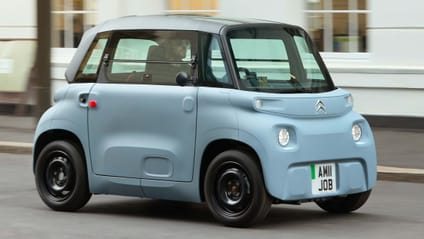
In the Ami’s defence, it is not a deeply limited car. It’s a deeply limited quadricycle.
Occupying the conceptual space between ‘actual car’ and ‘pushbike’, the wee lad’s absurdly limited range and performance – 40-odd miles between recharges, top speed of 28mph (though spend any time exploring the latter and you won’t get anywhere near the former) – mean it’s only suitable for the most urbanish of urban commutes.
But so long as you have but a very short distance to go, and plenty of time to get there, there’s something wonderful about the Ami. This is an object lesson in stripping back driving to the very least it can be: the ultimate manifestation of less-is-more four-wheeled travel.
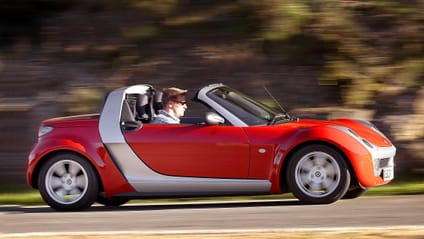
Yes, there’s a theme emerging here. We can’t help but heart small, slow sports cars, even if they’re (a) objectively quite rubbish and/or (b) barely qualify as a sports car at all.
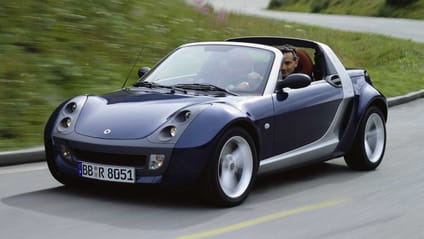
There was much to criticise about the Smart Roadster, so we will. The six-speed semi-automated gearbox was genuinely horrible. The roof gained a reputation for letting in as much water when it was raised as when it was lowered. Nought to sixty took most of the afternoon.
But as too many modern EVs prove, fast doesn’t necessarily equal fun. The half-size Roadster served up a double-helping of leisurely entertainment. More of this sort of thing, carmakers.
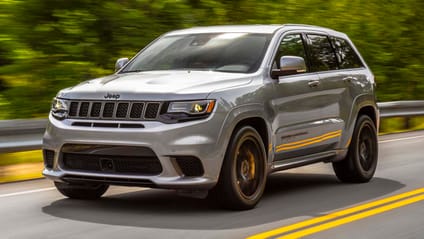
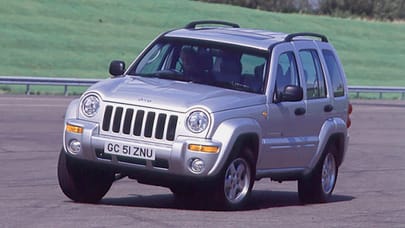
Stuffing a 700bhp, supercharged V8 into a family SUV is, it turns out, a broadly unsensible idea.
The Trackhawk was hideously compromised as a family SUV on account of the supercharged-V8 thing, and hideously compromised as a performance car on account of the whole big-family-SUV thing.
But still: supercharger whine. Four-tyre burnouts. Stupid drifts. Did we mention the supercharger whine? We don’t like ourselves for loving the Trackhawk, but we can’t help our feelings. Don’t SUV-shame us.
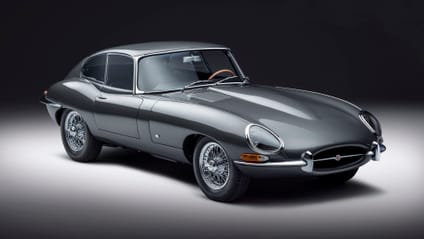
Yeah, sorry about this one, but all old cars are – by modern standards – objectively terrible. All of them. Every last one. Even the greats.
Jaguar E-Type, Lamborghini Miura, original 911, Aston DB5, the whole lot. Sure, they might be beautiful and evocative and all that, but, viewed through the cold lens of 21st century motoring, they’re all rubbish: no brakes, no grip, no chance of survival if you spam it into a sturdy Douglas fir.
Old cars are gorgeous, they’re dreadful, and we don’t care.
Disagree with our list? Of course you do. Tell us everything we’ve got wrong – and everything we’ve missed – in the comments below.
Get all the latest news, reviews and exclusives, direct to your inbox.