

47
Not the delicious, chocolatey kind, but 21 details you wouldn’t know were there unless you went looking for them
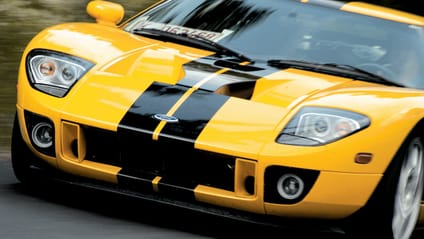
As well as being a nod to the ultra-successful GT40 racer, the original Ford GT was also conceived to mark Ford’s 2003 centenary (even if it went into production a couple of years too late), and the design team included a neat nod to this: look at the left headlight, and you’ll notice the individual lighting elements spell out ‘100’. Of course, look at the right headlight, and it says ‘OOI’, but just ignore that bit.
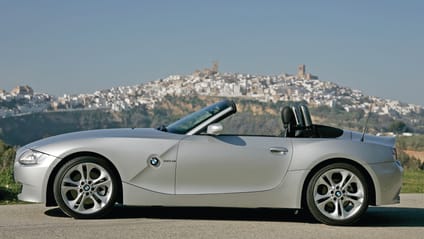
Ever wondered why the original BMW Z4 has that weird diagonal slash running down the front wings through the indicator lights? It’s not entirely gratuitous: in combination with the character line that runs along the top of the wing, and the one that goes along the sills, it makes a ‘Z’ shape in a nod to the car’s name. Again, this only works if viewed from the left, otherwise it’s a backwards Z, which makes less sense.
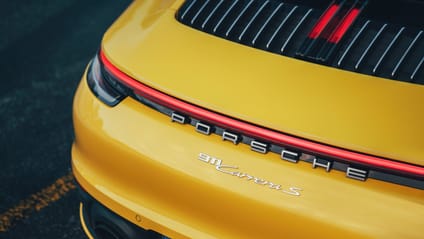
The twin central brakelights on the current Porsche 911 are another detail that might look like design for design’s sake until you consider what’s either side of them: the 911’s rear grille, consisting of two lots of nine vertical slats. In other words, two nines and, in Roman numerals, a two. In other other words: 992, the car’s chassis code. Or, if you cover up one half of the grille, a nine and an 11. Yep, it’s an extremely nerdy two-for-one Easter egg.
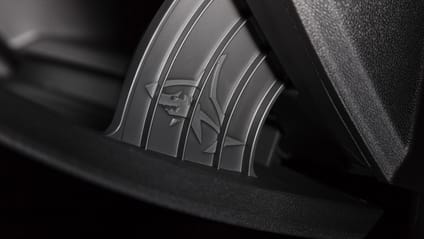
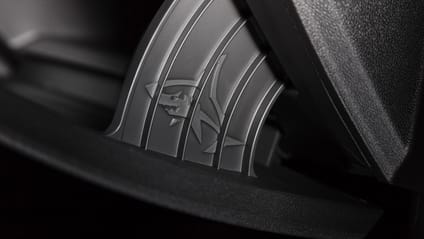
Root around the interior of pretty much any Vauxhall (or Opel) built in the last 20 years, and you’ll likely eventually stumble across a cartoon shark moulded into the plastic somewhere. Some of them are in obvious places, like the wireless charging pad; others, you have to go looking for in places like the glovebox hinge or the underside of the removable cupholders.
The only question is: why? What exactly is sharky about Vauxhalls? Nothing: it came about when Opel designer Dietmar Finger was at home working sketches of the in-development Corsa D in 2004. His young son, presumably disappointed by the dreary realities of designing a mass-market hatchback, suggested he draw a shark instead, and thus the Vauxhall shark was born.
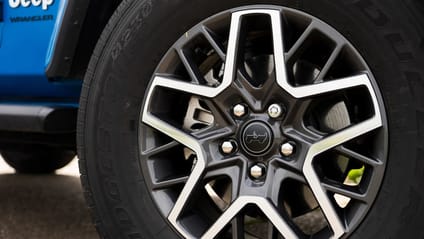
Jeep may well be the world champion of automotive Easter eggs, and they’re nowhere more prevalent than in the Wrangler, which is constantly reminding you that it’s descended from the World War II Willys Jeep. Depending on the version, you’ll find silhouettes of it in the windscreen frits, the automatic gear selector and on the wheels. Then there’s the one that flashes up on the instrument cluster on startup before it morphs into a modern Wrangler. We get it, guys.
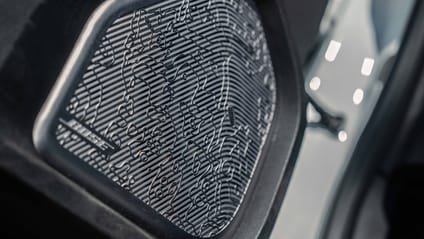
The door speakers of the reborn electric Hummer feature what, at first glance, appear to be a standard run-of-the-mill contour map. Surely a nod to the mammoth EV’s off-road chops, right? Not quite: what they actually depict is the Sea of Tranquility, the site of the 1969 moon landing. Despite that, we’re 99.9 per cent sure you can’t go to the moon in a Hummer EV. Although you could go to a soundstage in Nevada. Hmmm…

Those sculpted bonnet lines and quartet of rounded headlights on the Jaguar X-Type weren’t just gratuitous retro-ism. Okay, they mostly were, but they were also designed to mimic the engine cowlings of the beautiful de Havilland Comet, the first jet-engined airliner to reach passenger service. Thankfully, that’s the only thing the X-Type borrowed from the Comet, Jaguar choosing not to replicate the plane’s massive and disastrous structural issues.
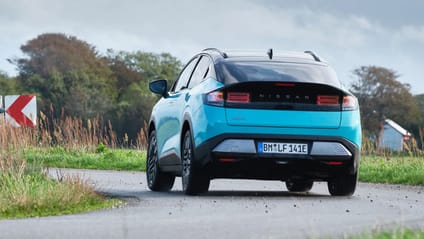
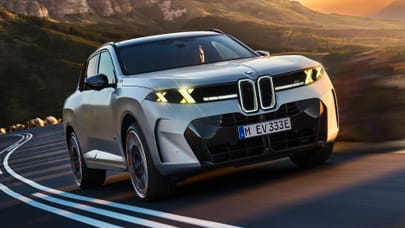
The long, slender bars that make up the rear lights of the new third-gen Nissan Leaf are separated out into two separate groups, one with two bars and one with three. Interpret them as Roman numerals, and it literally spells out a two and a three, at least on the right. And what’s the Japanese for ‘two-three’? ‘Ni-san’. And yes, this is also why factory Nissan race cars have often carried the race number 23. The more you know, etc.
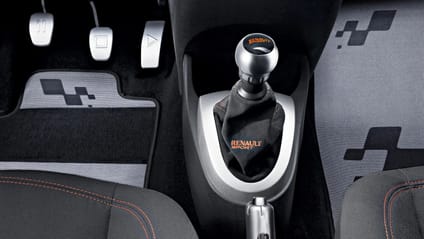
There must have been an audiophile working on the team that did the Renaultsport version of the second-gen Twingo. Not because it had a bangin’ stereo – quite the opposite – but because the pedals featured embossed symbols borrowed from the world of music: play for the accelerator, stop for the brake, and pause for the clutch. Brilliantly simple, really. This idea has been recycled by the VW ID.3, but since it only has two pedals to play with, it doesn’t quite have the same effect.
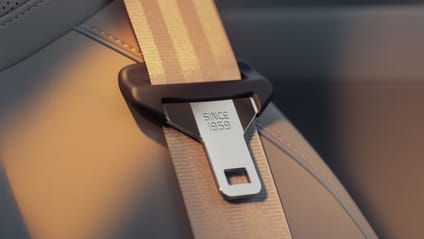
A simple idea yet one of the single biggest safety advancements in the history of the car. In 1959 Volvo became the first company to start installing three-point seatbelts in its cars, a fact the Swedish company is rightly proud of. So proud, in fact, that its belt buckles now carry the inscription ‘Since 1959’. Nice.
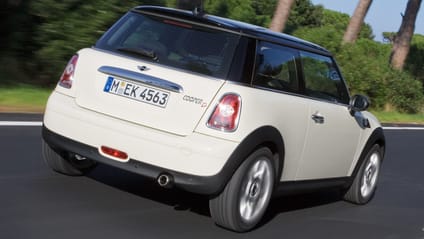
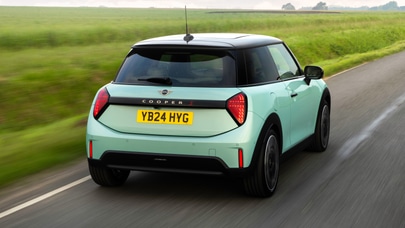
It’s late in the design process of the new BMW-developed Mini, and the styling team, led by Frank Stephenson, has just worked late to get a clay model ready for presentation to the board the next day. To celebrate their hard work, they crack open a few cold ones in the studio, until somebody realises they’ve forgotten something crucial: an exhaust tip. Thinking quickly, Stephenson strips the labels off an empty beer can, punches a hole in one end and jams it into the rear bumper of the styling model. Et voila, an exhaust tip that looked as if it was meant to be there from day one, and one the board liked so much it made it to production.
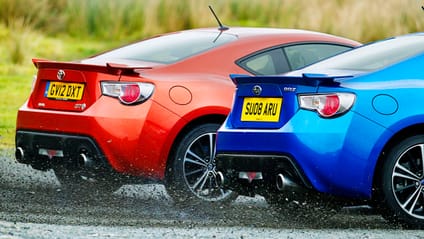
A nod to the AE86 Corolla that inspired it, the number 86 popped up everywhere on the original Toyota GT86 and its Subaru BRZ twin. The flat-four engine’s bore and stroke just so happened to measure 86 x 86mm (a side effect of creating a 2.0-litre engine with an identical bore and stroke), but possibly an even nerdier nod to the name is that the exhaust tips had a perfect 86mm diameter too.
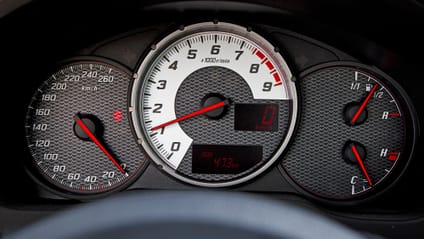
The GT86’s successor doesn’t turn down the nerdy details one notch. The number 86 may not be as prevalent, but Toyota and Subaru have turned their wonderfully geeky attention elsewhere. With the switch to a digital instrument cluster, the two companies took the opportunity to lay it out in the shape of a boxer engine viewed in cross section. You even get a little animation on startup replicating the spinning crankshaft and punching pistons. Neat!
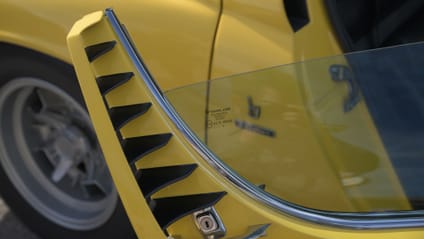
Lamborghini loves bulls. In case that wasn’t obvious. There’s its logo, of course, and the Miura kicked off its long-standing tradition of naming its cars after either breeds or individual Spanish fighting bulls. But that’s not the only reference to angry boy cows found on the Miura: viewed from straight ahead with both doors open, the way they flick up at the end is supposed to replicate the horns of a bull.
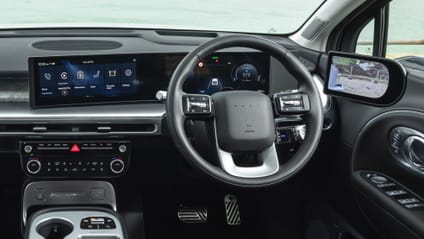
Step inside pretty much any Hyundai built in the last few years, and instead of the company’s swooshy ‘H’ badge on the steering wheel, you’ll find a sequence of four dots. What’s going on? Is Hyundai going for a dramatic pause? Not quite: in Morse code, the letter H is represented by four dots. This would look a lot messier if BMW tried it.
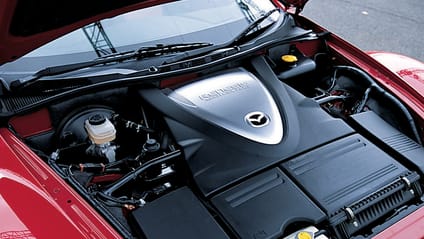
The Mazda RX-8 had a rotary engine. You already know this. And what’s special about rotary engines? That’s right, TRIANGLES. So to really hammer the point home, Mazda incorporated many, many triangles throughout the RX-8’s design. You’ll find them in the front seat headrests, atop the gear knob, and, on some early models, beneath the front grille. TRIANGLES!
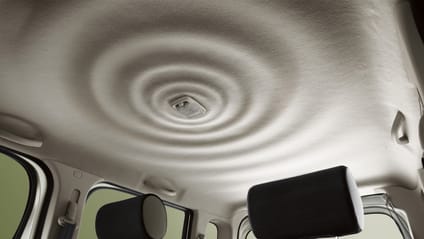
We won’t labour the point: the Nissan Cube was a weird car. This was the same car that had asymmetrical styling and the optional extra of a small patch of shagpile that sat atop the dash (something which, amazingly, Nissan will still supply you with as an official OEM accessory for the six Cube owners left out there). Then there was the headliner, which was for some reason sculpted into a concentric ripple pattern. Why? Well why on Earth are you asking us?
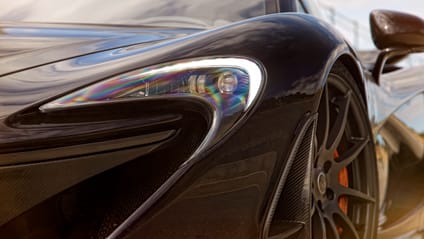
More headlight-based design shenanigans, although this one’s a bit more obvious than a hidden ‘100’ or a deeply geeky reference to a 1950s airliner. The P1 was the first McLaren to incorporate a headlight design that replicates the company’s ‘speedmark’ logo, a trend that continues today, in a somewhat more stylised form, on the Artura.
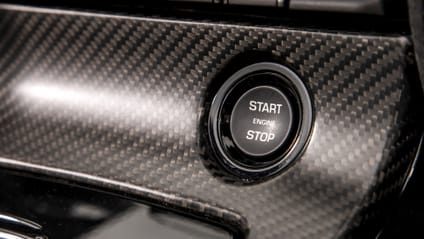
Jump into a recent Jaguar, and you might spot that before you fire it up, the backlighting of the start/stop button pulses on and off to indicate its readiness. Sounds like a gimmick (and is), but it goes deeper: the rate at which it pulses is 72bpm, the same heart rate as a resting jaguar. The big vicious kitten, not the car.
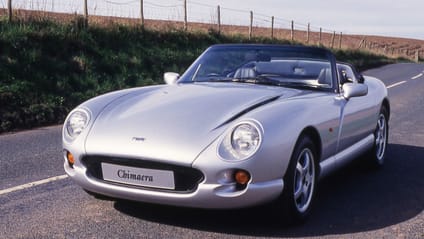
Not so much a deliberate Easter egg as a happy incident, if one possibly apocryphal tale is to be believed. The story goes that during development of the Chimaera, the much-missed and superbly moustachioed TVR boss Peter Wheeler had brought his German pointer, Ned, into a studio housing a polystyrene design model of the roadster. Ned, apparently mistaking the model for some sort of tasty treat, took a big bite out of its bumper just below a headlight. Apparently, everyone liked the way it looked so much that it was refined into the distinctive recessed indicator housings on the finished car, as well as the related Cerbera. Ned was indeed a good boy.
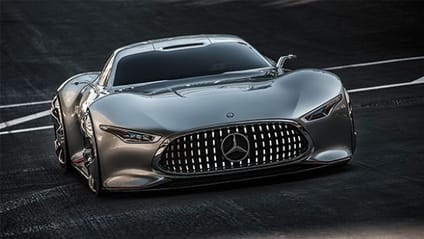
This one’s a bit of a cheat, because the Mercedes-AMG Vision Gran Turismo is a concept car, and diving into concept cars would open up a whole new world of Easter eggs. We’re inclined to include this one, though, because we just think it’s cool: as the name suggests, the VGT was designed for the Gran Turismo series’ Vision Gran Turismo programme (it was the very first entrant, in fact, way back in 2013). In a nod to that, when a real-life full-size model appeared, the headlight housings featured tiny replications of a PlayStation controller’s X, square, triangle and circle buttons.
Get all the latest news, reviews and exclusives, direct to your inbox.