



25
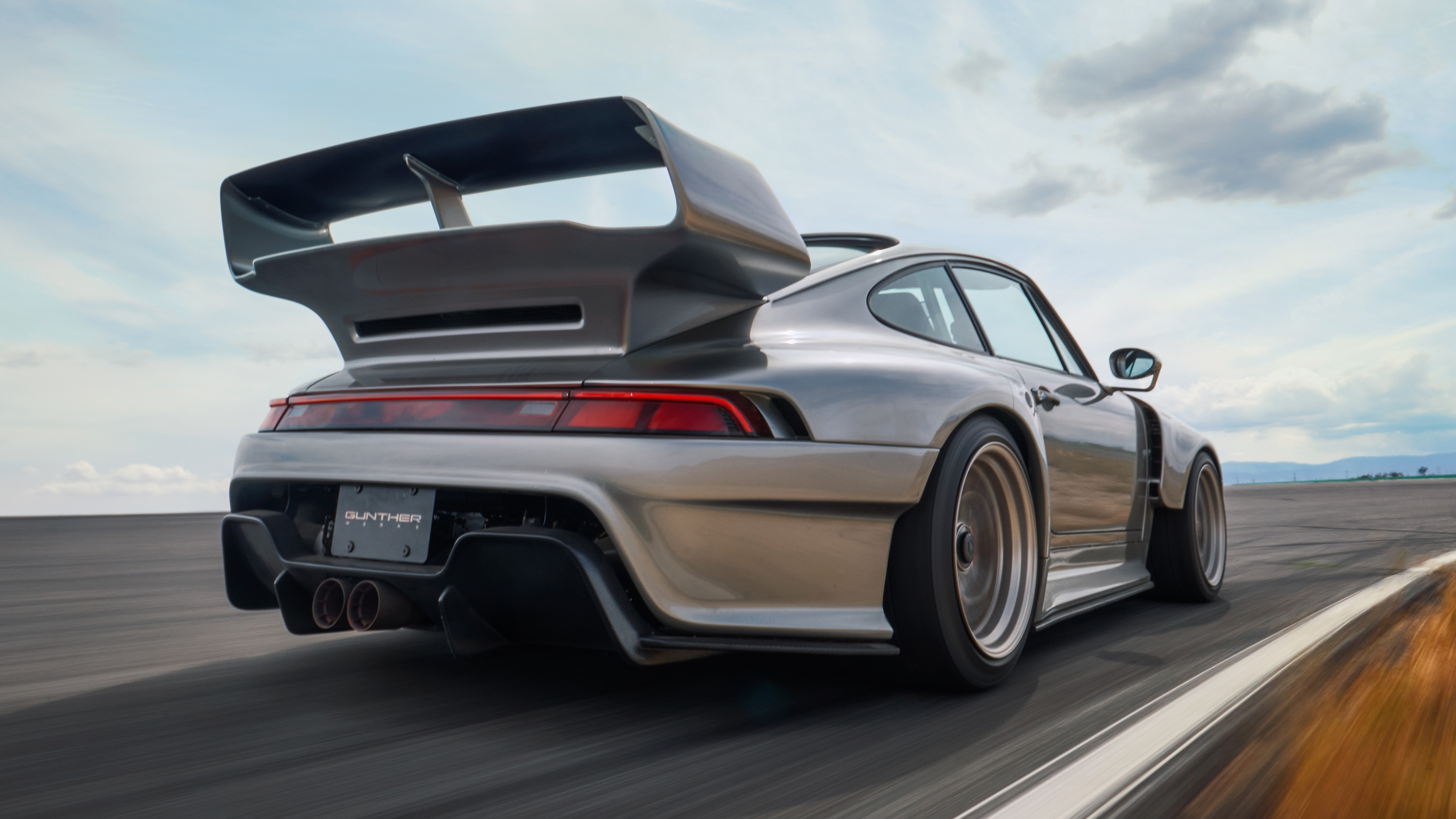
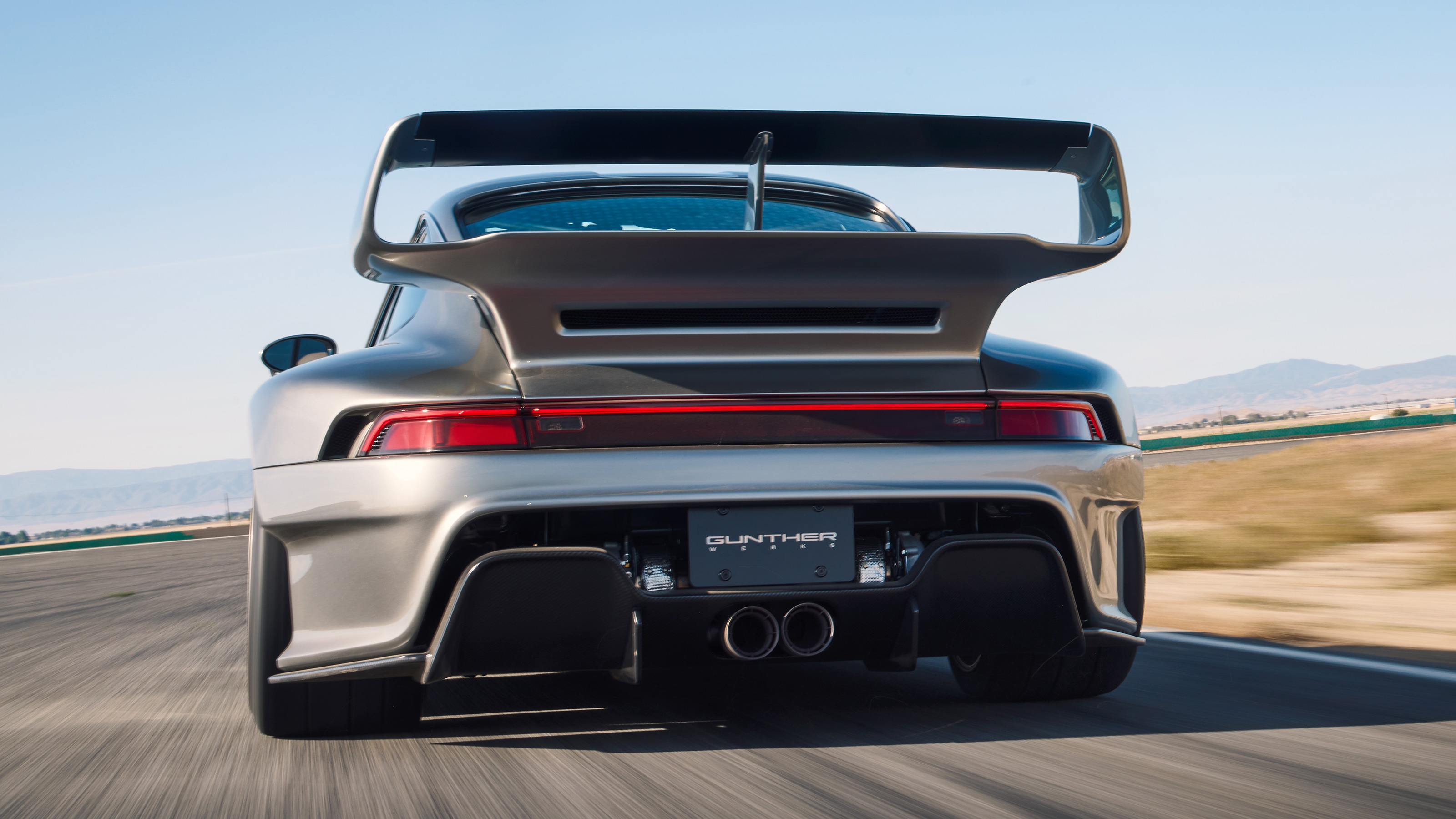
Correct. There is a proviso on that which I’ll come on to, but the basics are rather staggering. This is a 4.0-litre flat six that is still air-cooled and only has two valves per cylinder, yet thanks to a beefy pair of Garrett turbochargers that you glimpse through the rear valance, it develops 1,067bhp at 7,600rpm and 750lb ft at 5,600rpm.
The italics may seem like overkill, but think about it for a second – this is an original Mezger engine with none of the tech trickery Singer has applied to the DLS Turbo (more on that car later as well) and yet it produces more power than Ferrari’s 849 Testarossa or the Lamborghini Revuelto. Both of which also employ hybrid electric motors to help give them a boost.
And then learn that Gunther Werks offers the F-26 with a five-year, 100,000 mile warranty. That is perhaps the most remarkable thing about the whole car.
That power is developed on E85 fuel. On regular high octane pump fuel it’s about 880bhp. A mere 880bhp. In a car that weighs about 1,350kg.
Gunther Werks hasn’t attached hard numbers to it, because on paper they won’t be very impressive. That’s because all that power is fed to the rear wheels alone via a six-speed manual gearbox.
However, keep an eye out for the film we made on it. Hopefully you think it’s all worth a watch, but don’t dare miss the drag race section where I pitch it against Porsche’s own GT3 RS. Which, in some clips, appears to have slammed the brakes on.
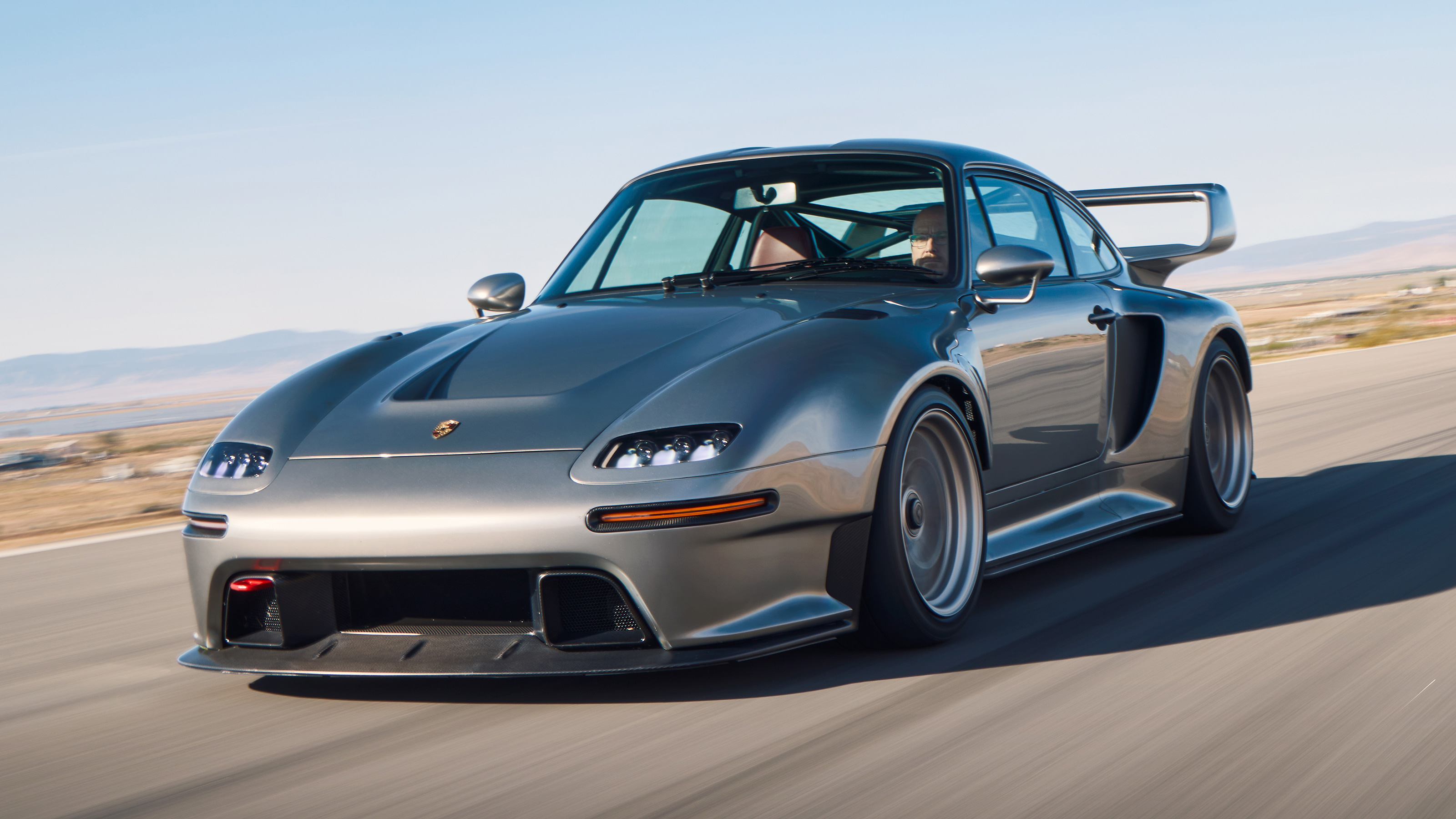
The F-26 is one of the most explosively fast cars I’ve ever driven. It consumes gears as fast as you can throw them at it, each lunge at the horizon feeling like freefall, accompanied by this frantic flat six gnash and intense turbo fizz. Remember the old 935 racers from the 70s? This accelerates like you imagine those to.
Interesting you should ask this now, so let’s follow a train of thought. Singer bestrides the world of restored and modified Porsches like a colossus. Everyone else lives in its shadow – and where Porsche restomods are concerned that is a long list.
So the superficial assumption is you only have one of the others if you can’t afford/can’t wait for one of Singer’s reimagined 911s, and that you are therefore getting something inferior. That’s the assumption at least. And it’s very wrong.
The F-26 is a fundamentally different car to Singer’s DLS Turbo. Not worse, not better, just different. It’s more hardcore – I could imagine road-tripping a DLS Turbo, the Gunther Werks would be exhausting. This is a car with a much more direct motorsport link than the Singer. The suspension is rose-jointed rather than rubber bushed, it’s raw and angry and downright bloody thrilling.
Get all the latest news, reviews and exclusives, direct to your inbox.
Nailed it. I went in with moderate expectations, wasn’t sure how much development the car would have had, didn’t know where it was being aimed. But it turns out Gunther Werks really knows what it is about where dynamics are concerned.
All Gunther Werks cars are, since the firm first emerged back in 2017. It assembles around 20 cars a year at its HQ in Huntington Beach, California, and starts by stripping the car down to a bare shell. For the F-26, of which only 26 are being produced, enough strengthening is added to boost rigidity by 250 per cent. You need that when power is basically being quadrupled.
The front sub-frame is entirely new and, like the DLS Turbo, Gunther Werks has developed its own double wishbone front suspension. The brakes are Brembo’s finest CCMR carbon ceramics, the wheels are magnesium and done in-house, it has motorsport-derived ABS and traction control. Not once do I think of asking if it can be turned off…
This is a car with a much more direct motorsport link than the Singer… it’s raw and angry and downright bloody thrilling
The rear axle has been moved backwards 30mm to help improve weight distribution (but that’s still 39:61), and lots of weight has been removed to offset the extra strengthening that’s been inserted. The body is entirely carbon, as are the doors, including the base structure, which means each is 20kg lighter than an original. The new wiring harness has saved 30kg.
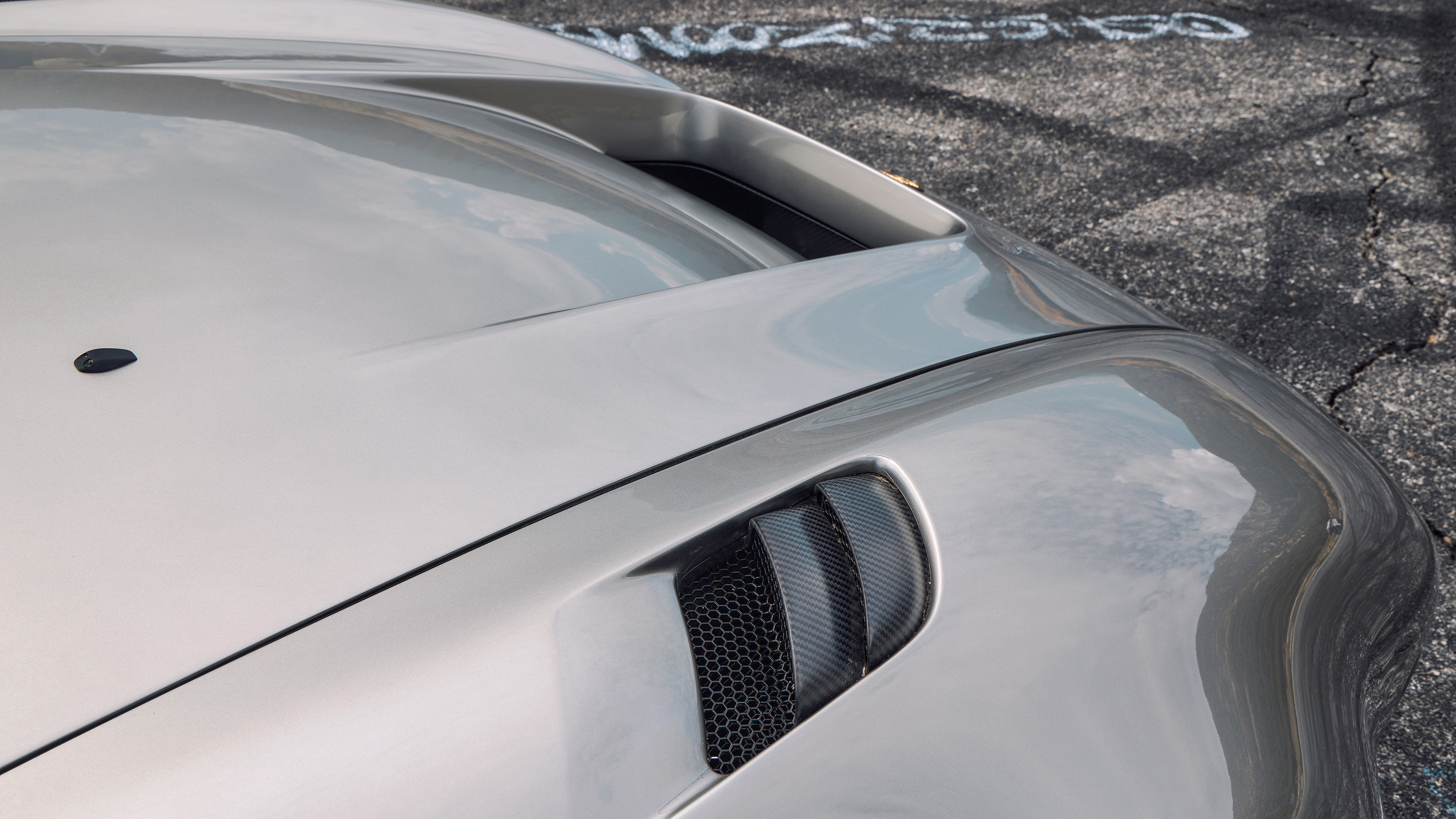
Meanwhile the engine modifications are the work of Porsche specialist engine tuner Rothsport Racing. The block is original. Almost nothing else is. It revs to 8,000rpm, sounds fabulously harsh and angry and the only water-cooling on the car is for the intercooler air. Cooling air for the flat six is pulled in through the engine cover, the fan blowing vertically down through a carbon shroud to maximise efficiency. Engine air is pulled in from the wheelarch inlets, the tracts as straight as possible to ram air into the turbos.
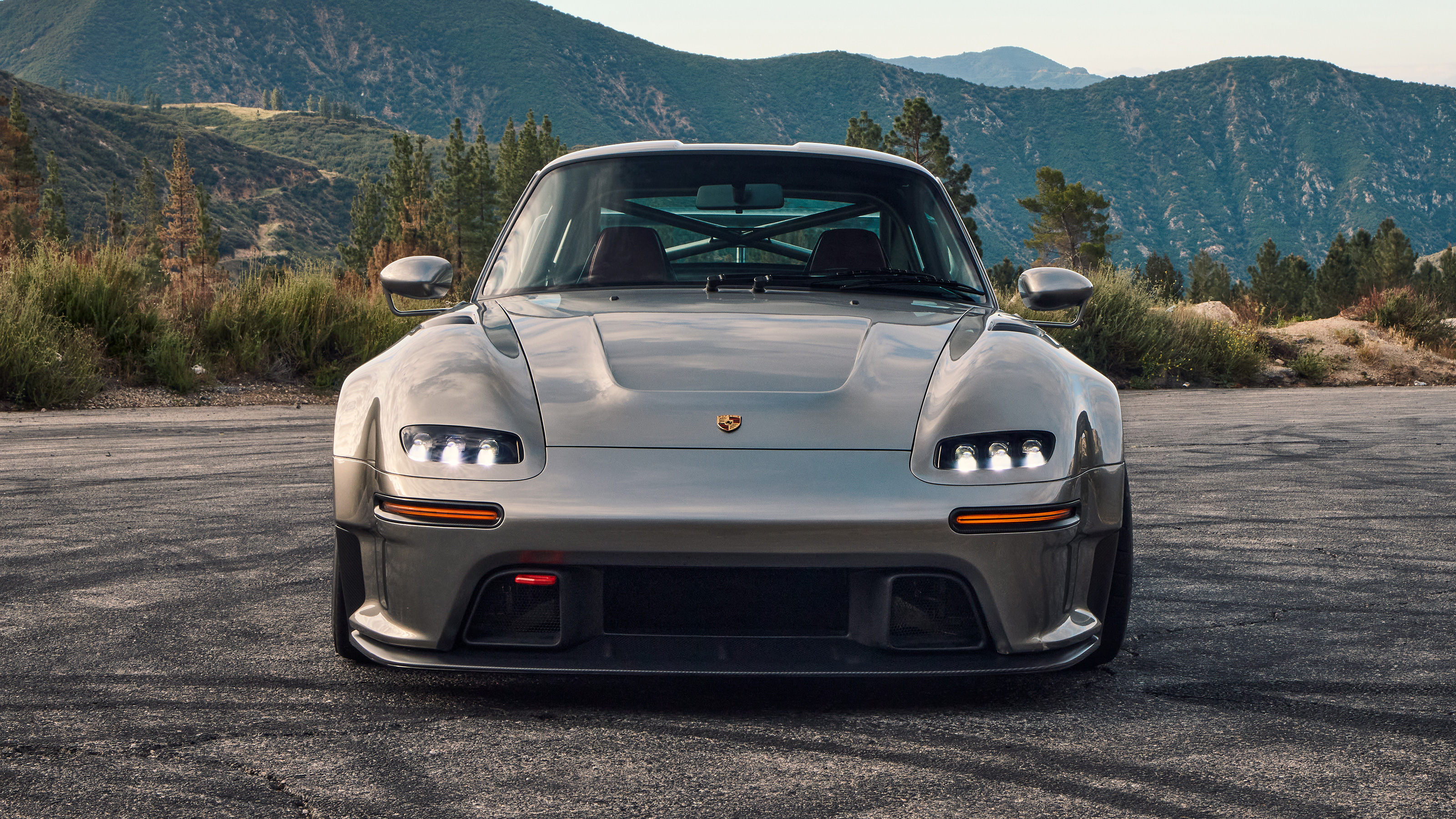
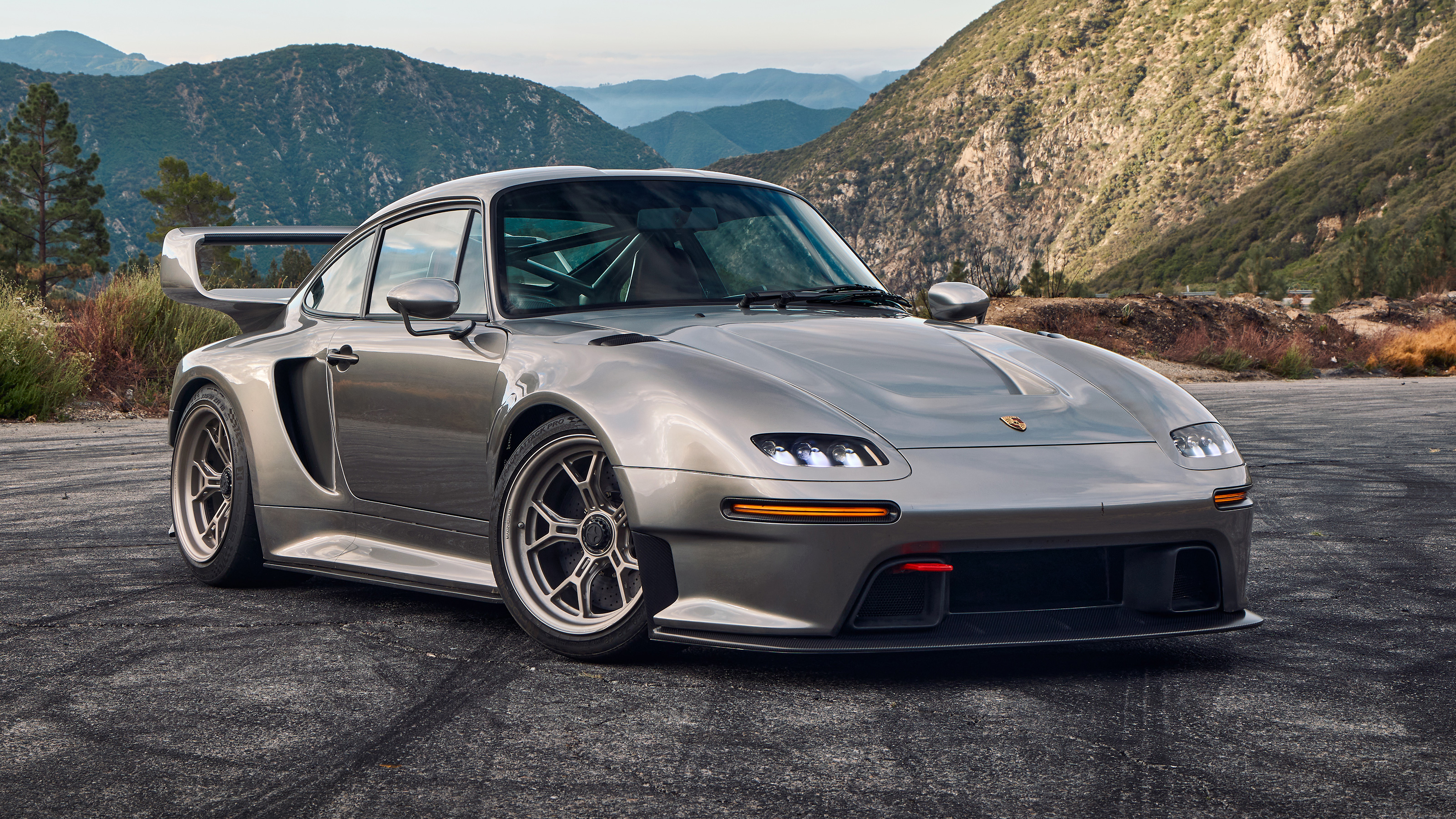
Everything pales alongside Singer’s stunning design finesse and creative detailing. Here, think purposeful rather than beautiful. Very motorsport inspired with those cutaway wheel arches, vents and wings. I like it, but it’s interpretive of an old slantnose, rather than deliberately retro.
And it’s the same inside – Gunther Werks doesn’t go to the same lengths and depths as it’s neighbours up in Torrance. The window and mirror switches are carried over and look slightly out of place, overall it doesn’t have complete design cohesion.
But the basics are good. Although they could do with more under thigh support, the seats are way more comfortable than they look and have magnetically removable headrests so you have more helmet clearance on track. The brake pedal looks like it’s too far up the footwell, but is perfect for heel and toeing. And the wooden-topped gear lever is lovely to hold and moves around the gate far more easily and satisfyingly than you’d expect for a transmission coping with this much torque. And I like the fact the exposed linkage hasn’t been prettified.
It has weight, that’s for sure, but it engages smoothly and easily, you don’t have to fear stalling. And the engine is tractable low down. The F-26 will potter about, but the rose-jointed suspension will also feel its way into every bump and dip. It’ll do so smoothly, because the damping is good, but this is a car that wants to tell you everything about the road surface. And at low speed it gets distracted because it’s not that interested.
But as it gets faster, it gets better. It still hunts cambers, but does so gently, doesn’t tug at the wheel, and actually flows really well on challenging roads. Provided you can resist full throttle. Use third and fourth and surf the torque between 3,500rpm and 5,500rpm and you’ve got all the performance you could ever need, this bottomless boost to jet you between corners.
You know there’s more there, but be careful about exploiting it. Modern supercars are so efficient, so stable, their power deliveries are so linear, that they’re incredibly accessible. They do speed with ease. This is not like that. It’s busy and active, it moves around, makes noises, communicates constantly. And if you want to use all the F-26 can give you’ll want warm tyres, a straight road and third gear. Because this will punch you back into the seat.
‘Everyone’s got a plan until they get punched in the face’, isn’t that what Tyson said? It’s the same here. This is performance that makes you forget what to do, or what comes next. The onslaught is so intense, the furious howl of noise, the spooling thrust, the crescendo of it all as it homes in on 8,000rpm, that you get carried away to another place. It’s just as well the limiter is there to call a halt to proceedings, because the dribbling mess that passes for a brain will have forgotten to lift-off.
‘Everyone’s got a plan until they get punched in the face’, isn’t that what Tyson said? It’s the same here
So you do it again. Obviously. And again. Soon the fuel tank is dry. So you fill it up and go again. It’s utterly addictive, the way the boost builds and builds, the flat six’s deep, dry chunter, the impact as this little light car is hurled down the road with improbable violence, scenery whipping through the upright windscreen.
It doesn’t understeer. At all. Gunther Werks has set it up more like a race car, with a narrow but very communicative balance window. The steering is accurate and has good feel – no slop there, so you have confidence turning in. It’s not the most adjustable on the throttle through corners, but that’s fine – if it behaved on lift-off like an old 911, I’d be worried.
Instead the rear axle is obedient, well supported and provides massive mechanical grip. And the tyres – super-sticky, largely tread-free Hoosiers in this case – can cope. Be glad about that weight distribution imbalance pressing the rear end down. The motorsport-style traction control will prevent it doing anything too scary and when it does break away, it’s more progressive than I expected. But still everything about the car tells you not to take liberties with it.
After five or six laps of Willow Springs I needed a break though. The heavy steering had made my wrists ache and at high speeds – easily over 160mph on the shortish main straight – the air pressure was causing the door seals to pop a fraction, resulting in wind roar in the cabin.
Well, loud, mainly. But elements like this and the speedo being a big fat fibber at high speeds (it was indicating 185mph on the main straight…), and the remaining original switchgear actually serve to remind you this is an old 911 being taken to wild new extremes.
This is a deeply, wonderfully thrilling machine to drive. Just treat it with respect
And I love it. Hadn’t expected to. Had expected they would have got it to make the power then made the rest cope, but actually this is a driveable, well set-up car. But it’s also proper old-school. The vibe Gunther Werks was aiming for was road-going 935 racer. You can argue whether you think they’ve been successful with the bodywork and cabin, but with the powertrain and chassis they absolutely have. This is a deeply, wonderfully thrilling machine to drive. Just treat it with respect.
As ever, money at this level is entirely meaningless. The F-26 is half as much as a DLS Turbo, but it’s still two or three times a Revuelto. $1.57 million or £1.16 million. Attaching value is impossible, all that matters is that demand outstrips supply to keep residuals high, so the wealthy buyers don’t look like they got a bad deal.
This is a challenging car for that audience. Many of the 26, I suspect, will be bought, driven once, found deeply intimidating and then parked in an air conditioned facility to appreciate like wine. Pity those caged tigers. That’s a fate they don’t deserve.
Photography: Greg Pajo
Get all the latest news, reviews and exclusives, direct to your inbox.
