

12
Times are a-changing… here's a selection of tech-heavy motors that might just reframe our automotive future
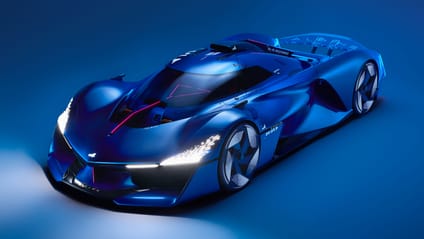
Alpine’s Alpenglow concept is a testbed for a hydrogen powered racecar, with tech that could then trickle down into its road cars too. We first got wind of it a few years back at the 2022 Paris Motor Show, before a fully functional version – called the Hy4 – was unveiled at the 2024 6 Hours of Spa, complete with 335bhp 2.0-litre powertrain. Alpine then proved its commitment with the Hy6, complete with a 730bhp 3.5-litre V6.
It’s noticeable for using a traditional combustion engine instead of more commonly used hydrogen fuel cells. But because hydrogen burns differently to petrol/air, you can’t just substitute the stuff. Instead the Alpenglow gets three 2.1kg hydrogen tanks, plus a pre-ignition chamber, which reduces the pressure to a useable safe level. A lot of palaver, but if they can make this thing work, it could be a gamechanger making use of existing engine tech and fuel station infrastructure with a much cleaner burning fuel.
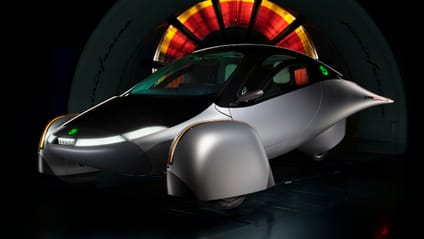
An electric car with 1,000 miles of range per cycle that you never needed to plug in to recharge was the bold – OK, slightly inflated – claim when we first saw this thing back in 2019. The solar-powered Aptera comes from Aptera Motors, and at the start of 2025 the Californian startup revealed the final ‘production-intent’ version.
Aptera has dialled back on those early claims, and now quotes a realistic 400 miles of range from a single charge, with up to 40 miles ‘extra’ per day via the solar panels. That’s in sunnier climes anyway, where a solar powered car makes perfect sense. Back in Blighty slightly less so, but remember, the average daily commute is under half that.
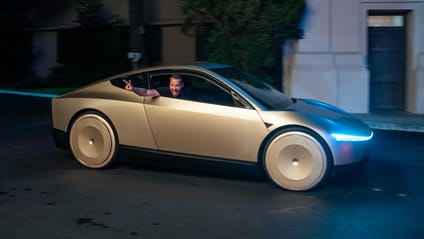
It’s been a long time coming, but Elon Musk’s autonomous Cybercab/Robotaxi arrived to much fanfare. At least, for the lucky few who got to try it – including our own Jack Rix – because mainstream it isn’t… just yet.
Musk promised it would be in full production by 2026, but that deadline’s here and while driverless Model Ys are tooling around Texas, there’s no sign of the wheelless wonders. The idea isn’t too far-fetched – we’ve already become used to Waymo’s fleet of driverless Jaguar I-Paces in various US cities, and Uber is set to start trialling autonomous taxis in London from next year.
But the Robotaxi is something different – a purpose-built autonomous pod, so it gets no steering wheel or pedals, just two seats, a massive 21in screen in the middle of the dash, two cupholders and butterfly doors. Avoiding small talk on the way home from the pub could soon be much easier.
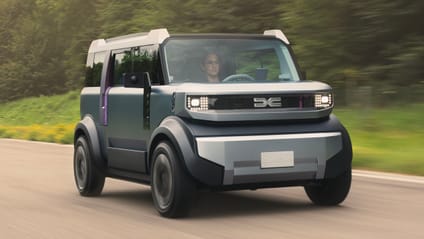
Hold on though – cars have been growing in size for as long as we can remember, and with it the congestion on our city streets too. Many cities are already fully pedestrianising streets. So is it time we reinvented the wheel? Already we’ve seen the Citroen Ami and Fiat Topolino siblings, and the reinvention of the Microlino and Renault Twizy (see the Mobilize Duo).
But Dacia says they’re all still too expensive to be a mass mobility solution, which leads us to this, the Hipster. It measures 3m long and 1.5m wide, has room for four adults inside, is designed to be as simple as possible and, says Dacia, offers enough range for daily journeys and hypothetically would only need to be recharged twice a week.
Lexus, too, has had a similar train of thought, but went one step further with its Micro LS Concept. A single-seat self-driving three wheeled pod, it’s designed for short inner city journeys only, and gets a cabin complete with a reclining chair, bespoke glassware, and floors and walls finished in bamboo. Either way, our city streets could soon look very different.
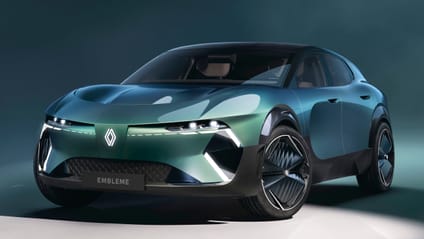
The automotive industry as a whole is being forced to think radically in its combined efforts to achieve net zero carbon emissions, and the Renault Group is one of those leading the cut. Stick with us here, because we’re about to get real nerdy.
The carmaker says that a petrol-engined Captur emits 49 tonnes of CO2 throughout its whole lifetime. That’s taking into account material extraction and component production, vehicle assembly, transport, use, maintenance and recycling. It’s already halved that with the all-electric Megane E-Tech, which produces 24 tonnes of CO2 over 200,000km.
With the Emblème though, it’s targeting just five tonnes of CO2 – or 90 per cent less in layman’s terms. That’s helped by an electric motor that uses no rare earth materials, a low 0.25 drag coefficient, and chopping out every extra kilogram it can.
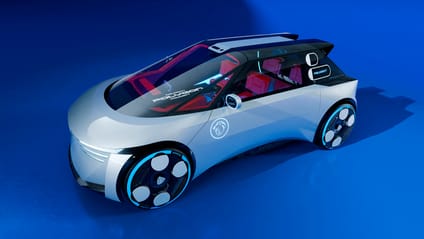
Meet the Peugeot Polygon concept. It likely previews the next generation 208, though the real life thing will no doubt be toned down considerably. But the most notable thing about it is its ‘Hypersquare’ steering wheel – which you’re going to be hearing a lot more about.
That’s because it gets steer-by-wire tech, which replaces the traditional mechanical link between a car’s steering wheel and its wheels with an electronic system. Because it’s disconnected directly from the wheels, the steering ratio can be changed for different scenarios – around town and on the motorway, for example. And it is the future.
If only because in our autonomous future, there’ll be no need for a steering wheel, or a steering column for that matter. See the Robotaxi above. The Tesla Cybertruck already gets it, Peugeot promises it’ll be in a production car by 2027. Others will follow.
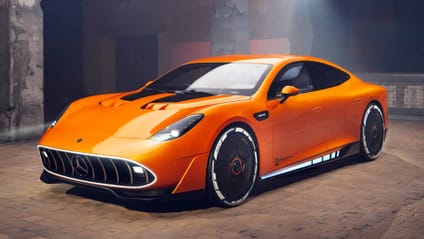
Mercedes has long been a ringleader when it comes to range and charging times in our new electric era, but the GT XX concept takes things to a whole new level. Already, the 1,340bhp tri-motor hypercar has set a new distance record of 3,404 miles over a 24-hour period completing a total of 1,317 laps around Nardò’s high speed test track in the process. But more pertinent to you and us is the charging speeds it’s capable of.
That’s because in testing it recorded an astonishing 1,041kW maximum charging speed, averaging out at around 850kW – that’s 250 miles of range in five minutes. Sure, charging points capable of those speeds are currently non-existent, but Mercedes has partnered with Alpitronic, a specialist in high power charging, to devise the next-gen infrastructure. Already it has developed a prototype that can handle that amount of energy using a standard CCS cable. This could truly level the playing field when it comes to refuelling a petrol car.
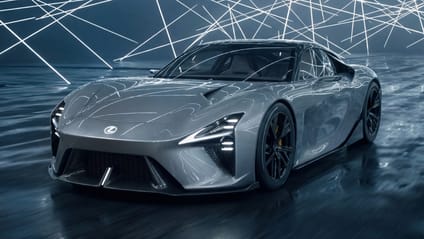
Solid state batteries have been five years away for as long as we can remember, but Toyota (amongst others) is working flat out to prove otherwise. It’s already revealed a prototype solid state battery pack capable of up to 745 miles of range, and at the Tokyo Motor Show it doubled down on its promise to have a car in production with a solid state battery at the latest by 2028.
Toyota says solid state batteries have the potential to produce double the power, three times the range and four times the lifespan of a conventional battery. So chances are it isn’t going to show it off by shoving it into its new Corolla – our money’s on the tech appearing in something big, fast, expensive and with a Lexus badge on the nose. LFA, anyone?
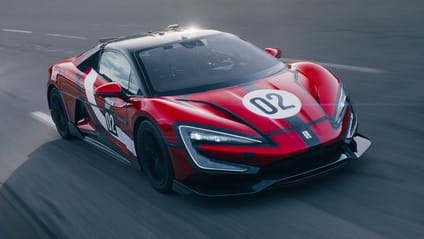
If the Mercedes-AMG GT XX is showing what’s possible when it comes to long speed distance and recharging records, the Yangwang U9 Xtreme is leading the way when it comes to performance in our new electric era. Earlier this year, it hit 308.4mph, dethroning the Bugatti Chiron Super Sport 300+ (304.8mph) after six years to become the fastest road legal car – electric or otherwise – on the planet.
Perhaps most astonishing of all though is that the computer data afterwards revealed the car had more to give. Already the numbers behind the U9 Xtreme are hard for our tiny brains to understand: 2,978bhp from four electric motors, each of which can spin at up to 30,000rpm, a power to weight ratio of 1,217bhp per tonne, the first production car with a 1,200V ultra high voltage platform. What comes next is anyone’s guess.
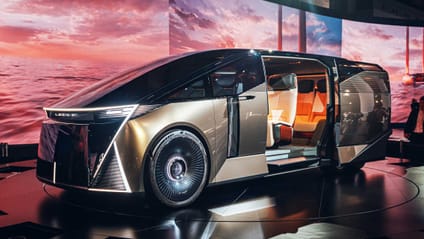
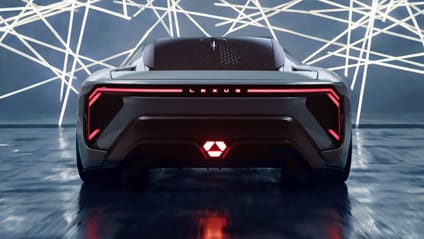
The MPV is making something of a comeback in our brave new electric era – already we’ve seen the VW ID.Buzz, the Kia PV5 looks set to be a big hit, and there’s soon set to be an influx from China too. But the one that’s really caught our eye is this, the Lexus LS Concept.
See, Lexus reckons that luxury saloons are fighting a losing battle against SUVs (fair point) so didn’t see much point in replacing the old LS like for like. Instead, its new LS – short for Luxury Space – is a luxury minivan with six wheels. Because why the hell not?
It’s not autonomous, but it is designed to be best enjoyed from the rear. So it majors on space, comfort and privacy. There’s huge sliding side doors. Lounge-like mood lighting. Slatted bamboo screens. Who needs a Range Rover when you could have one of these?
Get all the latest news, reviews and exclusives, direct to your inbox.