

47
China is now a world leader when it comes to in-car tech: here are the ones that have wowed us the most
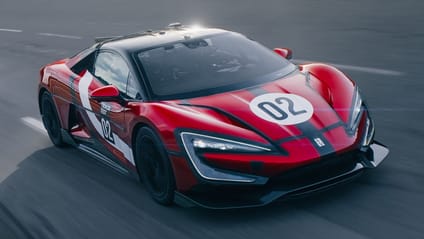
In 2,978bhp(!) Xtreme form, the electric Yangwang U9 supercar has been making headlines for going incredibly fast in a straight line (308mph) and also around the Nürburgring (6min 59s), but that’s far from its only party trick.
The U9 has parent company BYD’s DiSus-X suspension, an active hydraulic system that allows it to do small jumps on command. BYD pitches this as a way of avoiding potholes, which means that if the U9 ever comes to Britain, it’s likely to spend at least 50 per cent of its time airborne.
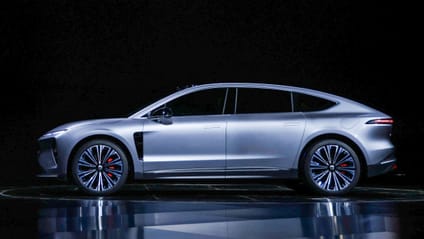
Yangwang isn’t the only company bringing a very fancy active suspension to the table, mind you, and the ClearMotion system used by the Nio ET9 might have some more practical real-world uses.
It too is a hydraulic system which, among other abilities, keeps the body almost spookily smooth and level when the car is travelling over bumps, and even rock the car from side to side when stationary to clear off things like snow or leaves. Or really annoy anyone that’s sat inside it.
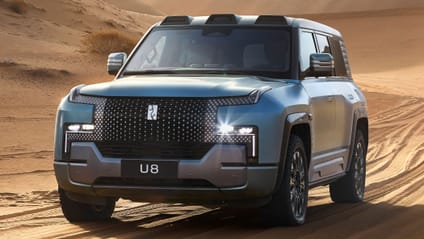
The Yangwang brand seems to be a testbed for some of BYD’s flashiest tech as much as anything else, as also proven by its massive U8 SUV, a car you might have seen a bit of when a few were brought over for British journalists to have a play with a couple of years ago. Among its party tricks are the ability to do a 360-degree on the spot ‘tank turn’, and the capability to float for short amounts of time (and unlike the Tesla Cybertruck, we’ve actually got proper proof it can do this).
The tank turns, though, aren’t unique to the Yangwang: the electric Mercedes G-Class can do them too, and in both cases, watching it happen will cause anyone with even a modicum of mechanical sympathy to cringe so hard they might actually phase out of existence.
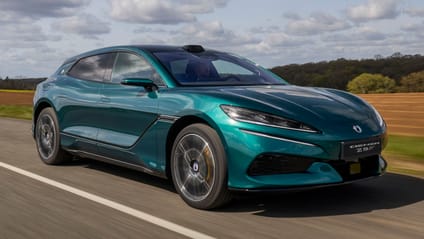
Denza is another posh sub-brand of the BYD mega-corp, and unlike Yangwang, it’s confirmed to be coming to the UK, and soon. One of its offerings, a 1,140bhp electric mega-estate called the Z9 GT, features self-parking tech, which is nothing new in itself, but ups the ante somewhat. If a spot’s too tight for a traditional parallel park, it can go into the space nose-first then use its individual rear-wheel steer system to point both back wheels outwards and drag its bum sideways into the spot like a dog with worms.
Genuinely useful, if once again likely to make you grit your teeth when you think about what it’s doing to your tyre tread. The Z9 GT is also able to ‘crab walk’ its way along the road at a diagonal, which… why?
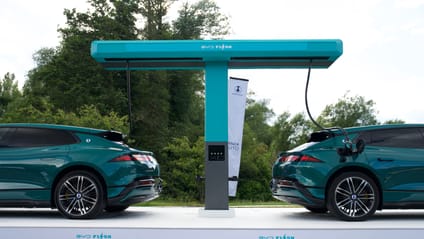
More BYD tech, but this one has the potential to be huge for the whole car industry. The company’s Flash Chargers, of which there’s already a decent network in China and one being rolled out across Europe, use on-site storage batteries to juice up EVs at a rate of up to 1,500kW – over three times quicker than the fastest public chargers currently available in the UK.
This, says the company, can top a battery up from 10 to 97 per cent in as little as nine minutes. They’re not BYD-exclusive, either. Basically any modern EV can use them, although there is of course a catch: the EV itself actually needs to be capable of accepting charge that fast, and so far the only ones that are, are a trio of Denza models.
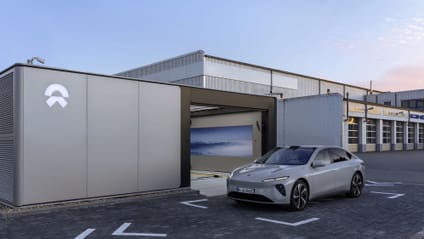
Nio has taken a different approach to the issue of speeding up the EV charging process: simply swap the empty battery for a fully juiced one, like the car’s a giant TV remote or something. Obviously, it’s not as simple as opening a flap and chucking a couple of new AAs in. It’s a fully-automated process that has to be done at dedicated battery-swap stations, although it can take as little as three minutes.
It’s an idea that’s been tried for as long as EVs have been a thing (so almost as long as cars themselves have been a thing, basically), but Nio is the first company to actually roll it out en masse, with a network of swap stations across China and Europe.
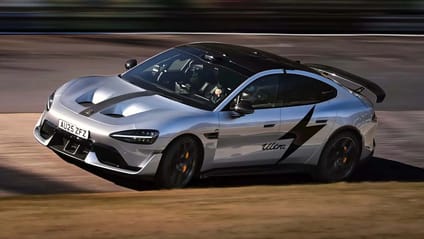
Xiaomi, a name you’re likely familiar with from its exploits around the Nürburgring with the SU7 Ultra EV mega-saloon, has only been building cars for a few years. It started out as a maker of smartphones, and that inevitably means a pretty deep level of car-tech integration. The HyperOS operating system its cars run off can be hooked up to roughly 200 different Xiaomi products, including smart home tech, meaning you can do stuff like pre-heating your house from your car. Sounds neat, although as with so much fancy car tech, we question how many people will actually use it.
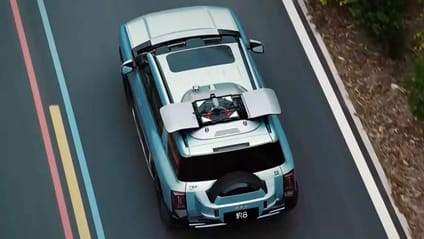
In its home market (where it has the slightly less catchy name of Fang Cheng Bao Bao 8), this chunky PHEV SUV features, as a £1,700-ish optional extra, a roof-mounted docking station for a DJI drone that can follow the car at up to 34mph, automatically return to it from anywhere within a 2km radius, and even take off and land when the car’s moving at up to 16mph.
Impressive, and useful if, for some reason, you want some nice drone footage of your own car driving slowly, but otherwise, feels like another slightly gimmicky ‘because we can’ moment.
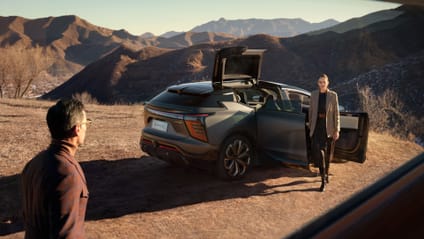
Tesla Model X’s Falcon Wing doors not show-offy enough for you? How about this duo of crossovers from EV upstart HiPhi, which split the rear doors into two parts. The bottom half opens up as a regular frameless door (just like an old Subaru!), while the top half raises up as a tiny gullwing. It all sounds like another gimmick until you look at the admittedly massive entry space this affords rear passengers. It also raises the question of how many doors these cars have. Five? Seven? 3.5? We have no clue.
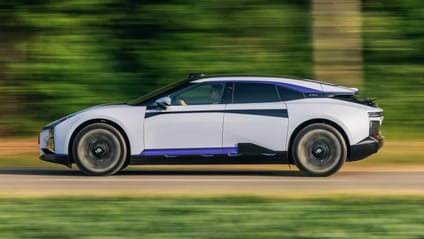
HiPhi’s other model, an insane-looking fastback saloon type thing called the Z, doesn’t quite have as fancy rear doors as its stablemate, although they are rear-hinged, a la Rolls Phantom (or second-gen Vauxhall Meriva). What makes the doors really unique here, though, is the fact that they house LED screens that can display words or patterns. We’re not entirely sure if it’ll allow you to broadcast to middle lane hoggers what you really think of them, or indeed if the Z is still a thing – HiPhi’s parent company filed for bankruptcy in 2024, and the brand’s current status is a bit murky.
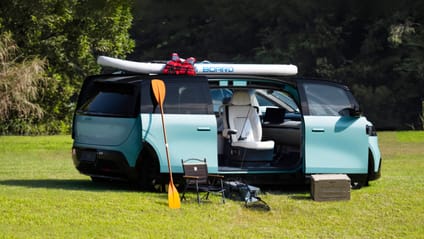
Thankfully, if HiPhi is a thing of the past, there are other Chinese cars that’ll allow you to get your strange door fix. The Zeekr Mix, an electric people carrier, features dual sliding doors on each side that open up from the middle like the doors from an old Star Trek episode. Or, y’know, your local Tesco Express. It’s undoubtedly a useful solution for tight spaces and preventing overzealous children from dinging the car next to them, but does an all-sliding door arrangement give anyone else Peugeot 1007 flashbacks?
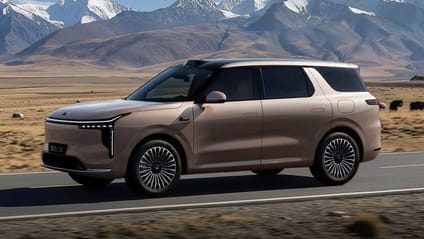
Four-wheel steering has been around for yonks, and variable-ratio steer-by-wire systems are slowly making their way into production EVs, but the IM LS8 range-extender SUV, from a sub-brand of MG’s parent company SAIC, is the first car to combine the two. The lack of physical connection to the steering wheel means the rear wheels can turn at up to 24 degrees, and the result is that this five-metre long SUV has a turning circle of 9.7 metres, matching titchy EVs like the Fiat 500e and Leapmotor T03.
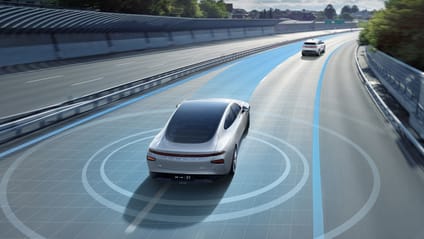
We could pick any of dozens of Chinese EVs (and indeed, those from other countries) to highlight impressive semi-autonomous tech, but we’re highlighting the not (yet) available in Europe XPeng P7+ as one of the most advanced of all. XPeng calls it an AI-defined vehicle, which might make you go ‘bleurgh’, but the result is a system that’s scarily good at piloting its way down a motorway with minimal driver input (where regulations allow, as our legal team will doubtless be keen to remind us to tell you).
And unlike some other sophisticated semi-autonomous tech, it doesn’t use lidar, so there are no unsightly growths on the roof. If you’re already fed up with AI's ever-greater encroachment into our daily lives, steer well clear of this car.
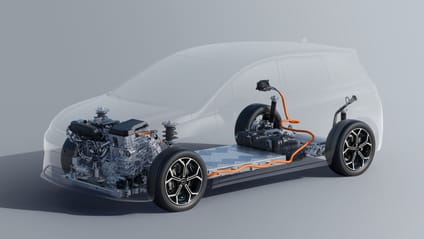
Simple concept, this: mostly, EV battery cells are split up into separate modules, then packaged up in one bigger battery pack, but this has efficiency and packaging limitations. To counteract this, some companies started skipping the modules and mounting the cells directly in the packs, but it’s now being taken further with cell-to-body setups that actually make the battery pack a structural part of the car’s chassis. This brings challenges in crash protection and temperature regulation, but if done properly, is good for energy density, space efficiency and weight saving. BYD was the first company to get there with the Seal saloon, although cell-to-body structures have also been adopted by BMW’s Neue Klasse EVs and the Volvo EX60.
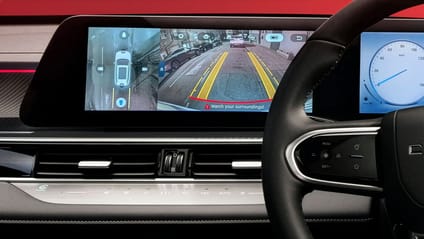
We first came across this concept in some TV ads for the now ubiquitous Chery-owned Jaecoo brand in Britain, and our tiny brains couldn’t really understand it. How could you have more than 360 degrees of vision? Turns out, the extra 180 degrees come from cameras mounted on the underbody, whose views are stitched onto the regular 360-degree feed, so you can get a live view beneath the car too. Very useful if you’re going rock crawling in your Jaecoo 7.

A car you probably won’t be familiar with unless you live in China or the Middle East, the hulking Rox 01 range-extender SUV was actually designed by Pininfarina. But that’s not the thing we’re here to talk about. No, that’d be its kitchen. An optional extra, it includes a swing-down work surface, cooker and tap. Nothing new for campervan owners but, we’re fairly sure, a first in a ‘normal’ car, especially because the cooker’s an induction unit powered by the car’s vehicle-to-load capability, avoiding the need to carry a gas canister around. Which is always a nice bonus.
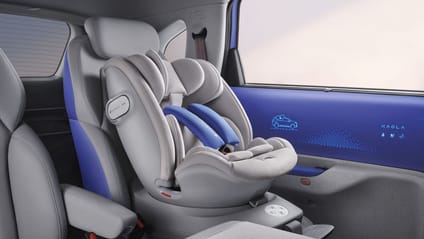
The Arcfox Kaola is aimed specifically at families with small children. So specifically, in fact, that it features an integrated baby seat. Said baby seat contains temperature sensors, which can detect when its occupant has suffered from a code brown, and switches on an air extraction system designed to get rid of any resulting stenches from the interior. Look, we had to learn that this feature exists, so you do too. It’s only fair.

As in much of Asia, karaoke is a big deal in China, although it’s apparently more of a private phenomenon for small groups of friends than the public-facing, Japanese-style karaoke we’re used to in the west (which anyone who’s been subjected to a wince-inducing cover of Islands in the Stream may view as a good thing). This approach has spread to cars, with an in-built karaoke machine first appearing back in 2003 in the unfortunately-styled and even more unfortunately-named Geely Beauty Leopard coupe, and there are now dozens of Chinese cars featuring such systems.
None of them have made it to Europe yet, but that’s set to change when the XPeng X9 people carrier arrives here in the coming months. It’s a whole new way of passengers subjecting you to their horrible music taste!
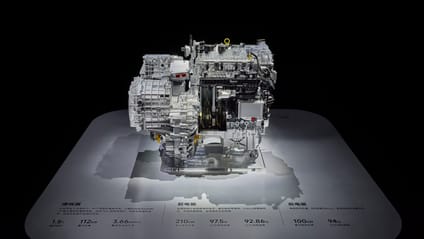
China has embraced the range-extender EV faster and more enthusiastically than much of the rest of the world, although TG still stakes its claim as innovators here with the Hammerhead Eagle i-Thrust back in 2009. We’ll admit, though, that things have moved on a tiny bit since then. While the i-Thrust could just about squeeze out 25 miles of range before you were out of both fuel and electricity, the latest generation of Chinese EREVs can manage a bit more. The official figures for the Xiaomi Skynomad N70 Max, for instance, say it can do 908 miles before you need to refuel or recharge. Then again, that’s on China’s more generous CLTC test cycle – stick it on Europe’s WLTP test and that figure will probably wind up closer to the i-Thrust. A bit.
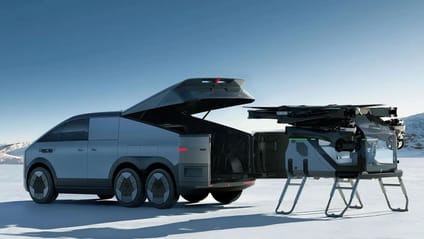
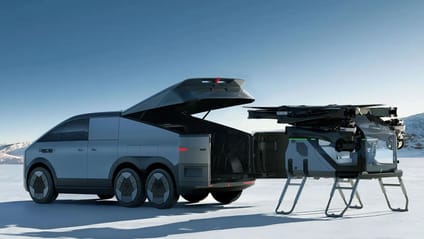
What you’re looking at here is a six-wheeled range-extender van-stroke-pickup truck whose rear section doubles up as a docking station for a two-person electric VTOL aircraft – basically, a halfway house between a drone and a full-on helicopter. ‘Great’, you may be thinking. ‘That’ll look good on a motor show stand, but it’s never going to be made, is it?’
Wrong, or so we’re told by XPeng, who earlier this year confirmed they had upwards of 7,000 orders for the aptly-named Land Aircraft Carrier and that it’ll supposedly start delivering them to customers in China by the end of 2026. Is there even a regulatory framework in place for such a thing? What do we look like, the Civil Aviation Authority?
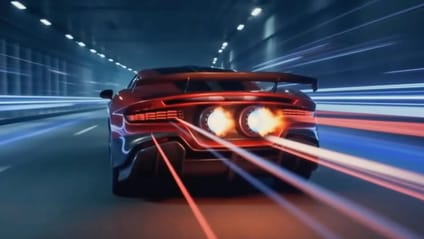
This comes with the world’s biggest asterisk next to it, because the Dreame Nebula Next 01 Jet Edition to give it its full title, is very much just a concept, and its manufacturer (who mostly makes vacuum cleaners) says that “the final production version is subject to the actual product". Yes. Anyway, said product is a 1,900bhp four-door electric hypercar complete with a pair of solid rocket boosters stuffed up its behind for a 0-62mph time of 0.9 seconds.
If this sounds familiar, it might be because of Elon Musk’s 2024 claim that the new Tesla Roadster, a car that’s been just around the corner for nine years now, would be available with a similar feature. Dreame has at least shown us a picture of what its car might look like, but as for either car actually making it to production with actual rockets on board… Yeah, we’ll believe it when we see it.
Get all the latest news, reviews and exclusives, direct to your inbox.