47
Scared of too much electricity? Here's a bunch of hybrids with slightly less

The eighth-generation 5 Series is available in two plug-in hybrid guises, either the 530e or the 550e xDrive. The former gets a 2.0-litre turbo four-cylinder and the latter a 3.0-litre turbo six-cylinder, but both are connected to an electric motor and a 19.4kWh battery, good for up to 64 miles and 55 miles of range respectively, or slightly less in the estate variant (the one you really want).

Mercedes offers its mid-size GLE as a plug-in hybrid in three guises: the 350de, 400e and AMG GLE 53 Hybrid. Maximum e-range is 64 miles, but worth noting that it only comes with five seats (as opposed to the optional seven elsewhere in the GLE range) due to the battery’s position below the boot floor. How often are you really carrying people back there anyway?
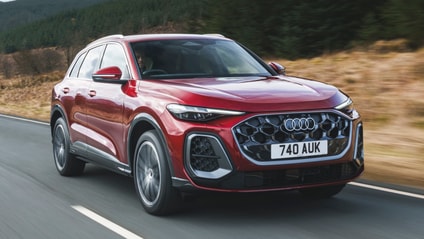
The first of several Audis you’re about to see on this list, the latest Audi Q5 comes in SUV and Sportback guise. The e-hybrid blends a 2.0-litre turbocharged four-cylinder petrol engine producing 248bhp with an electric motor and 25.9kWh battery and an e-range of up to 65 miles. All versions also get quattro all-wheel drive as standard.

Renault's Rafale E-Tech PHEV 300 combines a 1.2-litre three-cylinder petrol engine with three electric motors (one at the front, one at the rear, plus a gearbox integrated starter generator) with a 22kWh battery for a combined output of 296bhp and a claimed electric range of up to 65 miles. Renault reckons on combined fuel consumption of 403.5mpg (!) in hybrid mode or 48.7mpg even when the battery is flat – as ever, if you're running a PHEV, best to keep the battery as topped up as possible.

The BMW X5 received a mid-life facelift in early 2023, but it was the updates under the skin that caught our eye – specifically those to the xDrive50e plug-in hybrid. The 3.0-litre twin-turbo straight six and electric motor now output an extra 95bhp and 74lb ft over the outgoing model, while the 25.7kWh battery is almost 25 per cent bigger and now has a 7.4kW maximum charging capacity, double what it was previously. That's pretty slow by today's standards, mind...

“The C300e might well be the world’s best PHEV,” TG’s Ollie Kew concluded when Merc’s eco-conscious saloon faced off against its arch-rival the BMW 330e, highlighting the C300e’s impressive 67-mile range. There’s also a C300e estate, which offers up to 66 miles of range and of course a bigger boot, meaning there’s room to bring any four-legged friends along for the ride too.

The sixth-generation E-Class saloon is available in the UK with three powertrains: a 2.0-litre turbo petrol, a 2.0-litre turbo diesel, or a 2.0-litre turbo petrol OR diesel combined with a 127bhp electric motor. Both PHEVs get an identical 25.4kWh battery, good for a claimed 70 miles of electric-only range, and it comes in estate guise too, though due to the extra weight that car will only manage up to 68 miles of range.

The Mercedes-Benz CLE Coupe replaces the two-door versions of the C-Class and E-Class, and while you only had mild hybrids to choose from at launch, it’s now available with a petrol PHEV powertrain too. It's a privilege the Coupe enjoys over its Cabrio sibling, while Merc also tells us the Coupe can ‘easily’ carry three golf bags in the boot. Handy.

Audi’s A6 saloon and Avant lineup gets a 2.0-litre turbo four pot petrol engine mated to a 141bhp e-motor and 20.7kWh (net) battery, for up to 70 miles (68 in the Avant) of all-electric range. Worth noting, however, that where the standard ICE car gets 492 litres/503 litres of bootspace saloon/Avant, the PHEV only manages 354 litres/404 litres on account of the electric gubbins. Bummer.

The biggest Cupra money can buy, the Terramar gets a 1.5-litre petrol engine connected to an electric motor and useful 25.8kWh battery (19.7kWh useable), meaning a claimed 73 miles of EV range in the lesser-powered version and 72 miles in the sportier one. They're front-wheel drive and will rapid charge at speeds of up to 50kW, allowing for a 10-80 per cent charge in 26 minutes, or you’re looking at two and a half hours on an 11kW home wallbox.
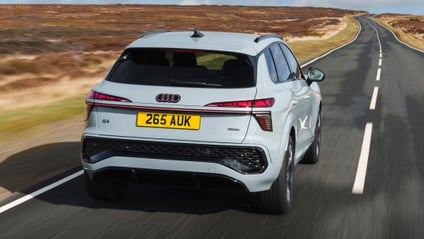
Audi’s mid-sized SUV pairs a 1.5-litre engine with a 114bhp e-motor for a combined 268bhp, plus 73 miles of claimed e-range when its 19.7kWh battery – almost double the capacity of the previous Q3 e-hybrid – is fully topped up. That battery supports 50kW rapid public charging too, meaning a 10-80 per cent juice takes under half an hour. Alternatively if you want to pay more for less, there's the Q3 Sportback e-hybrid...
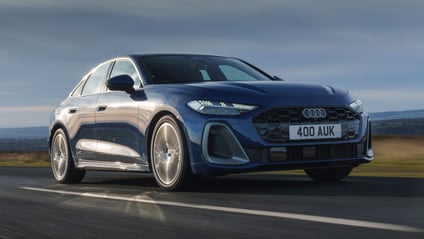
Audi’s latest A5 saloon and Avant gets the same powertrain PHEV powertrain as the A6, meaning a 2.0-litre turbo four-pot petrol engine with an e-motor and a 20.7kWh battery for up to 74 miles (72 in the Avant) of all-electric range. It’s also sleeker, fancier, and the interior is more techy than its predecessor – though depending on how much of a technophobe you are, that might not necessarily be a good thing.
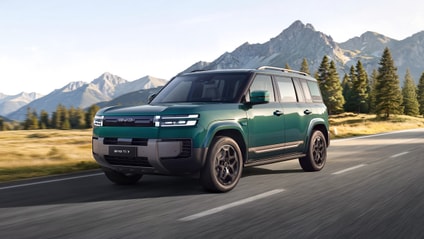
BYD is going after the Land Rover Defender with this boxy seven-seater – and it already has it trumped in the e-range PHEV stakes at least. That’s thanks to a powertrain that pairs a 1.5-litre turbo petrol engine with two electric motors and 35.6kWh battery for an electric range of 74 miles, versus the Defender’s miserly 19.2kWh battery and 27 miles of EV range. It also undercuts the Landie by more than £20k…
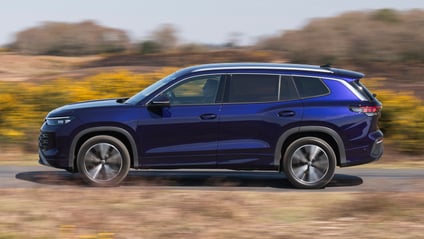
The Tayron essentially replaces the Tiguan Allspace, and is positioned between the Tiguan and Toureg, measuring around 25cm longer than the former, and roughly 10cm shorter than the latter. Brilliant, because another Volkswagen SUV was just what we needed… but we digress. It gets two plug-in hybrid options, both combining a 1.5-litre petrol and e-motor for 201bhp or 268bhp outputs, plus a 19.7kWh battery for up to 75 miles of electric range. Worth noting that in PHEV guise you’re limited to five seats.

The HS is one of MG’s best sellers and underwent a significant glow up in 2024, but that’s only half the story. Available in pure petrol or plug-in hybrid guise, the latter gets a 1.5-litre engine mated to an electric motor and 24.7kWh battery for a combined 303bhp total output and an e-range of up to 75 miles. But this car avoids its predecessor’s pogo-ing effect making it hugely better to drive. Plus, it notably now gets vehicle-to-load (V2L) technology, so you can power your campsite and suchlike using the battery.

Skoda’s second generation Kodiaq also brings with it the Czech firm’s second generation hybrid treatment, promising up to 75 miles of all electric range. It combines a 1.5-litre four-pot turbo engine producing 147bhp with a 114bhp electric motor mounted in the gearbox for 201bhp and 258lb ft torque totals. The 25.7kWh (19.7kWh usable) battery, located under the rear seats, supports up to 50kW charging, meaning a 10-80 per cent juice takes under half an hour. One of the most eminently sensible family cars just got even more sensible.

Looking for something a little… plusher? The fifth-generation Range Rover comes in the same plug-in hybrid guises as the Range Rover Sport, but manages 75 miles of claimed electric range due to its heavier weight and reduced aero efficiency. The 38kWh battery will charge from flat to full in around an hour on a 50kW DC charger, or five hours if you plug it into a 7kW home wallbox. The best luxury car in the world? We spent six months with one to find out.

A fully electric version is set to land soon, but anyone looking to get their electric kicks from the Range Rover Sport will have to make do with a plug-in hybrid for now. There’s two to choose from - the P440e or P510e, both of which get a 3.0-litre six-cylinder petrol engine mated to a 141bhp electric motor and 38kWh battery. Total output is 434 and 503bhp respectively, though the more pertinent figure is the 76 miles of claimed electric range, enough to enable the typical Range Rover owner to complete up to three quarters of trips without waking the engine, Land Rover reckons.

It comes as little surprise that the Tiguan's hybrid setup is identical to the Tayron, compete with 1.5-litre four-cylinder turbo, electric motor and 19.7kWh battery, though its smaller size means you’re looking at a slightly increased all electric range here. Plenty to cover the average 26-mile UK commute either way, and taking advantage of off-peak tariffs that start from under 10p per kWh, you’re looking at around £2 for a full charge. Or completely free if you can charge at work…

Cupra’s first ever standalone model – a hunkered down, low riding SUV – gets the familiar 1.5-litre four-cylinder turbo, electric motor and 19.7kWh battery from elsewhere in the VW group, again in two states of tune. The lesser of the two gets 201bhp and an e-range of up to 77 miles, while the more powerful version makes 268bhp and gets an e-range of up to 72 miles. Otherwise it gets the same raw ingredients as the Seat Ateca (which doesn’t get a PHEV powertrain), but in a more aggressive suit. Perfect for intimidating others at the school gates, in other words.

The Mercedes GLC has solidified its position as the firm’s bestseller in recent years. It comes as a PHEV in either petrol or diesel guise – it's the former (300e) you want if you're after maximum e-range, which features a 2.0-litre petrol engine paired with a 134bhp electric motor and offers up to 78 miles of electric range courtesy of a 31.2kWh battery, with the diesel (300de) only capable of 74 miles. Pah.

The BYD Seal U DM-i is the Chinese carmaker’s SUV version of its Seal flagship saloon (the U stands for Utility, makes sense). It pairs a 1.5-litre 4cyl engine with single or dual electric motors plus 18.3 or 26.6kWh battery capacities. For maximum electric range you want the mid-spec Comfort, which gets you a front-wheel drive Seal U with the bigger battery for up to 78 miles on battery power alone. Indeed, BYD says it'll act as an EV for 90 per cent of the time, with the engine largely acting as a range extender.

Something of a theme here, isn’t there? The next car to feature on this list from the VW Group megacorp, the Passat – which now only comes in estate guise – shares the same 1.5-litre, 147bhp 4cyl turbo engine and 114bhp gearbox-mounted electric motor as many others on this list, and manages 82 miles of electric range in eHybrid trim. More notable however is the 510-litre boot – we like big boots and we cannot lie.

The first of three Volkswagen Group plug-in hybrid family hatchbacks you're about to see, the Seat Leon e-Hybrid outputs 201bhp courtesy of its 1.5-litre 4cyl turbo, electric motor and 19.7kWh battery (nearly double that of its 10.6kWh predecessor) setup. But our money would go on the Leon e-Hybrid estate, which is capable of the same electric range as the hatch. Meanwhile, the sportier-looking Cupra Leon e-Hybrid and Cupra Leon e-Hybrid estate get a WLTP-rated 81 miles and 80 miles of electric running respectively.

The fourth generation Skoda Superb gets a plug-in hybrid powertrain in estate form only. It offers an impressive 84 miles of electric only range (over double the 35-mile range of its predecessor) courtesy of its 19.7kWh battery (up from its predecessor’s 13kWh unit). Boot space is identical to the Passat above, measuring in at an impressive 510 litres (1,770 litres with the rear seats folded), while a 10-80 per cent juice on a 50kW charger takes just over 25 minutes.

The world’s bestselling car in 2025, the RAV4 is now back for its sixth generation, and it has nearly double the electric range of its predecessor. The PHEV comes in two forms, pairing a 2.5-litre four-cylinder petrol engine with either a single motor on the front axle or twin motors for all-wheel drive, plus an identical 20kWh usable battery in both. The former claims up to 85 miles all-electric range, with the latter down around 10 miles on that.
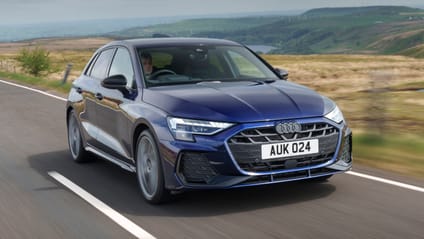
Second on the list of VW Group hatchbacks, the Audi A3 Sportback TFSI e shares the same hybrid system and underpinnings as the Seat Leon above. That means an identical powertrain and near enough the same e-range. Worth noting it now also supports 50kW DC charging, with a 10-80 per cent top-up taking under half an hour, while a full charge on a home wallbox takes around two and a half hours.

It had to be, didn't it? The arrival of the Mk8.5 Golf brought with it a range of updates, including a longer range plug-in hybrid good for up to 89 miles of electric range. That’s in the eHybrid, which gets the same setup as the Leon and A3 mentioned above. Alternatively there’s the sportier GTE, which gets a combined power upgrade to 268bhp but slightly reduced – if still very impressive – 82 miles of e-range.
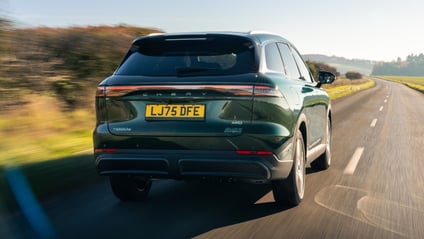
Honestly, it's something of a surprise we've only seen one Chinese car on this list so far. The Tiggo 9 comes from newcomers (on our shores at least) Chery, and it's fairly nondescript other than for it 91 miles of e-range. That's thanks to its 1.5-litre turbo petrol engine, dual e-motors and 34.46kWh battery. It also gets all the kit you could possibly ever want, with prices starting from a smidge over £43k. Tempted?
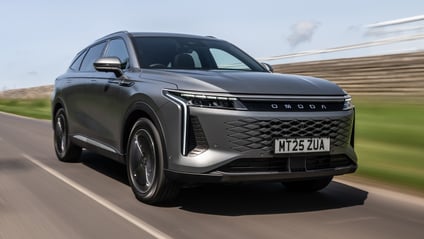
Sitting top of the Chinese crop – for now – is Omoda with its flagship 9 SUV. It gets the same hybrid powertrain setup as the Omoda 9 it sits alongside within the Chery group, only, more pertinently here, it manages a slightly increased 93 miles of electric only range. About the only thing noteworthy it has going for it, mind...
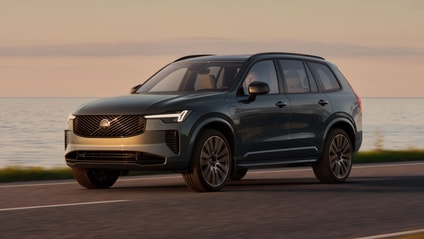
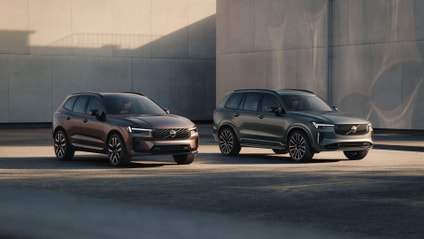
The latest generation of Volvo’s big boy family SUV can travel up to 99 miles on electricity alone, thanks to its new and improved 41.2kWh battery (37.7kWh usable), over double that of its predecessor. Said battery is also mounted into the floor – meaning it still comes with the option of seven seats. Total output is 246bhp thanks to the 175bhp e-motor and 2.0-litre four-cylinder petrol engine. Honestly, who needs more car than this?
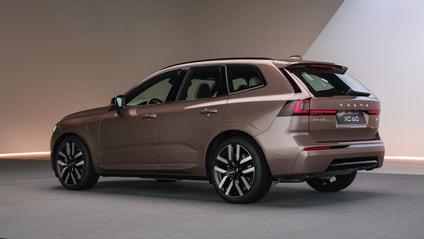
The current plug-in hybrid rangetastic king comes from Volvo, whose new long range plug-in hybrid XC60 – no less than its bestselling model of all time – can travel up to 124 miles on electricity alone. That’s in the 178bhp T6; alternatively you’ve got the choice of the 246bhp T8, which manages a slightly less 117 miles of e-range. Still more than its XC90 sibling in matching spec mind, owing to its 200kg(ish) less kerbweight. Bar, raised.
Get all the latest news, reviews and exclusives, direct to your inbox.