




USA
Top Gear
And the TopGear.com US SUV of the Year is… a 615bhp family-friendly rocket
SUVs are taking over the world - here’s the best one launched in the last 12 months
The Church of the Modern-day SUV is a broad one. No longer does a vehicle require a body-on-frame construction and permanent four-wheel drive to be christened as such. In fact, all you really need is a slightly raised ride height to join the cult… sorry, the club.
That’s not to say that the separate chassis is dead, of course. The popularity of pickups in the US keeps the construction method around and allows for many related SUVs to spawn from the same bones. Look, we’ve got two such examples in our motley crew here.
Advertisement - Page continues below
But first, a quick interlude to explain why we’ve gathered this gang. This is Top Gear’s inaugural US Awards, and with SUVs now accounting for roughly half of new car sales in the States, we felt it essential to give the high riders their own category. All of these cars – whether brand-new or heavily updated – arrived on US roads in the past 12 months or so, and there’s no discrimination based on powertrains here. It’s a straight fight between petrol, hybrid and electric.
Photography: John Wycherley
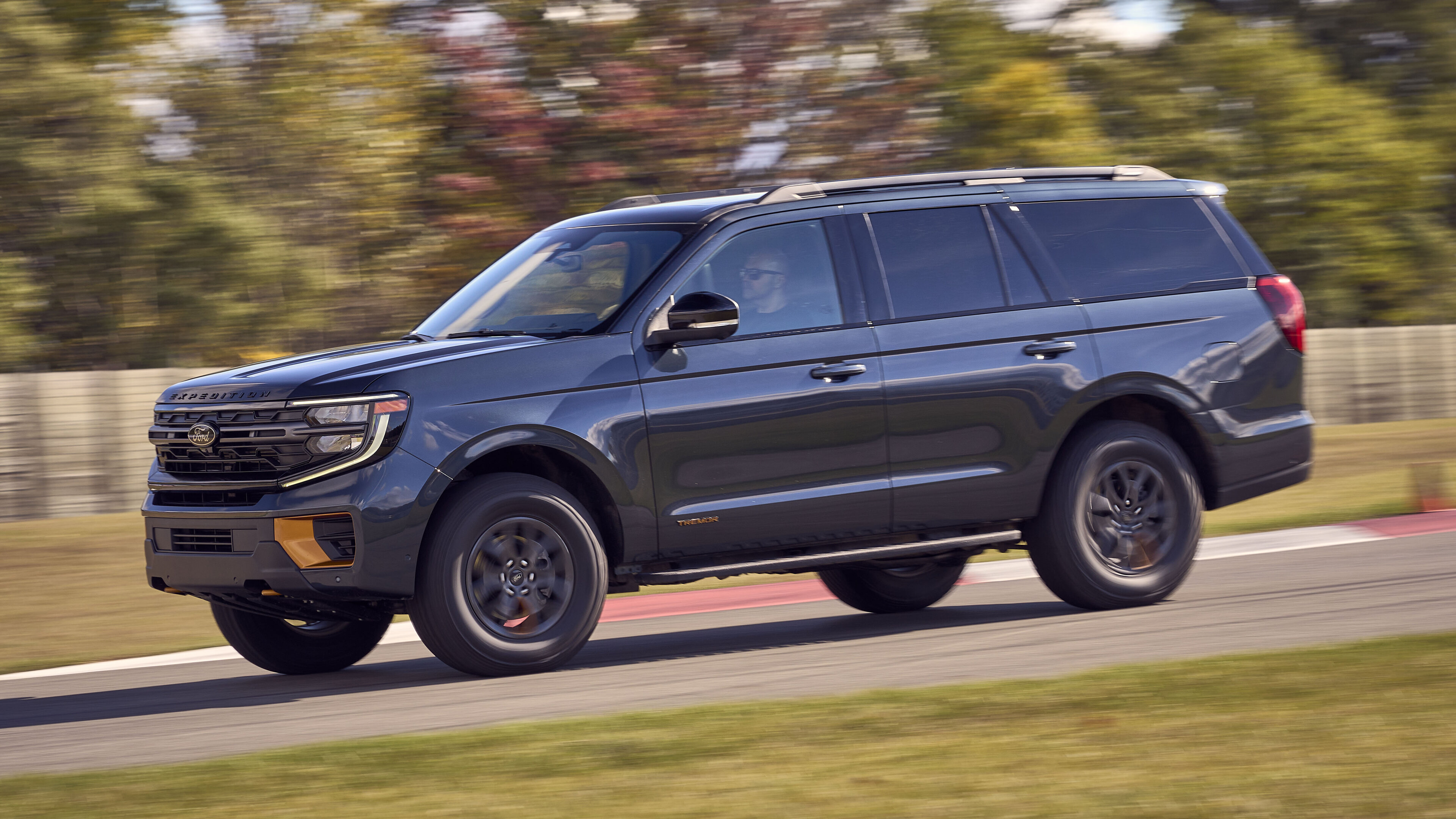
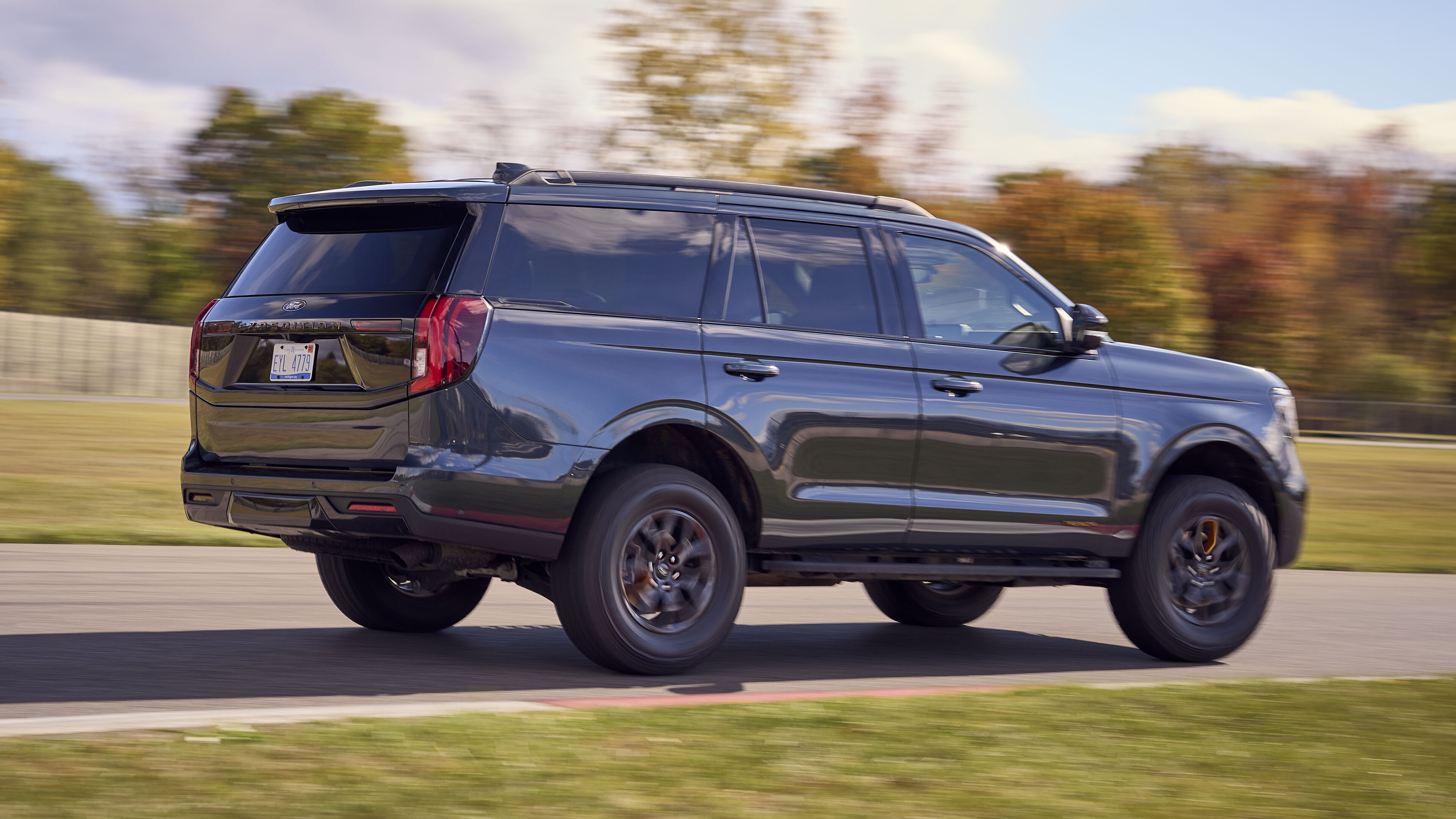
So, back to the body-on-framers. If biggest was best, the Ford Expedition Tremor would have this whole award thing wrapped up already, and the entire TG crew would be able to saddle up for the run back to the airport. Based on the chassis of the F-150, this thing is Ford’s largest SUV in the US. Well, almost, because there’s also an extended Expedition Max that’s very nearly a foot longer than the 17.5ft standard version we have here. Good grief.
Slab-sided and with seating for up to eight, the standard-size Expedition in its new fifth generation form can be had in this off-roady Tremor trim. It adds 33in all-terrain tyres, smaller 18in wheels, an electronic locking rear diff, off-road drive modes and both front and rear skid plates; for when all the family and all their friends want to go exploring. With prices starting at $81,350, the Tremor also includes the higher output 3.5-litre twin-turbo V6 engine connected to a 10spd auto gearbox, so you get 440hp and a very useful 510lb ft of torque. Bear in mind this thing weighs around 5,800lbs (2,630kg) and is able to tow 9,600lbs (4,350kg).
Advertisement - Page continues below
On the road the V6 actually feels surprisingly punchy as it powers the big boat. The 10spd auto is lazy though and slows progress, as does the massive amount of body roll when you get to a corner. The Expedition Tremor is softly sprung and does ride fairly well, but the brake pedal is overly sharp and the steering is unbelievably light. That last point is exacerbated by a ludicrously little squircle steering wheel that’s apparently lifted from the related Lincoln Navigator. Any Europeans here? It’s like driving a double-decker bus with the steering wheel from a current Peugeot 208.
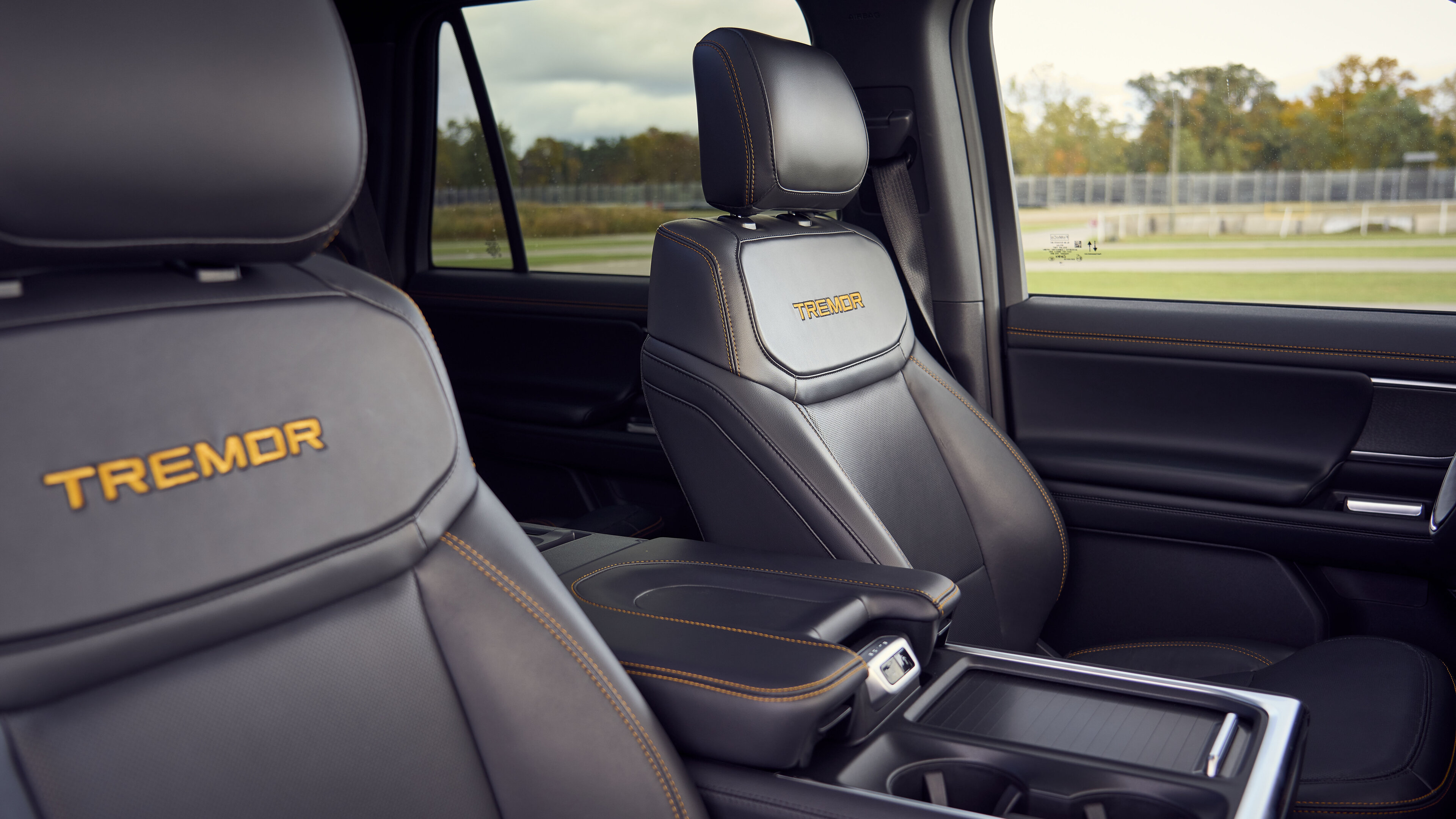
Interestingly, the Expedition doesn’t get the giant 48in panoramic screen from the posher Navigator, but the interior is hugely practical (thankfully, given the size of this thing). Two captain’s chairs are standard in the middle row for the Tremor trim, but you can pay $595 more for the three-seated bench. There’s a giant sliding centre console in the middle and a useful split tailgate out back, but proper physical buttons are lacking.
Looking for more from the USA?
Top Gear
Newsletter
Get all the latest news, reviews and exclusives, direct to your inbox.
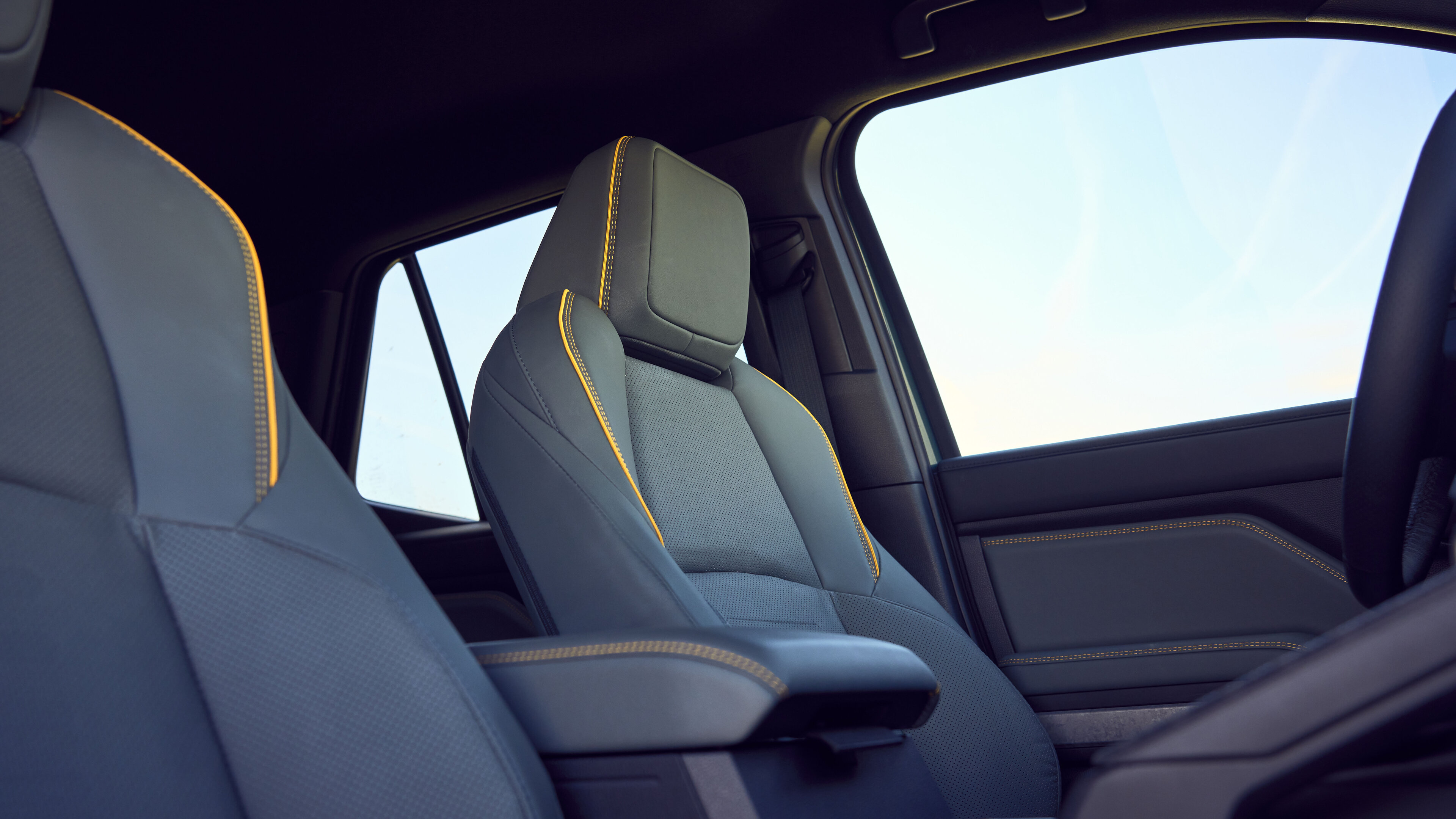
That’s certainly not the case in the other old-school SUV here – the Toyota 4Runner Trailhunter. Its interior is festooned with buttons and dials, with a separate panel for the climate, many media and assist switches on the steering wheel, and plenty of controls for hardcore off-roading on the centre console. There are chunky grab handles everywhere and rugged-looking shapes, although lots of it is made from horribly cheap plastic.
On the outside it looks utterly tremendous. Possibly even better than the Land Cruiser? That might be sacrilege. Anyway, this Trailhunter spec is also the one that’s designed to go on an adventure, so much like the Ford you get 33in all-terrain tyres and 18in alloys, although Toyota paints the stocky wheels bronze as standard, which instantly makes the Trailhunter 10 times cooler. There are also chunky plastic arches, a heritage-spec front grille, an onboard air compressor, steel underbody protection, Old Man Emu shocks, an ARB roof rack and Rigid Industries LED fog lights. Certainly the trim for those that like their branded goods.
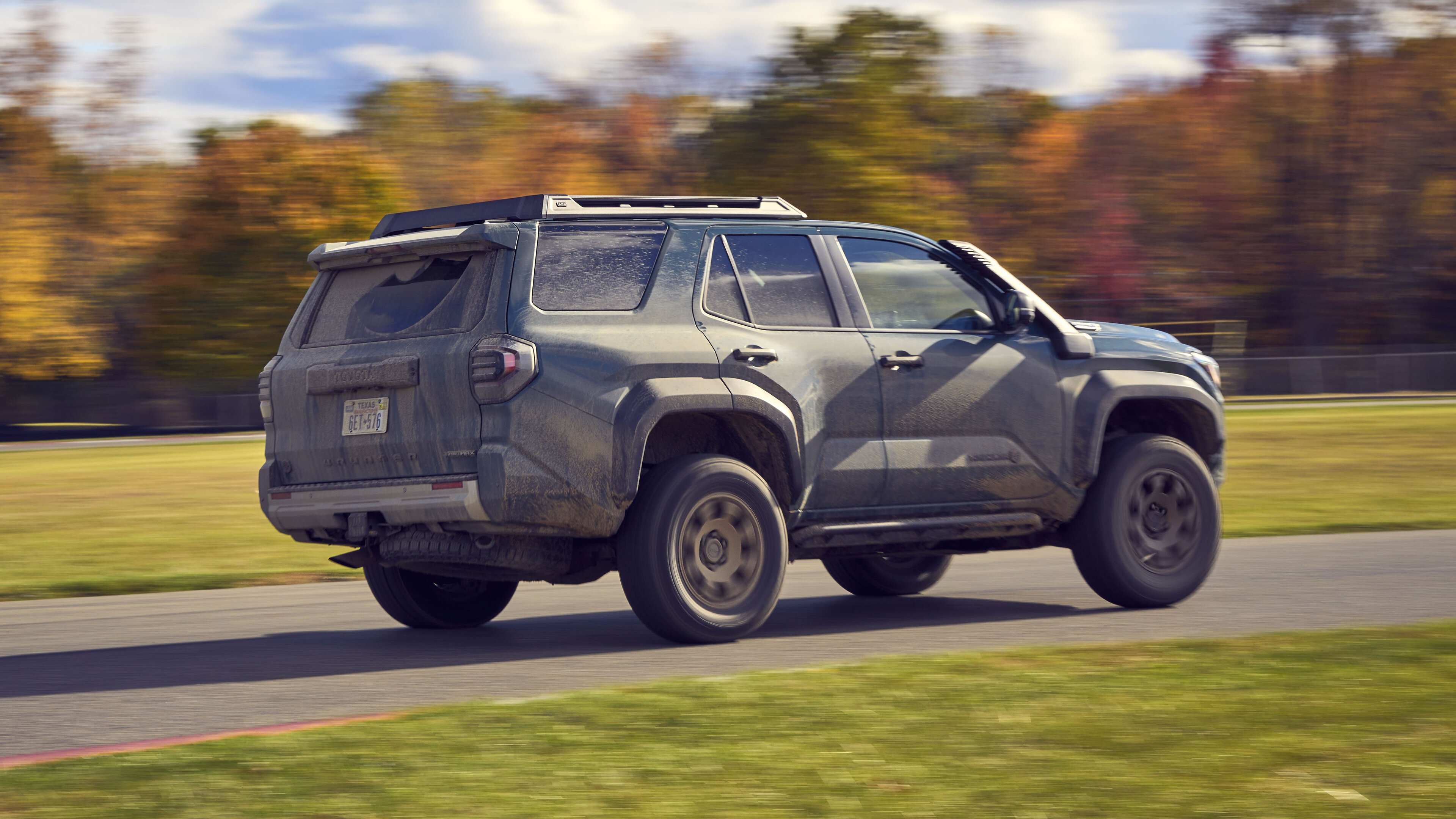
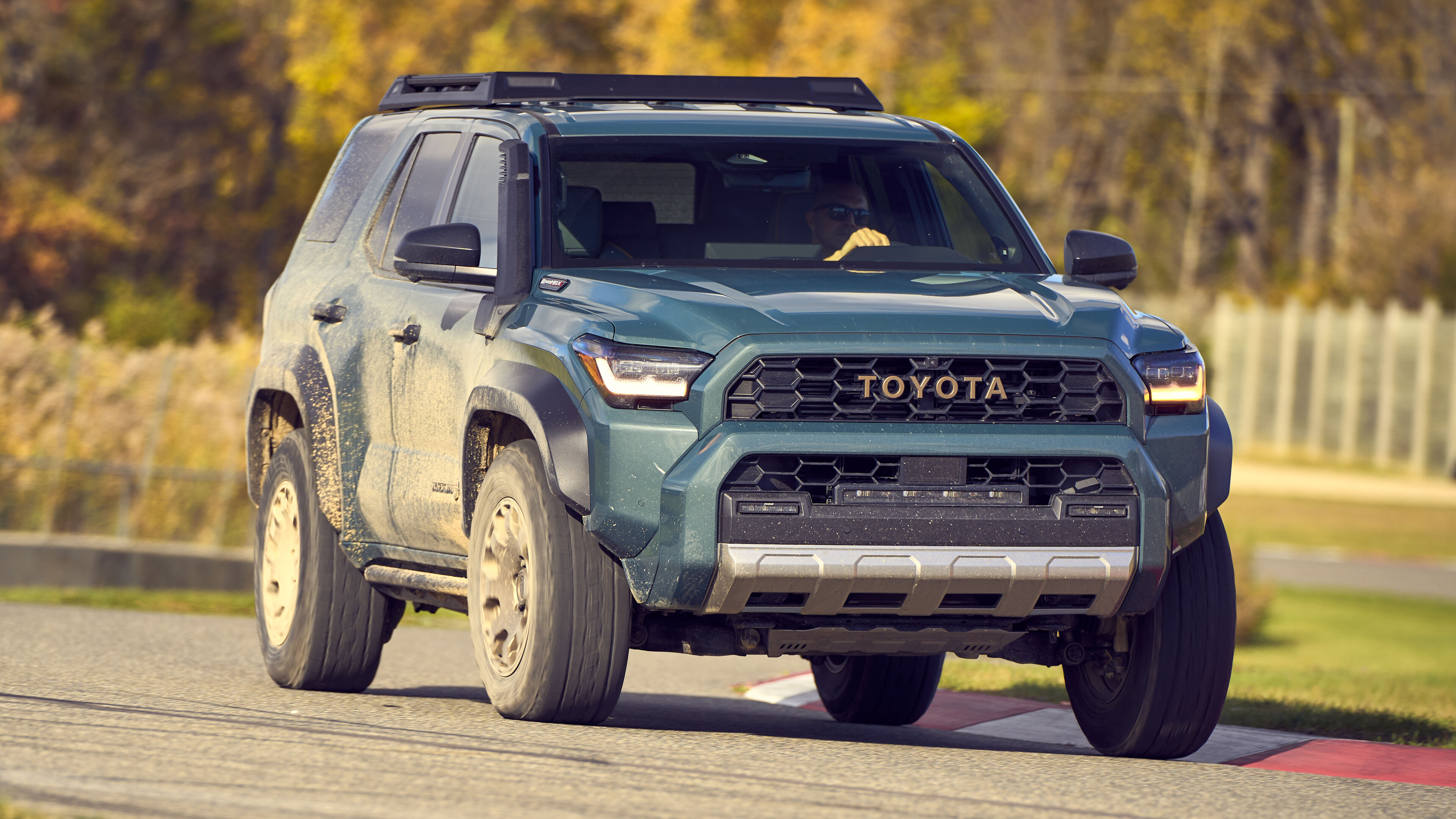
The Trailhunter is also the trim for the car enthusiast kid in all of us, because the standard kit list includes a snorkel that makes the hybridised 2.4-litre turbo four-pot sound like a fully lit 2JZ running maximum boost. Drop the window, dump the throttle, wait for the whoosh. Gets me every time.
Speaking objectively, the 4Runner is flawed. There are only five seats in the hybrid despite the large footprint, and even then the rear bench is tight. The on-road ride is choppy on these chunky tyres, the brake pedal offers no feel, and the four-cylinder engine is pretty weedy for something of this size and weight. On paper it claims 323hp, but you need to work it and the 8spd auto hard to make decent progress. At least, that’s what I told myself while getting giddy over the intake noise. I really did fall for the 4Runner, particularly in Trailhunter form with a layer of mud caked up the sides, but where the entry level car is $41,000, this trim starts at just under $70k and is just too uncouth on the road to take the overall SUV win.
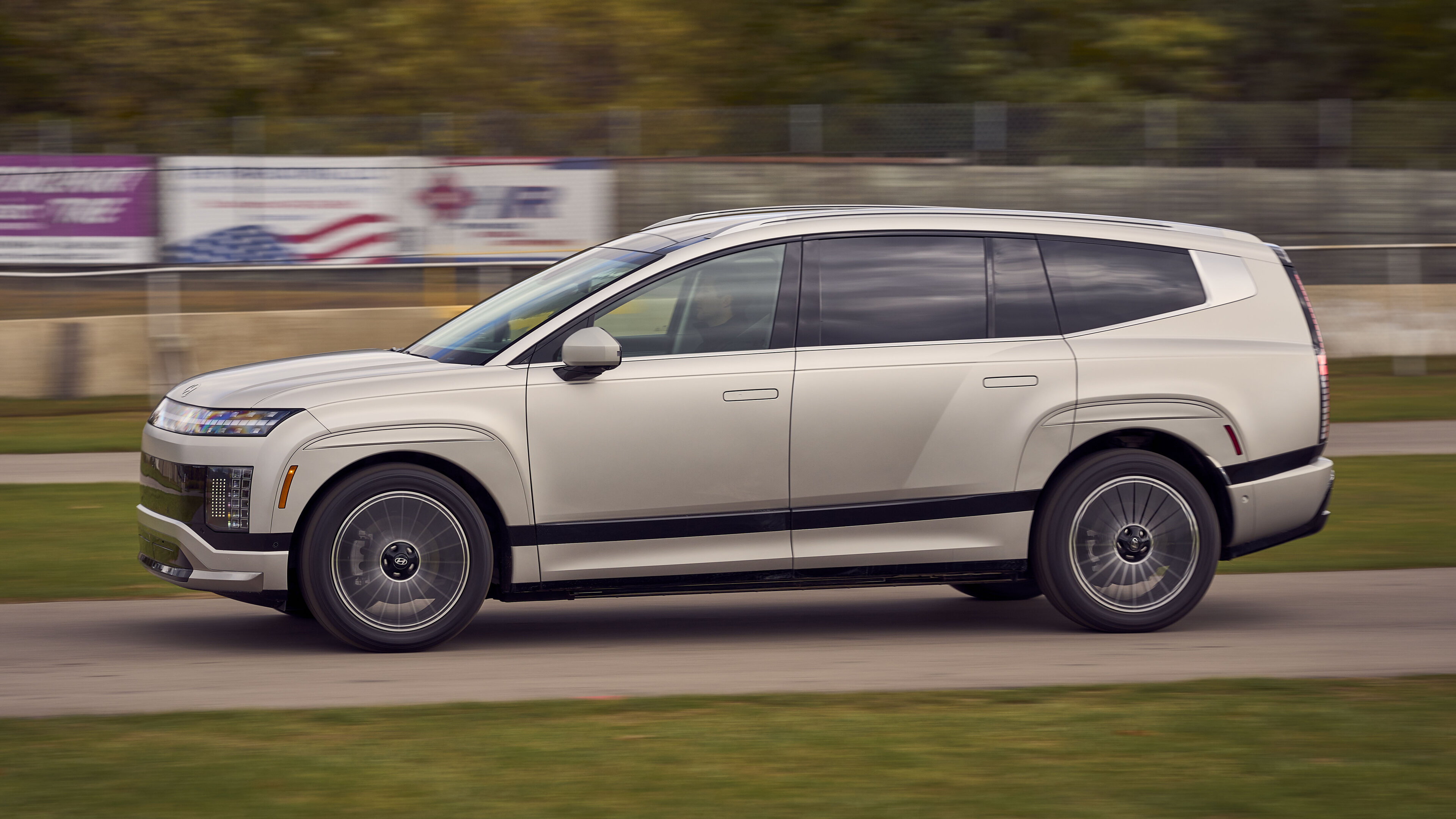
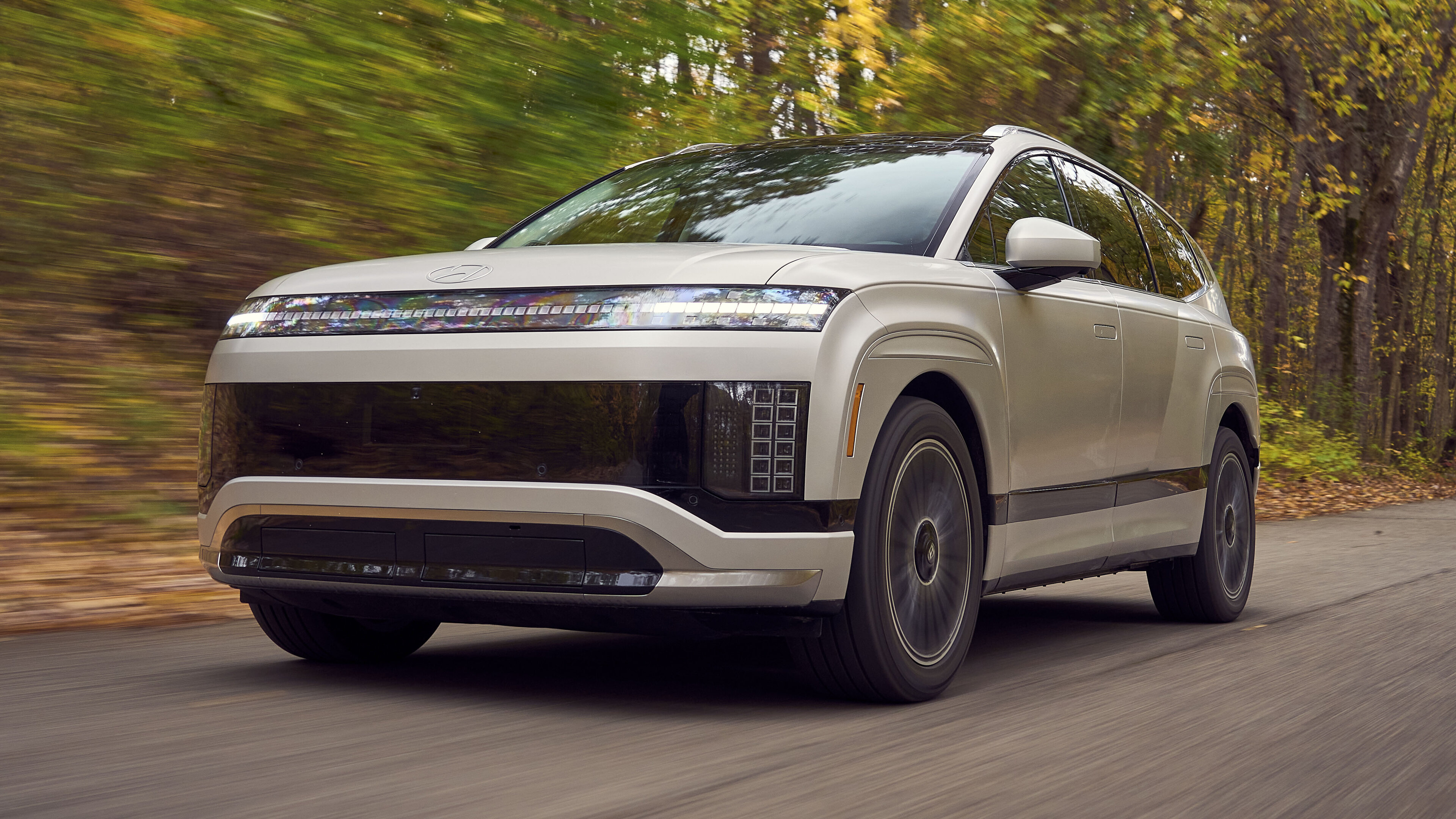
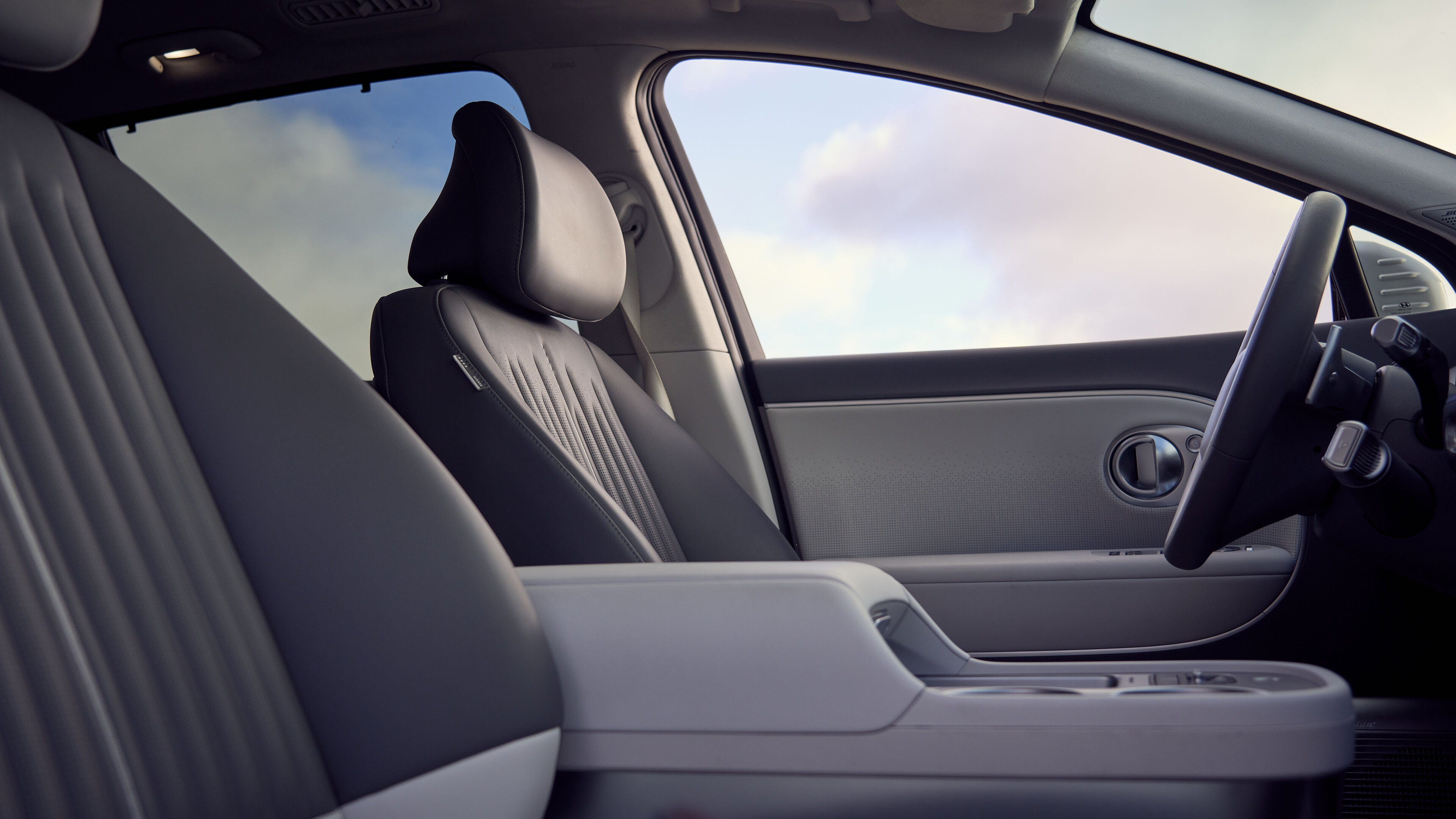
Much like the Toyota, I also find practicality to be a surprising issue with the Hyundai Ioniq 9. This is a car that feels far too big for the UK but fits on wider US roads. It’s heavy, quiet, soft and rolls round corners, but luckily there aren’t too many of them in North America so it’s mostly a sort of sensory deprivation tank on wheels. It does have paddles behind the steering wheel to adjust the level of regenerative braking on the fly, though, which instantly makes it more engaging to drive than the smaller and (slightly) lighter Tesla Model Y.
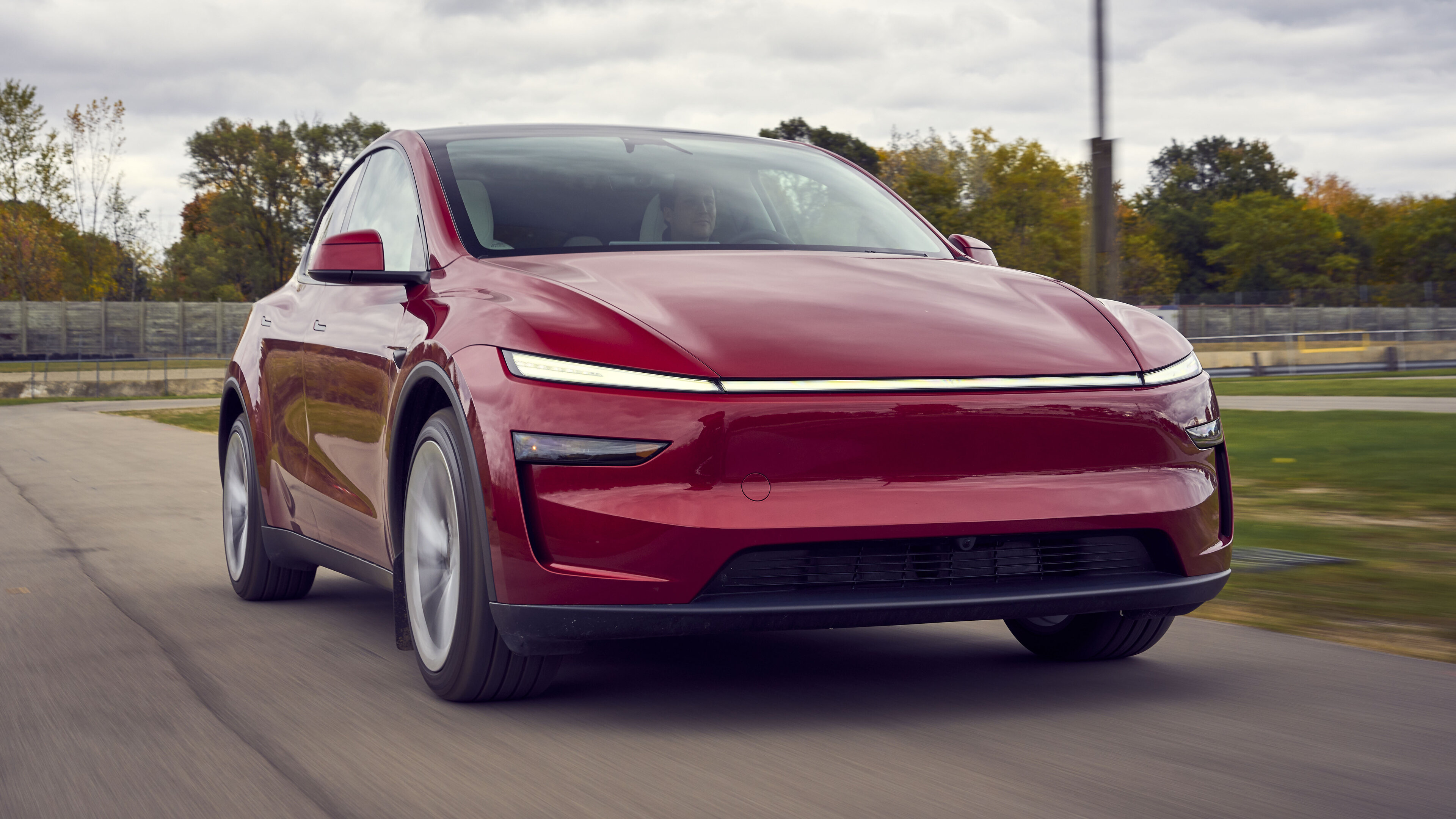
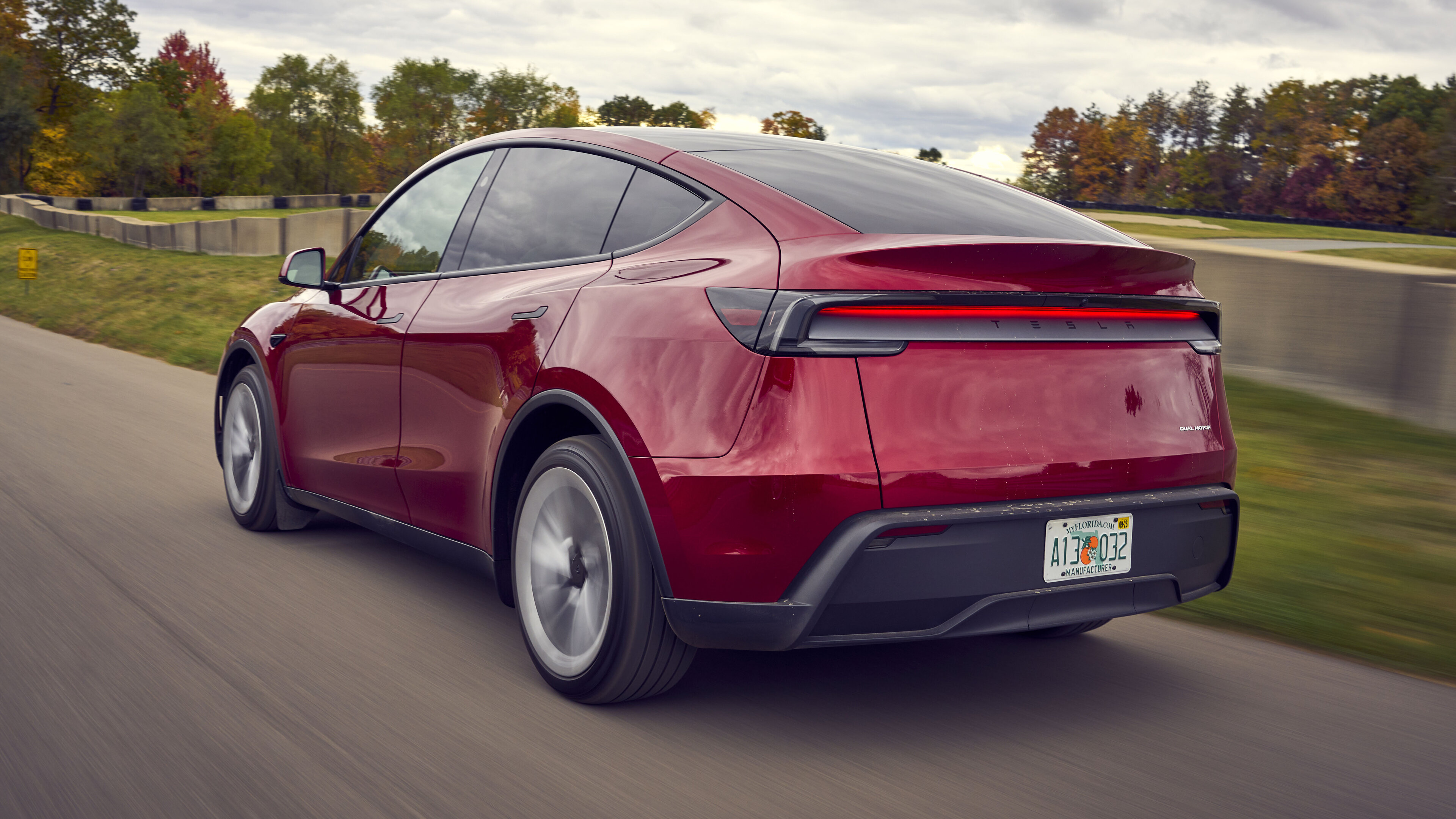
That’s not to say that Tesla hasn’t improved its best-seller with the recent facelift. In fact, dynamically it has come on leaps and bounds. The steering has much more feel than the Mk1 Y, and it finally rides with a bit of finesse over large bumps. There’s more sound deadening too that suppresses road and wind noise, so you could even say that it’s now a refined car. It’s not quite at the same level as the whisper-quiet Hyundai in that regard, but the changes (which include die-casting the rear floor to reduce the number of parts from 70 to just one) have made this a much more attractive proposition. And while the dual-motor Ioniq 9 maxes out at 311 miles of range, the Tesla in this ‘Premium AWD’ setup stretches to an EPA estimate of 327 miles. Impressive.
The twin-motor Model Y in this form also gets 375hp and a 0-60mph time of 4.6 seconds, but if you push it when the road gets twisty it still favours plenty of safe understeer. There are many settings buried deep in the touchscreen to change the way it drives with different throttle responses, levels of regen and weights of steering. And yet, none of the configurations really make the Y that engaging. It still just feels like an impressive tool. If you’re looking for an electric SUV that you might actually want to get out and drive, the Cadillac Lyriq-V is the pick of this bunch.
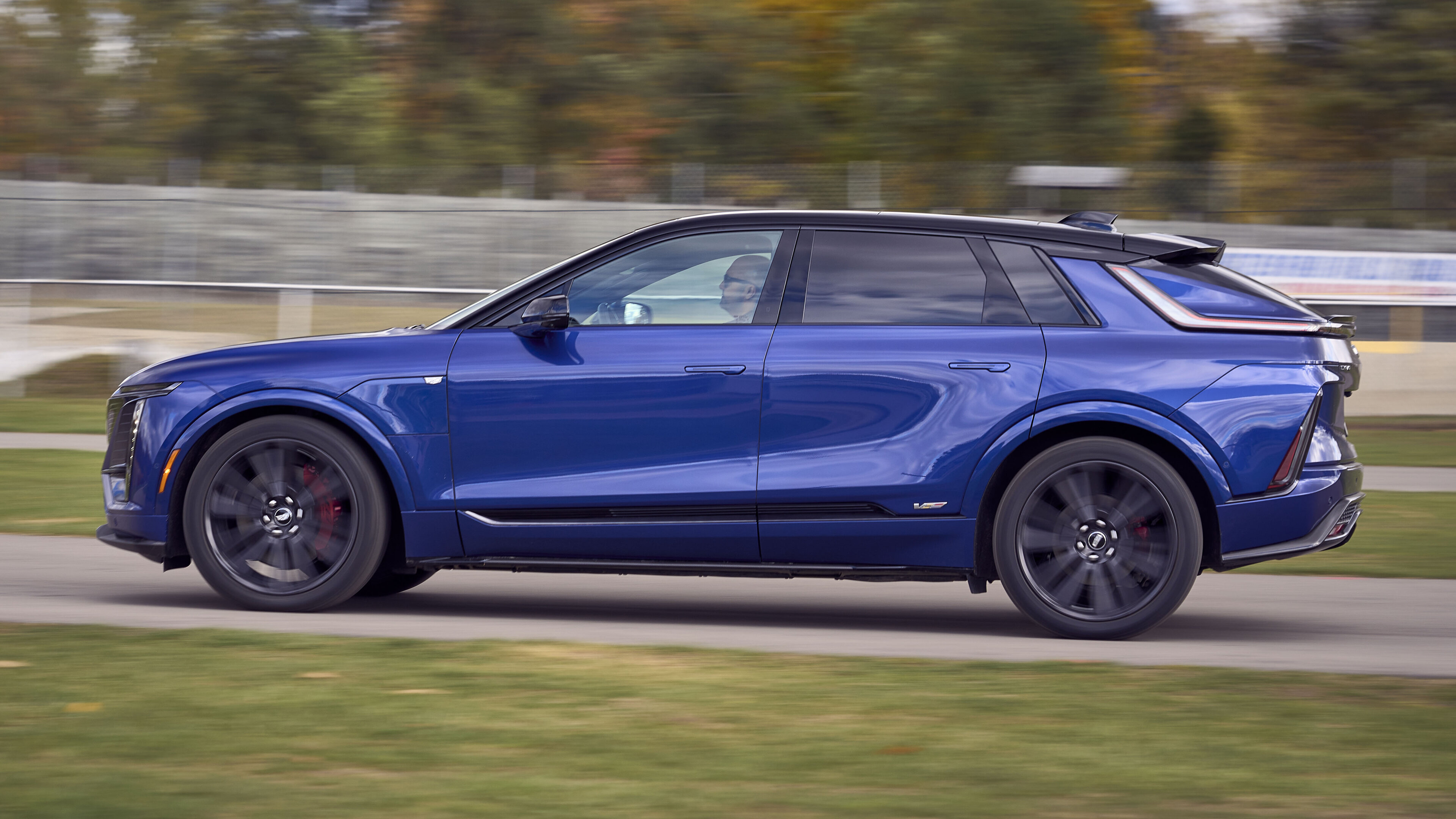
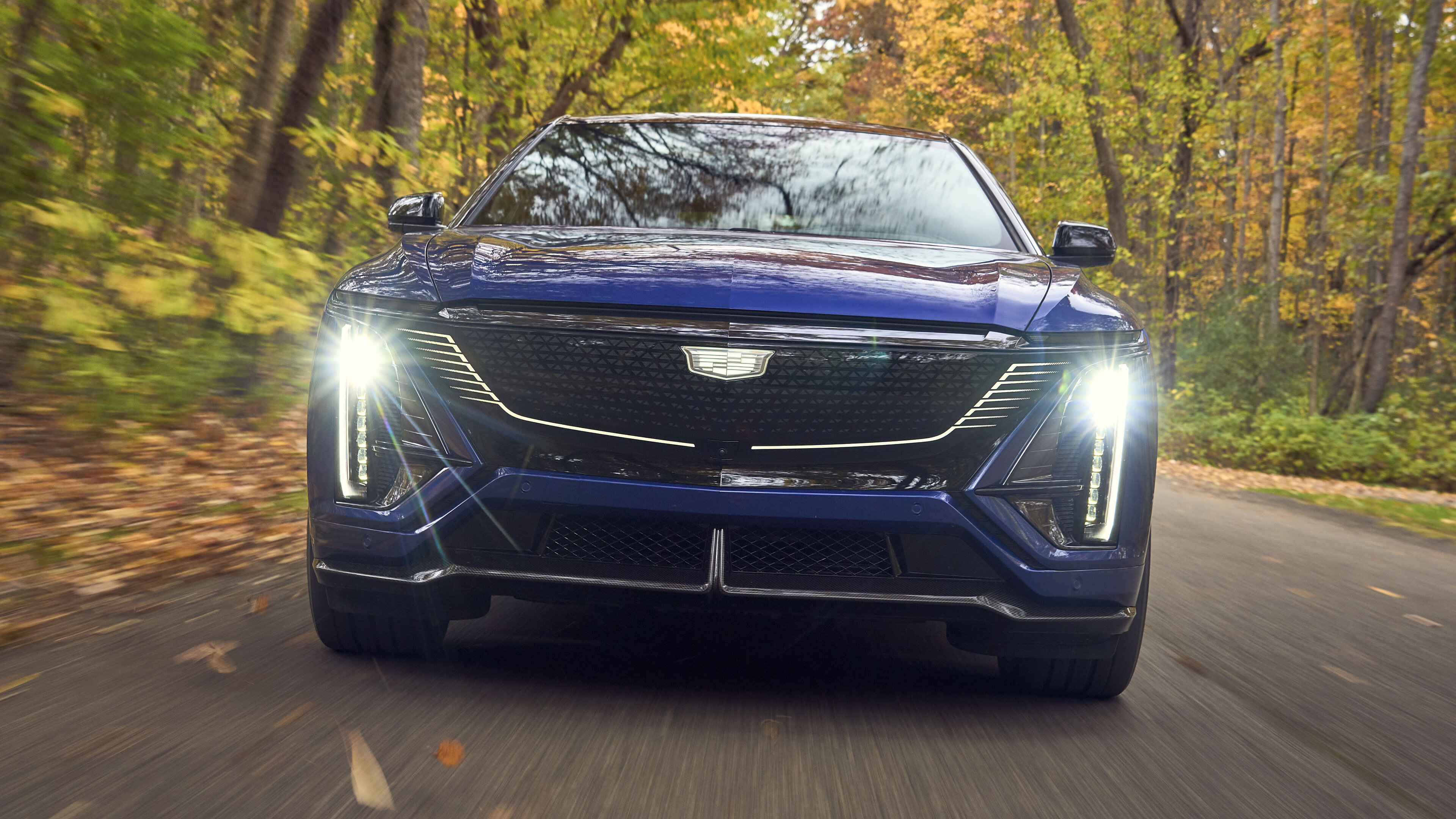
The standard Lyriq was actually unveiled in production form all the way back in April 2021, and TG’s local correspondent Alex Kalogiannis tells me that thanks to its ample space and smooth ride, it’s now the posh airport taxi of choice in the US. The recently released V aims to shake off that image with 615hp and 650lb ft of torque…
It’ll do 0-60mph in 3.3 seconds if you use its excellently named Velocity Max launch mode and will even run on to a top speed of 130mph. It never feels sickeningly fast (probably because it weighs nearly 6,000lbs/2,700kg), but on paper it’s the quickest Cadillac ever and there’s plenty of grunt to play with. Plus, with adaptive dampers and big Brembo brakes on board, it doesn’t all fall apart when you reach a corner. This thing offers a surprising amount of feedback through the steering wheel and while the ride is on the firmer side (no thanks to the V’s standard 22in wheels) it compensates by staying flat through bends.
The new 460hp Model Y Performance is a strong contender against the Cadillac. It has the same 0-60mph time and costs $20k less, but I still don’t think it’s as fun as the Lyriq-V. The ‘Regen On Demand’ system is Cadillac’s single paddle behind the steering wheel that offers more retardation the further you pull it, and using this alongside the ‘Competitive Mode’ makes for quite the combo as some of the stability controls are slackened off and the torque vectoring works out how best to find the most grip. Okay, you might not get the claimed 285 miles of range if you’re always using more than 600bhp, but it’s genuinely fun when the mood takes you. Oh, and there’s a choice of different ‘engine’ sounds to play through the fancy AKG 23-speaker audio system.
Anyway, back to that issue with the Ioniq 9. Unfortunately, this is the pricey top spec Calligraphy Design trim (costing from $76,490) with the six-seat layout, and the interior space is somewhat compromised. There isn’t a huge amount of room in the boot with all the seats in place, and legroom in the middle row isn’t fantastic either, particularly if you’ve also got passengers in the third row and have moved the middle chairs forward a bit. I’d expected executive saloon levels of space given the size of the 9.
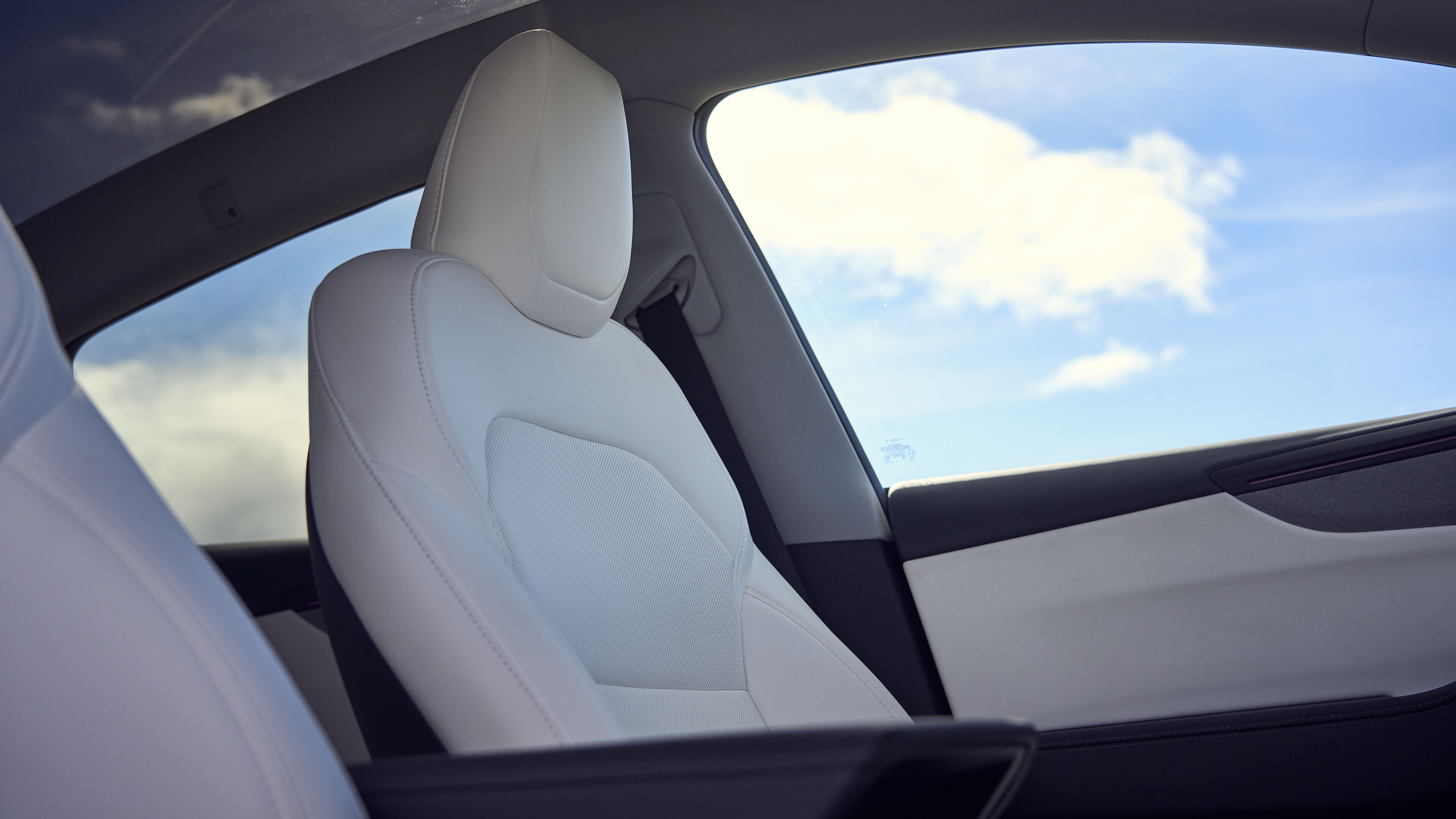
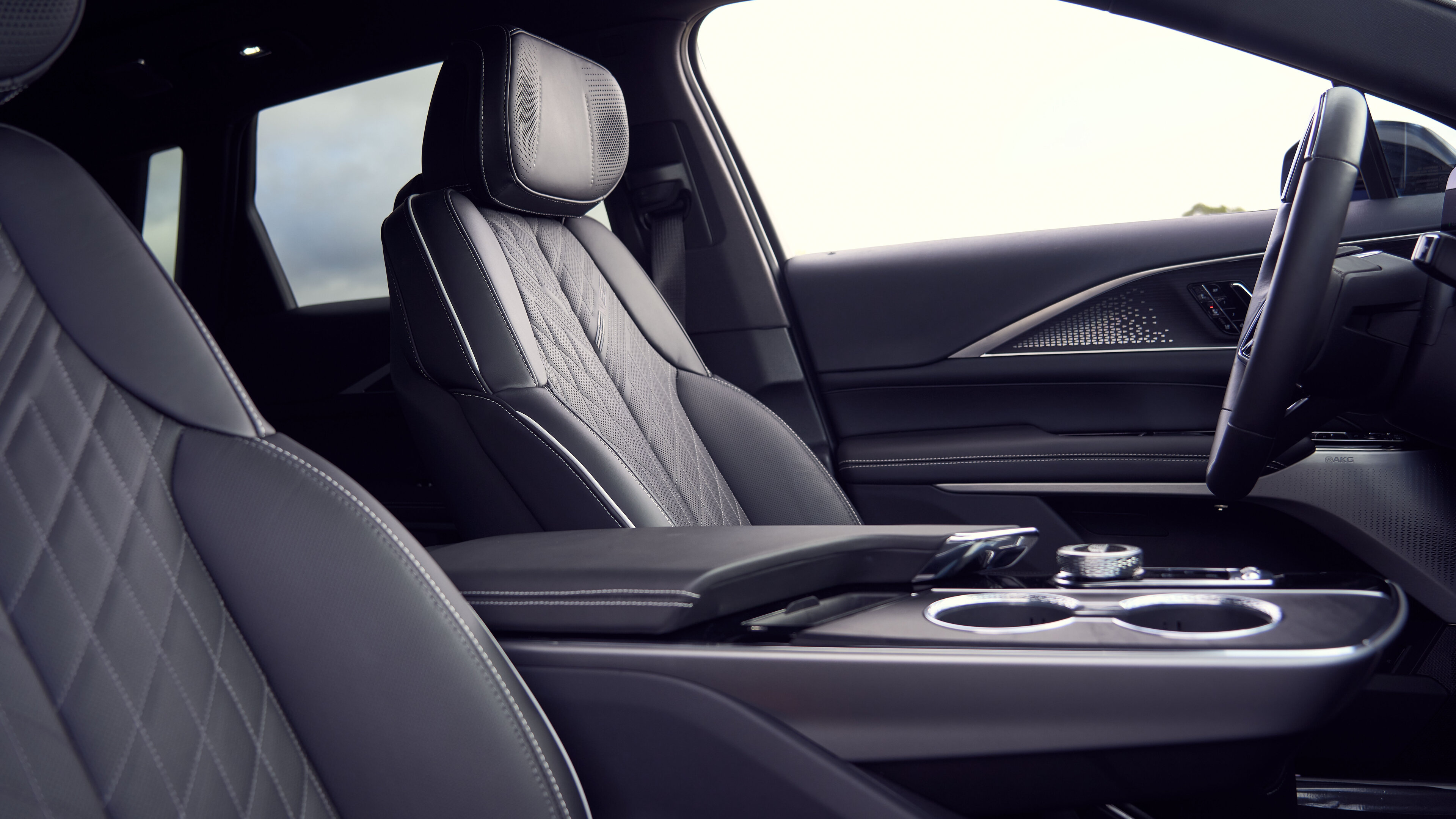
Plenty of room for five adults in the Tesla, but although it’s a responsive and high-definition touchscreen, there’s no way I could live with such a minimalist interior on the daily. The Lyriq-V’s cabin on the other hand is a welcome surprise. You get premium materials including Nappa leather for the seats, and there are physical buttons and a separate climate panel despite the presence of an augmented reality nav and the curved 33in LED screen. Said screen runs the impressive Google Built-in system so it’s easy to use, and there’s a proper rotary controller for those that miss BMW’s excellent iDrive.
To my eyes the Cadillac looks cooler than anything else here too. Well, barring the rough and ready Toyota, of course. The Tesla is unbelievably bland to behold, and the Hyundai does the whole ‘futuristic spaceship’ thing rather successfully, but the Lyriq-V remains recognisable as an SUV while incorporating some subtle go-faster bits and some seriously cool lighting signatures.
It's the Caddy that wins this test thanks to its genuine all-round ability. It’s fun to drive, comfortable to cruise in, supremely practical and still easy to operate. It was a pleasant surprise for us Brits, and with Cadillac still insisting that a European/UK launch is on the cards we’re pretty sure the Germans will be taking note. Could ruffle a few feathers, this.
Trending this week
- Car Review
Tesla Model Y
- Car Review
Renault 4