



25
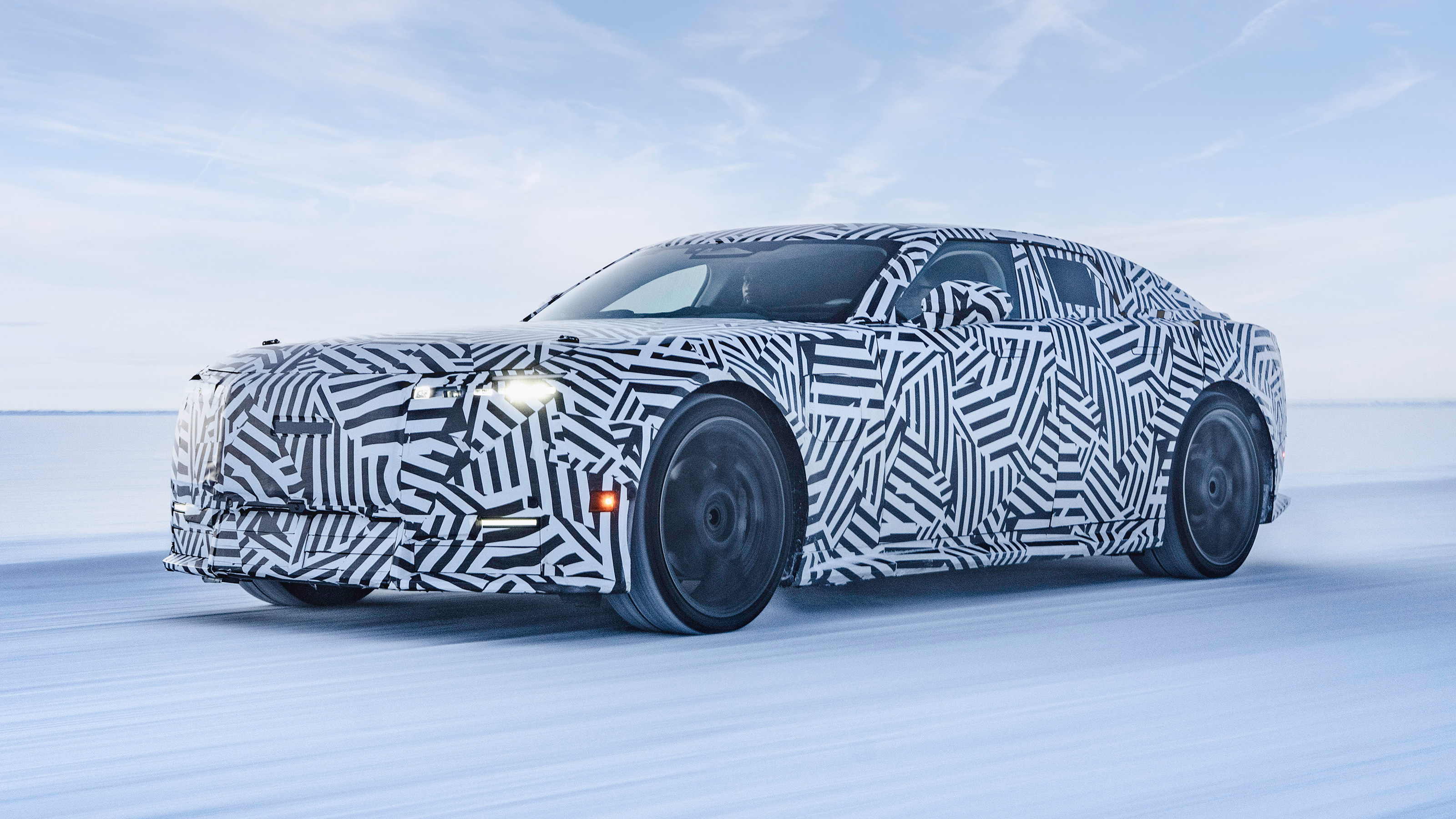
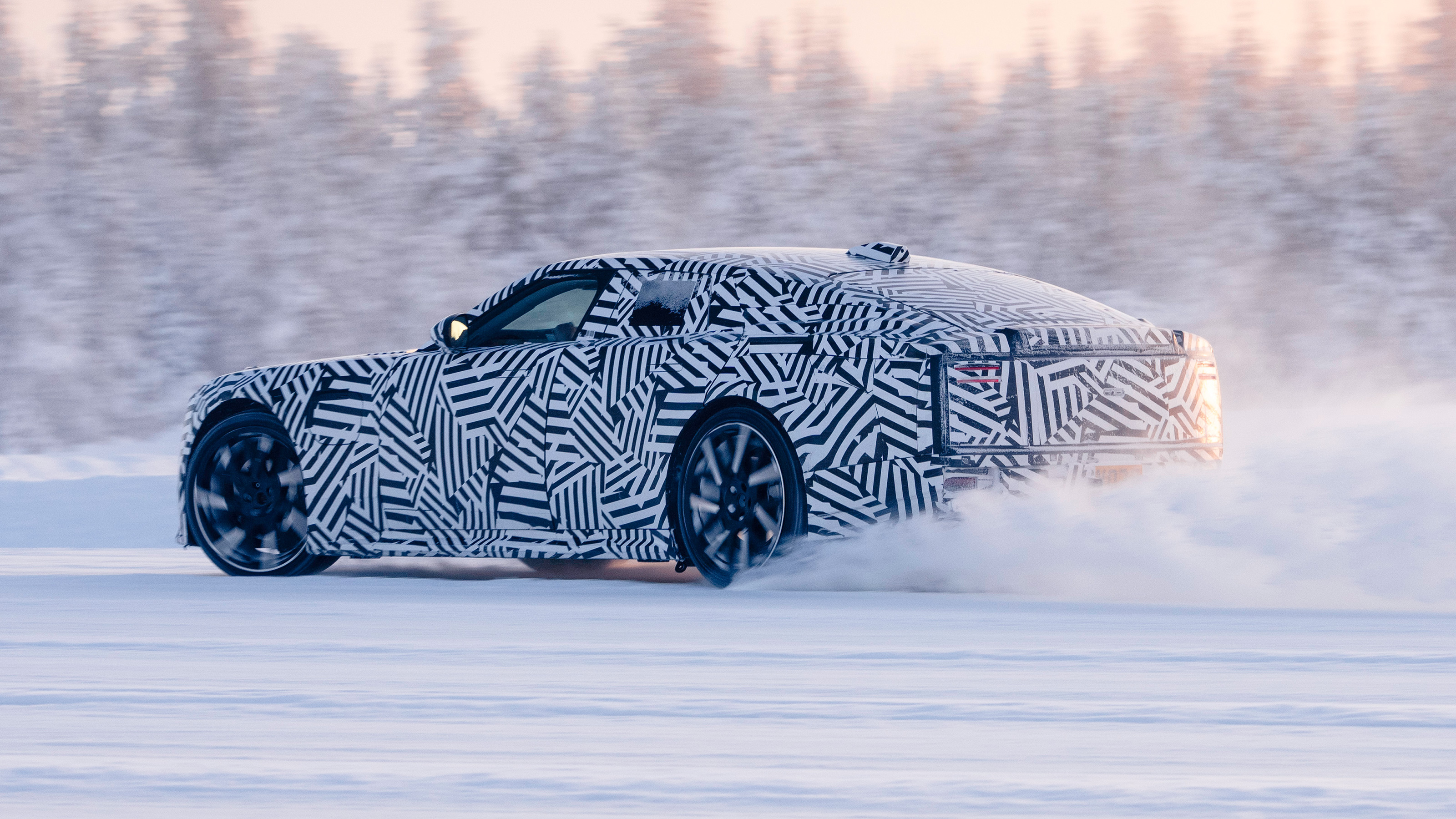
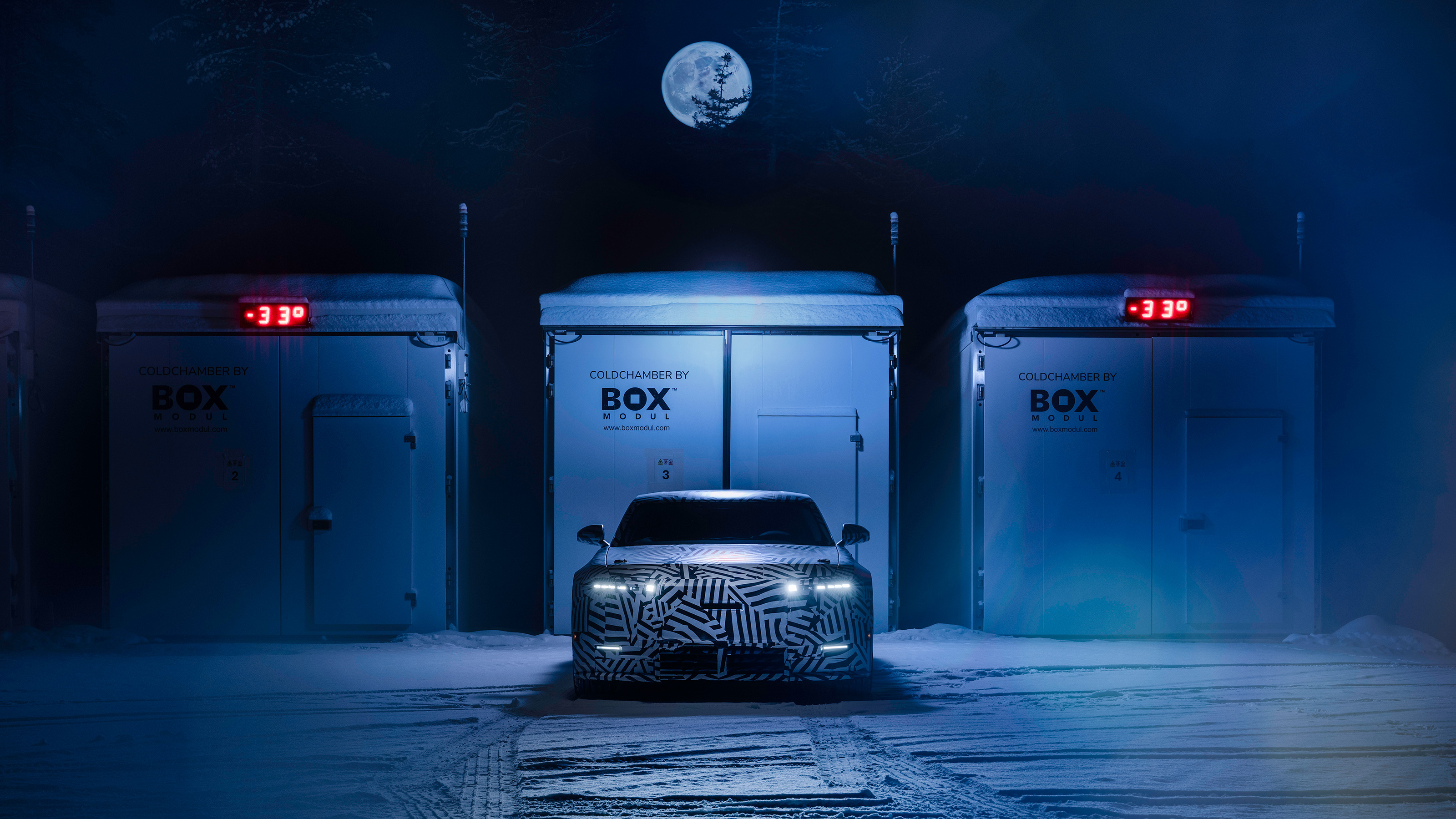
This is the next phase in the roll-out, and the one in which we get to drive the world’s most controversial car. In fact, we’ll be driving two. The first is dubbed PT3, one of the earliest cars in a test programme that has seen 150 prototypes constructed. Simulators might speed up the development process, but correlation and validation still require physical test cars.
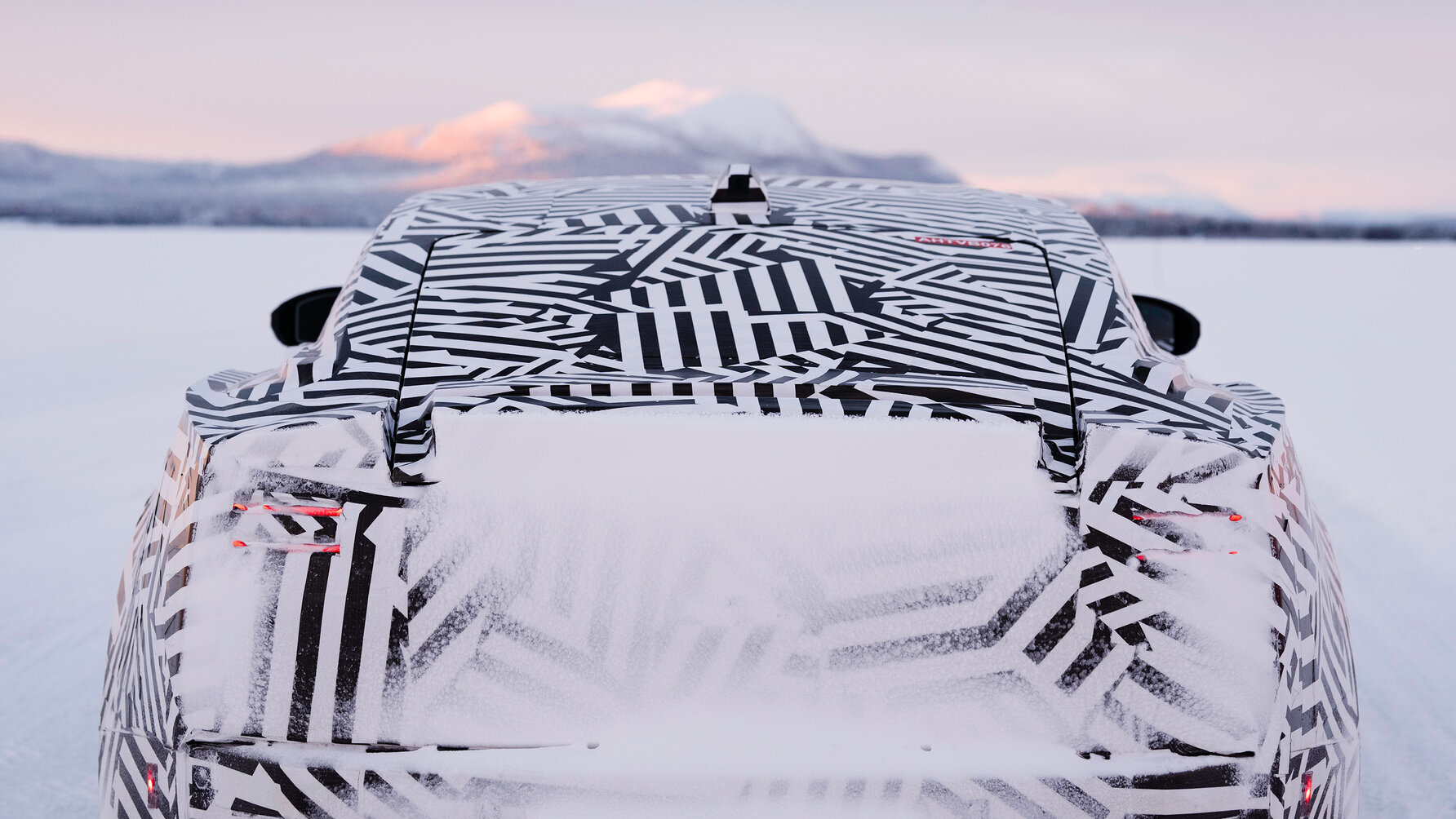
There are no buttons in here; instead you get a man with a laptop. PT3 has done the hard testing yards since coming to life, Frankenstein’s monster-style, in August 2024. It’s wearing Shooting Brake extensions on its zebra camo too, which elongates the already lengthy shape.
The real thing is 5.2m long, more than two metres wide, but a smidgen less than 1.4m tall. It’s mostly made of aluminium with high tensile steel in the critical areas. Jaguar is keeping its powder dry, but what we can confirm is that a) the concept car doesn’t lie, and b) that even buried under a load of cladding the proportions are extreme. The bonnet/hood goes on forever and terminates in a different postcode to the cabin.
Finished in black, Batman will surely be on the blower – and double-checking the dash-to-axle ratio. Other key info: despite the superhero silhouette, the Type 00 has 50/50 weight distribution, a notably low centre of gravity, and its structure is race-car stiff – 50,000 Nm/deg, in fact. So while it might look unusual, there’s some rational thinking at work here.
There’s a 120kWh (useable) battery packaged beneath the floor. It’s an NMC (nickel manganese cobalt) set-up with 200 prismatic cells, in a configuration that’s unique to Jaguar. It’s all proprietary, too. The terminals are on the side rather than on top, every millimetre extra in height equating to more energy.
The HP (high performance) busbars – which distribute power between the battery, inverter and motors – are integrated into the battery pack front to rear. They have superior power density and thermal qualities, and are more space efficient than cables. Packaging this hardware while preserving the car’s flamboyant shape is a major achievement; even the upcoming Ferrari Elettrica is a quasi crossover in form.
Correct, permanently excited synchronous ones. The motor on the front is worth 350bhp, the two on the rear capable of 950bhp. Total torque is quoted at just over 1,000lb ft, although not all of this grunt is constantly on tap. The lengthy nose doesn’t mean there’s a huge frunk: the front structure has been carefully (and expensively) designed for maximum crash protection and impact energy dissipation courtesy of a large die cast aluminium node.
That, together with the front ‘eMachine’ packaged above the single-speed gearbox, allowed the engineers to add another 32-cell battery stack at the front, much further forward than you’d usually see. The rear drive units can be deactivated – including the inverter – for efficient cruising, and if it’s needed the rear EDU can be back in play in less than two milliseconds. A large cooling pack is tilted at an unusual angle to help reduce bonnet height and maximise airflow during charging.
The car uses an 850 volt architecture and can charge at up to 350kW; Jaguar is targeting 400 miles range (EPA – a more accurate test, says Jaguar – 434 miles WLTP). It’s also comfortably the most aerodynamic car the company has ever produced. There are charging ports on either side at the front; the junction box is incorporated into the front strut brace, a solution Jaguar has patented.
There’s also a heat management system called ‘Thermassist’, which decides what temperature the battery ought to be by constantly evaluating more than 700 different parameters. It can recover heat from -10°C, the aim being to improve efficiency, enhance interior comfort, and extend range.
Get all the latest news, reviews and exclusives, direct to your inbox.
Truth is, it’s a slightly awkward car to get into, unless you have the rubbery flexibility of a Seventies Russian gymnast. Once you’re ensconced, though, it’s a fabulous place to be. Or will be in the finished car, with its dramatic full-length central spine and material finery. Jaguar’s suppliers have developed extra skinny lightweight seats, and they’re mounted as low as they could get away with. You definitely feel as though you’re sitting in the car rather on top of it.
In fact, it’s similar to the F-Type, which is no mean feat in packaging terms. This delivers a view ahead that’s different to pretty much anything else available right now. The Rolls-Royce Spectre has a similarly imperious feel, but it’s much taller and has a higher hip point. The Cadillac Celestiq has spaceship vibes, but it’s more of an ultra-luxe cruiser than a GT. Both are also much more expensive than the Jaguar will be.
Correct. As well as PT3, TG.com also gets to experience a ‘golden car’ or ADV (Attributes Development Vehicle), so-called because all the latest thinking vis-à-vis chassis hard- and software is contained within it. Unlike the older test hack, this one also has back seats and there’s no question that the rear of the new Jaguar is… intimate. A full-length glass roof alleviates any incipient claustrophobia, but we reckon it’s still a risky move deleting the window. And this on a car that’s jettisoning so much brand equity already….
TG.com has driven the Type 00-rivalling Polestar 5, and can confirm that the rear compartment takes some getting used to. But the Jag’s rear seats still cosset despite the presence of the battery pack beneath. It’s no limo but occupants’ knees won’t be around their ears.
In PT3, the bare minimum of dashboard is visible. The main display is a slender screen directly ahead of the driver, but the graphics are place holders so we can’t make any judgements about their look or efficacy. There’s a smaller secondary screen for climate control and other important functions.
Based on what we can see here, it’s not pushing the boundaries like the exterior is. But there are some innovations. Rather than conventional speakers sprinkled throughout the interior, the Jaguar has a soundbar that runs along the base of the windscreen. And the display for the rear-view camera sits just below that in the middle of the dash expanse. We only get a glimpse of that, but the engineers are aware that plenty of people (older drivers in particular, we dare say) have trouble with the focal distance if the camera-mirror is mounted too close.
There are no paddle-shifters on the steering column, just a drive controller and indicator stalk. The wheel itself is restful to look at. The Type 00 is leaning into the idea that real luxury is simple stuff elegantly executed.
In a word, fascinating. Jaguar may have melted the internet and seized the narrative globally when that ad campaign first broke in late 2024, but the development team insists that the Type 00 is fully informed by Jaguar’s past. So for all the wailing from gammony traditionalists, the core values have actually been respected.
And it’s true. This is an XJ for the 21st century, just vastly more powerful and more dynamically extrovert. The new car passes the 50 metre test with ease, air suspension and active dampers ensuring it breathes easily (even if first impressions are somewhat occluded by the icy surfaces we’re driving on). It feels meticulously engineered, the control weights are wonderfully calibrated and, despite having 1000bhp, it gathers momentum with calm authority rather than bungee-jumping you into the horizon.
Although not everyone agrees on this, the Jaguar guys aren’t fans of rabidly rapid EVs. It’ll do 0-62mph in around 3.3 seconds, but could go faster still. Top speed is limited to 155mph. Like the Rolls Spectre, the Jag is defined by what it holds in reserve rather than what it puts out there.
Yes and no. As ever, the fundamentals have to be correct before the ones and zeroes come into play. The chassis stiffness, clever packaging, long wheelbase, and weight distribution all play right into your hands the moment you start pushing things. Can this car really weigh 2.8 tonnes? This sort of mass is unavoidable given the size of the battery, but there’s an agility and adjustability here that’s very impressive.
By managing the driveline dynamics astutely. Key here is the Intelligent Torque Vectoring (ITV for short – which might confuse British readers. Jaguar has yet to introduce a system called Brake Bias Control). In the older test car, we get to sample chassis modes that span Wet/Ice, the default Comfort setting, before practising the Scandi flick in Dynamic mode (including DSC off). The engineers (or more likely marketeers) have stopped short of calling it ‘drift mode’; instead, this is a car with lucid and clearly defined handling parameters.
Personally, I’d prefer a little more heft in the steering, but the trade-off between an overly positive front end and high speed stability is well managed. Unlike a traditional differential, ITV can deliver positive and negative torque on either side of the car to balance yaw. Boy does it work well.
Vehicle Engineering Director Matt Becker says that the electric power steering is still being tuned, and admits that it’s deliberately light off-centre (NB: the rack is solidly mounted in three places, to reduce pinion motion and improve ‘feel’). It also has what he refers to as ‘oh s*** lock’, which gives you some idea of the kind of angles that are achievable if the circumstances permit. Which they very much do on a giant handling arena on a vast frozen lake.
All in the name of empirical fact-gathering, we assure you. It really isn’t about drifting. The systems are targeting a yaw rate, then allow the driver to hold a corner radius based on steering input and speed. It’s about delivering truly independent control of the rear wheels; couple that with the active rear axle (up to six degrees) and the result is a sublime level of rear-drive biased balance. It’s 30/70 front to rear most of the time.
In the ADV or ‘golden car’, we’re in Comfort mode only. This is less amusing but arguably more illuminating. The surface beneath on this particular handling pad is so slippery it’s almost impossible to stand up straight on it. Yet the systems allow us to keep circling at around 55mph without having to apply any opposite lock. This big, electric Jag simply settles into a groove, imperceptibly trimming the cornering line, and finding grip and motion where none really exists. There’s no active anti-roll, either, because the car’s roll stiffness is fine as is. That helps save weight, cost and complexity.
The key takeaway is that it feels entirely natural, particularly in the way that steering effort builds with yaw rate. Also that the torque vectoring and rear steer modify the car’s behaviour in a way that feels authentic. Best of all, it has the dynamic chops of something much smaller and lighter. You can also ‘curate’ the drive mode, matching a dynamic chassis with a comfort throttle set-up. The brakes also feel natural, the first phase relying on regenerative energy before blending in the friction brakes. The discs are FNC coated.
Finally, we got to experiment on various ‘split-mu’ surfaces, more proof of how spooky the ITM (traction control) algorithms are. Bury the throttle on a surface that’s slippier than the slipperiest of politicians and grip is instantly summoned up. Jaguar has developed bespoke rubber with Pirelli, who were happy to push the envelope; 23in wheels are standard. Can’t wait to try the thing on a dry surface. We suspect it’ll roll a bit, but that’s OK. It’s a GT not a supercar.
The sound is currently TBC. In fact, it’s still being debated internally. Ferrari is bullish about amplifying the frequencies naturally generated by the rear inverter on its Elettrica, but the Jaguar guys seem less convinced. TG ventures that, since the rest of the car is trying to keep faith with classic Jaguar dynamic values rebooted in EV form, there’s little point piping inauthentic sci-fi sounds into the cabin. Maybe the Type 00 doesn’t need to make any sound at all, beyond a whisper of wind round the door mirrors.
We’ll see the real thing pretty soon. Jaguar clearly has work to do reminding the world’s taste-makers that the EV-only re-brand was the right thing to do. Jaguar MD Rawdon Glover talks about skating to where the puck is going to be rather than where it currently is, but assessing the trajectory of the puck in question is proving hellishly difficult. The engineers developing the car can only do their best to ensure that the finished machine is up to scratch. On this evidence, we’re very confident they’ve done that.
Get all the latest news, reviews and exclusives, direct to your inbox.
