

12
The US market is notoriously hard to crack… as these poor cars discovered
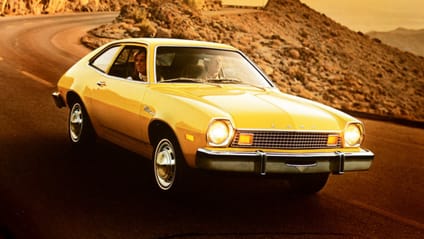
The Pinto arrived in 1971 having been rushed through production in twenty-five months, roughly half the industry standard. It showed. In rear-end crash tests, the Pinto’s fuel tank proved vulnerable to rupture at relatively modest speeds — a flaw that would later become infamous.
A fix was possible, and inexpensive. Internal Ford documents, later made public, included cost-benefit analyses that appeared to weigh the cost of design changes against the potential cost of accidents and lawsuits. When those documents surfaced, the scandal wasn’t just about the fires, but the arithmetic – the sense that sums had been done, and human cost had been reduced to a line item.
Ford recalled 1.5 million Pintos in 1978. The car limped on until 1980. The damage was done.
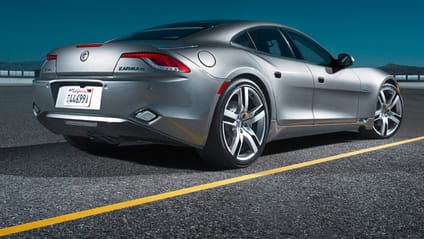
Before setting out solo, designer Henrik Fisker had penned the BMW Z8 and the Aston Martin DB9. Strong CV. His own car, the Karma, was genuinely beautiful, a long, low, hybrid sports sedan that looked every inch of its $102,000 price tag. Leonardo DiCaprio bought one. Silicon Valley poured money in.
And then it all went wrong. A Karma caught fire in a California car park, another in a Texas garage. Consumer Reports branded it a fail: the lowest-rated luxury sedan they'd tested, with instrument glitches, window failures, recurring warning lights, and a radio that barely worked. Fisker filed for bankruptcy in 2013.
The Karma was reborn under new Chinese ownership as the Revero, then the GS-6. It didn’t help. Henrik Fisker himself returned in 2016 with a new car – the Ocean SUV – from an entirely new company, Fisker Inc. Which was back in bankruptcy by 2024. Not-so-strong CV.
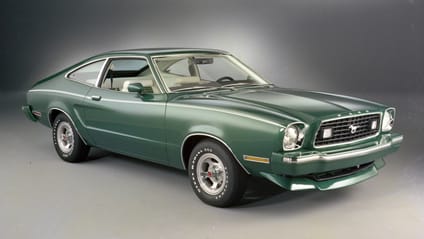
The original Mustang is, of course, one of the ultimate American smash-hits: a lean, V8 muscle car that sold nearly half a million units in its first year, and invented an entire category.
So for its follow-up, Ford did the obvious thing: based the second-gen Mustang on a Pinto platform, and gave it a four-cylinder engine making 88 horsepower.
The Mustang II arrived in 1974, smaller, lighter, and considerably less threatening. Ford had its reasons: the OPEC oil embargo had just hit, fuel was scarce, buyers wanted economy. Initial sales were pretty strong, actually.
But still, 88 horsepower. True, that was the base version, but still. 88 horsepower. The oil crisis passed, sales of the Mustang II collapsed, and it spent the next half-century failing to make its way onto all those ‘Greatest Ever American Muscle Car’ lists.
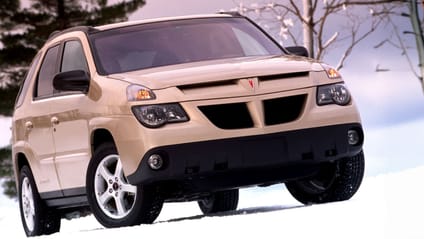
Never a good sign when your car's name becomes shorthand for ‘ugly’. Arriving at the turn of the century, the Aztek's aesthetics weren't so much shockingly novel as just plain wrong.
An Aztek was the prize in the first season of Survivor. The prize for second place, presumably, was two Azteks. Winner Richard Hatch collected his on Good Morning America alongside his million-dollar cheque, then went to jail for not paying taxes on either.
Vince Gilligan would later cast the Aztek as Walter White's car in Breaking Bad. It was not meant to make him look cool.
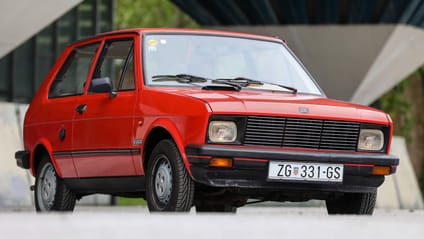
The Yugo was a Yugoslav compact hatchback that arrived in America in 1985 with a sticker price of $3,990, making it the cheapest new car on the market by a distance. In remarkable scenes, the Yugo then set about demonstrating what poor value for money it was.
The engine overheated. The electrics failed. Parts fell off. In 1986, a Chicago Tribune journalist reported that one local dealer was offering a free Yugo with every Cadillac purchased. Every customer refused this kind offer, indicating that no Yugo was preferable to a free Yugo.
Consumer Reports ranked it the worst car they'd ever tested. Time magazine named it one of the fifty worst cars in history. Yet today the Yugo has become a cult object — the car industry’s answer to The Room, beloved precisely because it tanked so completely and so cheerfully. Failure as an art form.
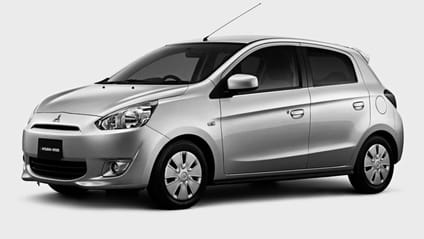
The Mirage died on the American market after the 2024 model year. Few mourned. Case for the defence: the Mirage was cheap. Case for the prosecution: literally everything else.
The Mirage wasn’t only bad to drive and badly built. It was dangerous, too. In 2023, the Insurance Institute for Highway Safety, a crash-testing authority in America, showed the Mirage to have the highest driver death rate of any car on sale in the USA. The IIHS noted 205 deaths per million registered vehicles for the Mirage, some 40 per cent higher than the second-placed car, Dodge’s Charger.
There’s nothing like a good cheap car, and the Mirage was nothing like a good cheap car.
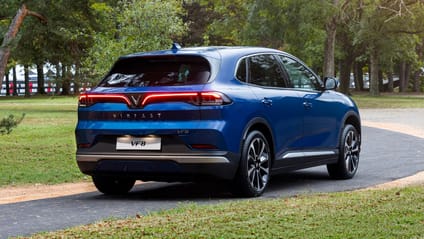
Cracking America as a car company is tough enough if you're German, Japanese, or Korean, with decades of hard-won reputation behind you. VinFast arrived in 2022 from Vietnam, with none of that history, and a plan to take down Tesla with its electric SUV, the VF8. Yeah.
When reviewers got hold of cars, they discovered the climate control didn't work properly, the turn signals were unreliable, and the navigation was best ignored. Apart from that, Mrs Lincoln, how did you enjoy the play?
The consensus was that the car wasn't ready for production. Yet there it was, being produced anyway.
Seeing a Vinfast on the road in America today is like witnessing a fender-bender in person: doesn’t happen often, and you feel bad for everyone involved when it does.
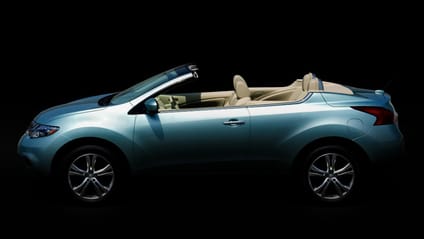
In 2011, Nissan decided that what the American market needed was a convertible SUV, and that the correct price for this was $47,200 – the equivalent of $70k today. The CrossCabriolet was, Nissan proudly noted, the world's first all-wheel-drive crossover convertible. Nissan apparently failed to stop and consider why this might be the case.
Perhaps thanks to the CrossCab boasting even less bootspace than a VW Beetle, and even less handling than a VW Beetle, sales largely… didn’t happen. In its best year, 2012, Nissan shifted 3,278 CrossCabs. Several US states recorded zero registrations. To the relief of most right-thinking humans, it was discontinued in 2014.
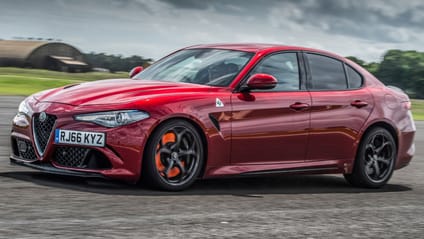
The modern Alfa Romeo Giulia should have been a triumph. It's beautiful, drives like it was built by people who care about driving, and the 500 horsepower Quadrifoglio version is one of the finest performance saloons sold in America at any price. Car and Driver called it a revelation. Journalists ran out of superlatives.
The issue? Reliability of early Giulias, which broke down with almost heroic consistency. A Jalopnik writer's car died in the middle of the night with 1,700 miles on the clock. Car and Driver's long-term Quadrifoglio became, in their words, a car that broke their heart — racking up dealership visits the way other cars rack up motorway miles. The reliability scores collapsed, the reputation curdled, and American buyers walked straight past the Giulia to the nearest 3 Series.
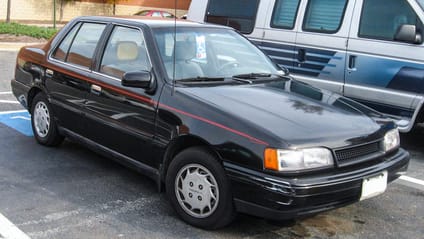
Hyundai arrived in America in 1986 with the Excel, a $4,995 subcompact that sold a spectacular 168,882 units in its first 12 months. Fortune magazine named it one of the best products of the year. America, it seemed, was ready for a cheap Korean car.
But the problem with selling 168,882 cars to people who don't yet know your car’s a heap of junk is that… pretty soon they’re going to find out. Excel switches snapped off in owners' hands. Engines blew. Bodies rusted. Air conditioning gave up on hot days, which is kinda when you really need it. By the early Nineties, American junkyards were filling up with low-mileage Excels that had simply stopped.
The reputational damage would take Hyundai years to repair. But it got there, largely by building cars nothing like the Excel.
Get all the latest news, reviews and exclusives, direct to your inbox.