

47
The wide-ranging remit of the Volkswagen group ranges from affordable urban transport to record-smashing hypercars
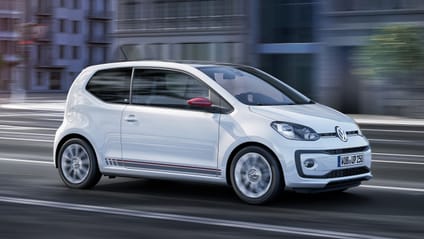
‘People’s car’. The very translation of Volkswagen from its native German suggests something the Up precisely represents: a cleverly crafted pod that easily accommodates four folks and a careful curation of their belongings before whisking them around cheaply. It launched in 2011 and was sold for comfortably over a decade before retirement – forever the sign of a very good product indeed.
Its powertrain options spanned from thrummy little 1.0-litre entry models to the fully electric e-Up and turbocharged Up GTI, with the latter still attracting very strong money. Yet two grand can get you a well looked after base Up with a low owner count – it’s in this thriftier form that its original remit feels best filled.
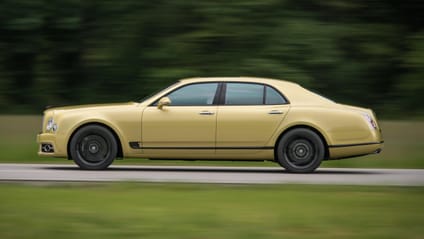
You’re surely all too aware that the Volkswagen group owns (or has owned) all manner of other carmakers, all primed to deliver people’s cars for, well, all manner of people. Sitting a mite higher up the price and poshness scale than the diddy Up is the mighty Mulsanne.
Launched in 2009, this was Bentley proving it still intimately knew its tradition despite VW ownership since 1998. A 6.75-litre V8 with half a century of history sat beneath its lengthy nose, while the interior behind it felt as spacious and well upholstered as an English Heritage property. It feels like a car of superlatives, but with careful shopping, no longer costs as such.
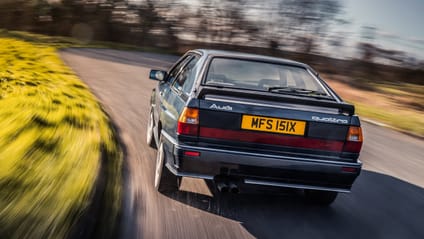
Volkswagen’s ownership of Audi dates all the way back to the 1960s, meaning there are dozens of all-time greats we could pepper this list with. The skinny, aerodynamic smarts of the A2 city car. The design icon TT. The hypercar-troubling RS6 holdall. Yep, Audi’s four rings have adorned all manner of very memorable vehicles.
Yet the biggest hero of them all is surely the one that’s informed nearly every Audi following its 1980 launch, and the pioneer of four-wheel drive as a genuine benefit to a performance car (or indeed competition car…). That the Quattro continues to look ice cool is a mere bonus. Prices aren’t exactly low nowadays, but if you can deal with a six-figure mileage, this one’s cheaper than a new Q3.
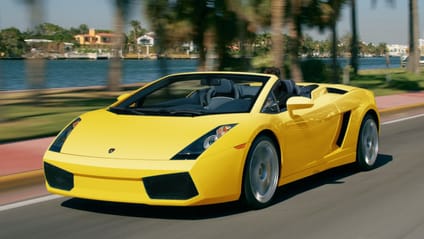
It was via Audi that Volkswagen picked up Lambo in the late 1990s, adding the Italian supercar icon to its swelling roster of more luxurious, less pragmatic brands. Fears the contemporary Diablo would be sanitised proved unfounded and while the Murcielago and Gallardo which followed under full Audi control were predominantly four-wheel drive, the flame that always licked bright in Lambos wasn’t extinguished.
The Gallardo lost the scissor doors in lieu of dull old conventional items but countered with a soaring 5.0-litre V10 engine – one which outmuscled its rival Ferrari with ease. A whisker under £60k makes this example the cheapest route into a Bull-badged car in the UK right now…
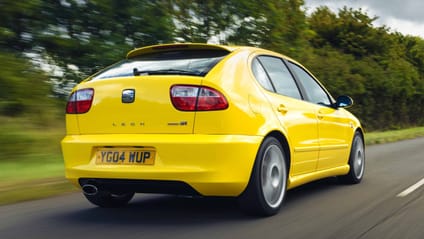
Volkswagen is entwined in Seat history. Back in 1948, VW lost a bid against Fiat to partner with a host of Spanish banks (and the Spanish government) in the founding of Seat; by the mid Eighties, Seat and Fiat had parted company and Volkswagen soon swept back in to secure its second shot at managing the brand. Fair to say it’s been a success, too, even if Cupra has now somewhat cannibalised its creator having advanced from sub-brand to real deal.
It’s the products of Cupra (originally short for Cup Racing, fact fans) which always spark our interest most, be it the day-glo Ibiza hot hatches of the hedonistic Nineties or the more eminently capable Leons which followed. This Mk1 Leon Cupra R slaps bright yellow paint and a slick Giugiaro design on some proven fast Golf underpinnings for an experience that’s “gloriously raw, gloriously analogue.” And all for under £5k.
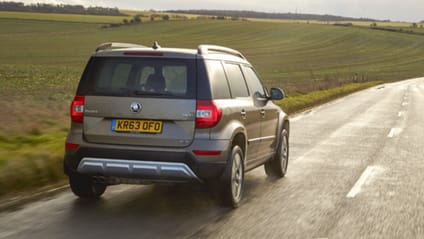
Not content with one, budget-minded Euro brand, Volkswagen began its acquisition of Skoda to slot below Seat in 1991, culminating in a complete buyout by 2000. The automotive equivalent of buying a shabby old barn to renovate into bougie open-plan living, VW spotted and almost immediately mined the potential. The Nineties Felicia sprinkled German knowhow through an existing Skoda platform to carve out something genuinely competitive; the Fabia and Octavia which followed it have quietly transformed the value for money car market and each remains on sale deep into its fourth generation.
It’s the shorter-lived Yeti we’re most besotted with, however. Its rugged body feels much more authentic than the SUV norm, as do its individually removable ‘Varioflex’ back seats which can turn it into a gnarly little windowed van if you so please. This one’s diesel and 4WD for utmost ruggedness (though ULEZ friendliness) and looks a bargain for less than four grand.
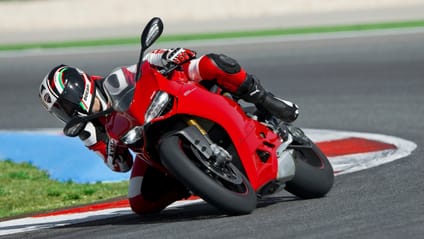
In a change of pace that fully reflects the breadth of the Volkswagen group, we move from a chugging diesel crossover to a near-200mph superbike. Ducati joined the clan in July 2012, acquired via Audi and run by Lamborghini. Let’s ignore the complex flow chart that is ‘Ducati ownership’ and instead focus on the simple beauty that nigh on all of its bikes exude.
For those not versed on lidded, leather-suited pleasure, ‘Panigale’ is shorthand as brisk and evocative as ‘Speciale’ or ‘Integrale’ in its signposting of halo Ducati road racers. (Don’t the Italians have a wondrous way with words?) This 1199 arrived shortly after the VW buyout and entwines hypercar performance with cossetting driving aids and a tempting ten grand price tag.
Hold on tight…
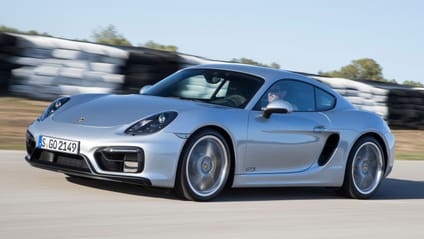
Mere weeks after Ducati joined the fold, Porsche followed, concluding an ongoing saga which had begun in 2008 when Stuttgart tried to buy out Volkswagen. An about-turn ensured the opposing scenario occurred just four years later, but as the tough shift to electrification punishes Porsche’s pioneering spirit with the Taycan, we assume the support of an enormous group is rather welcome.
The ‘981’ Cayman was fresh on the market when Porsche bigwigs put presumably very well engineered pens to Volkswagen-headed paper; this GTS version remains pick of the bunch for its mix of everyday usability and gently composed swagger. Though at a whisker under £50k, it’s lost bafflingly little money since its 2015 registration…
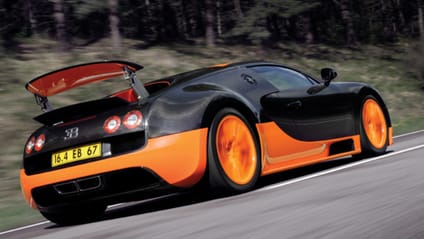
Sure, Bugatti is no longer a part of the Volkswagen group. But it would never have reached the lofty design and engineering heights it retains under Rimac ownership without 23 years under the watchful eye of Wolfsburg.
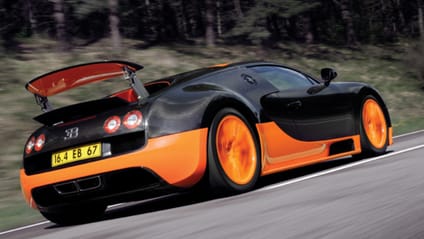
The Veyron was the car at the front of VW chairman Ferdinand Piëch’s mind when the deal was signed just days before Christmas 1998. An at times tortuous development process felt worthwhile when a refined, unruffled coupe proved itself capable of 253.81mph in 2005. Just mind the the tyre bills each time you attempt to prove that to your pals…
This Veyron Super Sport is quicker still, mind, a former Guinness World Record holder following its 267.86mph run in 2010 at Volkswagen’s Ehra-Lessien test track. It’s been surpassed since, of course, but still represents a vivid slice of history for its £3.5m asking price.
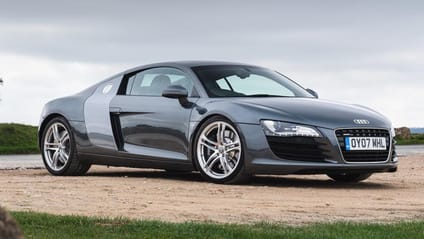
The greatest Audi in history? Sure, the Quattro further up this page will forever be an icon and innovator all rolled into one. But the original R8, in its purest, V8 powered, manually shifted form, is perhaps the smartest handling and most exquisite looking car in four-ringed history.
It took sensible four-wheel drive handling and made it truly expressive, remixing the Audi recipe entirely with its mid-mounted engine, bold sidebladed silhouette and unabashed driver focus. There’s not a dud amongst the numerous R8s which followed it, the car eventually morphing to become V10 and twin-clutch only in its second generation, yet little less thrilling for it. But a first-gen coupe, with its high-revving 4.2-litre engine staring coquettishly back at you through its glass cover, feels like the nailed-on future classic of the R8 story. A mite under £40k strikes us as very good value on those terms.
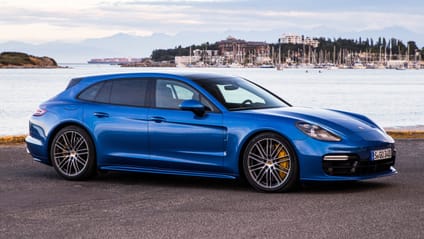
Yes, the Cayenne famously helped save Porsche, but you can have a decent chunk of its practicality in a shape far more likely to cut a dash at your local cars ‘n’ coffee. The Sport Turismo lived a relatively short life, launched in 2017 and sadly not replaced with 2024’s big Panamera update, but it shone brightly in its handful of years’ service.
Never penned as a true Volvo alternative, its USPs over a stock Panamera (which also had a practical hatch) comprised its lower boot sill for easier loading and a fifth seat, though we always preferred the Turismo’s neater, more natural proportions, too. Hybrids dominate the classifieds, but freed of the constraints of company car tax brackets you can fully indulge in the 4.0-litre V8 of the Turbo.
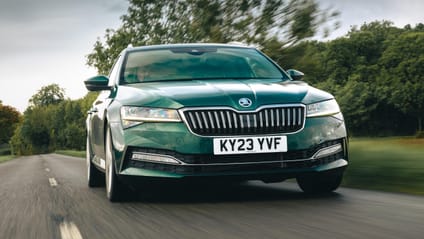
Or you can get your fast, practical fix for a fraction of the price elsewhere in the group. The Skoda Superb has a big name to live up to but has regularly done so, most notably in this third-generation form launched in 2015. Its handsome chiselled looks, solid handling and simply enormous rear quarters all combined to truly seal the deal of the Skoda revolution in one very beguiling motor car. Its peak came in 276bhp 4x4 form, though Skoda itself is only happy to prove how much more Superb your hatch or wagon can yet become. Consider this stock £17k example a mere jumping off point…
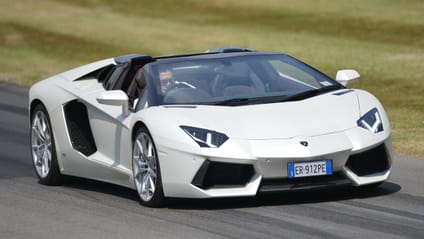
With its Murcielago predecessor going doolally in the classifies – values for all iterations soaring beyond any degree of sense, most notably the rarer manuals – you’d better snap up an Aventador while they remain vaguely in the realm of real-world. All versions deployed a 6.5-litre V12 engine, one gloriously free of turbocharging and electrification, with each and every Aventador hitting 62mph in under three seconds and topping 217mph. This silver-blue on beige Roadster is about as cheap as they currently get at £175k.
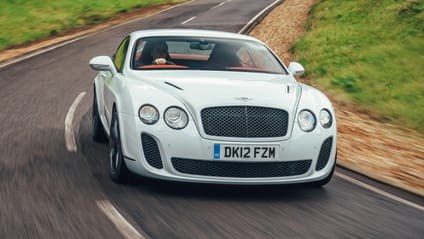
The Conti GT was the first fully new Bentley launched under VW ownership way back in 2003. Dozens of iterations have followed since and they’re all quite lovely things, but true specialness was bestowed upon the limited-run Supersports. Bentley made 1,207 between 2009 and ’12, when it was officially the most rapid road car in a brand history hardly short on power or speed.
This was Bentley doing a track special in its unique style; you could bin the back seats and morph the fronts into buckets while carbon-ceramic brakes helped keep check on its 621bhp, 206mph potential – yet fine metals and leathers still pervaded inside. Priced from £163,000 new, you can pay a mere fifth of that now.
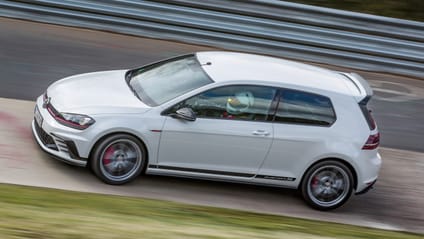
Similar money buys you a bona fide Vee-Dub with a two-seat, trackday mindset – and a car that also happens to offer one of the greatest hot hatchback experiences in living memory and a taste of a rather frenzied moment in ‘Ring record history. Fastest front-wheel-drive car honours at the Nordschleife live with the Golf once again, but a decade ago the subtly stripped-out Clubsport S snared them in an era when VW, Honda, Renault and Seat scrapped on a seemingly weekly basis to have the ‘quickest hatchback around a scary German toll road’ banner on their engineers’ email signatures.
Yet narrowing this Golf’s appeal down to its 7min 47.19sec headline is to ignore the fact it’s a composed, comfy and classy take on a hardcore formula, a car whose mixture of daily liveability and tenacious cornering really does border on the magical. It’s Volkswagen at its all-encompassing best.
Get all the latest news, reviews and exclusives, direct to your inbox.