




Big Reads
The secrets behind the Bugatti Veyron: here's the real story of the car that changed everything
The Veyron’s inception was... tricky. Fortunately, TG was there to watch the drama unfold
Bugatti’s official story is that the seed of the Veyron was planted in 1997. VW Group boss Ferdinand Piëch and his powertrain chief Karl-Heinz Neumann were on a Japanese train brewing up engine ideas. Piëch sketched ideas for an 18-cylinder. Yes, 18 not 16. We’ll come back to that.
Yet in 1999 Piëch himself told me his obsession with high cylinder counts went further back, to the 1970s. Some context: he began his career at the family firm, Porsche. His mother Louise was sister of the car dynasty’s second generation, Ferry Porsche. He was responsible for the all-conquering 917 racer. He told me he’d tested a 16-cylinder engine to further boost the 917’s output, but found a turbo 12 worked better. He turned one of the redundant 16-cylinder crankshafts into a candlestick in his house. An engine obsessive, then. He added he’d also studied an Italian Navy 18-cylinder engine in the 1970s.
Advertisement - Page continues below
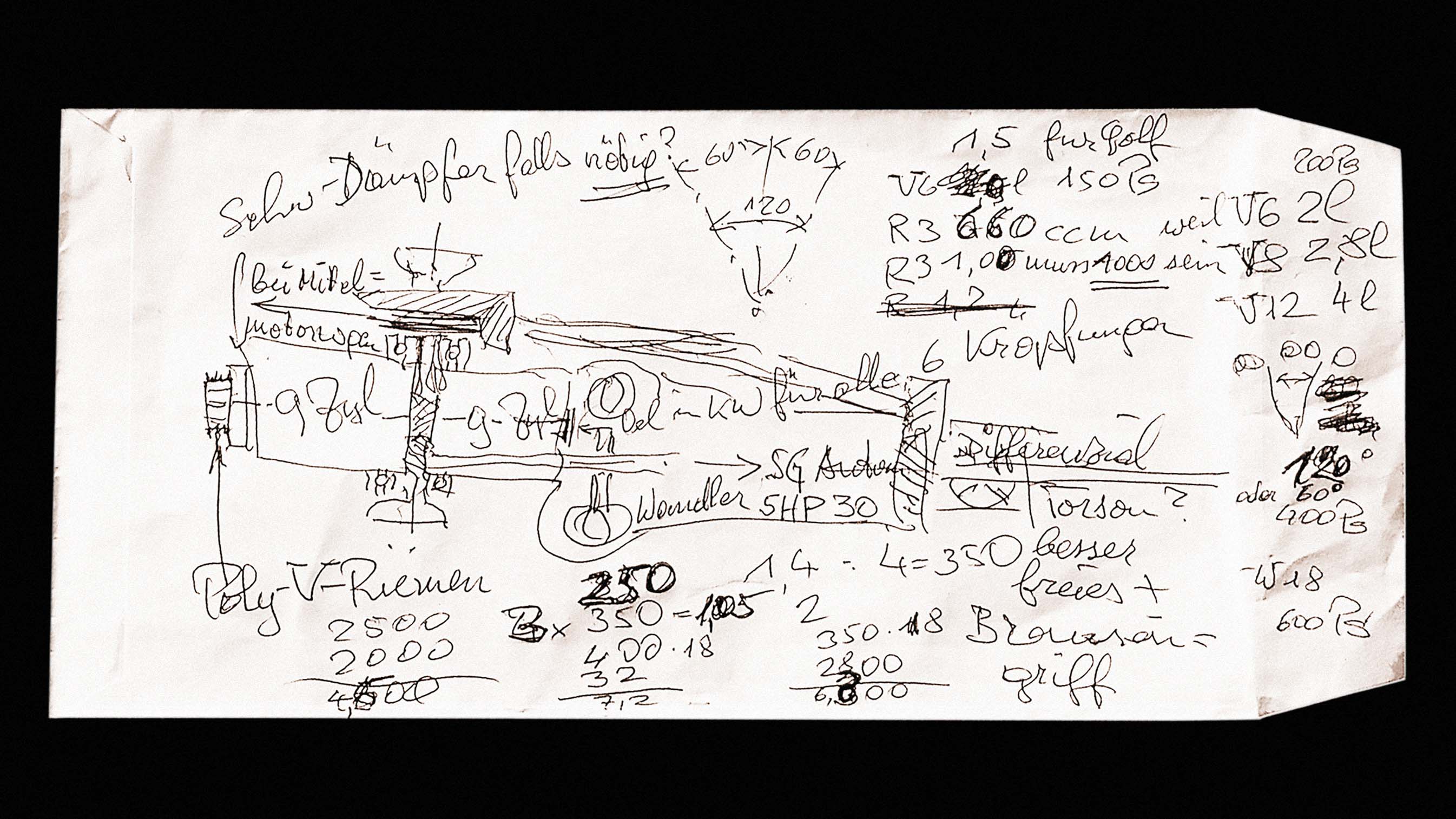
Piëch’s 18cyl sketch – on the back of an envelope – would lay the foundation for the W16
History records that he was as abrasive as he was inspirational, so the family pushed him out of Porsche in 1972. He went to Audi as chief engineer, then chairman, and moved it upmarket with five-cylinder turbo engines, Quattro drive and the Ur-Quattro itself, galvanised steel, the aero 100, and aluminium bodies. Audi profits boomed. So he got to run the whole parent VW enterprise, and raised its footprint by buying Seat and Skoda, slashing costs with his platform strategy across the brands. Which freed up cash for his some of his wild passion-projects...

Anyway, he remembered the 18-cylinder engine when he realised Mercedes was aiming for the stars by developing the V12 Maybach. “Anyone who makes a V12 can easily turn it into a V16. But an 18-cylinder is unique.” He wanted to get an 18-cylinder out there first. But he needed a car.
In 1998, flushed with ambition and profit, his VW Group bought Lamborghini, a portion of Cosworth, Bentley and, from Romano Artioli who’d resurrected then bankrupted the brand with the EB110, the rights to Bugatti. The Bugatti deal was done before Bentley, but wasn’t announced until afterward because it took the lawyers months to annul so many deals for Bugatti licenced tat – sunglasses, scent, scarves. That gave longer than people realised for Piëch’s friend Giugiaro to secretly design and build a four-seat two-door concept with an 18-cylinder engine up front, the EB118. It appeared at the Paris show in September 1998. For Geneva the following spring there was a four-door version, the EB218.
Advertisement - Page continues below
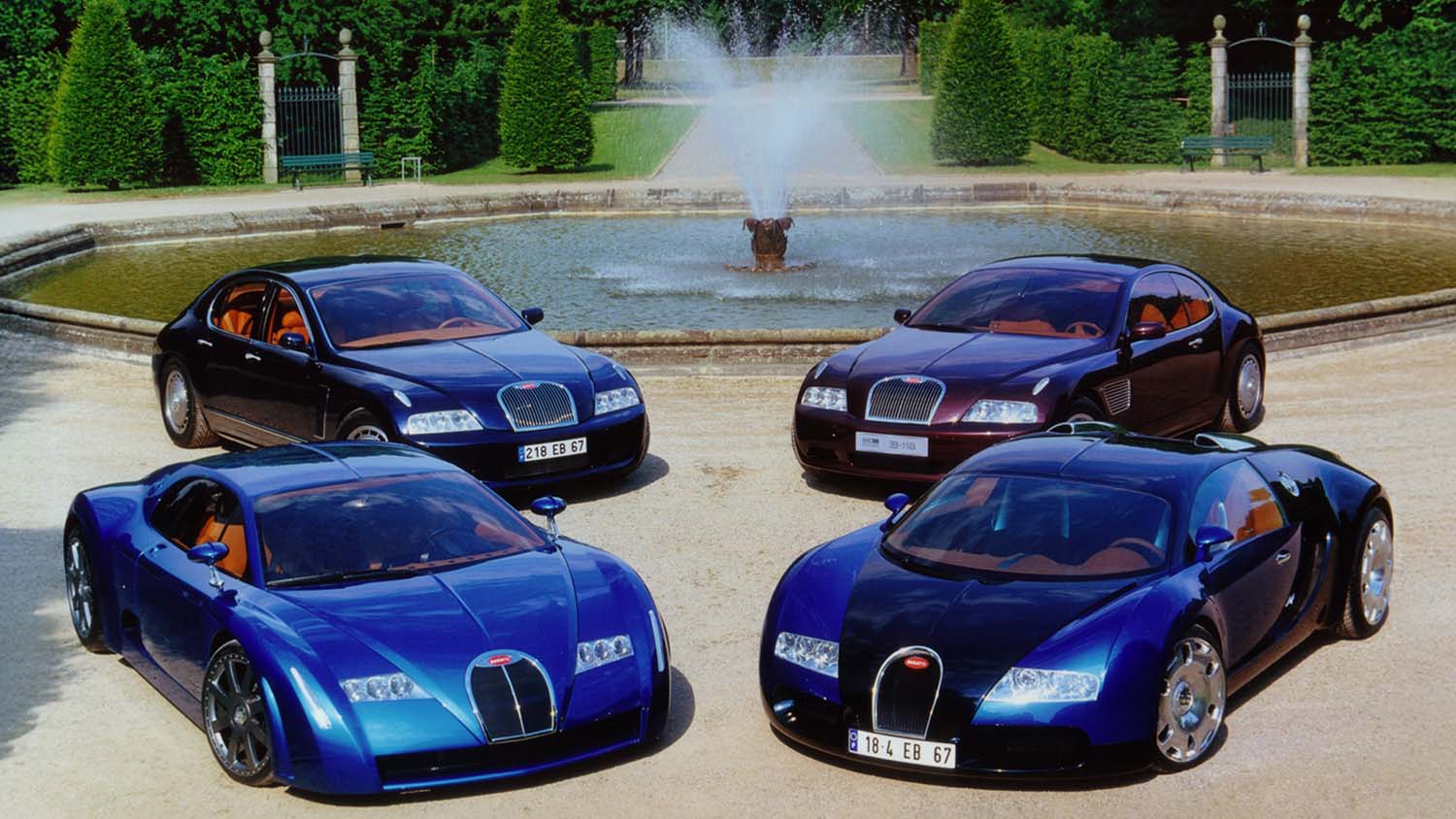
Then a decisive turn. Bugatti was to be mid-engined. For the Frankfurt show that autumn, the Chiron 18/3 concept appeared. And finally just two months later, at Tokyo, appeared a design that looked much like the final Veyron, drawn largely by a young Josef Kaban. This was the Veyron 18/4.
Four months on, and a new millennium. At the Geneva show in March 2000 Piëch brought the house down. The Veyron would have 1,001 horsepower, do 250mph, 0–62 in less than three seconds, and be comfortable enough to drive to the opera. Gulp. Then another surprise when, that autumn, the car appeared again, now called EB 16.4 Veyron. The engine had become a 16-cylinder of 8.0 litres. That’s two Passat W8 engines end to end. Or one and a half Phaeton W12s. Only with four turbos.
Even so... cars aren’t developed like that. Cars are developed like this. There are some targets, which are kept very secret. A mechanical package and powertrain are conceived to meet them. A body is designed that wraps around the powertrains and its cooling and aerodynamic needs. And then the public gets to see the shape. But Piëch, the man who always used fear as a management tool for his engineers, did it upside down and back to front. First the shape, then an announcement of the performance targets, then the selection of an engine, then the impossible puzzle of fitting it all in, and keeping it cool, and keeping it in a straight line and on the ground at 250mph.
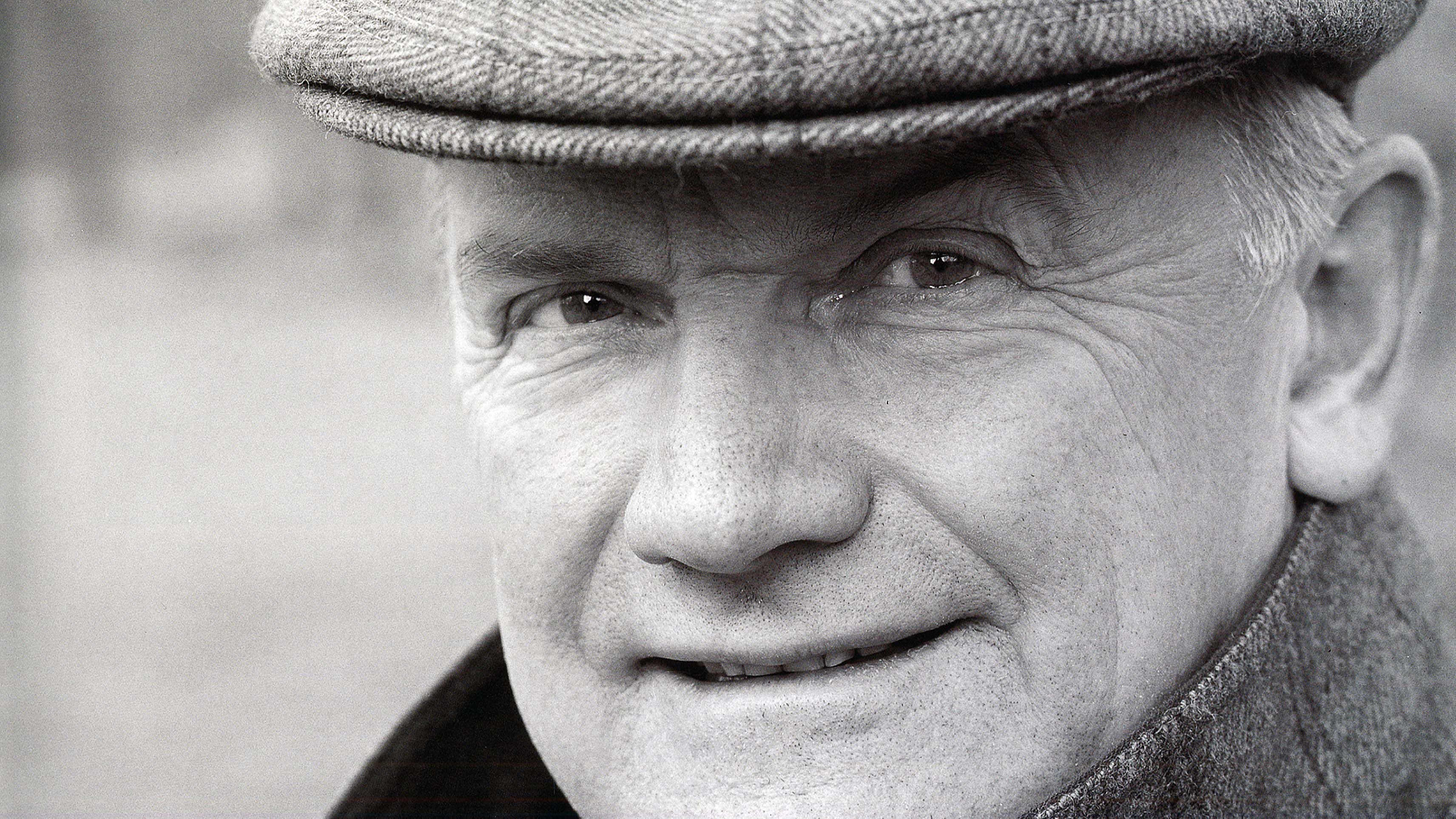
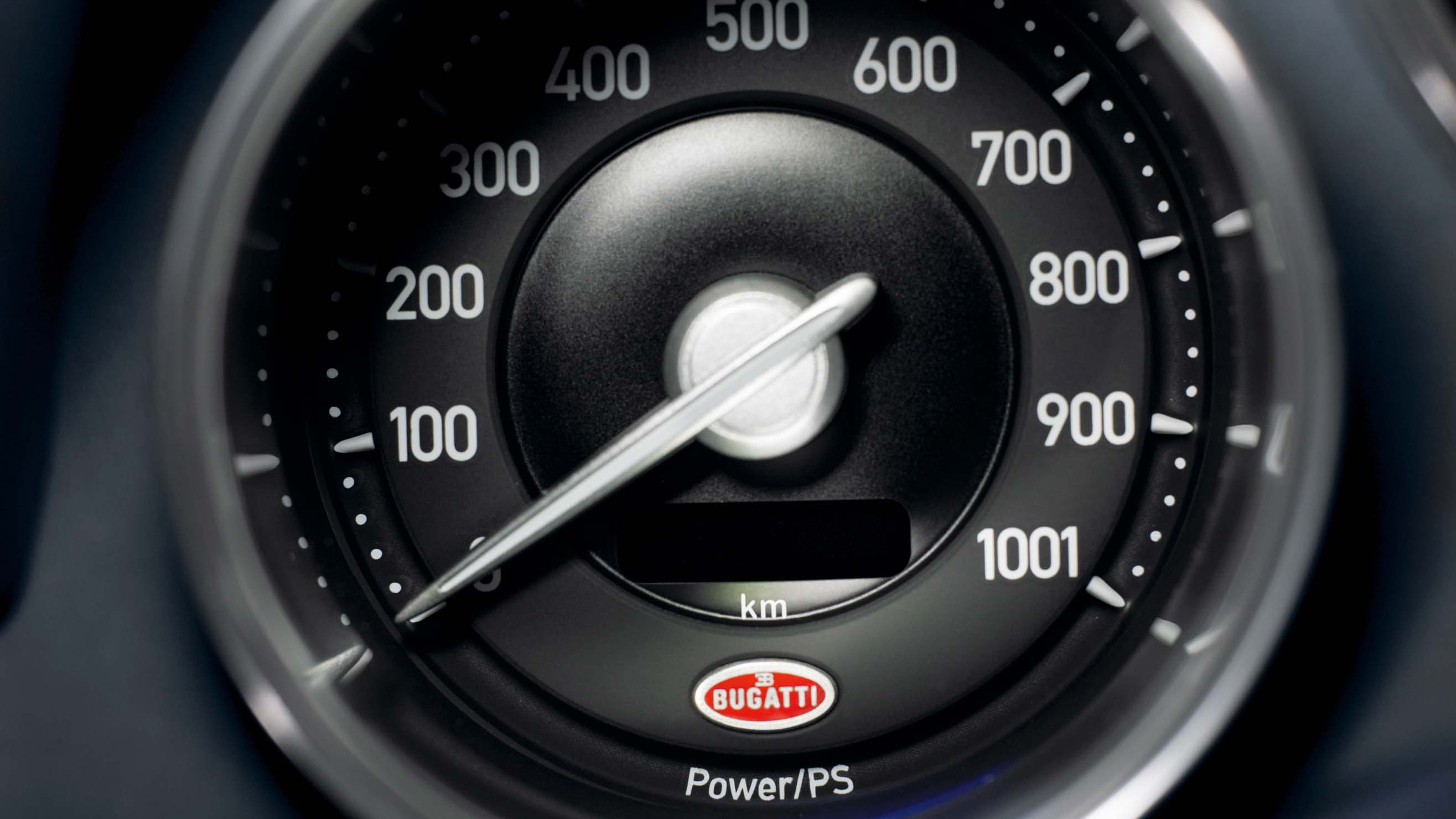
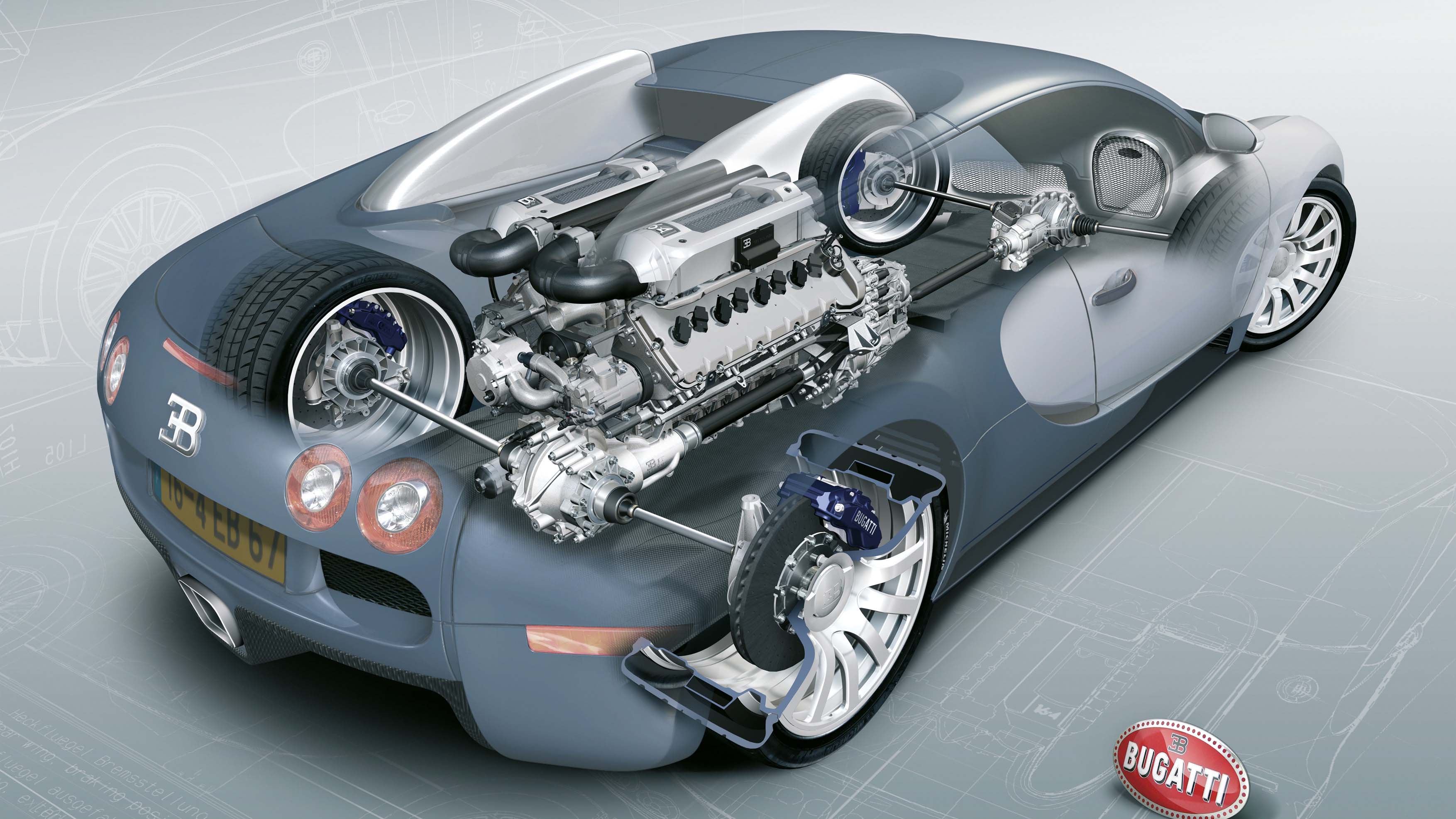
Piëch gave the job of developing the Veyron to his powertrain lieutenant Neumann, a man much less aristocratic than Piëch but equally direct. (On the launch of the Passat W8 automatic he told me he thought that car’s transmission was ‘s***’, and I could only agree.) By the way, they knew the 18-cylinder was unworkable long before the concept car switched to a W16. Later, Neumann confirmed to me, “Piëch said 1,000bhp. That wasn’t possible with the 18-cylinder, which was basically six of our little three-cylinder Lupo engines. The best we could do was 555bhp".
The project’s jeopardy was towering. This back-to-front development approach wasn’t being applied to a VW hatch where experience would probably have seen them through, nor to a single-minded tear-arse track refugee where rough manners would have been acceptable. No, they were going into terra incognita. This most powerful car in the world was to come wrapped in luxury, perfect finish, and suave docilty.
Having laid out the specs and performance in 2000, it was in 2001 that Bugatti publicly scheduled a 2003 launch. Piëch deepened the commitment by buying the old Chateau St Jean in Molsheim, eastern France, where Ettore Bugatti had made his headquarters in 1928. The chateau was restored from 2001 to become a museum and hospitality centre for Bugatti customers. They embarked on construction of a factory in its grounds.
Between the 2001 announcement and the final launch, we critics had ample time to snipe. How could any ordinary mortal drive a 1,001bhp engine, 4WD or not? The Porsche Carrera GT launched in 2003 with 627bhp. Rumours leaked that things weren’t going smoothly. Customers were told they’d have Veyrons from 2004, and journalists (including me) were invited to drive it in July 2003. Just days before that event, our invitations were cancelled.
Top Gear
Newsletter
Get all the latest news, reviews and exclusives, direct to your inbox.
Because the car was being re-engineered. A year before, Bernd Pischetsrieder, ex-boss of BMW and Rolls-Royce, had replaced Piëch as VW Group chairman. He drove the Veyron and didn’t care for it. It was too slow to react for his taste – he owned a Ferrari Enzo. Neumann told me: “Bernd Pischetsrieder said he wasn’t happy with the steering behaviour. For him it wasn’t direct enough, so we changed the ratio from 20:1 to 18:1.” That’s a big time-consuming component change and the car needed a new suspension tune to match.
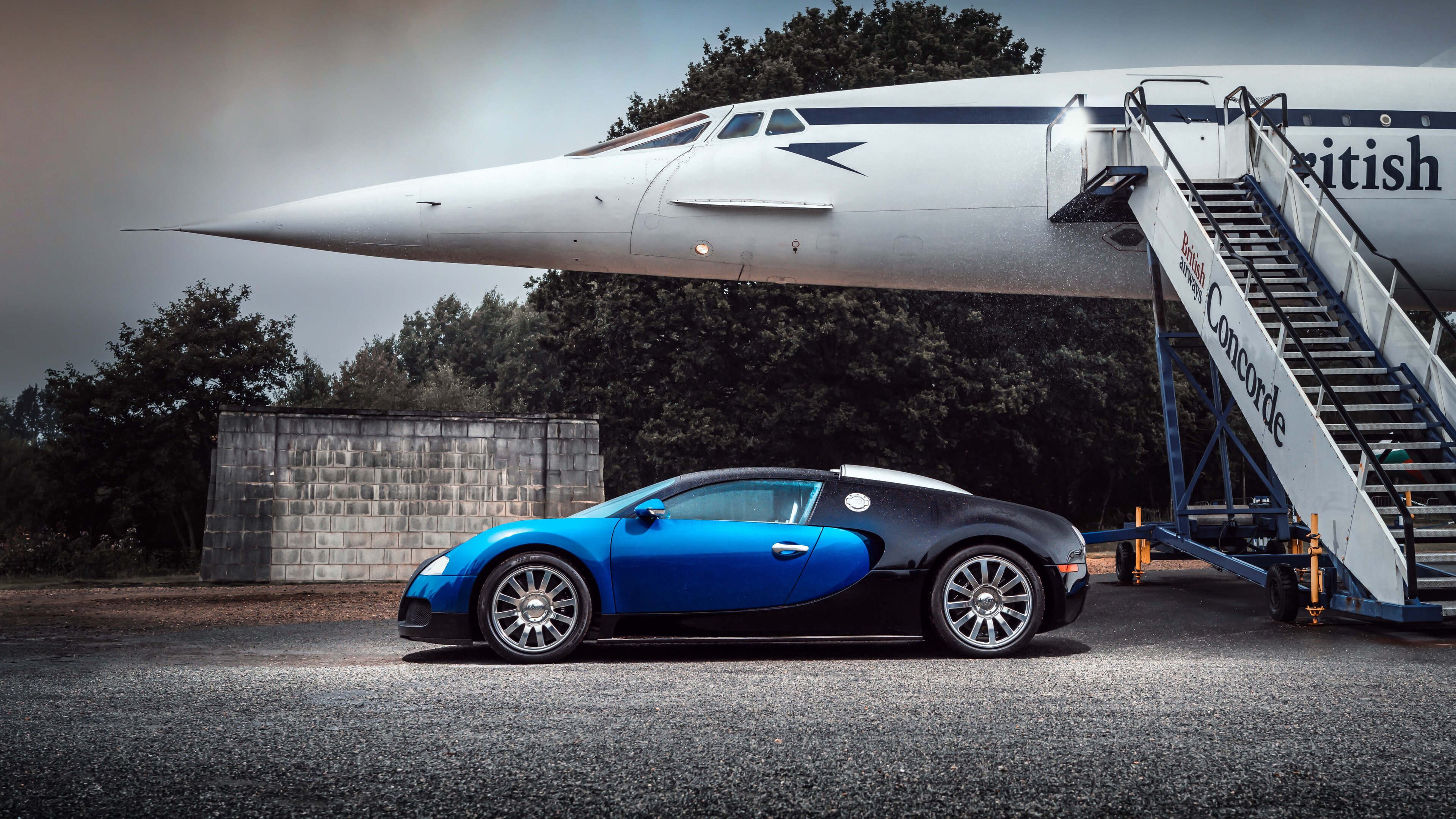
In August 2003 the Veyron did demo laps in front of the crowds at the Laguna Seca historic meeting, and spun. In September Pischetsrieder personally issued a statement to the press: engine, transmission and cooling were fine – it was just the steering. The next month at the Frankfurt show Bugatti press conference Pischetsrieder said little before pushing Neumann onto the stage. Neumann castigated the press.
“According to everything I’ve read [in the media] about the vehicle, what we should be presenting here today is nothing more than a pile of junk.” That’s nice. Your car’s late and being fettled and the bad press is somehow the press’s fault. He waved a graph showing perfect cooling performance, and said the tyres had been tested at 440kmh (275mph). It must have been on a rig because he later admitted to me it had lately grazed a barrier at Nardo at 380kmh.
As for the steering change, Neumann was typically blunt. “It’s really sporty now, and I’m sure different people like it the old way. But he’s the boss.” I also spoke to Loris Bicocchi, the lead development driver who’d set up the EB110 and Pagani Zonda. He preferred the sharper steering. Anyway, Neumann was clear that change was the reason for the press launch delay. He didn’t think the Veyron needed to compete with a Ferrari anyway. I mentioned the Enzo and Mercedes SLR McLaren and Porsche Carrera GT.
“For me, those, and the McLaren F1 [out of production but still the fastest car in the world] are pure driving machines. In our car you could go to the opera. Our car has more luxury, and its design I’d say is better. The clientele is completely different. The people who are interested in our car own Bentleys, maybe a Porsche 911. Basically none of them own Ferraris.” So the Veyron wasn’t just facing cliff-like engineering challenges, but conflict in the camp.
Those challenges? According to Neumann, not the engine, or even the cooling. “No, aerodynamics was the biggest challenge. That the car doesn’t fly. We needed a lot, a lot, of wind tunnel testing. With the moving tail spoiler we’ve got enough downforce now, about 100kg at the rear and 80kg at the front at top speed.”
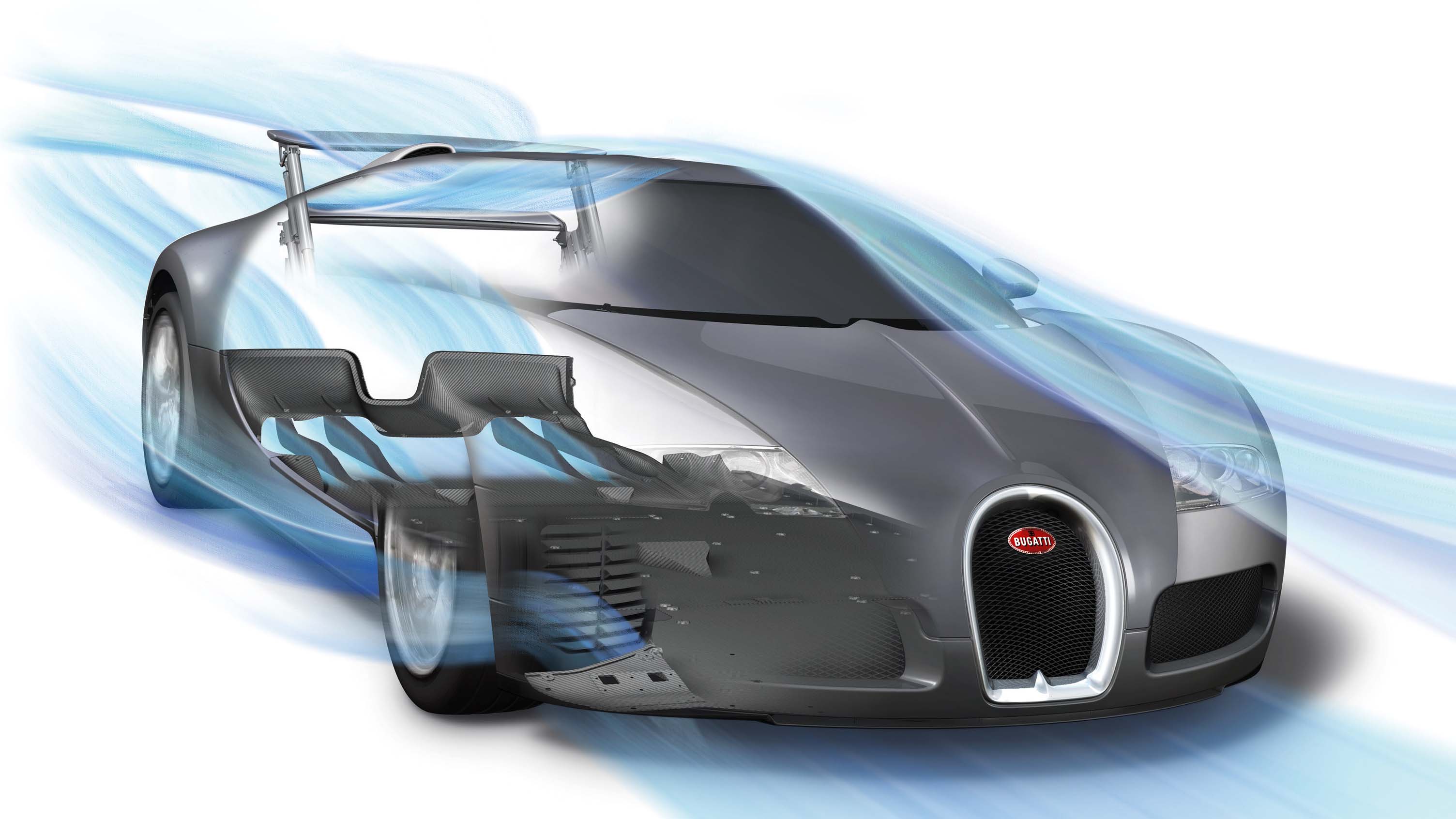
Despite all the carbon fibre and aluminium, he admitted it was heavy even before a spec was ever published. There was all that luxury for a start – acres of thick leather, an astounding Burmester stereo, electric everything. Then the huge engine, the 10 radiators, the dual-clutch transmission capable of taking all that torque, the transfer case and four driveshafts and three diffs, the powered rear wing... Neumann admitted before launch it weighed “too much. But I wouldn’t change anything. This is the weight you get if you transfer the design and engineering vision". So its power to weight ratio was barely better than the 660bhp Enzo’s.
There was every chance, if they ever finished development, that even if you put a hotshot driver in it, a Veyron was slower around a dry track than those other contemporary hypercars... but in the wet with a mortal behind the wheel it’d lap a fair bit quicker.
So with Pischetsrieder at the head of the VW Group, before anyone from outside the company drove the car, Piëch’s legacy looked like it might be tarnished. And then another departure. Neumann, the engineer who headed the Bugatti division and was most responsible for the execution of Piëch’s vision, left in November 2003. He told me, “I am at retirement age. It’s not VW’s policy to extend it". So, not pushed then.
Meanwhile VW Group insiders, aware the whole project was becoming a bit of an expensive albatross, started to hint the overall build number might be capped at 50, not the previously announced 300 coupes, to put a lid on potentially vast losses. But Pischetsrieder remained defiant, telling me that because a Veyron was largely hand-built, he knew in advance the build cost of each one would be about the same as any prototype, and that was the same ballpark as the projected Veyron price.
The project’s jeopardy was towering
Neumann’s successor as boss of Bugatti was a very different character: Thomas Bscher, a much more suave individual, with a better understanding of the Veyron’s likely customers. A vastly successful banker who’d owned many lovely classic racers, a McLaren F1 road car and won a European GT championship in the race version. In 1999 he raced a BMW V12 LM prototype at Le Mans, and that’s how he met Pischetsrieder.
Engineering development of the Veyron fell to Wolfgang Schreiber, who in 2012 returned to Bugatti as president of the company. (He later attempted to sue VW for millions, saying he wasn’t rewarded for developing the DCT back when he was group transmission chief.)
And finally... in October 2005, two and a bit years late, the Veyron was ready for a launch to the press. I flew out to Sicily but didn’t actually drive it. We’d brought along Gordon Murray, McLaren F1 man and emperor of lightweighting, to do our test of this two tonner. And guess what, he was blown away. Everyone was.
Yet I’d energetically poured five years of my finest scepticism into this car. I couldn’t quite believe them all. Then Jeremy Clarkson raced one from Italy to London against James May piloting a plane, and won. I had to deliver the car for the TV shoot. I drove it through towns, got to 180mph and back in about 20 seconds of clear autostrada, and sent it up one of the Alps’ great passes, the Gran San Bernardino. This car might have headbutted the laws of diminishing returns, yet never felt anything other than graceful, responsive and exquisite. And totally, totally finished.
I realised I’d never been so happy to have been so wrong.
Trending this week
- Car Review
Aion UT
- Car Review
Porsche Panamera