


25
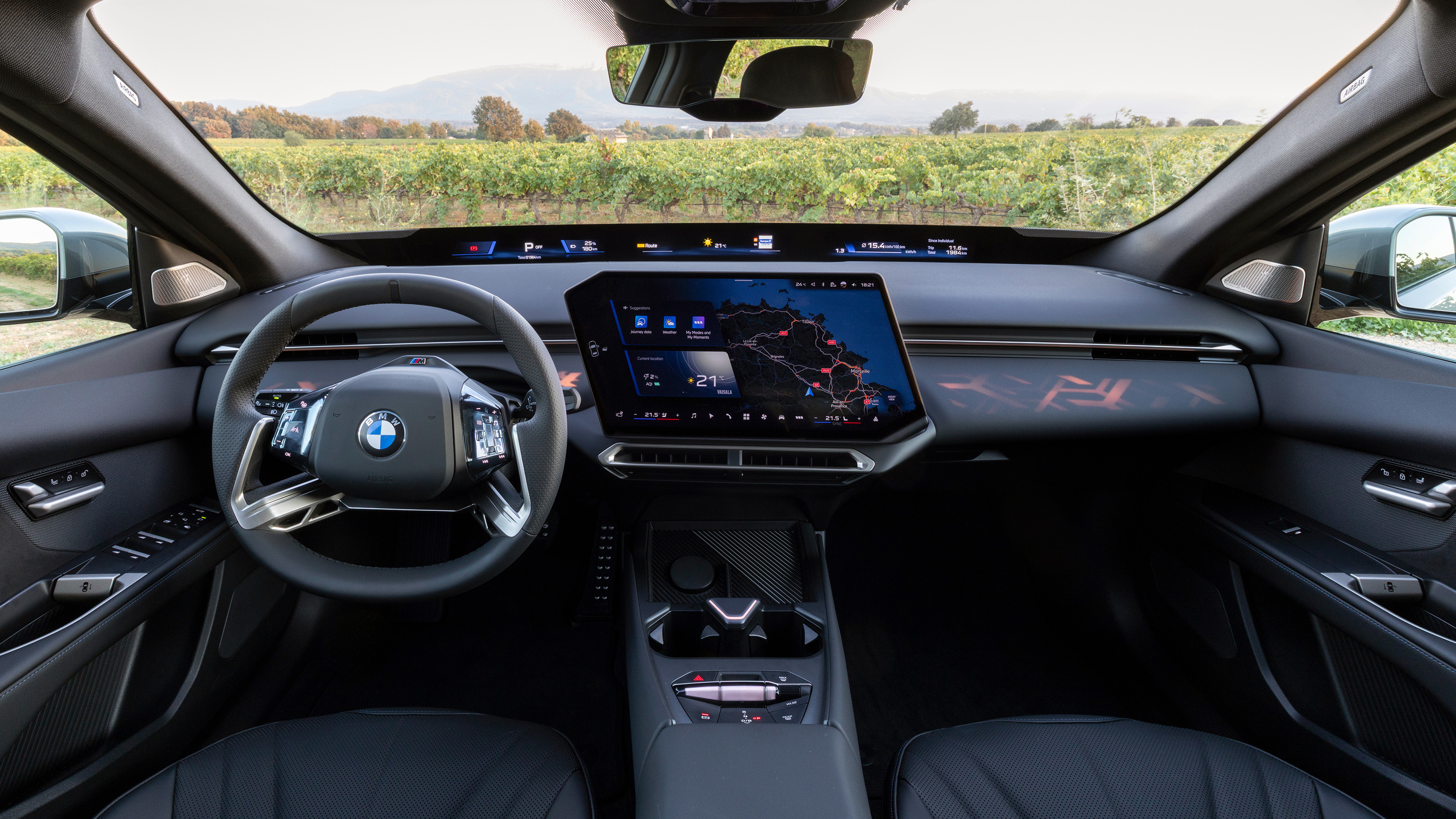
Slide into the driver’s seat and the first thing you notice is the Panoramic Vision, which operates in cahoots with the 17.9in touchscreen and BMW’s OS. It’s a strip that stretches right along the base of the windscreen, and takes on the role left behind the absent (and almost universal) instrument cluster display.
Here you’ll find speed, navigation and any number of other useful widgets you care to drag into it when you set the car up. It teeters on the edge of being gimmicky, but we can’t help but be impressed by the thinking behind the whole concept. Four different interior moods are available.
The graphics on BMW’s proprietary sat nav are rather distracting and actually a touch laggy. That’s a bit worrying given that it’s meant to work with the Level 2 driver assistance. Keep a firm grip on the steering wheel, eh?
The amount of available info also runs to overkill: with the head-up display on, the nav on the pano strip, on the central screen and the voice instructions, you’ve got guidance coming at you from all angles. Too many cooks spoil the broth, remember. Explains why we still managed to miss two different motorway exits. Google has been programmed into the sat nav for A-grade search. Of course, you might prefer to hook up Apple CarPlay or Android Auto. We usually do.
Meanwhile, the touchscreen is dripping with content, much of which is impossible to absorb on a cursory introduction. You could spend years driving an i3 and never really use all of it.
It’s also a route into a universe of customisability. Content, widgets and displays are configurable, with several colours and background images to choose from. Amazon Prime is present and correct (dangerous if you’re a shopaholic), and gamers can count on AirConsole and Boosteroid. There’s a Video content app for streaming too. Does anyone actually use all of this stuff? We’d be off getting a coffee while the car charges.
BMW says its Intelligent Personal Assistant AI voice activation is now unimpeachable. It can deal with navigation, music and podcasts, climate control and all sorts, all by means of natural language without the need for specific voice commands. Perhaps it won’t surprise you to hear that we still failed to make it work consistently.
It’s a high quality environment, though some of the materials are nicer to touch than others. Choose between Contemporary or M-themed interior treatments with various colours available. The basic one is a material called Econeer, finished in Vivid Grey. Does such a thing exist? Veganza is BMW’s sustainable textured textile. You can also have a white BMW Individual steering wheel, if you’ve gone for the bicolour digital white cabin.
There’s reasonable storage, plus wireless charging and USB-C sockets. We would have liked to see the doorbins lined; stick keys or a phone in there and they’ll bang about generating far more noise than the motor control units.
The i3 packs 420 litres of space in the boot, 30 short of what you get from the petrol car. But there’s a 58-litre frunk for your charging cables, so there’s that.
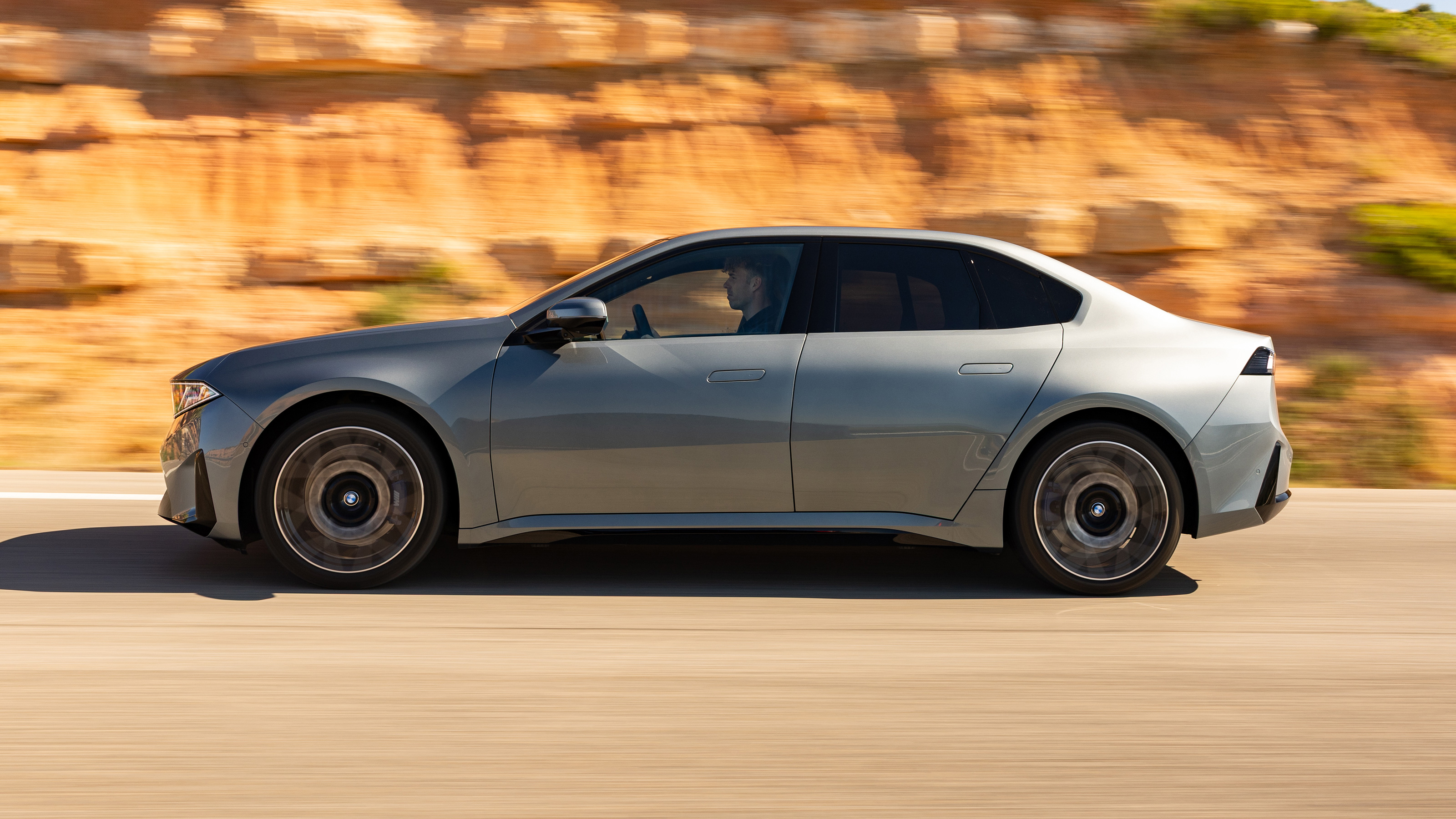
Good point. You sit higher and further forward. The seats are also a different shape in here compared to the petrol 3 Series. That lengthy wheelbase means there’s ample rear legroom even if you’re sitting behind a six-footer.
The wheel itself sits lower and feels a bit weird to begin with but gets better with use. It’s multi-function and uses ‘shy-tech’ so that the controls for driving assistance and parking functions are only lit when available. The infotainment stuff has haptic feedback. There’s a Harman Kardon audio upgrade available, too.
Get all the latest news, reviews and exclusives, direct to your inbox.
