




25
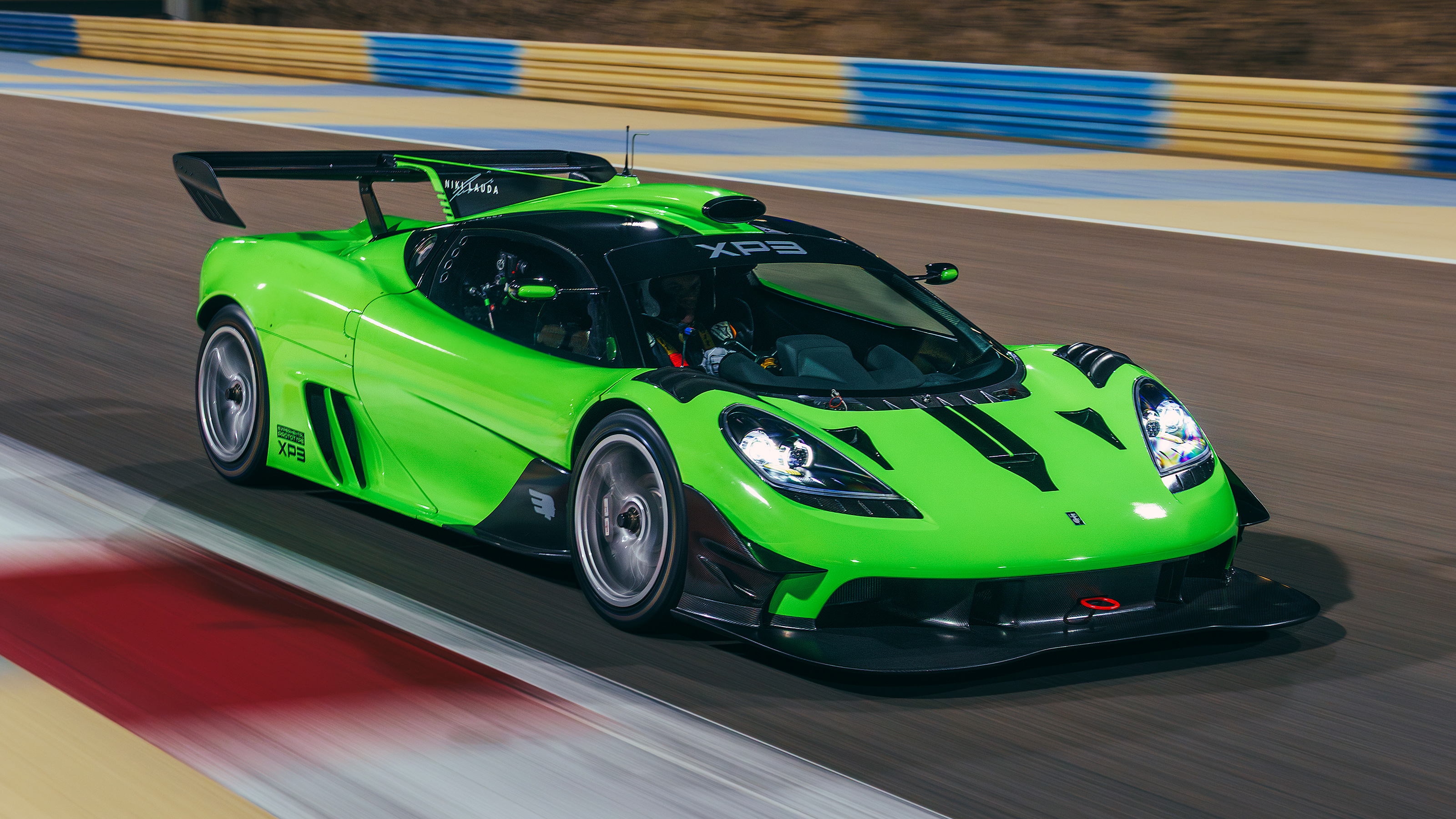
Exactly! This is the GMA T.50s Niki Lauda and it’s enough to make us go weak at the knees. Gordon Murray says this isn’t a ‘version’ of the T.50 supercar, but rather a parallel design and development programme around the same basic bones but with a very different brief.
The T.50s is a track-only car and just 25 will be built, each one named after the locations of the first 25 victories by Gordon Murray-designed F1 cars. Power from the 4.0-litre V12 is up to 761bhp at 11,500rpm and 367lb ft at 8,000rpm, it weighs less than 900kg wet and produces 1,200kg of downforce.
You could say that. The Cosworth V12 is already one of the truly great engines in the road car, but here it takes another big step to create something very hard to describe. It has revised cylinder heads and camshafts, is fed by a roof scoop for added ram-air effect and no longer needs the variable valve timing of the road car engine. It weighs 166.3kg, which is nearly 12kg lighter than the T.50 unit, and the compression ratio is up from 14:1 to 15:1.
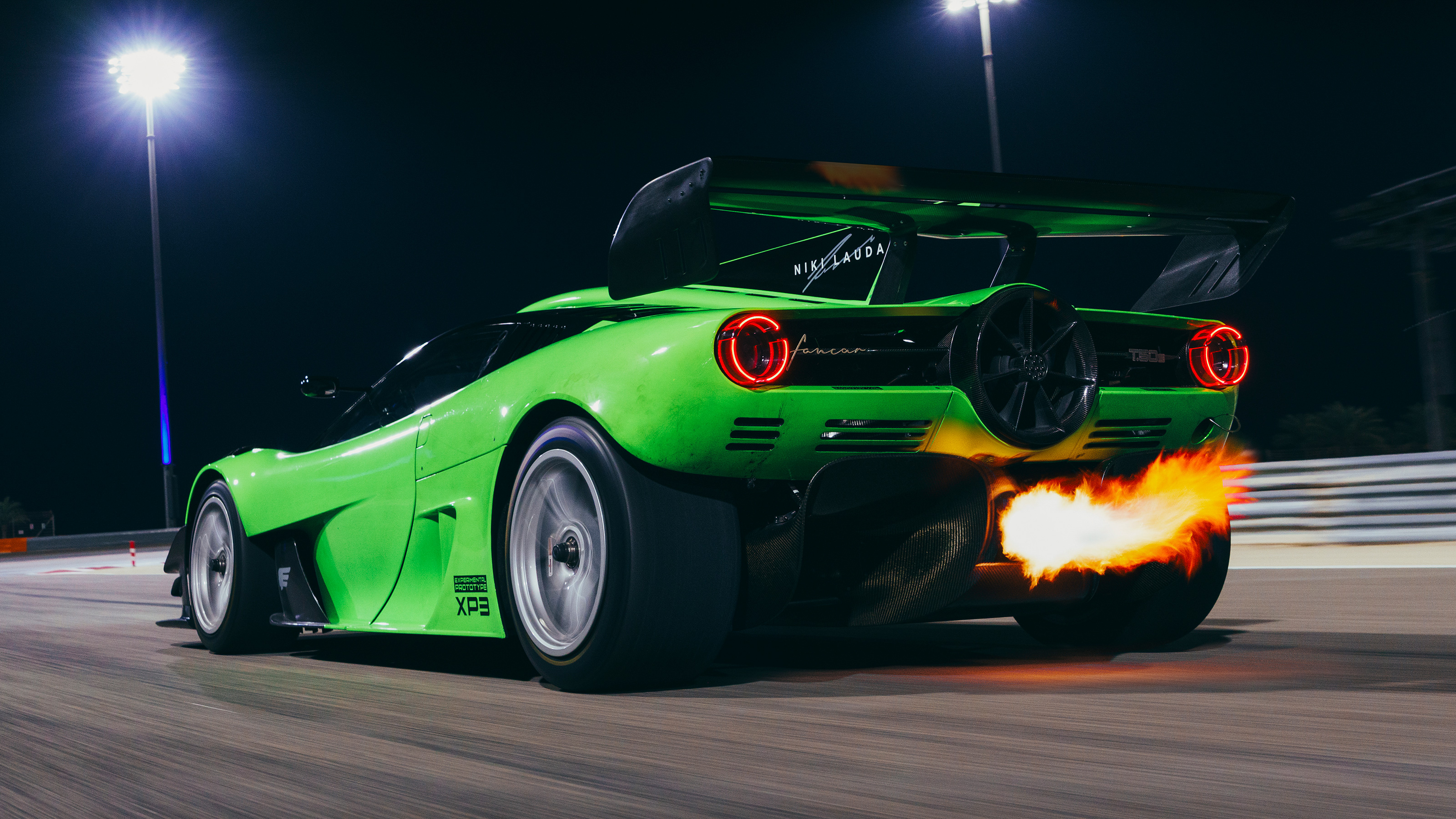
It also has 12 throttle bodies and two sets of injectors dumping fuel straight into the cylinders. The noise has more depth, more bite, more anger and it shoots some rather nice flames, too.
Perhaps the biggest departure in terms of philosophy at least, is the fitment of an XTrac IGS (Instantaneous Gearshift System) sequential ‘box. It’s 5kg lighter than the manual of the T.50 and will be offered with different gearsets depending on customer preference and the demands of their most visited circuits.
There are also real ‘carbon-carbon’ brakes for maximum performance and consistency, a thin-wall Inconel exhaust system (unsilenced on ‘our’ T.50s, the XP3 prototype) and magnesium wheels – once again the best combination of durability and low mass. Add all those up – or rather, take them away – and you get that significant and forensically-sought weight saving.
Actually, the thing that first strikes you about the T.50s is how small it is. The footprint really is tiny compared to most modern hypercars (or any cars, come to think of it). But yes, the front splitter is massive, as are the dive planes, the rear sharkfin and the rear wing. It amps up the drama of the slightly tame T.50 road car shape and creates huge presence.
From an aerodynamic point of view it’s also much more extreme. With the trademark rear-mounted fan programmed to spin-up to its maximum 7,000rpm from 50kph for maximum downforce, the T.50s has masses of high-speed stability. The fan doesn’t suck the car to the road (like Gordon Murray’s famous Brabham BT46 fan car) but it does allow for a much more aggressive rear diffuser without any separation or ‘stalling’.
Rather incredibly, it’s probably better than the sum of its money-no-object, conceived-by-F1-genius parts. Everything about this car is special. Climb into the central driver’s seat (there’s just one passenger seat now, to the left of the driver) and the view is perfection. The scuttle is so low that it feels like you’re right down and in touch with the surface. And, obvious though it is to say, the symmetry is so logical and natural. Why doesn’t everyone do this?
Ahead is a small carbon-fibre, Bat-signal shaped yoke with three buttons on the left wing top, four on the right. These cover intercom, indicators, wash/wipe, speed limiter and headlights. It has a thumb-wheel on the lower left side of the hub to scroll between display screens for the digital read-out ahead. Functional, but compared to a modern F1 car or racing prototype – or quite a few roadgoing supercars – it’s simple and calm. It also feels terrific.
Get all the latest news, reviews and exclusives, direct to your inbox.
To the right, angled towards you is a big control panel with large rotary controls to set ABS, traction control and the assistance level for the EPAS. The R53 dampers can also be adjusted here, with front and rear compression and rebound separately set from -4 to +4. A bit like you can on a 992 GT3 RS. All good stuff, but as Dario Franchitti, GMA’s Executive Product and Brand Director (and four-time IndyCar champ) has already set the car up for the Bahrain International Circuit, I’ll be leaving it well enough alone.
To start the engine, simply flick the master switch down, hit the green start button, let the car cycle through various checks and screens and then, when it’s ready, a green light below the start button will flash. Depress the brake, hit it again and the 4.0-litre V12 rips into life. Oh yes.
Calm down at the back. As soon as you feel the V12 fizz through the carbon tub you just know you’re in for an assault on the senses. Rattling against the pit limiter and waiting for the pit exit line, the sensations are already rich and have HD clarity. The T.50s feels so light, so wonderfully pure… and I’ve barely turned the yoke.
What follows is mesmerising – savage but strangely calm all at the same time. Take it as read that the engine is completely wonderful and outrageous. The noise, the throttle response and the sheer reach are pure joy. 761bhp in sub-900kg is intense. A V12 that goes to 12,000rpm with very little silencing is life affirming. Induction, valvetrain noise, a crazed exhaust note and wicked licks of flames that tear through the cold air combine into a sort of mad, musical, wild-eyed frenzy.
But just as incredible is the chassis. Forget the big downforce number. The T.50s feels absolutely alive. It’s so agile and composed, so sharp in its responses but with a measured, effortless poise. It’s almost eerie. The forces are extremely high in all directions – this thing has masses of cornering capability – but there’s a real inertia-light ease to everything it does.
It’s so agile and composed, so sharp in its responses but with a measured, effortless poise
Even piling into the braking zone to Turn 1 at 180mph+ and jumping on those carbon-carbon brakes, the T.50s barely dives and feels rock solid. Then it rolls easily to the apex and takes throttle so early for the run through Turns 2 and 3. Secure but light on its feet and the balance shifting with your inputs; locked-down but somehow still breathing with every move you make.
The XTrac ‘box is also superb. Fast, positive and a great match for the sheer performance on offer and the lap time potential. Did I miss a manual? At all? I can’t say I did. The brakes are also fabulous and the whole car comes up to temperature so quickly that it never feels clumsy or intimidating. The steering – light and clean – also provides plenty of feedback. You’re hardwired to the chassis anyway. It bubbles and tingles with information.
What racecar has a V12 like this? What racecar celebrates driver feedback and adjustability like this? I can’t think of many. Competition cars are about going fast. Everything else is secondary. In the T.50s the speed comes naturally from the power, weight and aero load, but wasn’t chased in the development phase. No doubt they could make the car flatter, faster, generate even more vertical load and chase the last bit of grip from the slick Michelins. But then you’d lose the progression. The low-speed fun and the way you can slide and tease the car in ways that a racecar wouldn’t really require nor understand.
And maybe the high-speed security would become a knife-edge, only accessible to the very best drivers. Instead, it’s indulgent and feels malleable in ways you can’t quite believe considering how fast you’re going.
That sums it up. As do words like ‘brilliant’, ‘unforgettable’, ‘intoxicating’, ‘pure’ and, well, ‘perfect’. The T.50s Niki Lauda is something different and something I’ll yearn to experience again for the rest of my life. It’s the ********. Am I allowed to say that? [No you’re not - Ed]
Photography: Dean Smith
Get all the latest news, reviews and exclusives, direct to your inbox.
