



25
7.3kWh
1050bhp
2.4s
214Mph
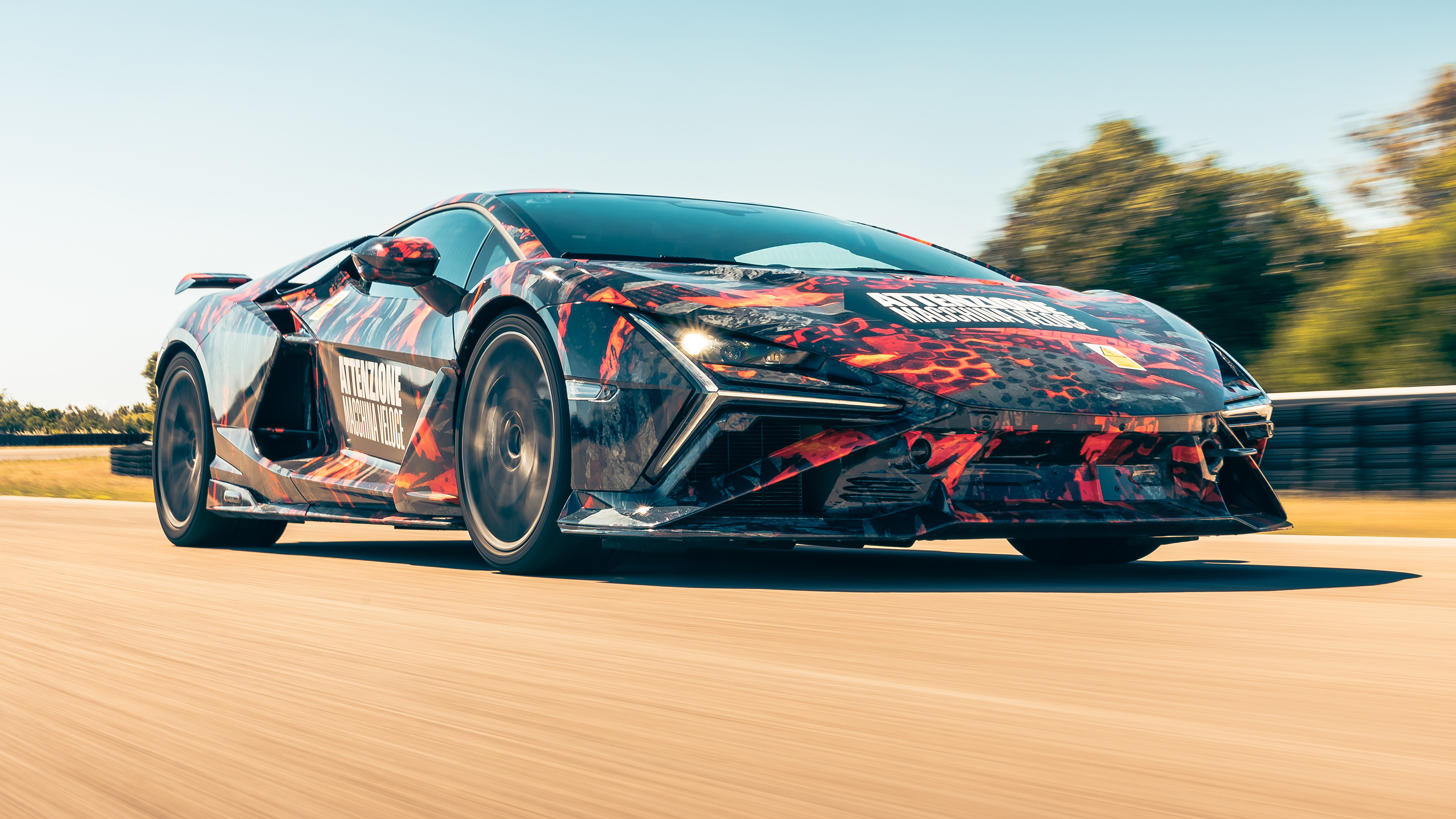
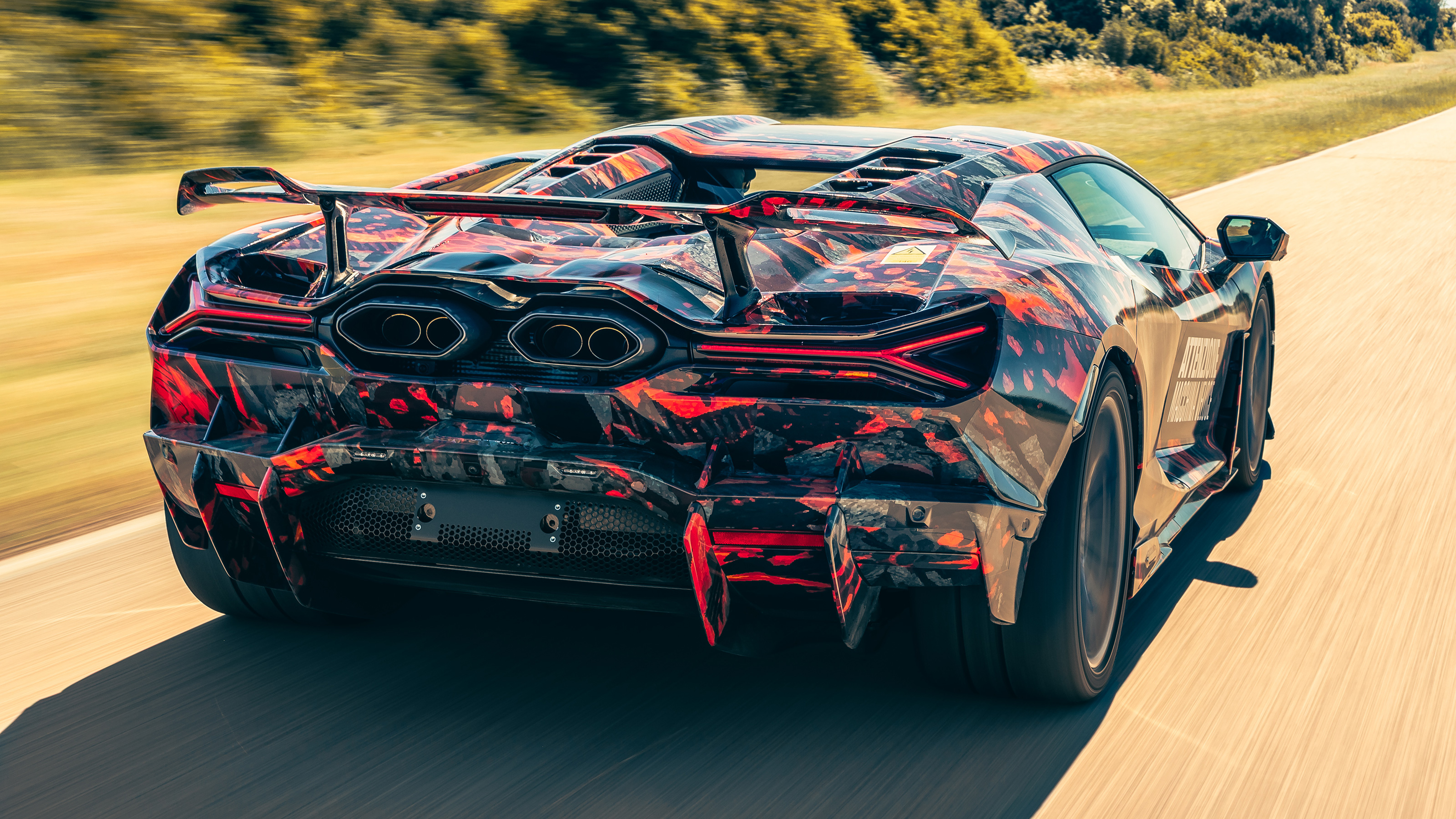
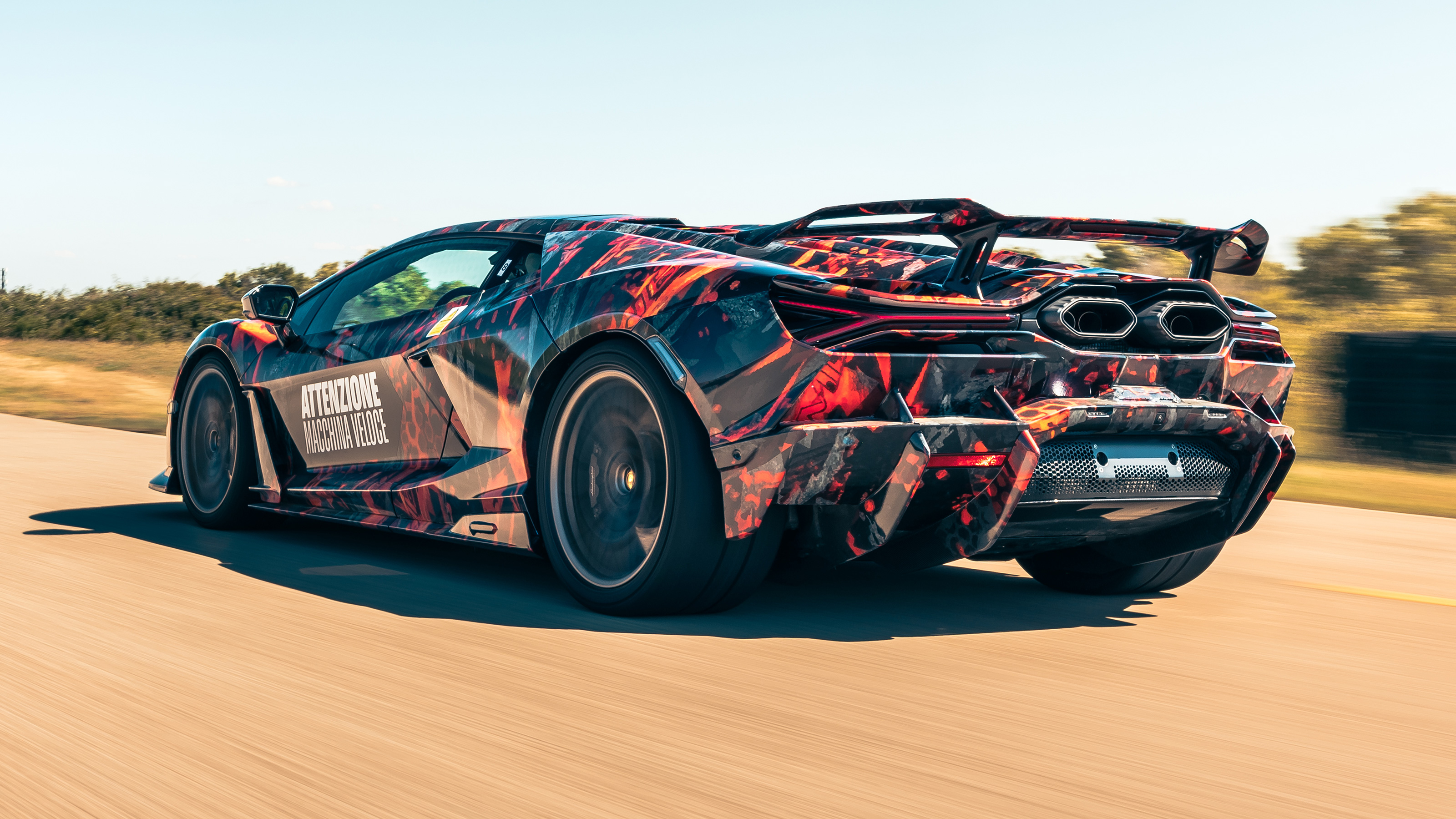
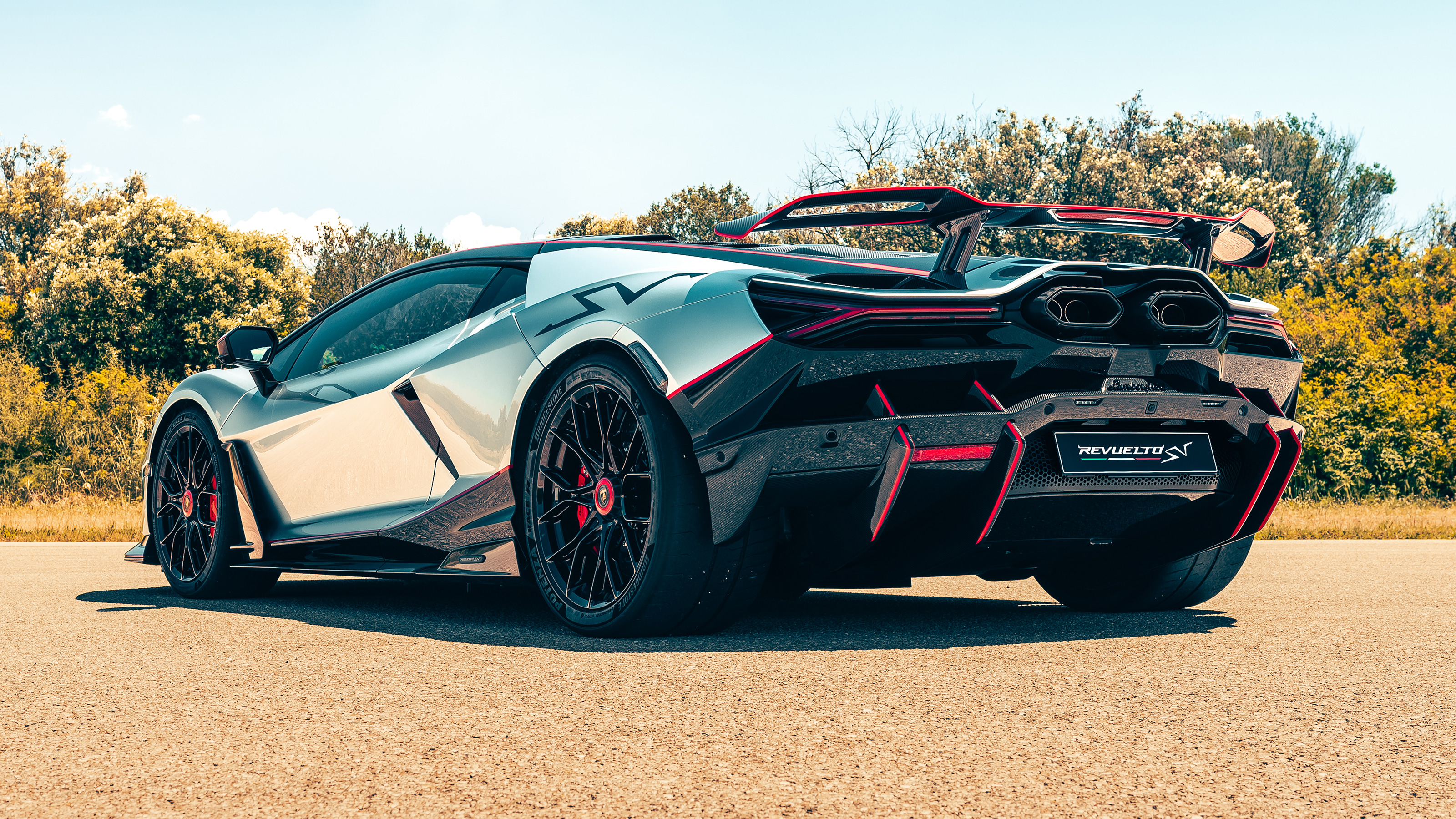
That is a late-stage dynamic prototype of the new Lamborghini Revuelto SV. The track-focussed, road-legal Revuelto variant that carries on a long line of particularly legendary cars that stretches all the way back to the Miura. The Aventador SV remains etched in many memories as a Lamborghini bull with more than its fair share of horn. This is the latest in that pantheon. And we’re here to drive it.
The famous Nardo test track. Or more correctly, the Nardo Technical Center, 14 miles outside the Italian town of Nardó. The high-speed bowl is just under eight miles long, and there are various road courses, a full-on test and handling circuit, off-road elements and many, many secret garages. Photography is strictly controlled if not forbidden – and you have to pass a test just to get through the door, another if you want to actually drive there.
We’re using the handling facility which is more than just a track: it’s got bumps and lumps and off-camber sections, plus a decent straight. Even a ‘crest’ that becomes a jump if the car is fast enough. This car is fast enough.
The devil of the Lamborghini Revuelto is the V12 at 9,500rpm, an experience that neatly excises all other thoughts, leaving in its place a kind of adrenaline-fuelled, localised amnesia: joyful in the moment, likely to kill you with prolonged exposure.
You’ll push the envelope until you lick the wall. Indeed, there aren’t many people who step from a Revuelto and decide that it’s a bit wet, mainly because even in bone-stock format, it packs a triplet of e-motors supporting that 6.5-litre V12 and around 1,000bhp. It’s all-wheel drive, remarkably analogue-feeling despite the digital helpers, and has far more engineering finesse than the wrapped Instagram posterchildren might have you believe. They are not just straight-line heroes.
Yep. But they make for genuinely comfortable grand tourers. Having spent several days on both road and track, you’d be surprised at the absence of sore lower backs, luggage issues or boomy exhaust noises, marvel at the ability to mooch as well as attack turn one of whatever track you care to mention. On Nardo’s famous handling circuit, the standard Revuelto feels exciting, devastatingly fast and reliably competent. After just six laps, I wasn’t sure there was a lot to improve.
A lot, but not entirely in the ways you might imagine. An impression born out by the stats. The Super Veloce (SV) only lifts power by around 50bhp, all of that carved from the outputs of a new 7.3kWh battery for the hybrid system. It’s the same weight as before, with very marginally better performance figures. Yes there’s bigger aero and lots of chat about the new passive dampers and CCM-R Plus brakes, but bolting in some new rotors and slapping on a bodykit is not the Lord’s work. And yet the SV is far more than the sum of its parts.
It’s damnably epic.
Immediacy is the key. These camouflaged, late-stage prototypes are undergoing final testing here at Nardo, and if they’re going to feel ‘right’ then it will be on Nardo’s bumpy, weirdly-cambered, offset handling track. This isn’t a race circuit – more somewhere engineers can assess a car’s handling balance and capability with irregularities thrown in. But in 100ft, you’ll know the difference.
Okay, okay. The steering is the first thing. It’s not stupidly darty – the metric on very fast off-centre steering being a TVR Tuscan Red Rose, which had steering so sharp it felt like it might slice open your palms – but it’s got way more intention than the standard car.
Get all the latest news, reviews and exclusives, direct to your inbox.
The second is the way the body control works with that steering to give you the sense that the SV has a very short wheelbase. The dampers are now passive, adjustable for bump and rebound, and come with a list of settings for various tracks in multiple conditions. And they work more reliably than the road-biased adaptive versions. Not ‘better’ – they haven’t got the instant push-button variance of the more road-biased standard – but they’re more pointy on track.
The third is the fact that when you enter turn one at what is politely called ‘oh dear’ speed somewhere in the 150mph range, that wheelbase suddenly feels longer and more stable, the all-wheel drive serving up confidence rather than threat. And confidence in a car with more than 1,000bhp is not an easy thing to engineer.
Exactly that. And so you begin to parse what’s actually going on here. The V12 sings the song of our people all the way to 9,500rpm, and that’s the bit you use to work out what gear you’re in and bang through the changes on the eight-speed DCT. But that’s reinforced by the all-wheel drive system that consists of a radial flow e-motor on the back axle that fills in while the V12 gets going, and an axial flux motor for each front wheel that gives the AWD traction.
The V12 sings the song of our people all the way to 9,500rpm
The battery system is apparently four times more consistent when battering around a track than the road-biased car, and the torque-metering spectacular. Apparently the SV has 10 per cent more lateral grip than standard, and 17 per cent more agility. And even if your brain can’t work out the percentages, you can feel the improvements through your bottom and hands.
Even on a full-bore launch control launch, there’s barely any wheelspin, but all the joy of a V12 trying to headbutt the limiter. You become ground zero for an explosion of noise and fury. Ears assaulted, eyes blurred by the reversing scenery. It’s like riding the shockwave of a peculiarly benevolent bomb.
That’s something that translates on track, too. Go in too hot and turn too hard and there’s the vague feeling that the car has somehow magically translated your lack of talent into an apex. Hit bumps and the suspension eases low enough to strangle further movement, knees bent to full squat, and then the bump. It’s more direct than the active system, but there’s never any second-guessing: it does the same thing, the same way, on every corner.
That’s important because it means that you, the driver, become the point of refinement. It’s feedback. Something that starts getting fuzzy on most cars with more variable systems. There’s no muttering here, this is response chatter that enunciates every word.
And there’s a new ‘Pilota’ driving mode that offers five stages of traction-control scary, designed to offer up that extra edge. Do not flick from one to five in a blasé manner mid-way through turn three at Nardo, or you’ll suddenly become very proficient at swearing.
Shout out to the brakes, here. They’re called CCM-R Plus, apparently derived from GT racing. Syncopated 3D strands of carbon wound through the rotor, machined rather than cast venting that gives more air gap through the structure; better for heat dissipation and reliable stopping power from 420mm discs on the front and 410mm on the rear.
The brakes… stop like you’ve reached the end of a tether attached to a ground anchor
You want race-pit facts? Compared with the stock Revuelto, the SV manages 11 per cent greater peak deceleration, 23 per cent better heat dissipation and a 12 per cent reduction in brake disc temperature. Which equates to brakes that feel the same all the time, and stop like you’ve reached the end of a tether attached to a ground anchor.
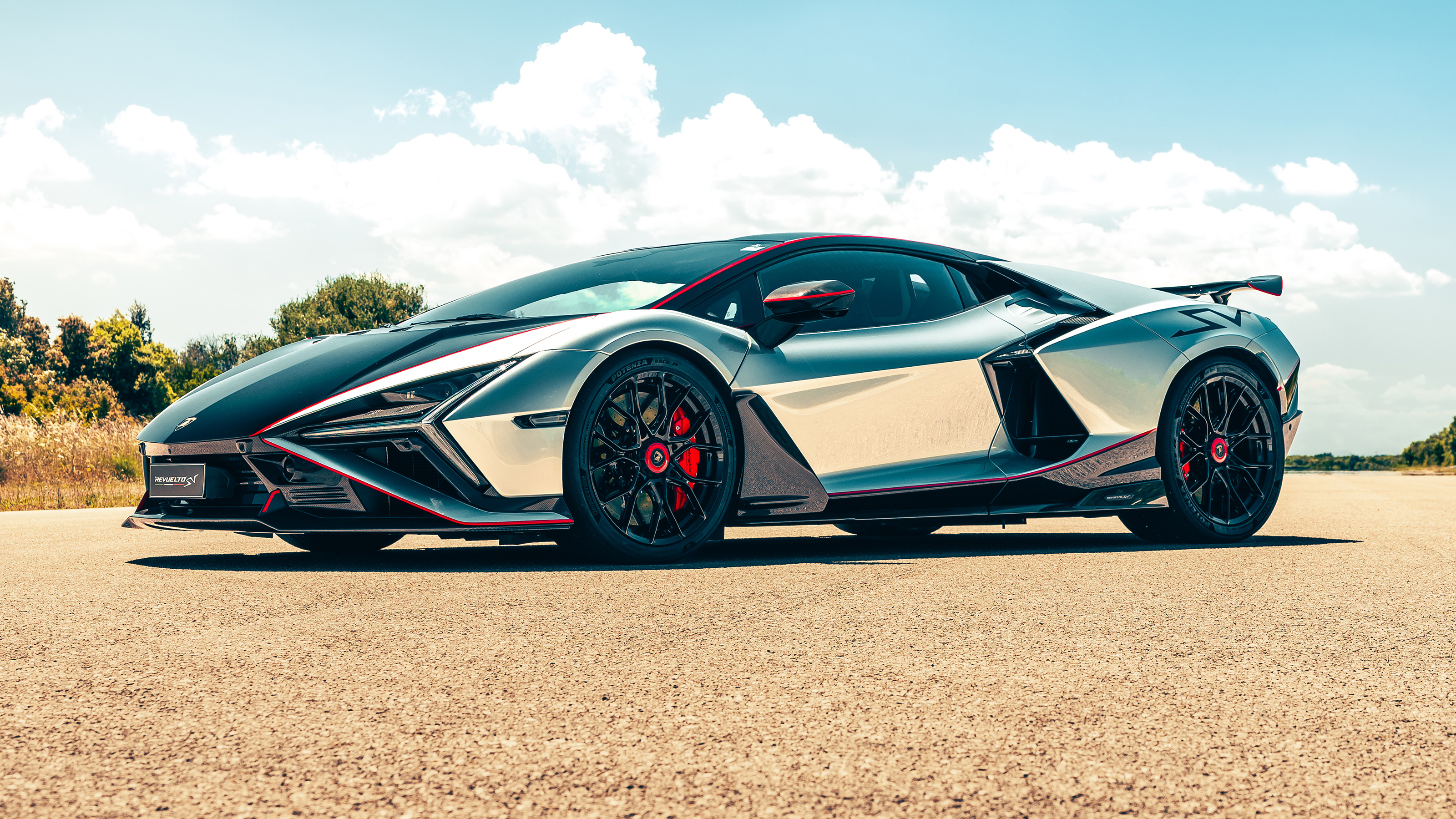
Not so much, but the weird thing is that despite the dynamic changes, most will see the aero and styling as the main development. Big front splitter, new flicks on the edges of the front bumper that fire air into the side intakes. The aero balance has shifted further forward, and there’s a deeper ‘X’ shape across the nose.
Wheels are 3D-Superlight Dromos, 20-inch fronts and 21-inch rears, now with ‘monolocker’ central locking, and one neat detail that we’ve seen on the uncovered car is the optional ‘SV’ sticker pack that uses the shape of the engine intake at the front of the rear three-quarter as the ’S’ of the ‘SV’ badge. You can have the smaller stickers if you want, but it looks great.
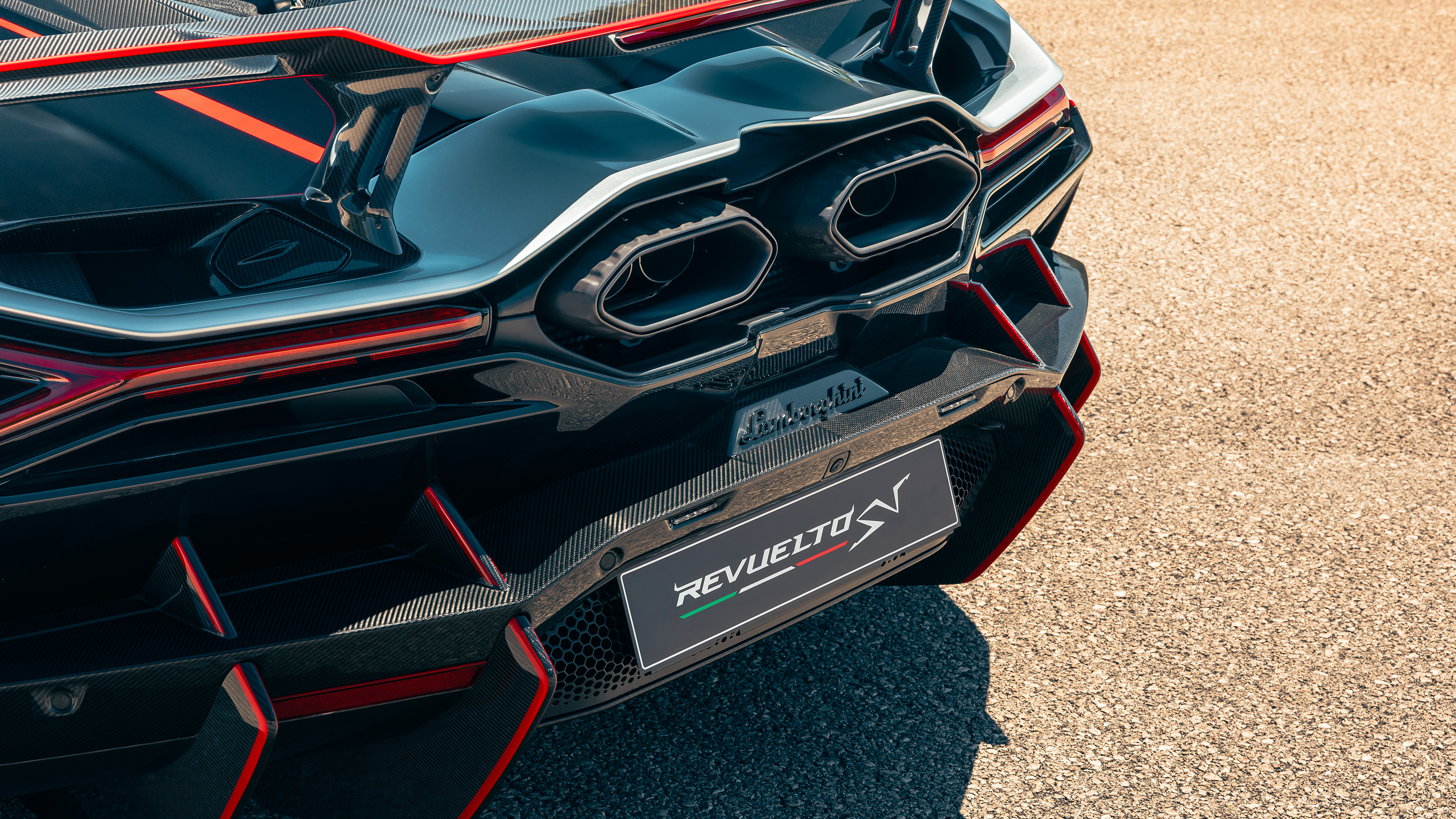
The rear wing is fixed, dual-planed and responsible for rear balance, the outer edges taking care of downforce, the slimmer middle bit high-speed efficiency. It’s pointedly, deliberately outrageous, and the better for it. And the rear Venturi stretches the width of the car. Again, it’s a Lamborghini that knows what it is and what it’s for. Subtle just doesn’t cut it.
But this isn’t glitter for the sake of it: in terms of numbers, the SV manages 80 per cent more total downforce than a standard Revuelto, and 10 per cent more than the Aventador SVJ. That’s serious improvement and commitment over the normal one. In reality? In the fast corners it just feels very stable, and on big straights it feels like it makes the very air itself thinner, almost slippery. It’s grand.
It’s deeply impressive, the Revuelto SV, even in pre-production format. It’s not a different car, but a Revuelto that has had its road-going compromises shifted towards more regular track work. It honestly feels like it would be fine on a normal highway, but less absolutely accommodating than the regular version. On a track, it’s regular, repeatable, exciting and desperate fun. Roll on the reality – it’s going to win some prizes.
Photography: Jonny Fleetwood
Get all the latest news, reviews and exclusives, direct to your inbox.
