



25
It is. Although the world does not need a more powerful Lamborghini Urus. The current line-up is fast and capable enough to put most to shame as it is, thank you. But new model lines sell cars, and as long as the global appetite for performance SUVs remains, Lamborghini is going to feed the slightly bouji hunger.
Therefore, the latest in the line of Super SUVs from the Italian marque is this, the Lamborghini Urus SE Performante: a car of very fast contradictions.
Well this is a plug-in hybrid that features a twin-turbo 4.0-litre V8 and an electric motor, for a start. That’s the ‘SE’ bit. But it’s also now the ‘Performante’ variant, which means there’s exceptional power, torque and speed at hand, but also an almost bewildering set of cherry-picked improvements compared to the previous incumbents.
So there’s a 32kg weight reduction, with a 144bhp/111lb ft uplift in power. Sounds good – but the weight reduction is over the standard ‘SE’, and the power jump versus the last-gen Performante. It turns out that the new Performante, if you dig the figures a bit, is actually at least 250kg heavier (depending on spec) than the last one, so those improvements fight to keep it competitive… but it makes sense only once you’ve had some time to consider what Lamborghini is using as a metric for comparison.
For the numbers, that’s 812bhp and 738lb ft hauling a five-seat SUV that weighs a big dinner under two-and-a-half tonnes. Grip and torque deliver 0-62mph in 3.3 seconds – exceptional for such a chunky and heavy car – big power serves up a 194mph top speed. It’s as fast in terms of raw numbers as some supercars.
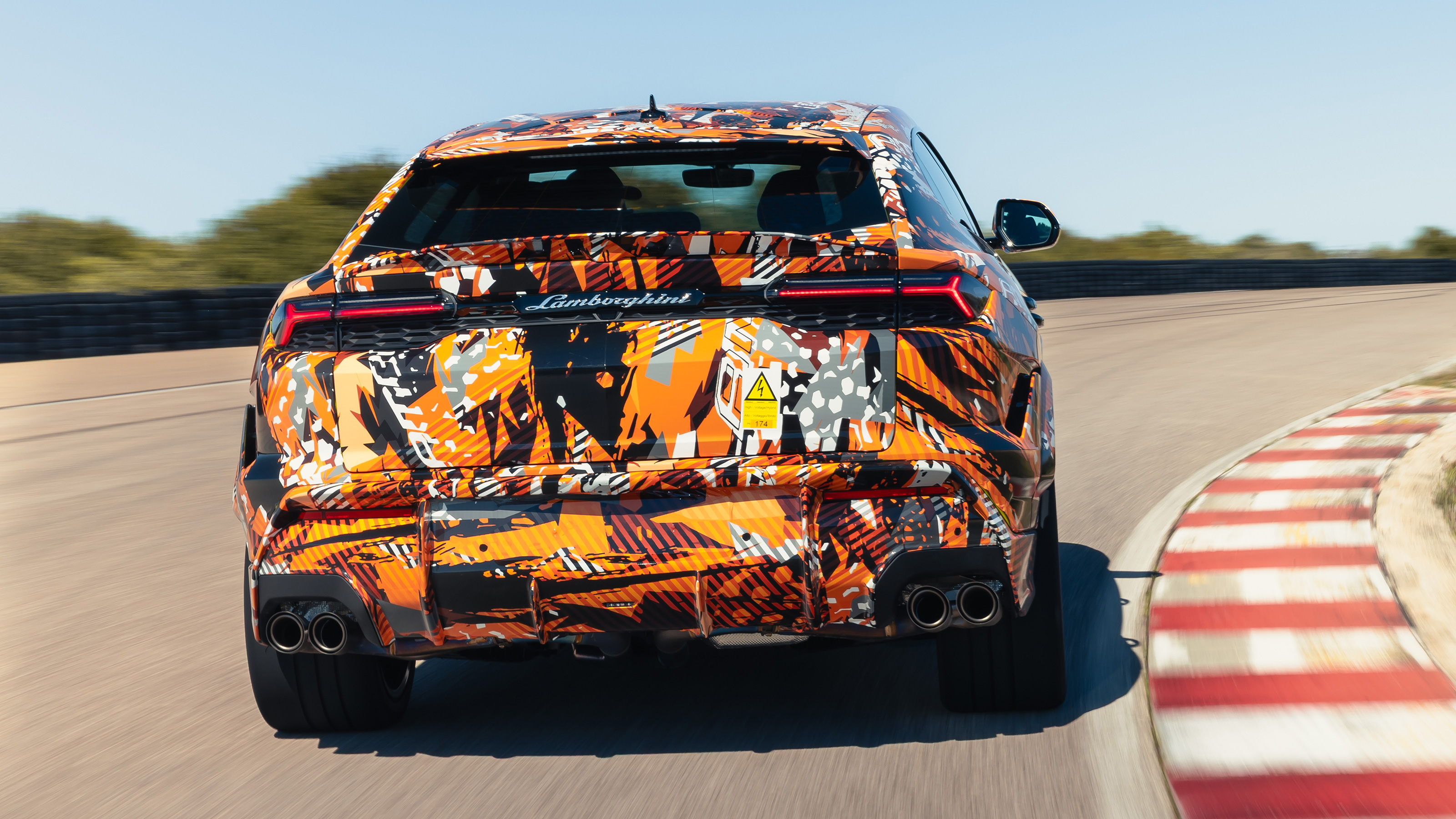
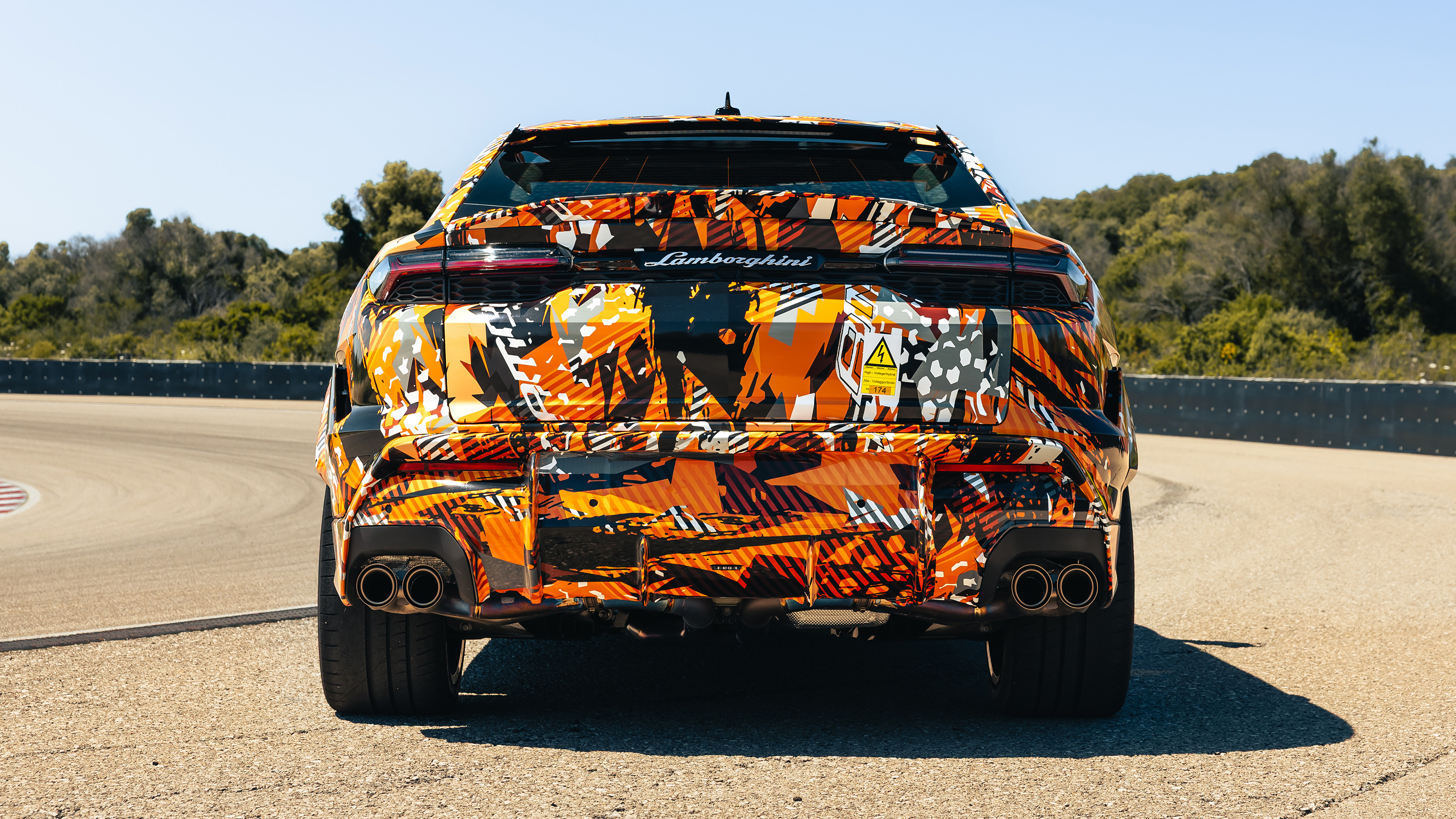
The weight is considered, slavishly carved from lots of little slivers. A new Akrapovic exhaust with lots of titanium in its makeup saves 10kg, there’s a lighter braking system (4kg), less soundproofing (3.3kg), even a lightweight ‘CorsaTex’ interior fabric that saves 2.7kg. Carbon is in full effect, both in terms of a stylistic choice on the outside and a diet pill – roof, wheelarches, front and rear bumpers, side skirts, bonnet and rear Venturi are all weave.
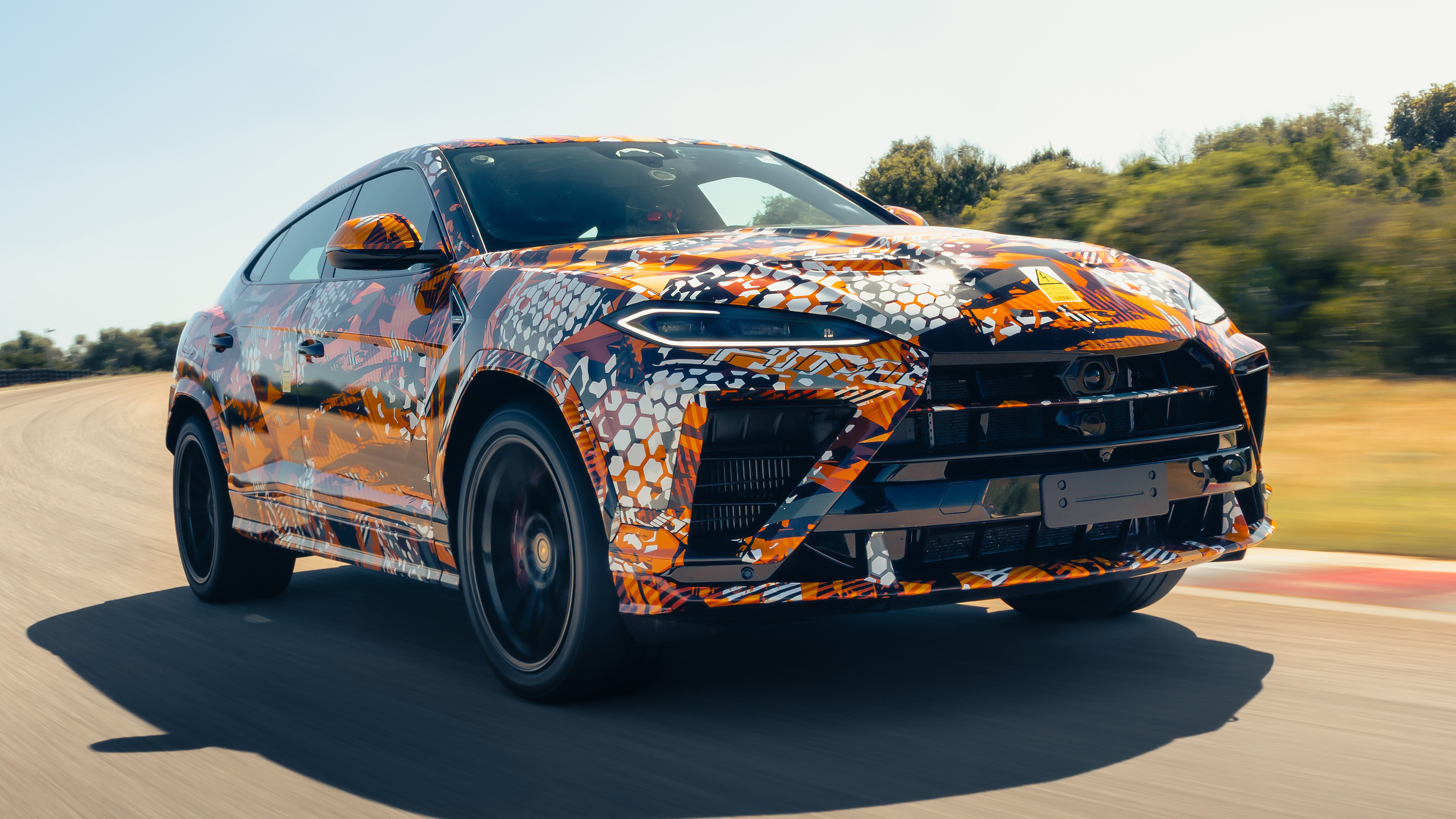
The look has evolved once again – there’s that tranche of exposed carbonfibre – but the bonnet now gets a chunky power bulge and deep vents, the front bumper is more aggressive to direct cooling air to the new braking system, the arches similarly steroidal over optional 23-inch wheels. Worth noting here that the cars we drove were on 22s, safe to assume that the slightly smaller standard size is more optimised for handling than mall-crawling.
There’s a wingletted roof spoiler, complemented by a cool ducktail on the bottom of the rear windscreen, and a massive Venturi slung underneath. The SE Performante is actually three per cent less draggy than the SE, which is good for efficiency, but gets a 23 per cent increase in downforce over that variant, with 16 per cent improvement over the last-gen Performante, most of that over the front axle thanks to the bigger splitter.
Whatever the complicated mathematics, it looks more… Urus. Bonnet bulge and generalised aggression, without tipping into the ‘modified’ look. If you like Uruses, you’ll probably like this.
Fast and surprisingly amusing – although not 100 per cent finished. Testing camouflaged late-stage prototypes at the legendary Italian track at Nardo, we’re at the place where these cars are developed at high speed – so if it’s going to be good, it’ll be good here. And Nardo’s handling circuit is a stricter test than you might imagine: it’s not a racetrack, so includes off-camber corners, deliberate bumps, even a crest that becomes a jump if the car is fast enough.
Get all the latest news, reviews and exclusives, direct to your inbox.
To keep things in check, the SE Performante gets ‘AURA’ dual-chamber air suspension, acting on both the springy bit and the damping, the twin valve, two channel system offering a bigger distance between comfort and absolute control. Apparently it manages to eliminate body roll by 50 per cent in the hardest modes, while offering up decent mooching ability.
Bluntly, it really does work. Roll over a kerb (track, not pedestrian) in Comfort mode and it’s a barely-felt vibration. Stick it in Corsa and you can feel the texture of the paint. The steering is a little light, but placing the car isn’t a problem, and there are various flavours of attack from the Tamburo mode selector, which now comes in a wonderfully ergonomic flight-style controller. So run through EV, Strada, Sport, Corsa and Rally (the new loose-surface programme), and this Urus does a passable impression of a car about a foot lower to the ground.
It’s impressive: bumps aren’t beaten into submission, but subdued by decent ride. Better ride means more consistent contact and grip, and a car with a rear-biased all-wheel drive system means you can genuinely have fun as a driver. No, it’s not re-writing the rules of physics, but with 800bhp+ and such a lovely, mostly neutral set-up, you can play with angles without feeling like you’re about to stuff it.
Some of that is thanks to a new brain. There’s a ‘6D’ sensor that monitors the car’s attitude in a multitude of ways, gently pricking the bubble of Lamborghini anger so that the car remains biddable – but it doesn’t feel like the car is tweaking that much. It’s the best kind of electronic helper – nicked from the limited-run Fenomeno – and makes the driver look and feel better than they are.
Such were the speeds at certain points and around specific corners that without the systems working hard, the car would probably have left the chat. Into a wall. Shout out here to the brakes, which are phenomenal in an SUV.
Not really. Not at max-attack, anyway. As for power, it’s all there. The e-motor sits upstream of the ‘box (itself with faster ‘shifts), fattening the V8’s response and performance, powered by a new 25.9kWh battery. A battery which allows for 37-ish miles of silent running. The AWD works with a central clutch and e-diff at the back, delivering both continuously-variable shuffling of torque and a defined (and very Lambo) neutral to rear-wheel drive bias. It’s not actually rear-wheel drive, but the half hand of corner exit power oversteer is genuinely satisfying. And a bit excellent-slash-childish.
But such is the suspension and traction control’s sophistication, you really can get on the throttle and not really worry about it. It’s not a fussy car at speed, or one you have to manage particularly – it could be more exciting, but is ‘exciting’ what you really want from an SUV capable of this pace? Best get something more specific if you want to wrangle the outer edges of track performance.
And yes, it’s absolutely hilarious on a dirt track, mainly because the new ‘Rally’ mode shoves more torque rearwards, but reserves enough front axle action to save those over-enthusiastic slides. In fact, the only thing that really could be improved is the noise. The Akrapovic exhaust looks cool, but the turbos and emissions gubbins make it sound generically ‘sporty’, pop ‘n’ crackle map or no.
So, a verdict on the prototype drive, having seen the revealed car. The Urus SE Performante has a lovely interior, a flamboyant exterior and some serious dynamic chops. There’s a lot going on to control the weight, but Lamborghini’s engineers have done a bang-up job of making this a fun, effective and very, very fast SUV.
Full disclosure, it’s not the kind of thing that floats my boat specifically, but you have to respect the nous on display here. And if you like a Urus generally, then you’ll love this – it’s the best of the breed.
Photography: Jonny Fleetwood
Get all the latest news, reviews and exclusives, direct to your inbox.
