

the fastest
1.6 Plug-in Hybrid 195 GT Premium 5dr e-DSC7
- 0-627.9s
- CO2
- BHP191.8
- MPG
- Price£38,710
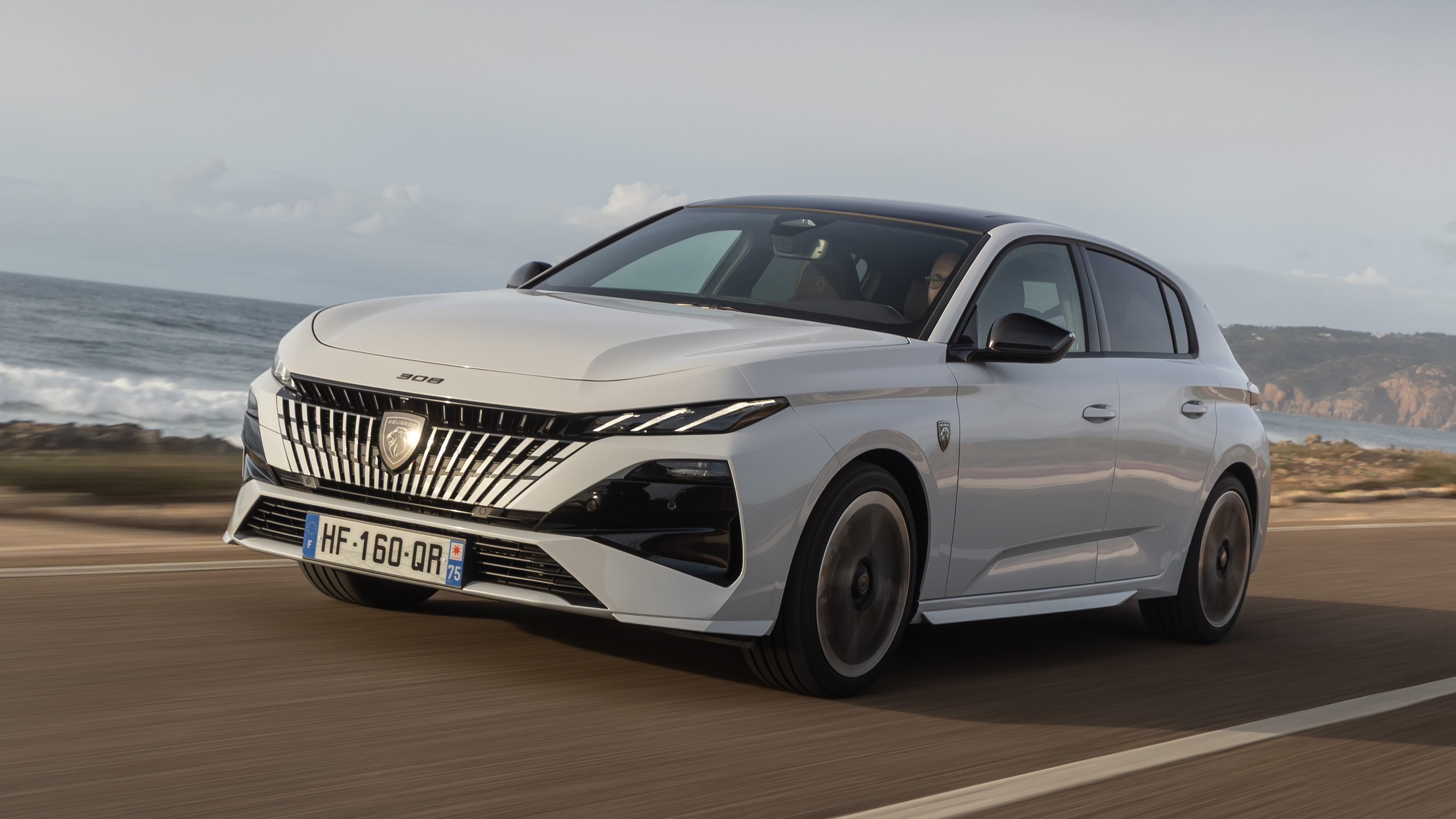
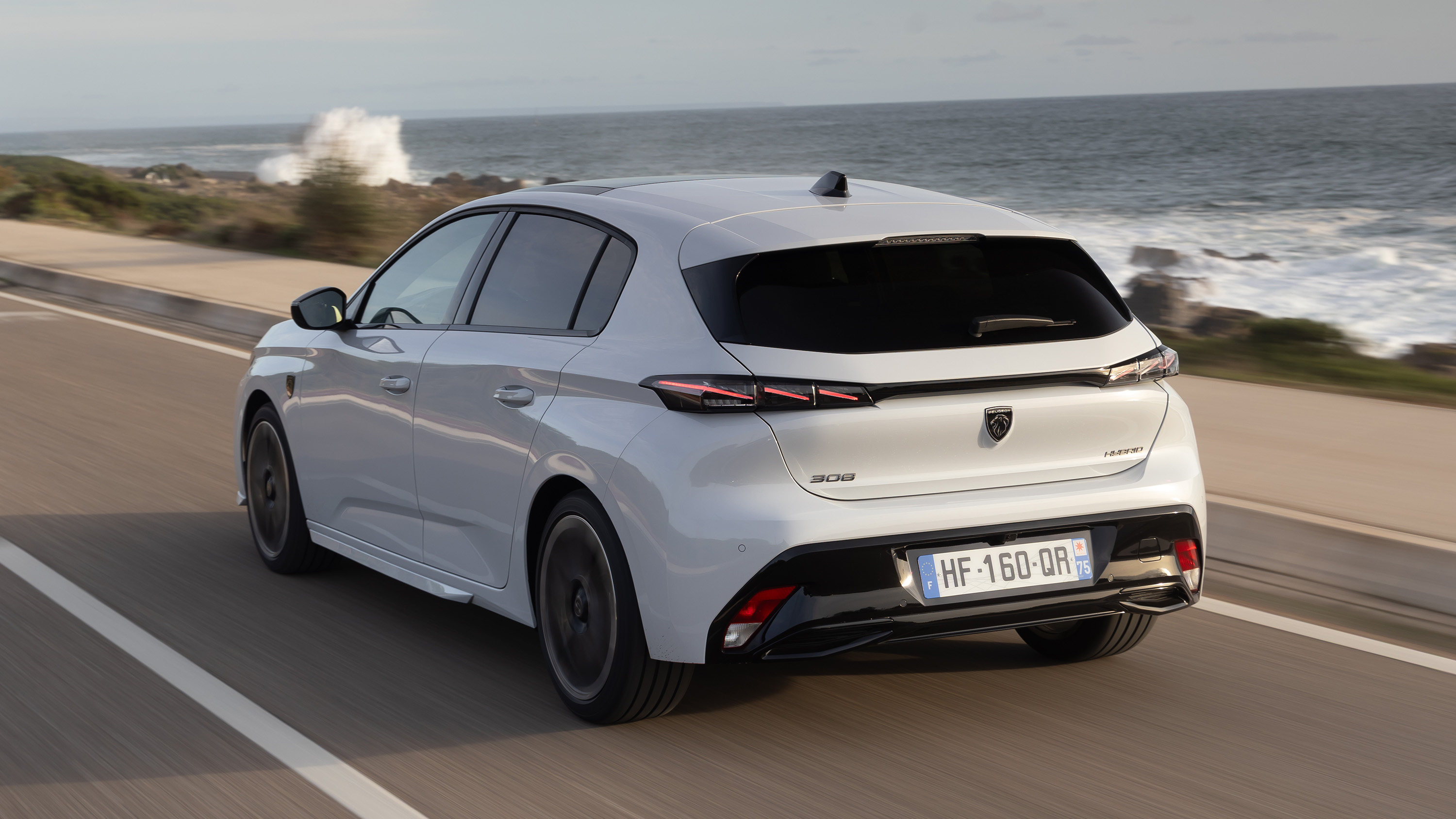
While plenty of us cling to memories of the Peugeot’s age-old commitment to affordable high performance, the 308 instead majors on qualities that are probably more relevant nowadays: refinement and efficiency.
It uses an updated version of the EMP2 platform that underpinned the previous model, and isn't exactly cutting-edge in the chassis tech it deploys. Yet it steers, rides and handles with more than enough joie de vivre for its class and to compete against a dwindling band of small hatchback rivals. You can have fun in it, with concerted effort, or just sit back and let the broadly smooth powertrains lollop you along.
Replacing the old 1.2-litre three-pot and eight-speed automatic is a mild hybrid offering. It's the same, diddy engine with a small electric boost for a 143bhp total and with a more urgent six-speed auto helping hustle you along in a more spritely manner. Its 8.8s dash to 62mph is almost a second down on the previous entry-point 308, and you'll feel that in traffic and down slip roads. While actually improving on the old car's 50mpg real-world efficiency thanks to its smart hybrid power.
You'll be surprised at just how often it operates on electricity alone, especially given there's no chance to plug it in. Much low-speed shuffling can be done without the engine, and during calmer cruising you'll see the speed readout change from white to blue – to signify the engine's sleeping – rather a lot too. This is a hybrid without you having to think about it, and it's a thoroughly simple and relaxing car to drive as a result. Handles quite well too, owing to its modest weight.
The 195 PHEV gives the 308 the power and torque its edgy looks warrant. Where the base Hybrid and electric E-308 both hit 62mph in circa nine seconds, this one drops neatly into the sevens. You feel its extra weight over the base 1.2, but it's still a well-controlled thing and business users (or regular long-haulers) will relish its refinement when the 1.6 engine has properly melted into the background and you're floating along on electric alone. Its 17.2kWh battery provide a claimed electric driving range of 53 miles.
We saw 68mpg when calling on both e-motor and engine on a mixed run, though this plummeted to the sub 40s when we’d depleted the battery. Further evidence that you should only run a PHEV if you can keep the battery topped up at home, else you’re just hauling unnecessary weight around and paying through the nose for the, er, pleasure.
It’s wonderfully quiet at motorway speeds, suppressing all but the most intrusive of surface bumps and undulations. Generous soundproofing helps – the windows are thicker and laminated side glass is available – and only a modest amount of kerfuffle around the A-pillars and door mirrors upsets the sense of calm. Even the arrival of the PHEV's combustion engine feels seamless.
Peel off onto more challenging back roads, and the sparkle comes off a bit, especially with the plug-in hybrid’s extra mass (253kg more than the base Hybrid). We’d also suggest sticking to the smaller alloys if you can resist the flashier trims, which help absorb the worst our broken roads can throw at them. But it steers briskly, turns in nicely, and has decent body control.
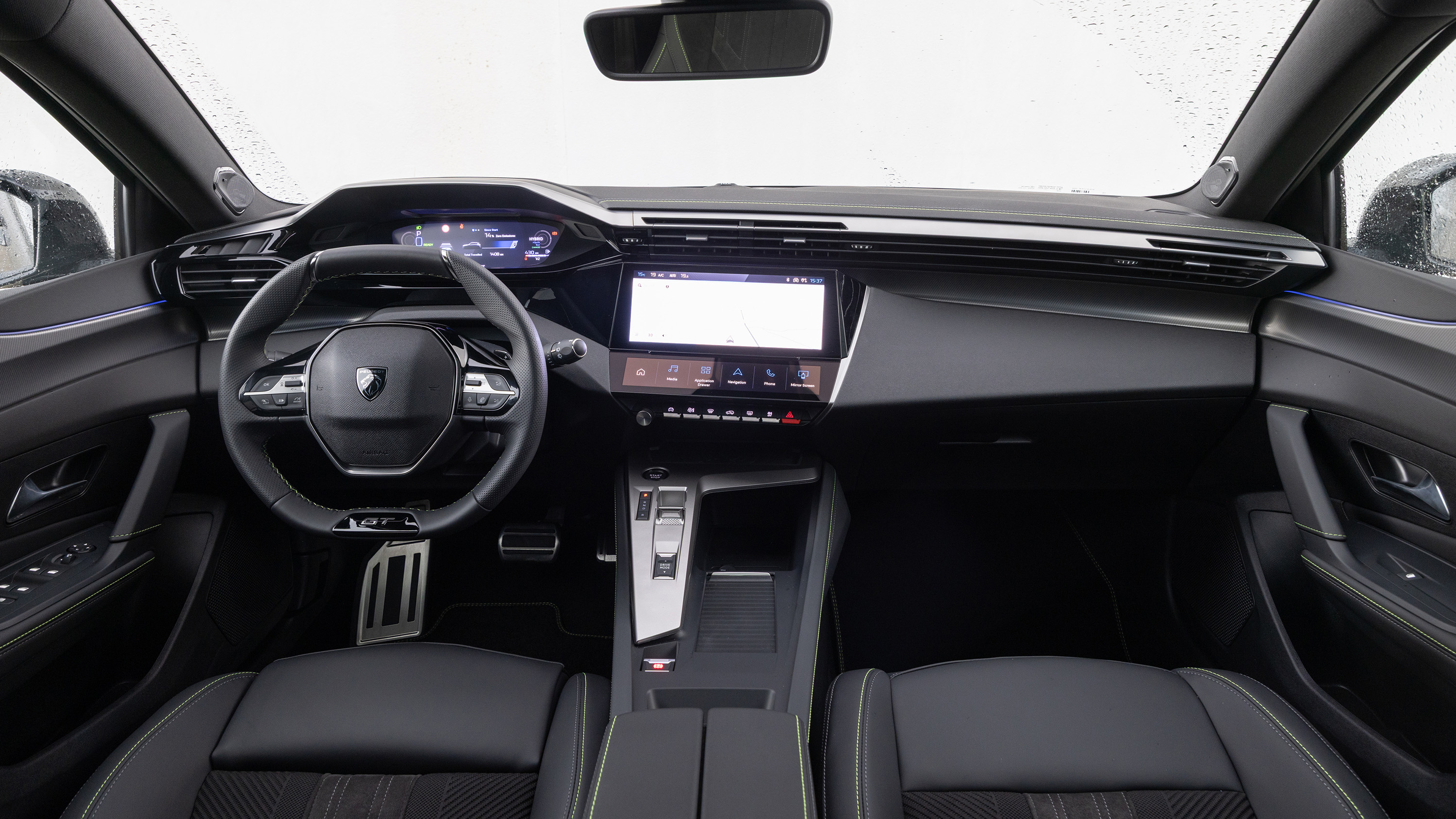
A little panel and raised controller on the driver’s side takes the place of the gearstick, allowing you to flick smoothly and swiftly between drive, park and reverse. In addition, there’s a ‘drive mode’ selector that allows you to switch between various modes. On the plug-in hybrids this allows you to switch between electric, hybrid, or sport, which offers firmer power steering, optimised torque delivery, and shorter gearshift time. You’ll likely stick to hybrid.
As ever, it’s also fitted with the full suite of driver aids and as usual, the lane keep assist was the first thing we turned off. Peugeot also offers a Drive Assist Plus pack which includes such innovations as semi-automatic lane change, anticipated speed recommendation, and curve speed adaptation, the latter ‘optimising the car’s speed according to the severity of the bend’. Semi-autonomous tech, in other words.
Get all the latest news, reviews and exclusives, direct to your inbox.