



25
No-one's pretending this is a beautiful car. But it's got a big place in history, and it's also great to drive.
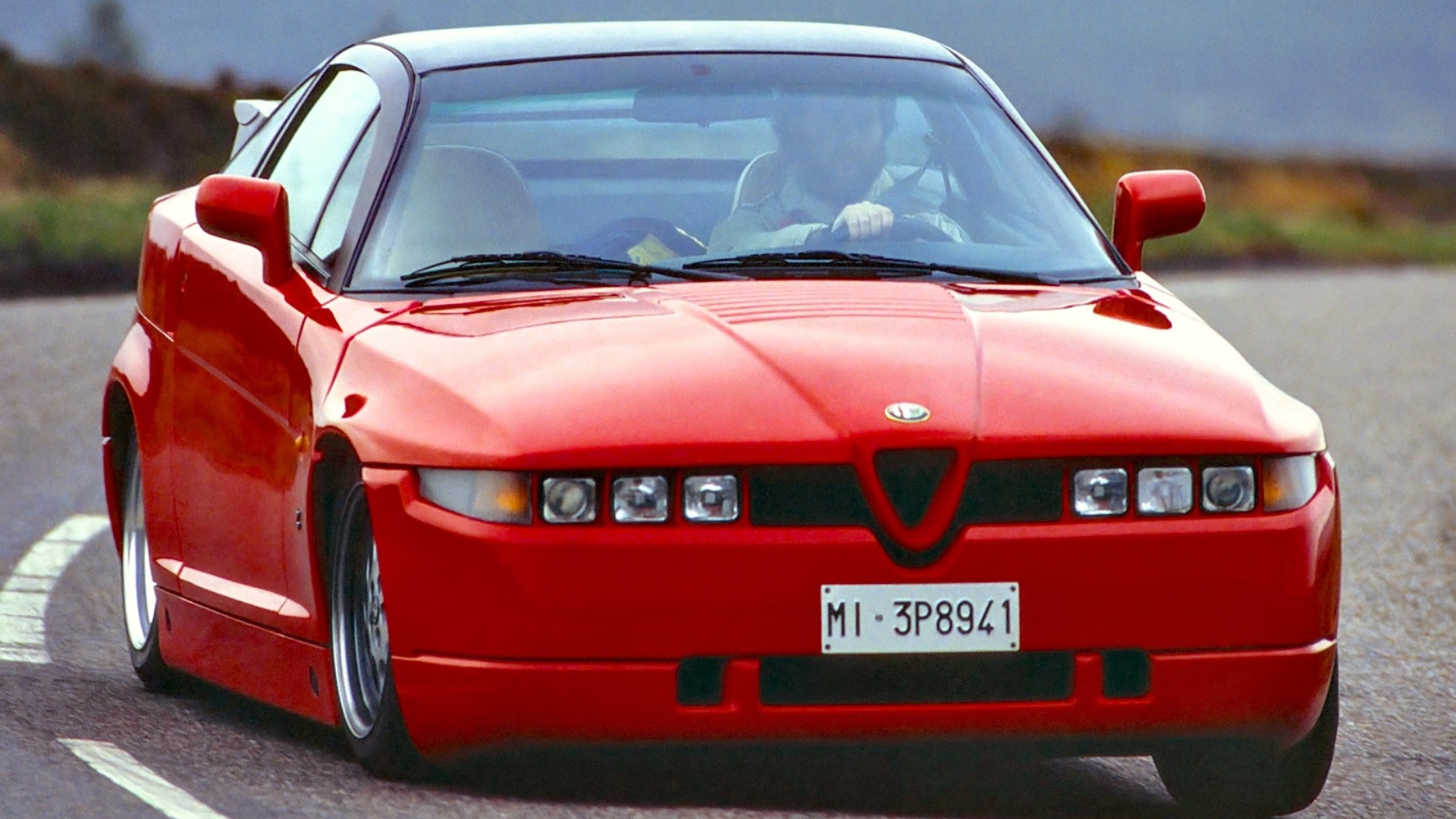
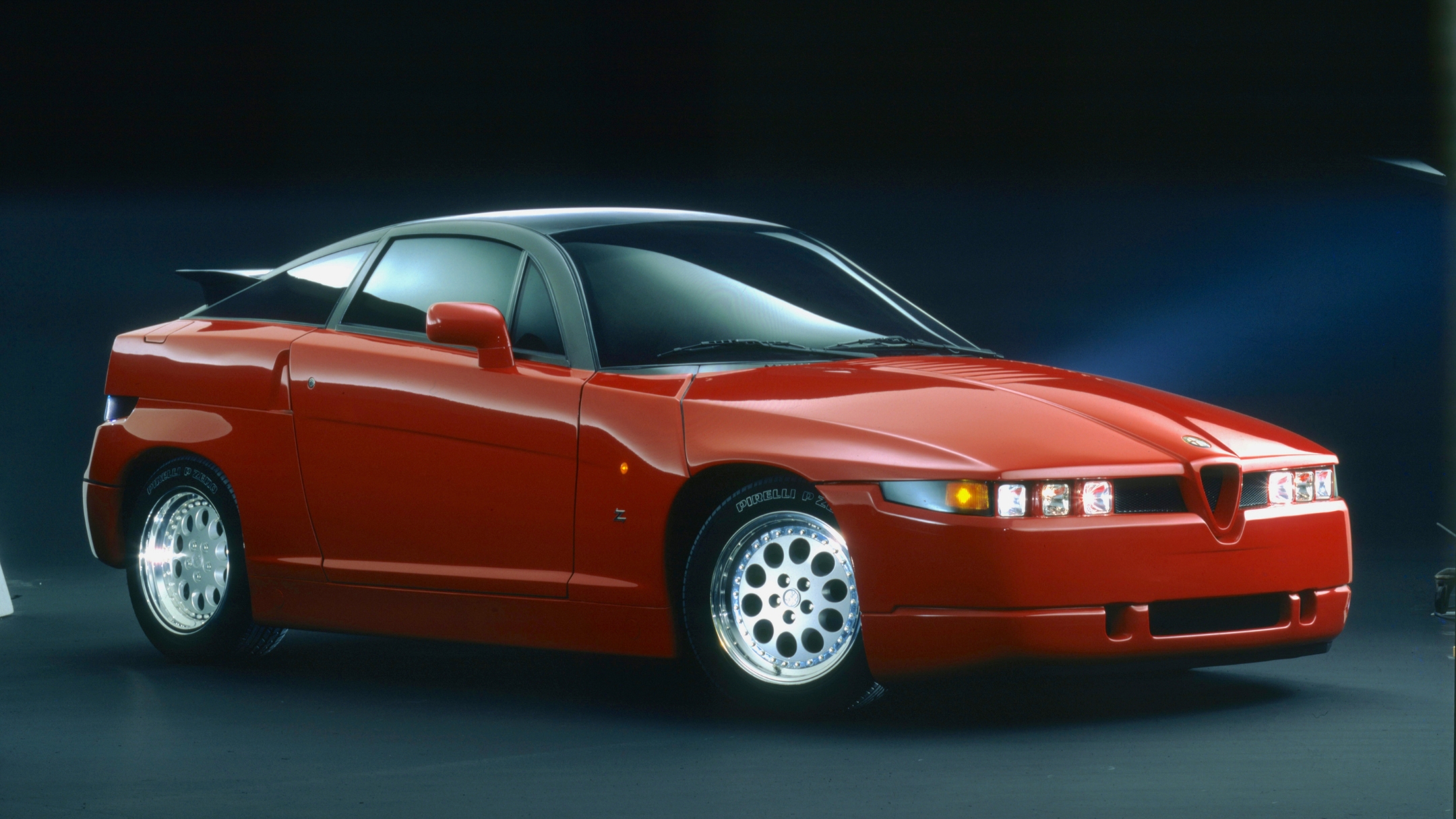
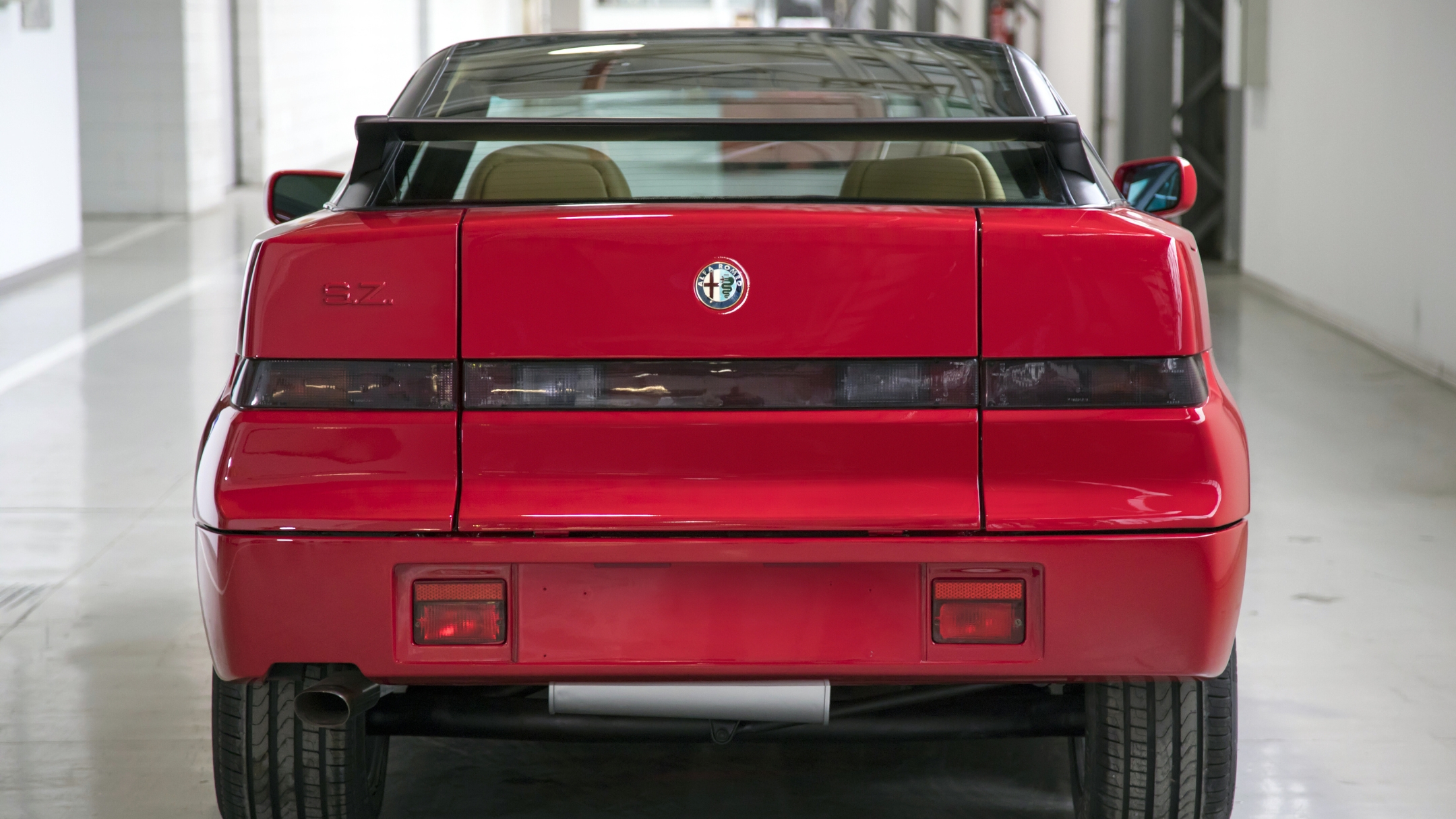
It's the 1989 Alfa Romeo S.Z. and gosh, I've always called it SZ but the full stops appear in one official Alfa book on my shelves but not another. They're on the bootlid too. Our one is commonly known by its codename ES30 and even more commonly Il Mostro. The monster. You can see why.
There had been other cars called S.Z. before, Alfa coupes with bodies by Zagato, and this one has Z for Zagato badges. But to call it a Zagato design is a myth. It was built by Zagato, but the shape was done in house.
There were actually two designs in competition. Proposal A was led by Walter da Silva at Alfa HQ. It had a family resemblance to the 164, which launched in 1987 when the S.Z. was being conceived. Proposal B was done by Fiat Group HQ on an initial proposal by Robert Opron (did the Citroen SM, him) finished off by Antonio Castellana, who said, "I wanted to punch right in the stomach, disorient, and lead to a more careful observation". It was B that won. So observe carefully.
Alfa had failed financially and been bought by Fiat in 1986. Group chief Vittorio Ghidella wanted a design to cause a stir and show Alfa still had a heart. The S.Z. also had a terrific engine and great chassis, but first it needed to attract attention. And fast.
The S.Z. was developed in two years when the industry average was five, thanks in part to the fact it was one of the very first cars to use CAD/CAM software. It translates the design sketches into tools for real bodywork, working out packaging issues – interior space, bonnet height for the engine, path of the winding windows – that until then had meant laboriously building physical models.
So here's another myth: the primitive software might have got the surfaces wonky, or even put the wheels in the wrong place. But actually, look at the highly pixellated early renderings and it's all there. Bulky custom sides, bulging over the rear wheels. It was exactly what the designers intended.
Headline grabber is of course the engine. It's the awesome 3.0-litre V6, designed originally by Giuseppe Busso, here with the original two-valve heads because the four-valve version wasn't ready. But for the S.Z. they found an extra 25bhp with new manifolds and cams and injection. It emerged with 207bhp, and a very useful 332lb ft.
The S.Z.'s steel floor, with rear-mounted gearbox/transaxle, came from the 75 saloon. So, broadly, did the de Dion suspension out back. At the front the 75 road car's torsion-bar suspension was binned for a coil-spring double-wishbone setup from the 75 IMSA racer.
Oddly it was heavier than the 75 saloon, because the body panels – glassfibre with injection-moulded resin – were quite thick and bonded on. That served the engineers' obsession with body stiffness for precision and grip.
Get all the latest news, reviews and exclusives, direct to your inbox.
There were other revolutions. The headlamps were tiny for the era. The windscreen has extravagant double curvature that taxed glassmakers to their limit. The CAD data helped the aerodynamicists, and indeed Castellana later said the rear wing did little but please the marketing folk. The Cd was just 0.3, with downforce aided by the low-hanging bodywork – it was one of the first cars to have a lift system so it didn't drag its underside on speed bumps. You were supposed to raise it on bumpy roads too.
They didn't cheat and use the 75 dash. The S.Z. got a bespoke interior, a fairly slabby dash in carbonfibre garnish (only the rear spoiler was structural carbonfibre). Classic Veglia dials couldn't have been clearer. The seats were very simple yet comfy and supportive, with petal-shaped side bolsters and big grabhandles by your inboard knee. Beautiful soft tan leather lifts the place.
Although the wheelbase was as per the 75 saloon, there's no back seat – the front ones are further back in the car – so it was just a carpeted luggage shelf above the fuel tank. The super-stubby rear overhang reduced the 'boot' to a tiny compartment entirely filled by an upright space-saver spare wheel.
It was utterly alive to the throttle. They lightened the flywheel to quicken its reactions, and in any case there was plenty of torque in the mid revs. Below that it had a woofling baritone a bit like a Jaguar XK's, but higher up it soon it hardened and added a bark. It was just a wonderful noise, and a willing spirit. Absolute performance isn't spectacular – 0-62 was 7.0 seconds – but that just means you spent longer with the engine singing its heart out.
The gearshift, with linkage going back to the transaxle, needed care but didn't spoil the fun because it felt properly mechanical. The ratios weren't too long – second ran to about 65mph.
Honestly, another high spot. It was sorted by Giorgio Pianta, an ex-rally driver who'd then become a competition engineer for the likes of Walter Rohrl at Lancia. The steering was super-precise right from the straight-ahead, thanks to minimal bushing and the Pirelli P Zero tyres. And it was magically alive in your hands, giving a vivid picture of what was happening at the tyre treads.
Things stayed tidy to the really high grip limit. A mild understeer let you feel what was going on, and then heaps of traction under power. Except in the wet, when you realised there was no traction control and those tyres lost interest so it got properly skittish at the back. I wonder what modern soles would do.
The damping and roll control were superb too, and yet all this precision came with what is by today's standards a reasonably supple ride. Road noise was an issue mind. It wasn't a motorway car. Brakes came with a soft initial travel, but with a hard shove in they came. But not too hard please – there was no ABS.
They're out there. In all there were 998 coupes plus prototypes. And another 250-odd of the R.Z. roadster. The S.Z. was about £40,000 new, which was 911 money and a lot more than an E30 BMW M3 of similar power.
Now you'll pay £70k and up. Well into five figures for really pristine examples. The market is surprisingly liquid, and because all were left-hand drive you can look for more in Europe.
Be aware, panels are functionally unavailable so body damage is a disaster. The steel under-structure can rust too, so have a good poke around. Servicing is well covered by specialist Alfa Aid.
Like 1960s brutalist concrete architecture, the S.Z.'s design has its fans, and there are more of them with each passing year. From today's perspective it's a redemption. Even if you don't like the look, a drive will win you over. It moves delightfully and its soul will elevate yours.
Get all the latest news, reviews and exclusives, direct to your inbox.
