



25
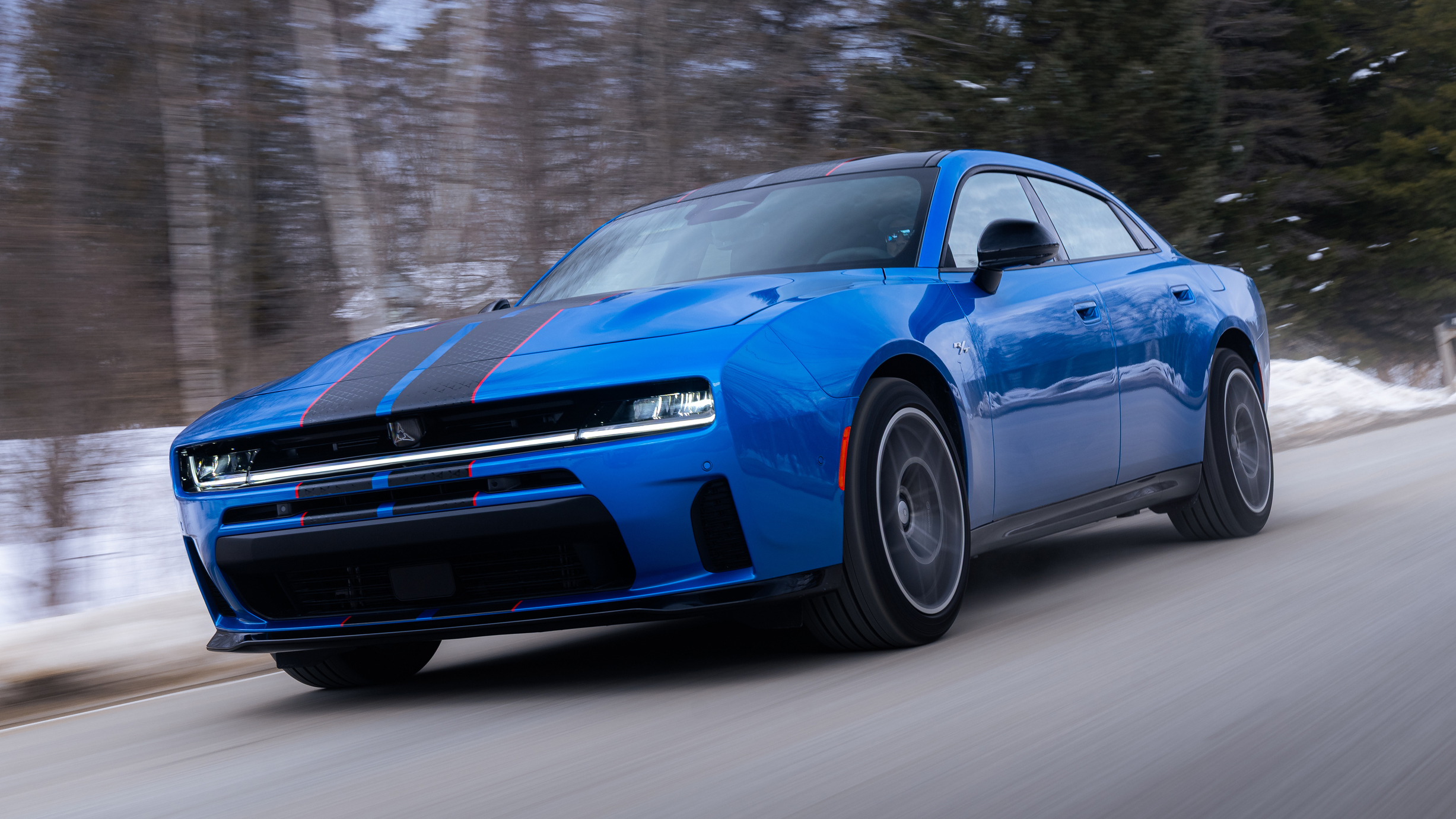
Indeed we are. In case you missed it, we gave the Dodge Charger Sixpack our first US Car of the Year award just last fall (or autumn, depending on who’s editing this). It squeaked in at the last second to top the other cars in contention because of its versatility as a daily that doesn’t compromise on its muscle car intentions. It’s also very easy to put sideways, and that’ll always charm us.
It’s important for you to know that this is the R/T, the ‘standard output’ version of the Dodge Charger Sixpack which is less…
Less power, less speed. Less.
It’s also less money! The R/T is the ‘volume’ model of the Charger, meaning it’ll be cranked out in perpetuity to fill dealer lots for customers eager to get their hands on a Charger while keeping a few extra bucks in their pockets, presumably for gas. The Charger R/T starts at $49,995 while the Scat Pack comes in at $54,995.
It’s worth mentioning the all-electric Charger Daytona – the quickest and most powerful version – is still on sale for a base price of $59,995. These are prices for the two-door, by the way, the four-door models for all of these add $2,000 to the bottom line.
No catch, just a few concessions. The Dodge Charger R/T is fitted with the standard output version of the same 3.0-liter twin-turbo inline six as the Scat Pack, generating 420hp and 468lb ft of torque rather than the 550hp and 531lb ft of the high output power unit.
Naturally, this also means comparative limits to its performance. It takes the R/T 4.6 seconds to go from 0 to 60mph instead of 3.9s, and it tops out at 127mph now, while the other Charger Sixpack (I’m actively avoiding saying ‘Scat Pack’ too many times) can sail all the way up to 177mph.
This is probably why Dodge insists on comparing the R/T with the outgoing Hemi-powered model.
Nope! Here’s the kicker – all these things really don’t matter much at all.
Hear us out: the Charger R/T delivers on just about the same experience as the high-output version where it counts. Outside of a track, both top speeds are immaterial here in the States, and a slightly slower 0-60mph won’t matter outside of a few pulls at a red light. 99 per cent of the time, it performs just as well as the Scat Pack.
Get all the latest news, reviews and exclusives, direct to your inbox.
Right. As mentioned, the R/T packs the twin-turbo 3.0-liter ‘Hurricane’ engine that blazes 420 horses and lays down 468lb ft of torque, mainly to all the wheels, by way of an eight-speed automatic transmission. I say ‘mainly’ because while the Charger operates in all-wheel drive by default, its many drive modes can split power in a few different ways along with fully disconnecting the front axle for pure RWD performance.
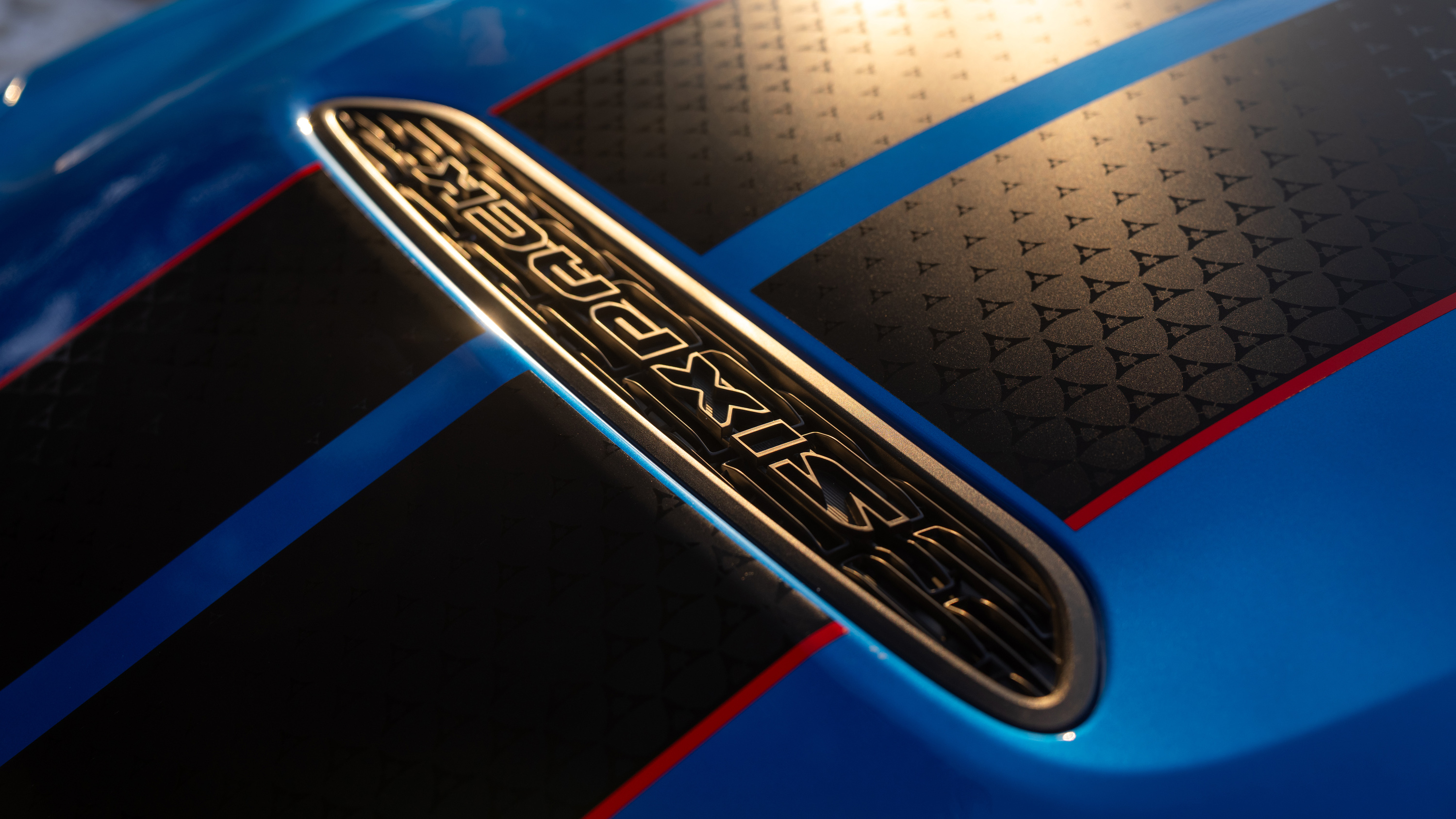
In terms of exterior and interior differences, the R/T has a few model-specific graphics packs but everything else remains about the same. Though offered as a two or four-door, the Charger’s exterior dimensions remain the same, though internally, the Dodge engineers have managed to make the rear seat and cargo area of the four-door a smidge larger by the smallest of fractions; 22.7 cu ft (643 liters) vs 22.1 (626 liters) of storage, to be specific. Fold the rear seat backs down and there’s 37-38 cu ft (1,048-1,076) of volume that could technically hold a full set of tires if you wanted to haul your slicks to the track. I guess there could be other uses, too.
One of the things I admired about the Charger Sixpack is how well it obfuscates its size. Make no mistake, this feels as big and wide as it is, though it carries itself well enough for it to not be a hindrance. Acceleration, contingent on drive mode, is responsive and the drive position is solid. The multi-link suspension does its job well enough, but physics are still a thing and thus there are constraints on how nimble it can make the hefty muscle car.
Practically speaking, the R/T doesn’t necessarily feel that much different to the Scat Pack, as if it’s being dragged along with a mis-matched power unit that can’t cut the mustard in a car of this size. It pulls away fine, it climbs the rev band and it can sail down the highway at an eager clip, just like its more muscly counterpart.
So if top-top speed is not really a concern, the R/T provides almost the same experience. If anything it feels ever so slightly lighter, which it is, by about a hundred pounds (45kg), and that’s probably the most significant, perceivable difference.
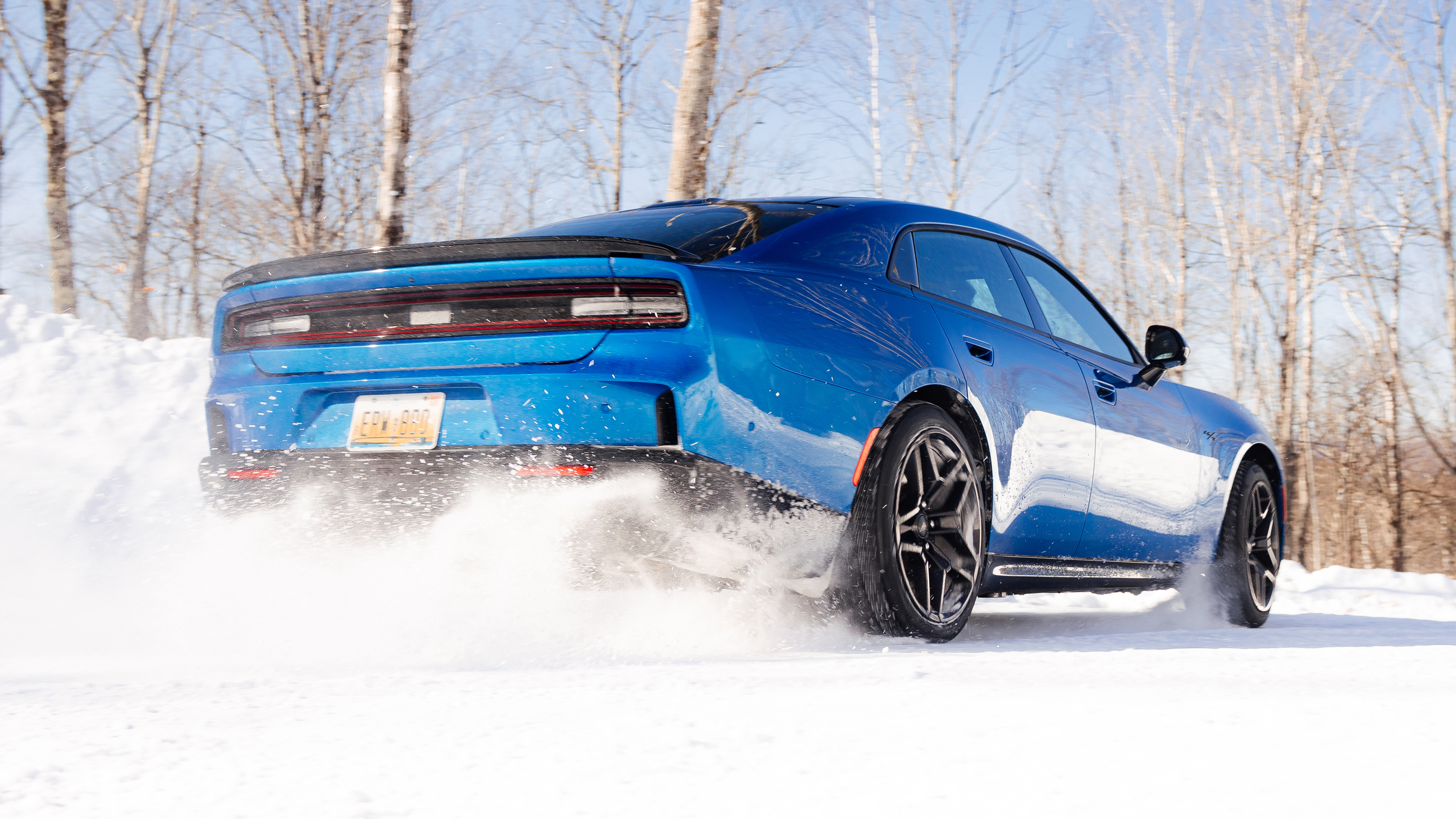
Oh absolutely. Rear-wheel drive mode behaves as expected and the 70/30 split allows for rear rotation with the front acting as a spotter of sorts. Turn everything off and go nuts on the skid pad or cut it up at a track. Either way you’ll have a good time.
To highlight the range of behaviors the Charger is capable of, Dodge let us cut loose at the Team O’Neil rally school facility in New Hampshire. It was an apt testing ground for the various modes and how they split power along with the usual digital safety guards.
Sure enough, Snow/Wet mode did its darnedest to keep us on the straight and narrow while RWD with everything off sent us skidding all over the place, with Sport acting as a happy medium. All of this is to showcase that the Charger can be a confident, year-round daily while easily switching to a drift machine whenever you’re compelled to have some play time.
Dodge bills the Charger as the “no-compromise” muscle car, and the R/T follows suit in the ways that matter, though it does introduce a few concessions to what it is, rather than what it can do.
By that I mean it’s still a versatile sedan/coupe that can be driven all year round, even in places that see a proper winter, thanks to its standard all-wheel drive layout, and one that can switch to classic RWD muscle car mode with a flick of the proverbial switch. The R/T simply trades off some of its performance for a lower price tag, though it doesn’t feel like that much of a step down at the end of the day.
Similar to its rival, the Ford Mustang’s non V8-powered offerings, there are different choices for people with different needs and desires, and there is no one ‘correct’ version, though I already sense some people shaking their heads at that. So be it. If the Dodge Charger appeals to you and you’re okay with shedding a little top-end performance for a smaller payment, the R/T is calling your name.
Get all the latest news, reviews and exclusives, direct to your inbox.
