



25
In May 2001, in a quiet corner of Toyota Motor Co's engineering department, the project head of a proposed sports car, Haruhiko Tanahashi, wrote the internal briefing document to explain his car's aims to the top management. So it had to be persuasive. On the cover was a Toyota F1 car and a Toyota 2000GT.
The proposal was for what became the Lexus LFA. History records the F1 adventure, freighted with hope back in 2001, ended in ignominy before the LFA ever finished its lengthy gestation. But we're here to talk about the other cover-star Toyota, the 2000GT.
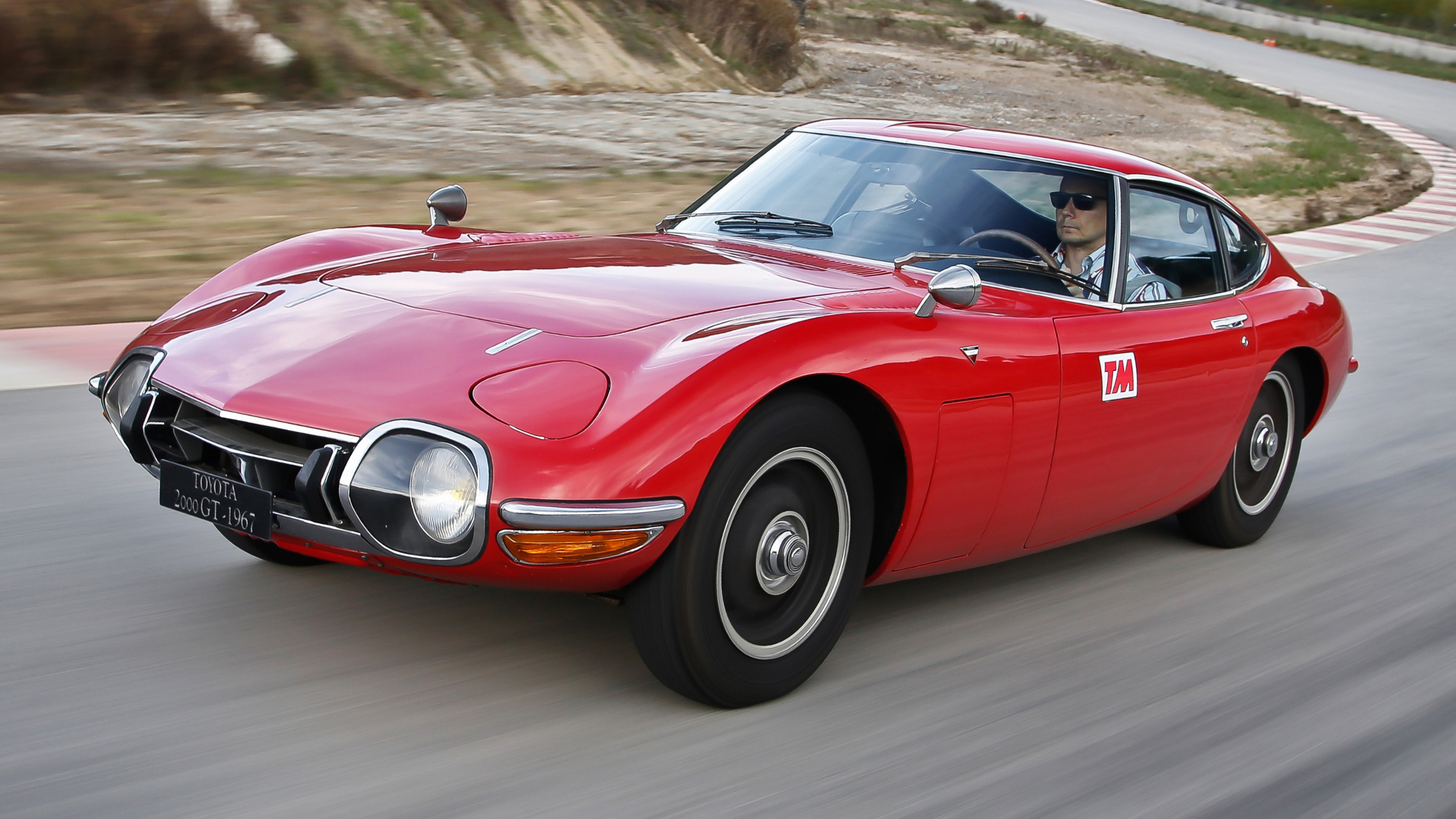
In the mid 1960s, it was a moonshot for Toyota. The depth of its engineering, the purity of its performance, the fact it wasn't just a barely house-trained raucous track car but a thing of sophistication, refinement and visual delight – all characteristics shared with the LFA. And the absurd price, way above a 911 back in the late 1960s and knocking on the door of £1m nowadays.
Like the LFA, the 2000GT gave the corporation – and all Japan's industry – a leg-up in external recognition. And, just as important in Japanese culture, the highest internal honour.
It was shown in 1966 at the World's Fair in Tokyo and went on sale in 1967. Imagine its impact in the US, where Toyota had been selling cars for just 10 years. It was always meant to be super-limited in numbers and only 337 were built.
Most famously a custom convertible version was driven by Sean Connery in the Bond film You Only Live Twice. And you thought only Aston Martin built special cars for 007.
Albrecht Graf von Goertz, he of the BMW 507, did the initial design work. Less well-known was that he did it under contract to Yamaha, which was proposing the design to Nissan as a vehicle for a Yamaha engine.
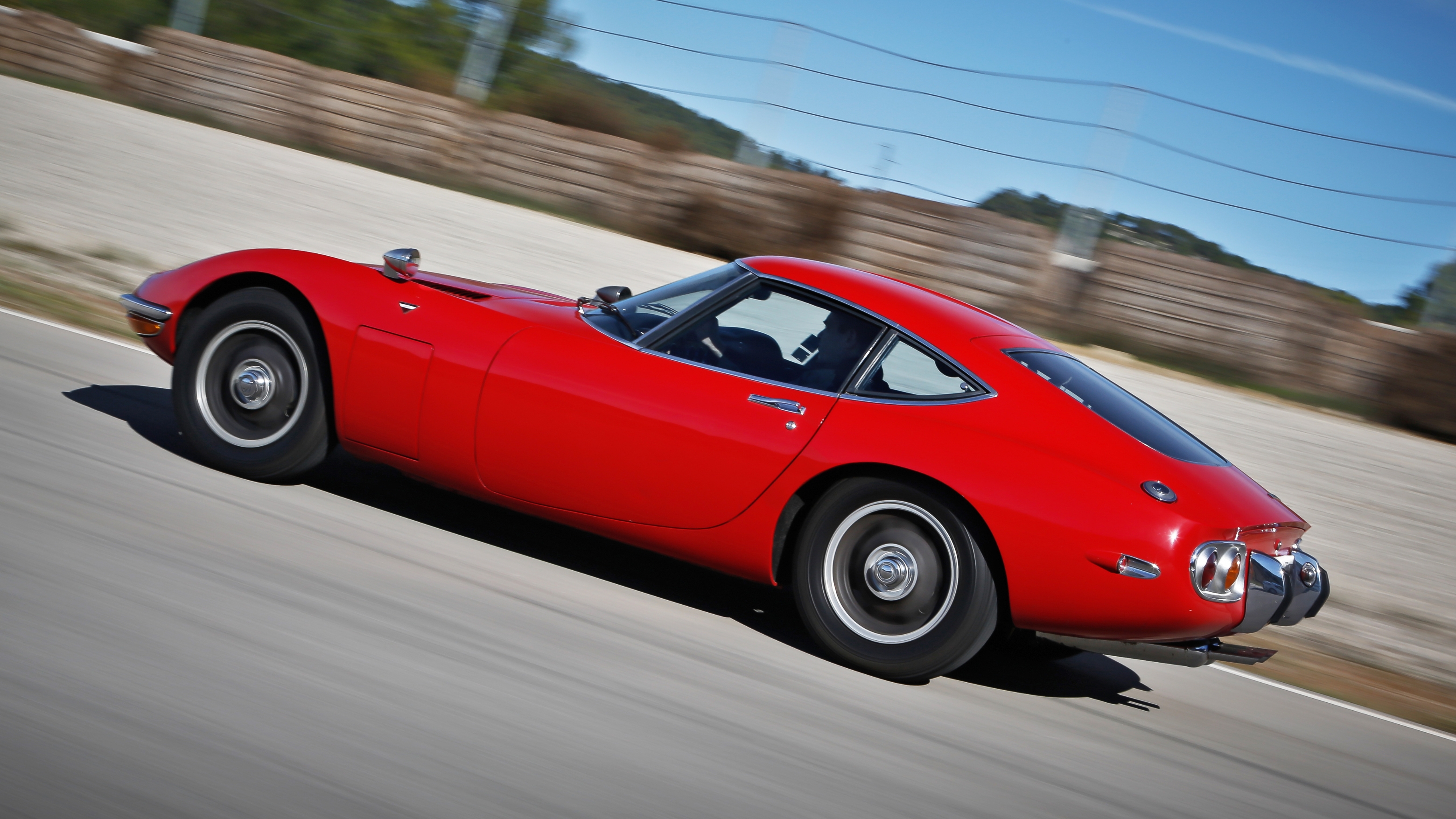
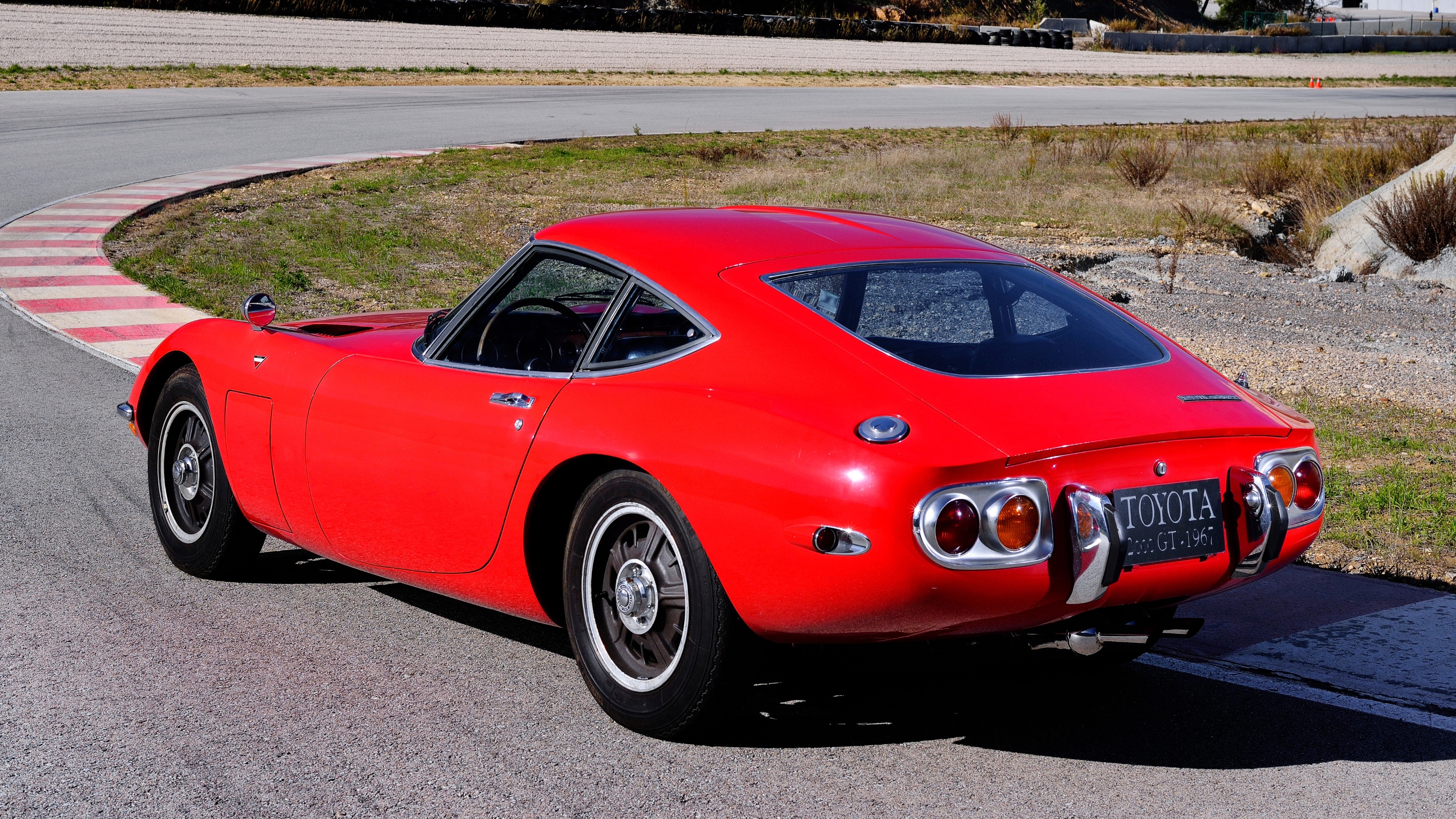
But Nissan backed out, so Yamaha started talking to Toyota. As Yamaha hoped, it was giving the job of building the 2000GT under contract to Toyota. (Yamaha built the LFA engine too.) Development fell to Toyota’s managing director of racing, Jiro Kawano, and a tiny team, including head designer Satoru Nozaki. It ended up sensationally beautiful.
Despite its great refinement it really was developed with racing in mind. And it did well, with Carroll Shelby running a team in the US. It also did a lot of distance speed records, including 10,000 miles at an average of 128.87mph.
The engine looked like an engine, aesthetically lovely with it. A twin-cam straight-six of a watchmaker-tiny 2.0-litre displacement with three double-barrel carburettors. That's enough for 148bhp at 6,600rpm, with a 7,000rpm red-line. It had that wonderful visible precision of Japan's motorcycle engines. I'm thinking Honda CBX, but with the cam drive and takeoff at the end not centre. Behind was a five-speed manual.
Get all the latest news, reviews and exclusives, direct to your inbox.
The chassis frame was an X when seen from overhead, made of steel sheet, very like the original Lotus Elan's. The engine and box were cradled between the front forks of the X and the diff in the rear. Double-wishbone suspension was hung off all corners, with four disc brakes too. Ferrari, BTW, switched to independent rear suspension only in the same year.
On top of the rolling chassis was the gorgeous aluminium bodywork. That helped keep weight down to 1,120kg. Overall height is just 1,170mm, 50mm lower than the lowest E-Type coupe.
It's low and narrow so you have to fold yourself up, but once in there you wear this car comfortably. Unless you're tall – maybe that's why Connery needed an open-top one.
It was luxurious for the era. Yamaha motor was spun off the Yamaha piano company, although the two were by then separate. Still, Toyota got the piano guys to make a beautiful wood dash for their new car.
Period equipment included a push-button AM radio with a switch for the electric aerial. The handbrake is an umbrella handle. A row of five chrome-ringed dials sat along the centre of the dash – amps, water temperature, oil temp, oil pressure, fuel. Plus there were two clocks, one of them an altimeter-style stopwatch.
And then ahead of you in clear sight the speedo and rev-counter. Three sliders controlled the heating and venting, but there was no air-con, so if sweaty you just opened a rear quarterlight.
The engine sounded mechanical at first, a whirr of cams and chains with a smooth exhaust burble at the bass end of the sonic spectrum. With some revs up, it morphed into a lovely growl. A proper straight-six balance. Of course given this example's insane value and the fact the metal in the engine is six decades old, I decided a visit to the full 7,000rpm wasn't worth the risk, so I curtailed things at 5,500-ish.
At which time it was still pulling hard. American magazines did their tests back in the day and got to 60mph in just less than 10 seconds, and under 17 for the SS1/4. Now I'm not going to call those supercar numbers, and indeed a 911 2.2S of the era with very similar weight and power was quicker off the mark and a couple of seconds quicker in the quarter at a very close trap speed; all consistent with better traction.
That short gearlever was a good clue to the shift: a lightweight mechanism of great precision. Think MX-5.
At a dawdle the steering had a bit of friction, and of course heft at very low speed because it's unpowered. Once you were under way, the feel was lovely, a real sense of the grip. Which, given the skinny 165/15 tyres, was surprisingly stout.
Pouring harder into curves was rewarded with an exact answer to your commands. Not just commands of the wheel but of the throttle; tucking the nose in, edging the tail out. It weaved a bit under brakes, but the pedal was reassuring.
So the whole car felt connected and sophisticated. A real piece of engineering.
Knee-trembling beauty and excellence in the mechanical spec will get a car a long way up the classics pecking order. Construction quality too. An intriguing back-story and historical significance. Competition history and a red-carpet film role. Plus rarity. The 2000GT ticks every single box.
Then it backs it up with a driving experience that's just a delight in every dimension. The 2000GT is solid-gold high spot for one of the world's most important car companies.
Get all the latest news, reviews and exclusives, direct to your inbox.
