



25
The WRX is quite accessible for a wide breadth of drivers, and while enthusiasts will delight in the sprightly energy of the turbocharged 2.4-liter boxer under the hood, it won’t be a turn-off for if you’re indifferent to performance. The WRX’s modest power and even-keeled delivery gives it a sensation of robustness for tackling any task at hand, be it errand-running, commuting or sloppy terrains.
With all models sharing the same engine, the differences between them are subtle. Those fitted with a CVT transmission have virtual shift points to emulate gear changes, to at least provide some kind of feedback while you’re trying to have fun. We’re not innocent when it comes to CVT snobbery, but Subaru does package it well with a responsive ECU, particularly in the GT where drive select modes are included.
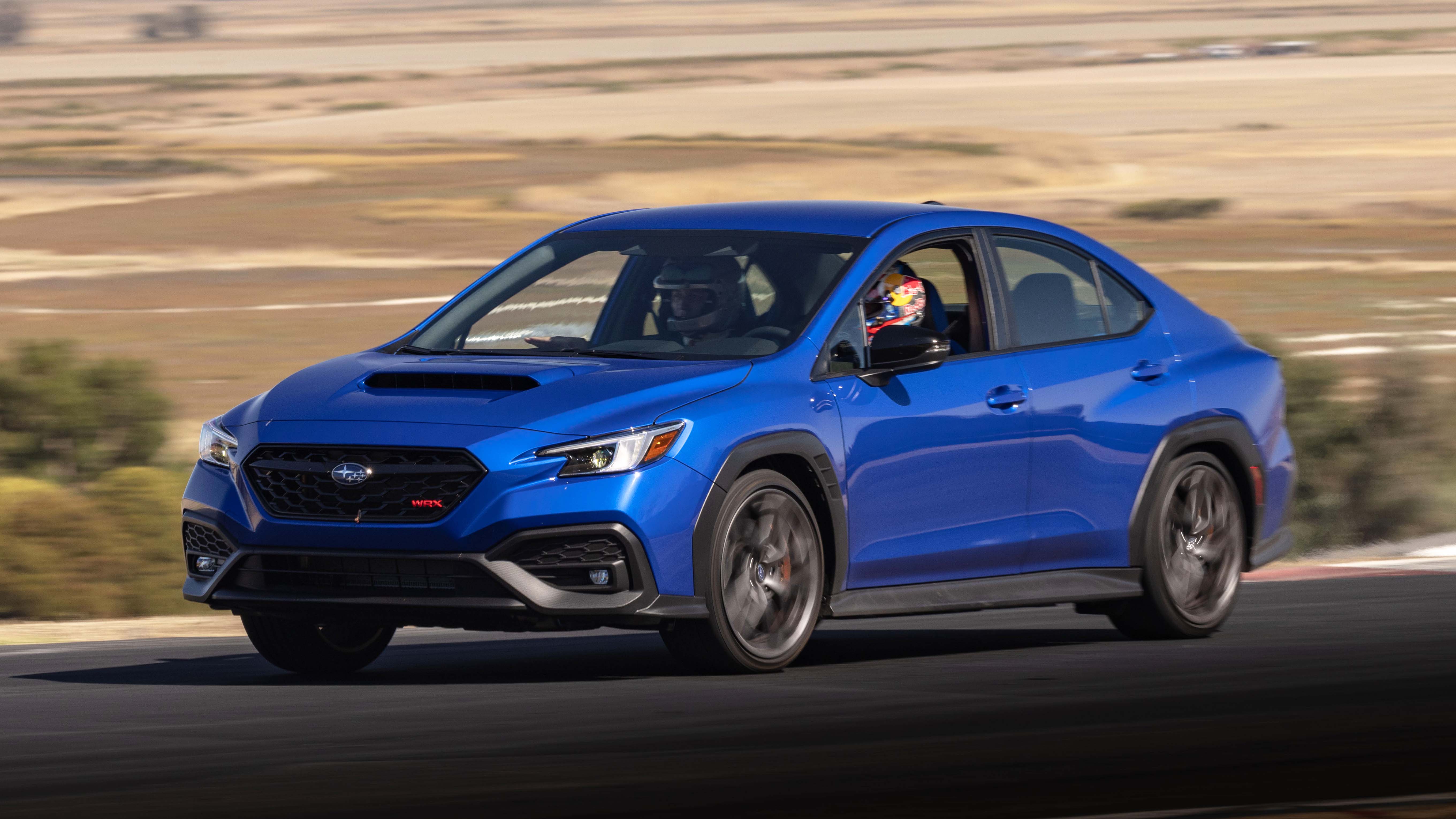
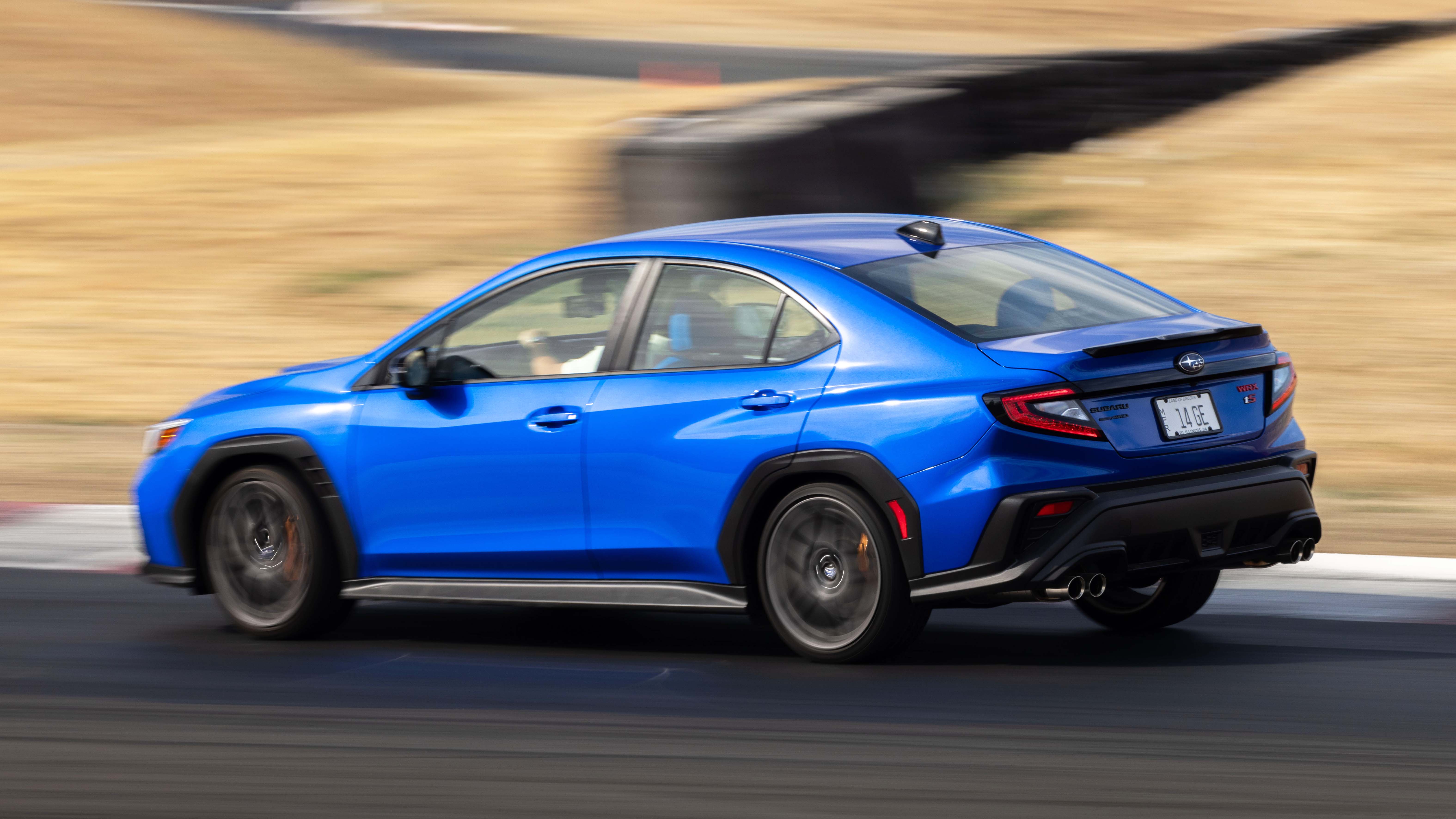
The newest and sportiest edition to the WRX portfolio is the WRX tS, which, like the BRZ tS, is improved upon by suspension changes rather than engine upgrades. Previously, drive modes were limited to automatic-only WRXs, but now drivers of the WRX tS can take advantage of sport and the new sport plus modes for sharper throttle response. This is supported by the electronically controlled dampers previously exclusive to the GT model, freeing up this manual-only model to be configured to your preferred damper and steering stiffness.
Subaru’s kept 0 to 60mph times of the WRX close to the vest, but it’s safe to say it’s a solid six-second car off the line: it’s a car eager to please. We’ve had the opportunity to drive the WRX on a number of tracks, from California’s Sonoma Raceway to England’s own Oulton Park. Even during uphill jams, we were encouraged by the Subie’s enthusiasm to push ever forward, though the one nagging quirk throughout the car’s performance was the narrow rev band. Most of the usable power comes in quite high in the curve, and between that and the 6k redline, it feels like you’re always pinging right when you need it the most.
If you can get beyond that, you’re free to focus on what the summer performance tires are allowing you to do, so long as you’re in the tS version. Even without these, the balanced all-wheel drive plants the WRX like a boot on the circuit, so the most ham-fisted and aggressive of us can wheel around securely, with little threat of spinning off.
When the WRX does start to rotate, there’s loads of grip you’d have to ignore before it becomes a problem. Six-piston front Brembos and two-piston rear brakes complete the tS’s performance package, letting you stand on them heavily for run after run without a sense of struggle or fade, a feature you’ll come to miss after multiple hot laps in the base model.
Out in the real world, the WRX’s peppy charms remain, as does the issue with the power band, though it’s not as egregious here. The engine can still be sluggish before it gets to that very narrow sweet spot, however, so the enjoyment is diminished because there’s the perpetual sense that you’re in the wrong gear. It’s almost enough to distract you from the benefits provided by the boxer power plant like the lightness and stability, both of which complement the rest of the package.
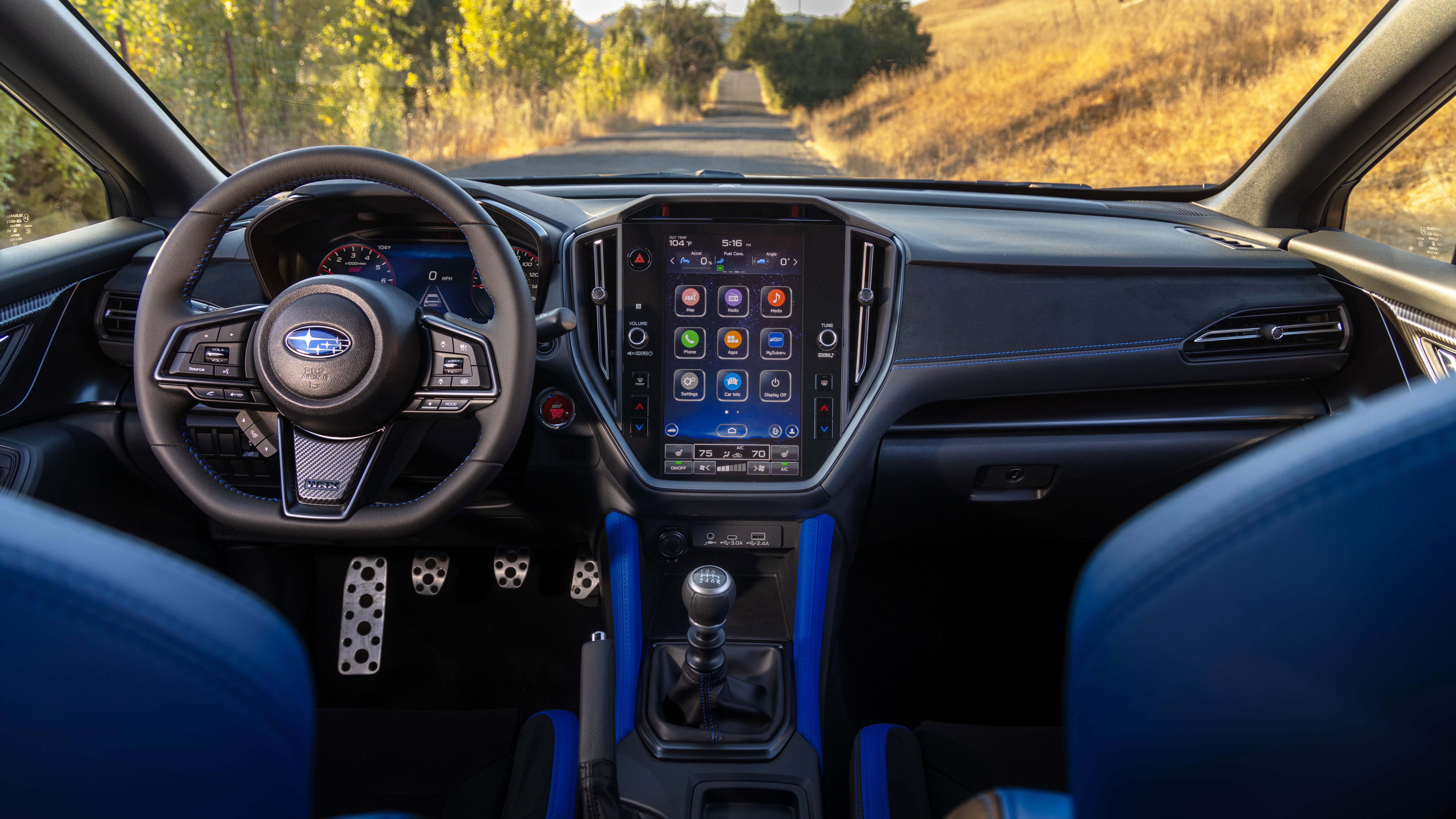
When it all comes together, it’s so supportive of play, despite minor shortcomings. The manual gearbox isn’t the smoothest and the stick often feels far from hand, but shifts are chunky and satisfying. With models that offer different drive modes, the overall behaviour of the car doesn’t change dramatically but switching the dampers from comfort to sport plus does make a palpable difference.
Get all the latest news, reviews and exclusives, direct to your inbox.
