



25
Bentley Continental GT Mulliner
3996cc
771.1bhp
3.2s
Anyone with a thimbleful of mechanical sympathy is taught to let an internal combustion engine warm up gradually. At start-up – especially when it’s chilly – the engine’s oil is gloopy, slow-witted and late getting to where it needs to be. Like me on a frosty morning. This means it can’t protect the engine – and why your old man sagely tells you 90 per cent of engine wear occurs within 30 seconds of switching it on.
Some modern cars illuminate blue warning lights that extinguish when the engine is warm enough to allow higher revs and loads. BMW M cars flash up an alert when they’re roused, informing the driver full engine power will only be unleashed when the sensors are happy it’s nice and toasty.
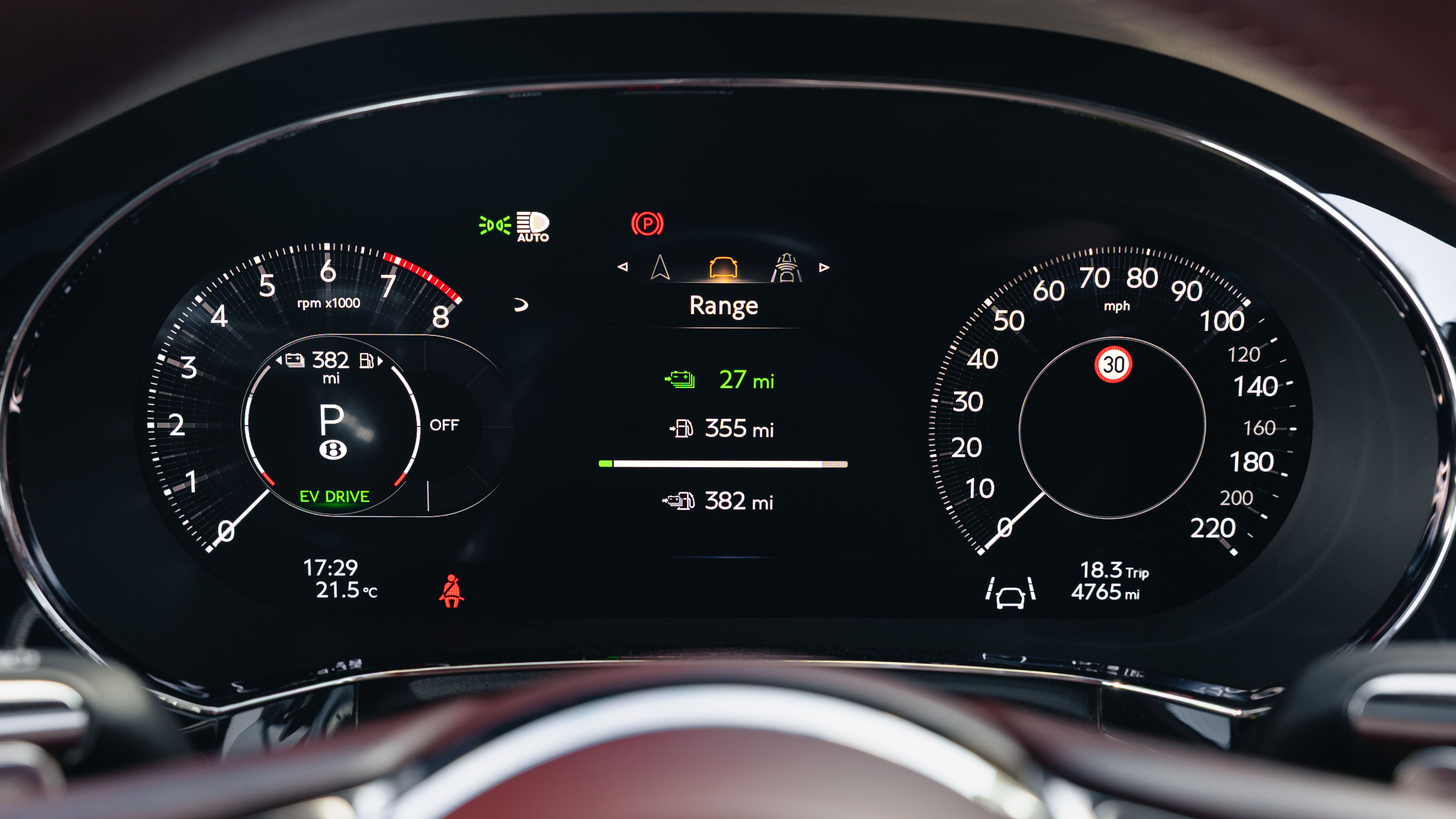
But because the Bentley can whizz along at over 80mph on e-power alone, sometimes I’m in the outside lane of a motorway with a frozen engine at the very moment it decides to chime in. And that can’t be good for a twin-turbo V8, can it?
Suddenly having to wake, stone-cold, and push a 2.5-tonne Anglo-German destroyer along. I wince when it happens, imagining the gnashing, grinding wear going on under the bonnet.
Surely some measures have been taken to ensure reliability? I was so alarmed, I pinged this very question at Bentley’s engineering boffins, and the answer was both fulsome and fascinating. Here’s what they said: “To ensure engine performance during hybrid operation under cold conditions, a number of strategies are employed. For cold starts (at ambient temperatures below minus 10 degrees Celsius), the engine is started, preventing high-load cold-engine starts with the vehicle in motion.”
Clever. But you ain’t heard the best bits yet.
“Low temperature engine starts with the vehicle in motion are calibrated to allow sufficient time for the oil and fuel pressure to build, maintaining progressive torque delivery under all conditions.
"Additionally, during cold start a rapid warm-up strategy is employed with the coolant system by-passing the radiator supporting a fast stabilisation of the engine.
"For example, at an ambient temperature of 0 °C, oil temperature typically increases by approximately 40 °C and coolant temperature by around 50 °C within the first 60 seconds of engine operation. The oil is the same oil as previously used in the V8 combustion engine: (0W-40W).”
This is why I have monumental admiration for car engineers. I love it when big-brained people have been beavering away on a problem, concocting a solution the driver will be blissfully unaware of, apart from when they go for a service in 50,000 miles time and don’t need a new engine block.
So, as winter sets in, no need to worry about the engine being less of a morning person than me.
While I had the ear of the Bentley boffins, I asked a few other questions that have arisen during life with the Mulliner. For example, what’s the maximum proportion of braking which comes from hybrid to re-gen as opposed to friction braking? What alterations had to be made to the steel and ceramic discs (and brake pads) to stop the brakes glazing or corroding due to lack of use?
The answer: “Maximum deceleration using recuperation is set at 0.3g. The brake system is developed such that it begins any braking event using the friction brake and then blends in recuperation as much as possible based on various factors (vehicle speed, deceleration, ESC/ABS status, etc). As a result of this strategy there is no issue with glazing/corrosion as the pad and disc are regularly used to clean them.”
Again, a simple action like pushing the brake pedal is in fact a secret committee meeting of brain power between the human engineers and the onboard computers. And they’re right: the Conti’s vast brakes never display any of that tell-tale rust you sometimes spot on the discs of hybrid and EVs which lean on re-gen.
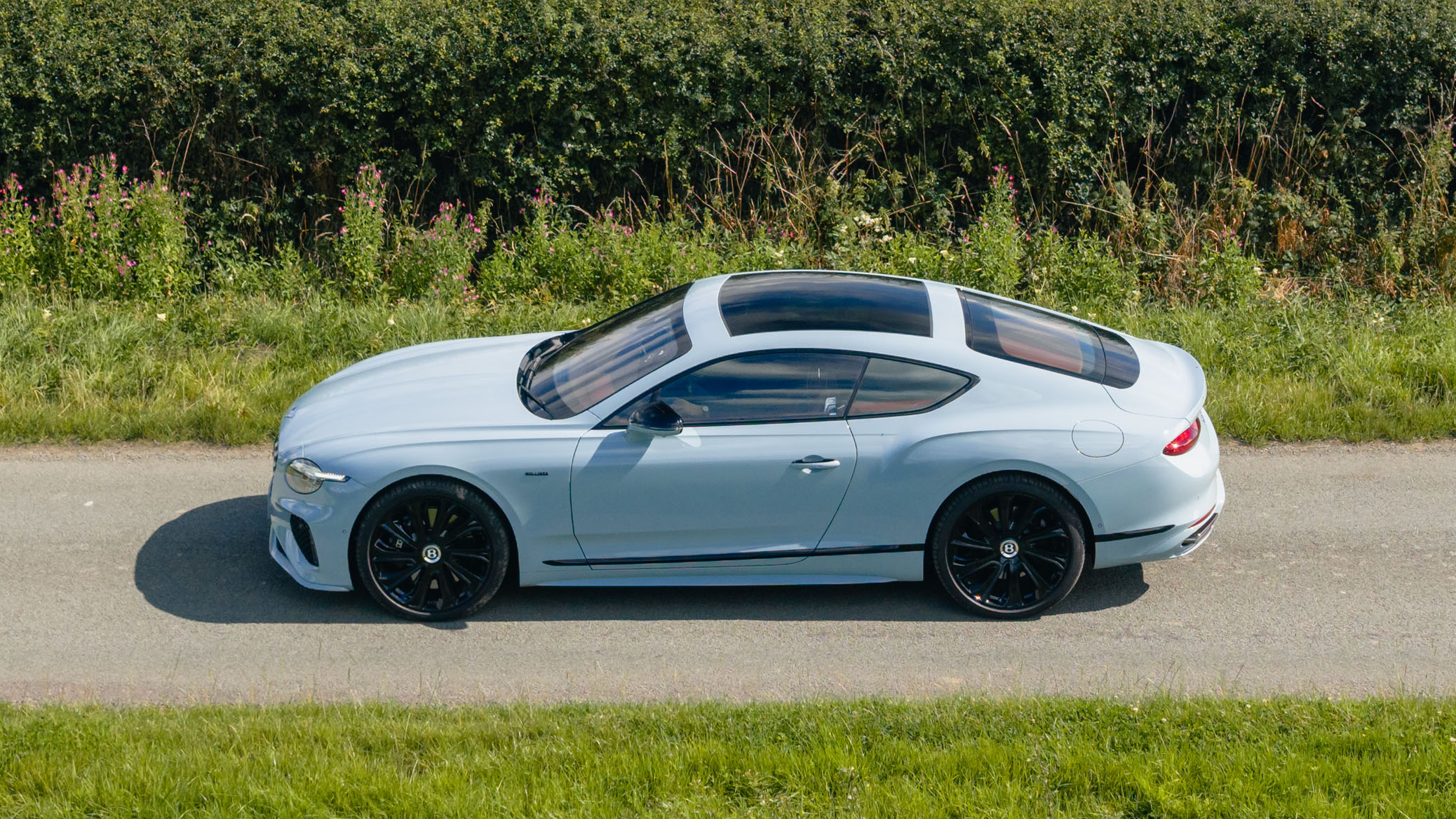
I had time for two more questions, which centred on changes you might have noticed to how the Conti GT looks. The pre-facelift model sported a pop-up wing on its tail. That’s gone for the hybrid. Why?
“When the rear of the car was redesigned it gave the opportunity to incorporate a larger rear spoiler, with weight savings and less complexity.” Fair enough – one less thing to go wrong in a car of much electronic complication, I suppose. And raising the wing spoiled the Conti’s elegant lines. Though I had to chuckle at ‘weight savings’. This car is a monster. I think my driveway might be sinking.
Meanwhile, what’s happened to that natty vent that lurked behind the front wheel before the Conti went hybrid? Is it now so efficient it was needless, or was this perhaps a cunning ploy to cut drag and up fuel economy by 0.0001 per cent?
“It was chiefly a styling feature only,” says the mothership with refreshing honesty. “For the fourth generation we have focused upon a more minimal side profile emphasising the three iconic lines of the GT, the power line over the front wheel arch, the haunch and the roof line.”
So there you have it. Random questions about the latest Bentley GT, solved.
Get all the latest news, reviews and exclusives, direct to your inbox.
