



25
Polestar 4 Long Range Dual Motor
367 miles
1cc
536.4bhp
3.8s
As we observe often enough, cars with screen-heavy interfaces take time to learn and set up to your liking. In many, that time is infinite. The Polestar was just a few weeks.
A hack lurks in the cruise control buttons on the steering wheel's left spoke. When the cruise control is off, they have secondary functions. The speed-up button cycles through regeneration (off, little, more), useful as the car does without paddles. Follow-closer button is accelerator map – sport or normal. Speed-down button is the most welcome as it switches off the speed limit bonger. Welcome because the car is pretty clueless as to actual limits. The increase-distance button does nothing. Maybe it awaits an OTA update. The buttons on the other spoke get me among other things to the trip computer, which is vital in an EV.
Then the screen. You can have six shortcuts there too, so I have one for lane assist on/off. Another gives ESP sport mode which is incorrectly marked as 'ESP off'. Another is to turn the lights on or off because the car has no light switch duh; it wants to do it automatically but when parked at night and I stay in the driver's seat there's no other way to switch them off.
Another opens the glovebox, maybe because they think thieves would force a latch, and another the boot because again there's neither a switch or a button on the key. One more goes to the Bluetooth menu because this car is hopeless at switching between mine and my kid's phones as audio source. Several of them demand further confirmatory jabs at the screen but hey, it's a start.
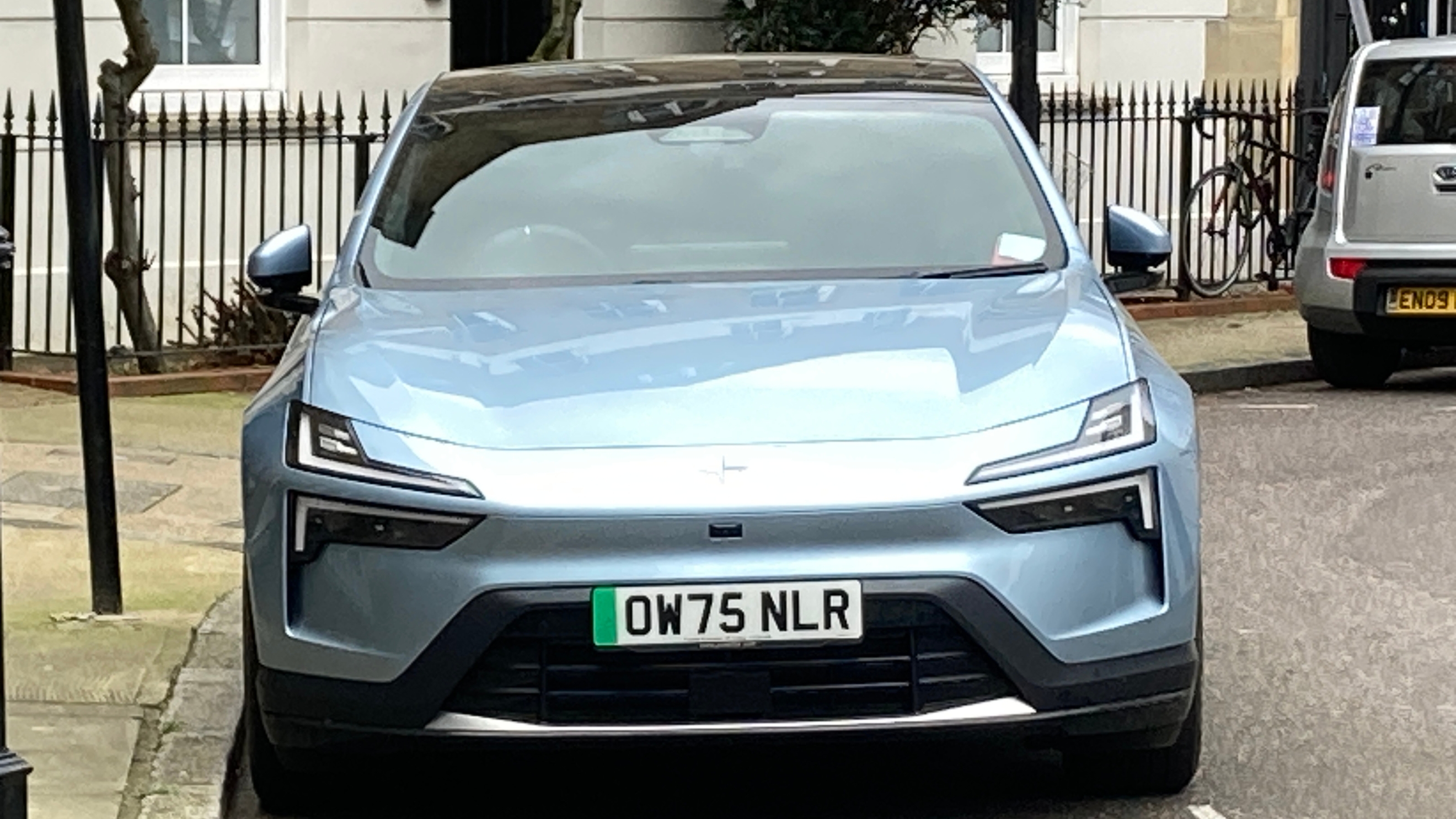
Then there are bigger screen tiles, and on one of those I have the parking camera activation because you need the side cameras in a hurry for width restrictors. This car is crazy wide. It touches tyres on both sides in 6ft 6in restrictors. Those other tiles are phone and music display, plus that bunch of six of my own buttons, plus the half-screen map which is big enough. Various seat-heating and climate shortcuts reside permanently at the screen base.
Overall it's a better system than the different one in the Polestar 3, or any Volvo. At at least its OS is more compatible with my brain's OS.
There's an actual volume knob that passengers can reach, and window switches. It took me a while to grasp how to motor out the exterior door handles so the person you've come to collect can open the door. Press the unlock button in the driver's armrest.
So the only remaining infuriating thing, and it gets me seriously mad, is the fact there are no mirror adjust switches. It's four jabs deep in the right-hand spoke buttons. Yes, you can set it so both drop every time you reverse, but often I want one up and one down so I can see the kerb and passing traffic.
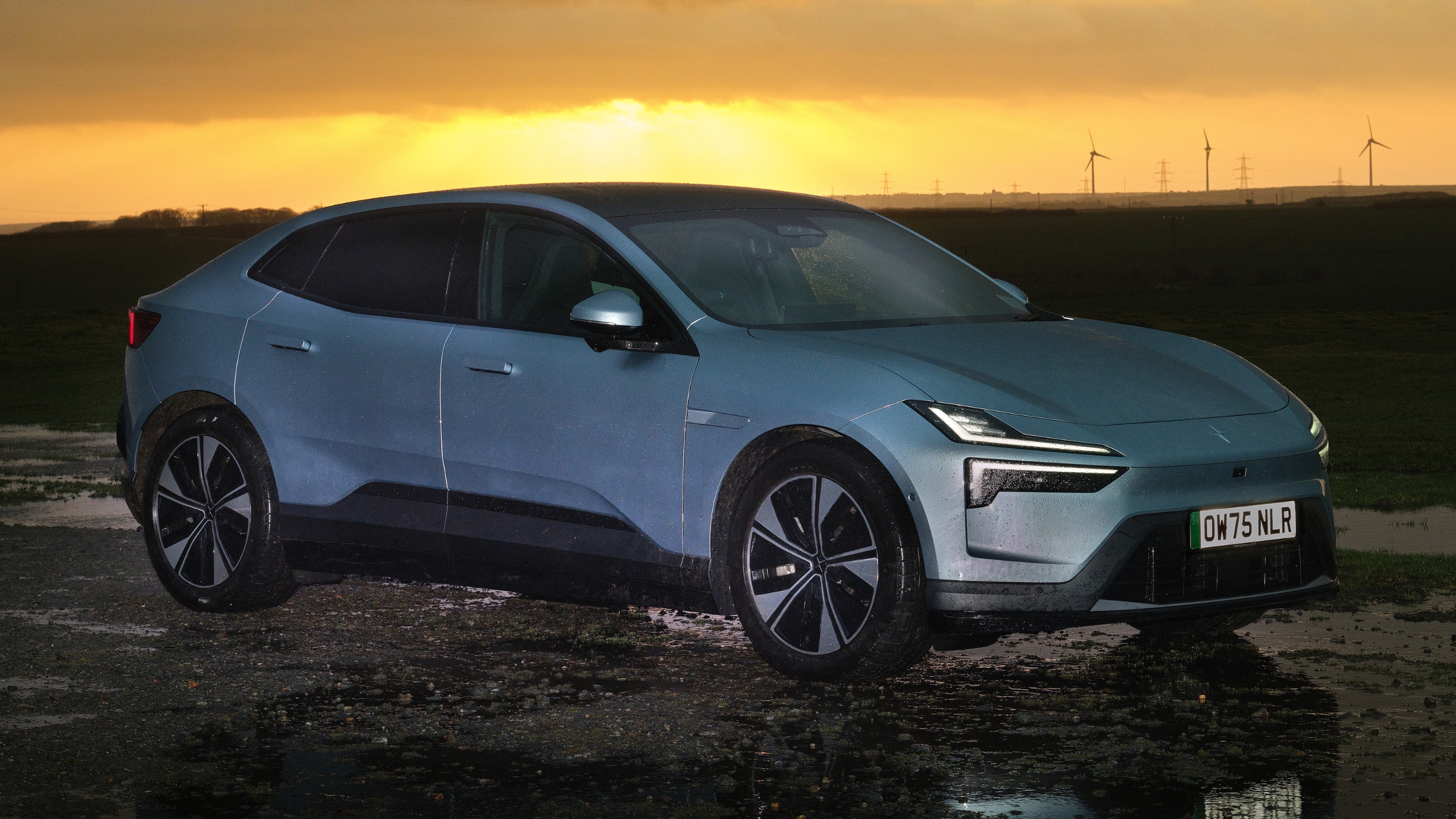
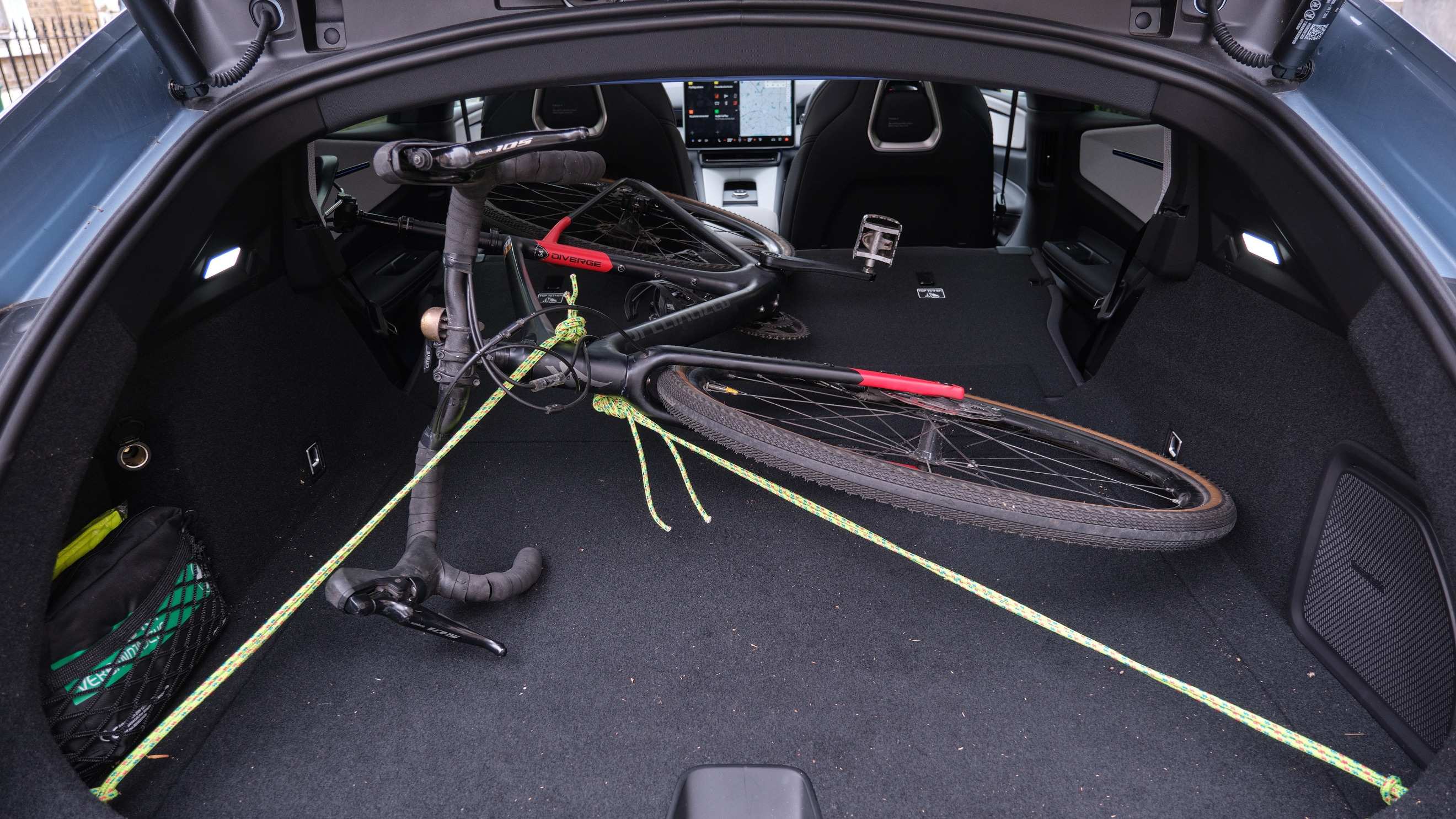
I said the Polestar 4 is wide. I don't like that, but I do like its length, for the leggy rear seat and big boot. There's a photo up top of my standard folded-seat test: bike in there, with both wheels on. It still has about 30cm of longitudinal room to spare. The tie-down eyes are good – strong, easily found and spring-loaded. There's a biggish bin beneath the boot floor too.
I was collecting the bike from Carbon Cycle Solutions, an outfit set up by a former McLaren F1 composites engineer. I'd fallen off in a biggish impact, and cracks can be hidden beneath the carbonfibre frame's surface, so CCS does ultrasound scanning to find them. I remember Gordon Murray telling me he didn't like carbonfibre road wheels for the same reason. Next time I'll get an aluminium bike; my legs aren't good enough for the small performance advantage of carbonfibre.
Actually the bike was fine. Not me: I needed a whole new hip joint. It's made of chromium, cobalt and sintered zirconium. Although probably not as much as in the Polestar's battery and drivetrain.
Get all the latest news, reviews and exclusives, direct to your inbox.
