





Big Reads
"This isn’t a car, it’s a bulldozer": why the Munro is the best off-roader of 2026
Still mourning that old Defender? The Munro EV is a Glaswegian off roader that’s built to last
The foot high step down wasn’t obvious, seeing as it was already under three feet of water. But as the bonnet of the Munro submarines and the car starts to float with all four wheels now operating as rotary paddles rather than gripping the mucky lakebed, there’s a flash of regret, widened eyes and immediate panic. But with a scrabble and crunch, the front wheels torque themselves onto... something, and the Munro yanks itself up the opposite bank, dragging a torrent of stinky, muddy water with it. A more thorough test of what a car can usually manage; I’m not usually worried about drowning on my commute.
Luckily, this isn’t a car. It’s a bulldozer. Or a telehandler. Or, if you’re being creative, a combine harvester. The Munro is all of those things, and somehow none. Because although it can’t competently harvest winter wheat or forklift a pallet of fertiliser, it’s an electric 4x4 that’s supposed to be treated more like plant equipment than a normal SUV. It can quite happily manage the regular road network – unlike a lot of construction equipment – but it’s also designed with a sense of the longevity, repairability, capability and simplicity of something way more industrial.
Advertisement - Page continues below
To thrive in the harsher environments of forestry, agriculture, mining, requires a concept that includes lasting for two or three times the usual duty cycle of the average pickup. Which makes for a car that’s been subject to a heavy redaction in terms of what’s useful and what’s not, a considered filleting of the hardware. Mainly because you don’t need a 14in touchscreen and massage seats when you’re up to your thighs in mud and the local car wash is seven hours away.
Photography: Mark Riccioni
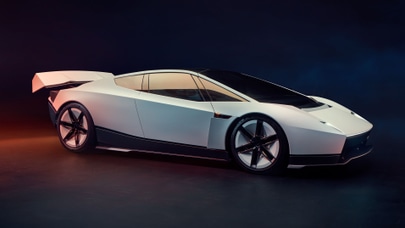


Which is why it looks like a brick. The kind of vehicle for people for whom steel toes aren’t a fashion accessory and Gore-Tex is a luxury fabric. Why? Cost and in-theatre fixability. Car companies spend billions on tooling and machinery, while the Munro is essentially just a series of flat or bent panels – no complex curves here. What that means is that it’s cheaper and easier to produce, and much simpler to fix on a jobsite miles from a four-post lift or easy parts supply. Or if not fix, then at least beat back into shift-capable shape. It can come as a double-cab pickup, SUV (like the one here), or even a bare chassis and cab, all the better for attaching pretty much anything you feel like.
There’s space for five, with heated seats and electric windows. But that’s about it. Yes, there’s a small screen with satnav and Apple CarPlay/Android Auto set into the horizontal slab of dash, but widescreen OLED tech is too frail for this kind of thing. The gear selector set is a triplet of buttons by the steering wheel, the low range ’box a chunky lever in the centre console. There’s a whiff of homebuild project, but the home is Barclays, because it’s built like a bank safe.
Advertisement - Page continues below
And every car should have transmission tunnel saddlebag pockets from this point forward. But the crackle-coat painted, flat-sided cockpit isn’t really the big deal here, even if you can literally hose it out – everything is dust and waterproof, so you can chuck a bucket of clean water in it and let it air dry. It’s more the mix of next gen EV drivetrain and tried and tested mechanicals. Because the Munro has a touch of Frankenstein’s monster about it.


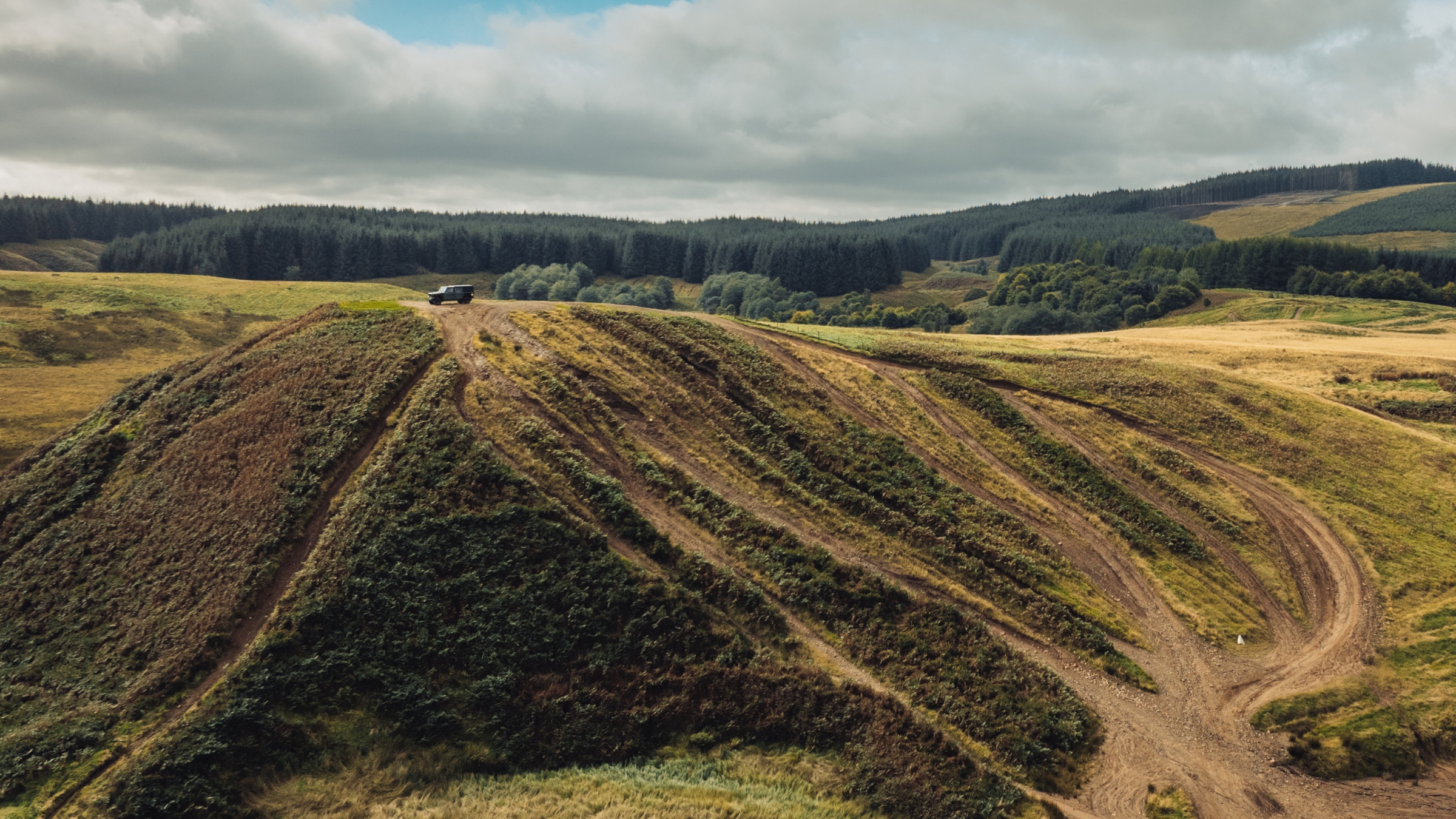
The Tao of Munro is simplify and then add reliability. So it’s about as basic as it gets: a steel ladder chassis with a body stuck on top and those angular aluminium panels. A bespoke triple-pod LFP 85kWh battery, driving through a mechanical four-wheel drive system with three locking diffs and a two-speed transfer case. There’s just one motor that comes in two power outputs, 375bhp and 516lb ft or 228bhp and 442lb ft, both with the same 170-mile real world range. Then there are beam axles and coil springs, and a really big steering damper. And it has 130kW of DC charging, so you can just hook it up to a rapid charger and go from 15 to 80 per cent in half an hour, with 7kW AC for overnights, so pretty much like most modern electric cars.
Worried that the Munro isn’t capable of 500 miles of range for those overlanding expeditions you never do, even though you bought a rooftent? These sorts of vehicles generally have a small operating environment and specific duty cycle, so charging them typically isn’t a problem. And it’s an easy win to try and decarbonise at least a portion of the working fleet when you have a lot of big diesel excavators chopping about. It might look like an SUV, but this is a very specific thing.
On road, it’s... fine. Not a dynamic powerhouse, but it’s fast enough, capable enough and certainly the kind of thing you could drive between job sites without any trouble. It leans like a speedboat, has the kind of vague steering that suggests a direction rather than enforces it, but does nothing that would worry anyone unless they’re trying to McCrae the wheels off it. Think a tightened up, torquey version of a Series Land Rover or coil-sprung early Defender – something compromised on road to give greater ability off it. Luckily, off road, it’s just very easy. Kerthunk the lever into Low, and then just manage the Go and Stop pedals. Lock out some diffs and simply aim it at the landscape.
The Munro has a touch of Frankenstein’s monster
Wet grass inclines are dispatched with the kind of indifference you really need off road, ditto ruts, mud, cross-axle nightmares and any other kind of obstacle. You can manage the throttle carefully, there’s always plenty of torque on offer and lots of easy articulation. It could definitely manage much larger tyres, which would be useful for a bit more clearance, but that’s about it. You do need a little bit of off road nouse, but most users will be more than averagely capable, and the mix of electric torque and reliably regular mechanicals make it a very easy car to get about in. And yes, a sealed unit EV can more than happily cope with water well over the bonnet. The official wading depth appears to be ‘seafaring’.
So where did this strange, Scottish off roader come from? Well, Munro was founded by Russell Peterson and Ross Anderson in 2019, in the unusually unautomotive environs of Glasgow, originally with the intention of converting older Land Rovers to electrified power. The dreaded lifestyle conversion. But the team soon realised that there was a lack of simplified commercial electrics for industry, and the electric bit wasn’t the hard part – it was the conversion of the base vehicle. So they developed an entirely new product that solved the problems of both the original and the powertrain.
Top Gear
Newsletter
Get all the latest news, reviews and exclusives, direct to your inbox.
You can buy a Munro privately for going to the shops, but it’s a bit specific; if you don’t off road at least 50 per cent of the time, you probably don’t meet the compromise criteria. The company has ended up with a serious bit of kit – albeit a pretty costly one. The more powerful M280 comes in at £82,495 without VAT, the M170 £69,662. So that’s 20 per cent on those prices if you’re not a business user. But based on the operational cycles, do you want to buy a £40k truck twice, or an £80k truck once? The lifetime costs make it cheaper than it sounds, and far, far more ecologically sound.
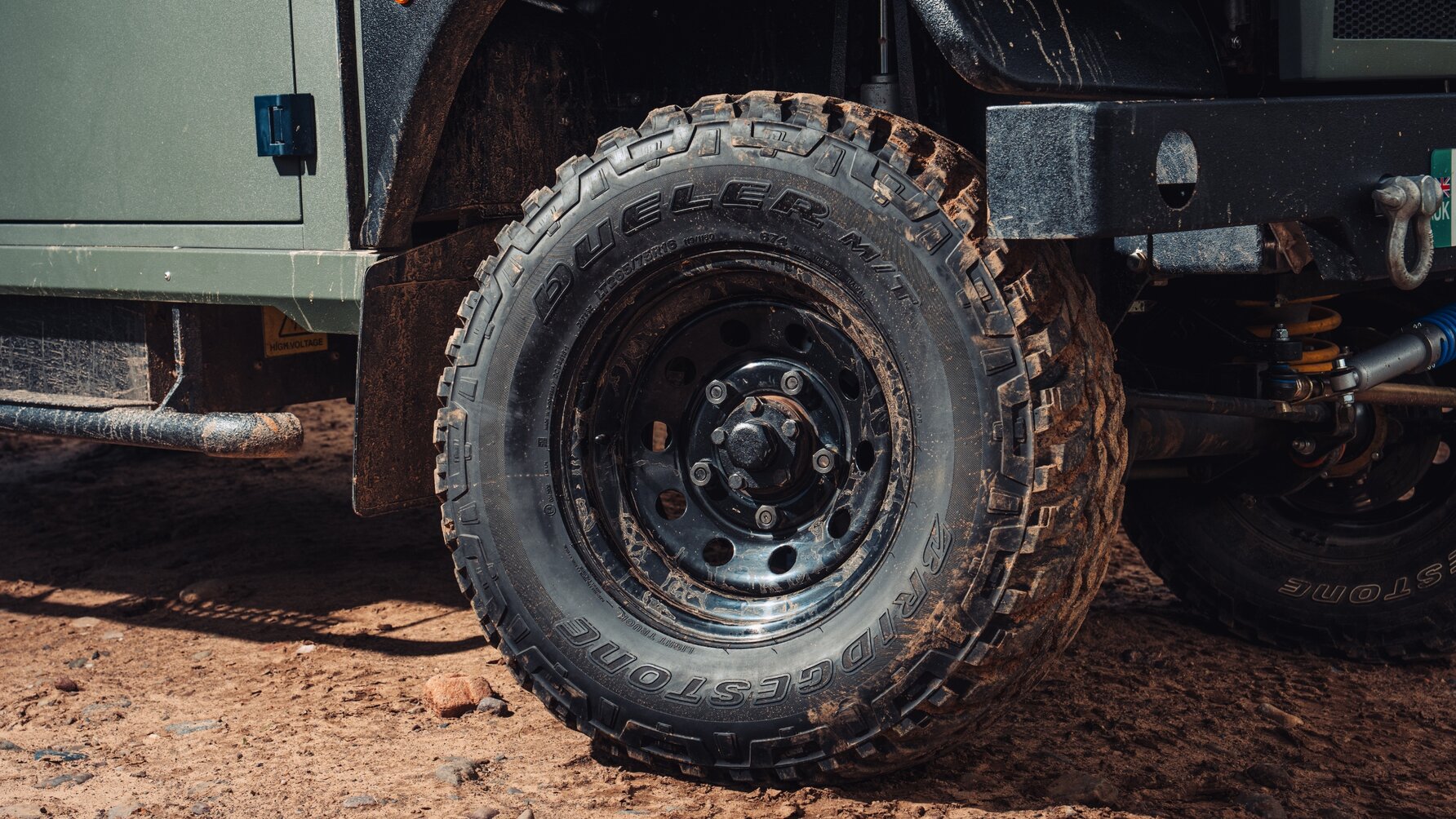
There’s a lot going on here. This isn’t a vehicle that suits the usual lifecycle or usage. It’s been designed for a specific purpose, wedging itself into its own niche. And there’s something absolutely fabulous about a car that’s born to scythe through a specific mission statement. Use it as intended and it’s wonderful – stray too far from the specifics and you’ll likely find it a bit much. This isn’t a shopping car in the same way a JCB FastTrack isn’t very good at going to Sainsbury’s. It’s a car for showing up, not showing off. And for that reason, it’s our electric off roader of the year.
Munro M280
Price: £82,495 (+VAT)
Powertrain: Single motor, 375bhp, 516lb ft
Transmission: 2spd auto, AWD
Battery/range: 85kWh/170 miles (real world)
Performance: 0–62mph in 6.0 seconds, 95mph
Weight: 2,450kg

Trending this week
- Car Review
Tesla Model Y
- Car Review
Renault 4