



25
Volkswagen Golf GTI (Mk 8.5 Facelift)
1984cc
261.5bhp
5.9s
Tick. Tick. Tick. Of all the noises I expected to remember after a day driving 50 years of Golf GTI, it wasn't induction gargle, front tyre chirp or the slightly antisocial exhaust of a Clubsport S that’s logged in the basement of my brain. It was a clock.
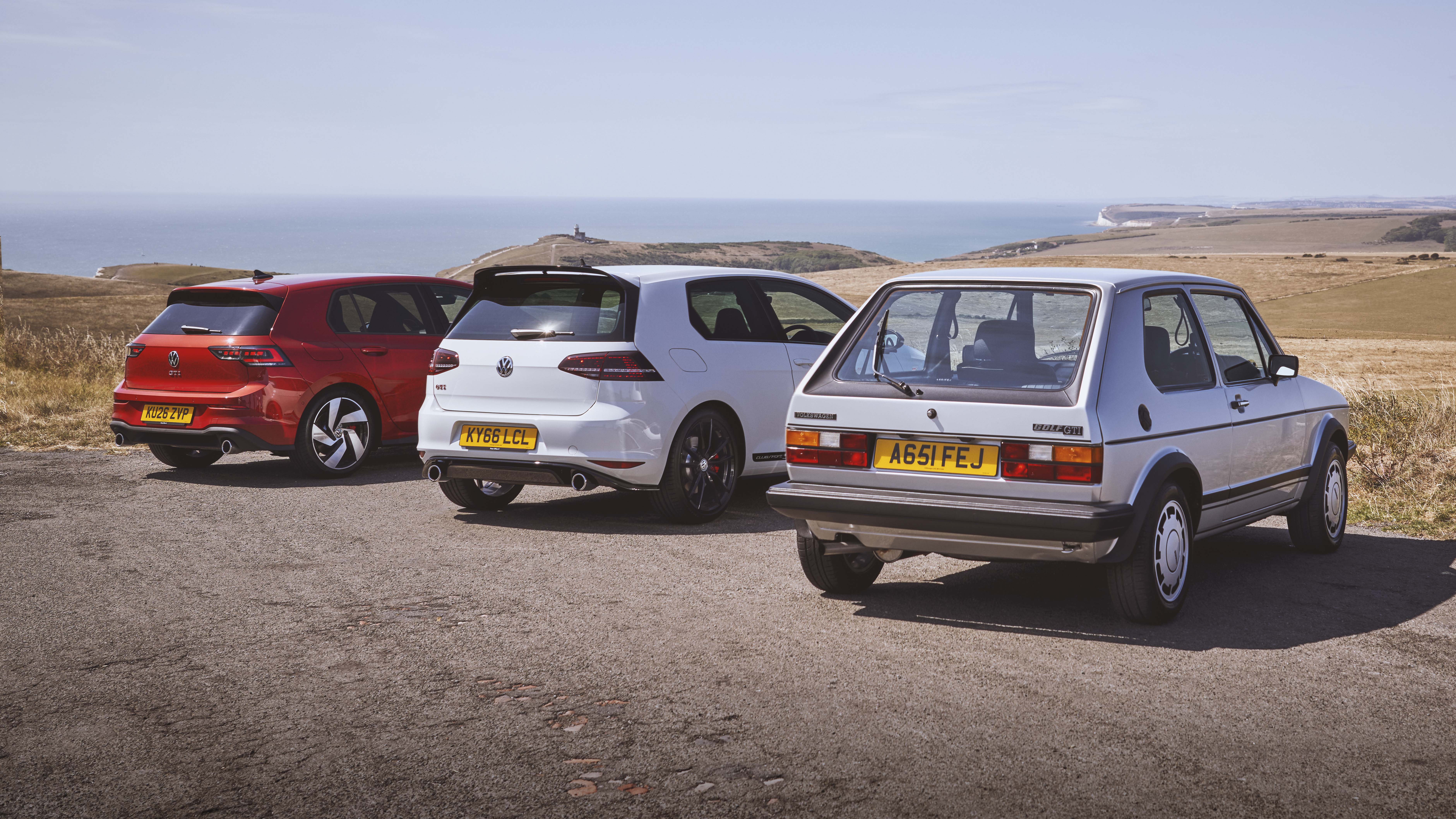
It sits in one of three little dials sunk into the lower dashboard of the original Mk1, mechanically marking the passage of time with a crisp, audible, notchy sound. Which seems appropriate, because on a bright day at Beachy Head I decided to get two of its descendants together and conduct a fairly simple experiment: what has half a century actually done to the GTI?
The answer, parked side by side, appears to be: fed it.
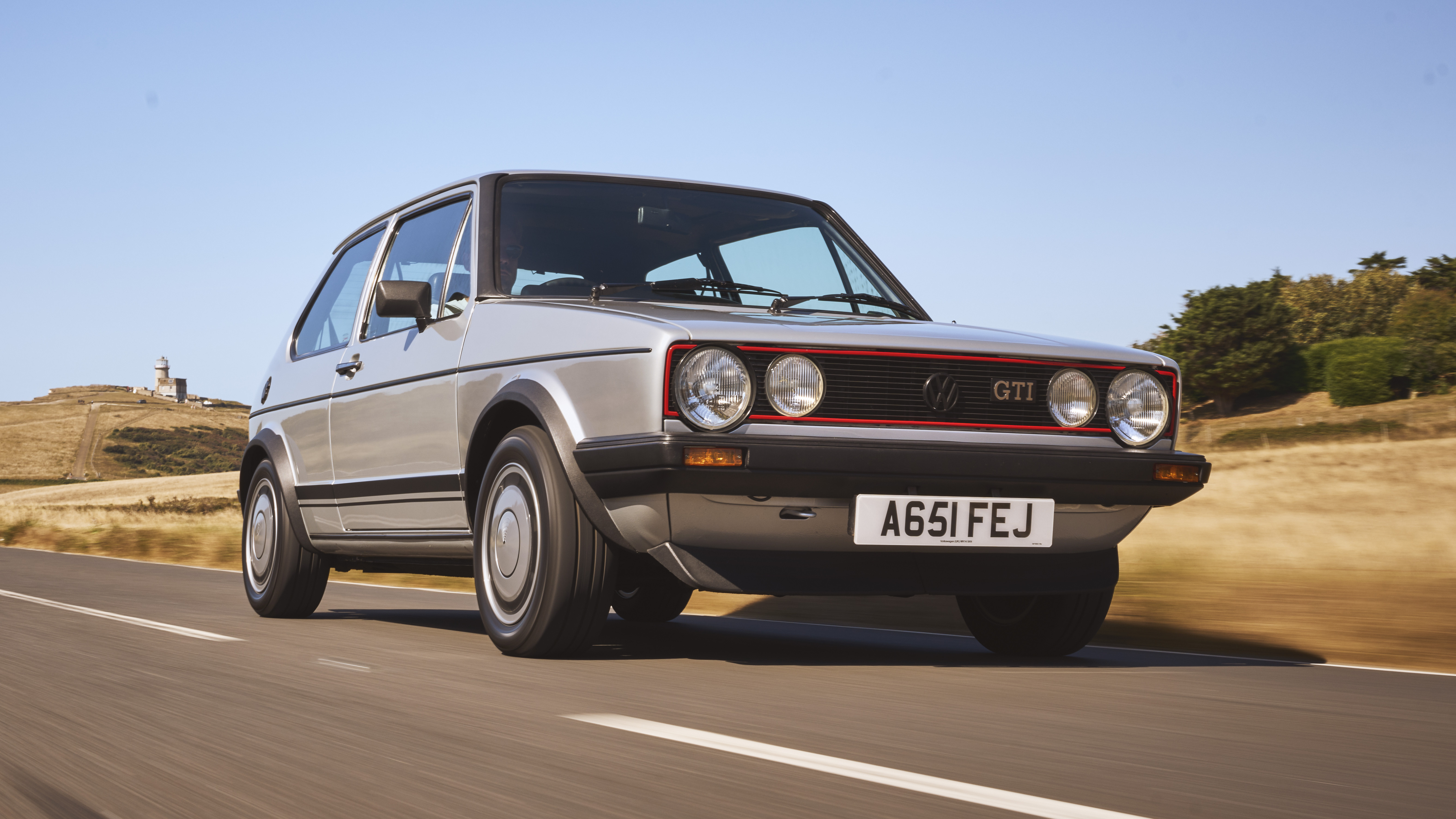
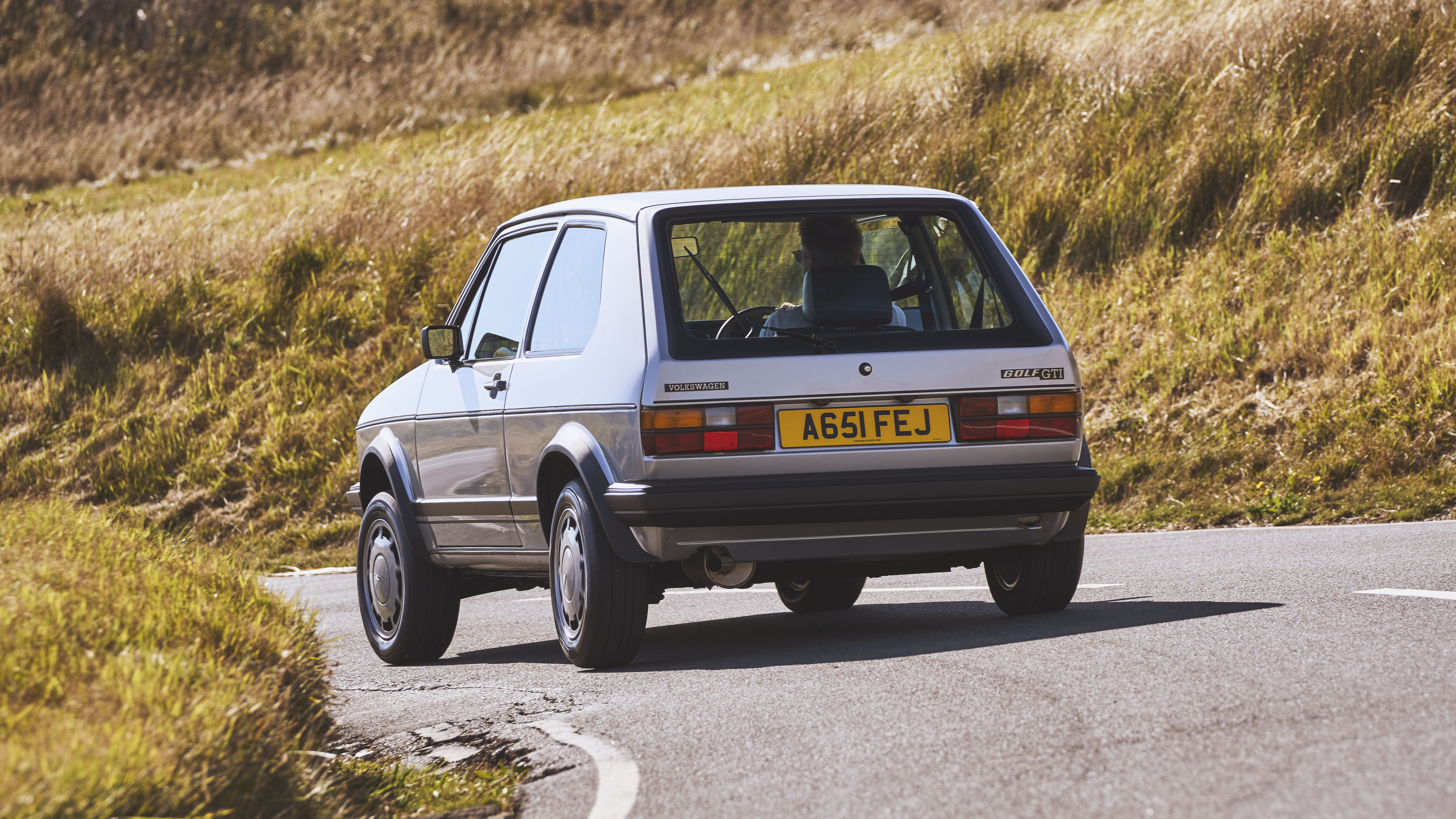
The Mk1 is tiny. Narrow, upright, perched on little wheels and possessing the crash protection of a Quality Street tin. Next to my Mk8.5 GTI it looks less like an ancestor and more like something the new car has recently given birth to.
Yet this tiny grandfather was the revolutionary one. The rebel. The original GTI wasn't conceived as a new species of performance car. A small group within Volkswagen essentially wondered what would happen if you put more engine into the ordinary Golf, sharpened its chassis and didn't ruin everything that made the Golf useful.
The result arrived in 1976 with 110bhp, weighed around 800kg and accidentally established the hot hatch template manufacturers have spent 50 years copying. Sports-car pace, family-car usefulness and none of the inconvenience traditionally associated with trying to combine the two.
And driving it now reminds you how simple that template was. Slam the satisfying door and sit in the squidgy tartan seat and you realise there's very little car between you and the world. Thin pillars, thin steering wheel, skinny tyres. The clutch is heavy and the steering even heavier. But it gets up and goes as the wheel writhes gently in your hands. You take on one of East Sussex’s hairpins and the body moves around. You have to use the gearbox. You can use the engine. It’s still fast. But more than that. It's alive.
Then I climb into my Mk8.5 and discover that somebody has inflated everything. But here's the strange bit. There is still a thread connecting them. The weighting of the steering, the driving position, the sense that this is fundamentally an ordinary car that happens to enjoy being driven hard. Fifty years of engineering haven't completely erased the original idea.
They've just made it devastatingly effective. My GTI has 262bhp, and after driving all three repeatedly over the same roads I reckon that's about as much performance as a road car needs. Not because 262bhp is an especially enormous number, but because modern tyres, dampers, electronics and differentials mean the car can deploy almost all of it, almost all of the time.
We live in a world where four-figure horsepower numbers barely warrant a press release anymore, yet on a British B-road the 8.5 can travel at a frankly ridiculous rate. It finds traction. It stops. It turns. The dampers keep everything under control. The differential drags the nose towards an apex and you disappear up the road wondering when, exactly, you're supposed to encounter the difficult bit.
The modern GTI solves nearly every problem before the driver really has to. It's brilliant. Which is slightly the problem. Because then the Clubsport S rather ruins everything.
Turn a key – remember those? – and it fires with a wonderfully purposeful burble. The exhaust cracks and pops occasionally, a noise that probably helped start the popcorn-machine maps that have subsequently infected everything from hot hatches to SUVs. Here, though, it feels authentic and appropriate.
The steering wheel is thin and wrapped in Alcantara. The seats are fabulous to look at and supportive, if mounted slightly too high. Look backwards and there aren't any rear seats at all, just carpet and a great empty space where respectable Golf owners normally put children. Who said Germans can’t be fun?
In 2016, Volkswagen apparently looked at its sensible family hatchback and decided what it really needed was less family. The Clubsport S was the Mk7 GTI with the sensible bits peeled away: 306bhp, two seats, 400 built and a Nürburgring front-wheel-drive lap record to chase.
I went to the Nürburgring for its launch and followed VW development driver Benny Leuchter around the place. It remains one of the great days of my career and was eye-opening as to what a hatch can do.
Because the Clubsport S demonstrated something we've subsequently started to forget: front-wheel drive can be spectacular. Not merely cheap, efficient or packaging-friendly. Fun. The great Civic Type Rs, Renaultsport Méganes and this thing turned the supposed limitation of asking the same wheels to steer and drive the car into part of their character.
And the Clubsport S still feels sensational. There's aggression in the front axle that the Mk8.5 has polished away. You feel the reduced mass. You have to manage the front tyres and work with the differential. It is fast, but you're involved in making it fast. Where the Mk8.5 calmly processes a road, the Clubsport S asks you to participate. It feels like a hatchback GT3 RS not merely because it is quicker and harder, but because Volkswagen removed things in pursuit of a more concentrated experience.
More surprising is how little of it feels old. It has proper instruments that tell me everything I need to know more clearly than the endlessly configurable display in my new one. Physical controls. That key. A steering wheel unencumbered by acres of switchgear. Only the tiny infotainment screen really gives the game away. Remove that and you could almost convince yourself it was new.
Which raises an uncomfortable question. Should the Golf GTI have stopped here?
Not literally, obviously. The Mk8.5 exists in a completely different world. Crash legislation, emissions targets, refinement, connectivity and customer expectations have all added complexity. Developing cars costs fortunes, and buyers now expect one Golf to perform the roles that once required several different cars.
The engineers haven't forgotten how to make analogue cars. The world around them has simply made them harder to build. Ironically, at the expensive end of the market we're now spending extraordinary amounts of money trying to engineer all that involvement back in.
Look at Monterey this year. McLaren revealed the McL 6GT – V8, rear-wheel drive, hydraulic steering and, remarkably, a genuine manual gearbox. Its first manual road car since the F1. Ferrari has gone somewhere even stranger. Its limited-run 12Cilindri Manuale has a gated gearlever and clutch pedal – except they're controlling the existing dual-clutch gearbox electronically.
Maranello has spent engineering money recreating an interaction that engineering had previously made redundant. Even Ferrari's electric car uses paddles to create stepped levels of torque and simulated engine braking. It’s mad to think we've spent decades engineering inconvenience out of cars and have now reached the point where inconvenience has become a luxury feature.
Restomods tell much the same story. Singer and its ilk have built an industry around giving wealthy people the bits of modernity they want without sacrificing the tactility they miss. At the very top of the market, outright performance is becoming less important because performance itself has become cheap. Mate Rimac recently compared the future of exotic combustion cars with mechanical watches – objects valued for the engineering and human experience rather than their ability to perform a task more efficiently.
But the economics of that world don't really exist for the hot hatch. You can charge hundreds of thousands to reinvent a Porsche because wealthy people will pay for one. Nobody is going to spend fortunes re-engineering an old Golf at scale simply to give us back thinner steering wheels, lighter bodies and fewer screens.
Perhaps that's why the Clubsport S suddenly feels so significant. Volkswagen built the restomod before we knew we'd need one. It has enough modernity to use every day and enough analogue hardware to make every journey interesting. It came from the factory lighter, angrier and more focused. Nobody needs to reinvent it because Volkswagen already did.
Its rising collectability makes rather more sense after driving it again. But then I get back into my 8.5 for the journey home and can't bring myself to be disappointed. It's comfortable. Quiet. The driving position is actually the best of the three. It'll carry four people and their luggage, crawl through traffic and then demolish a road when you ask it to.
And despite everything that's happened to the motor car over 50 years, it's still recognisably descended from that tiny box ticking away beside it. That's quite an achievement. The Mk1 invented the idea. The Mk8.5 shows how astonishingly far that idea has evolved. It is unquestionably the better car. I’m just no longer convinced it’s the better GTI.
Maybe the Clubsport S is where we perfected that. Better isn't always about adding more. Sometimes you already have enough.
Get all the latest news, reviews and exclusives, direct to your inbox.
