



25
Volkswagen Golf GTI (Mk 8.5 Facelift)
1984cc
261.5bhp
5.9s
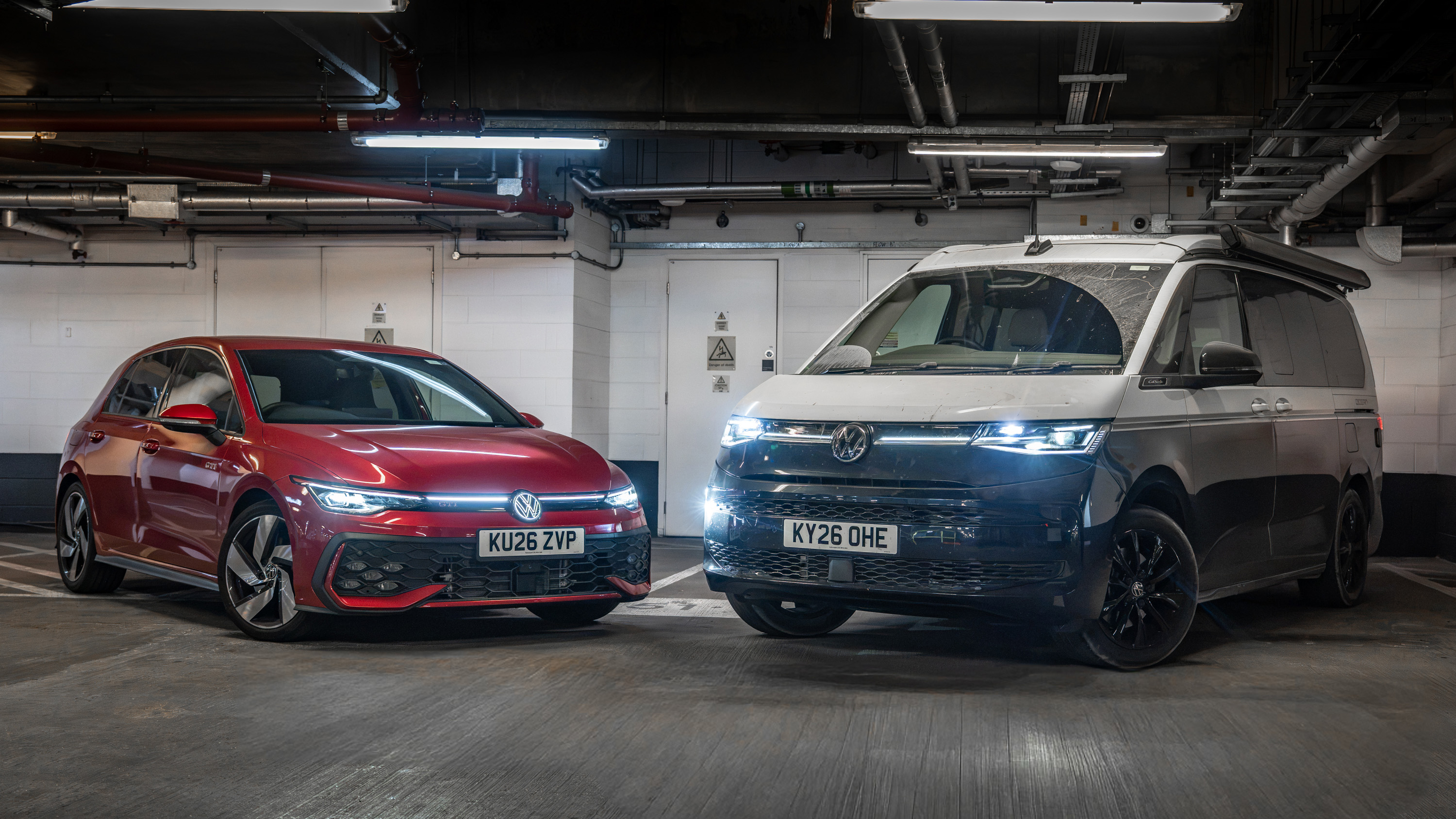
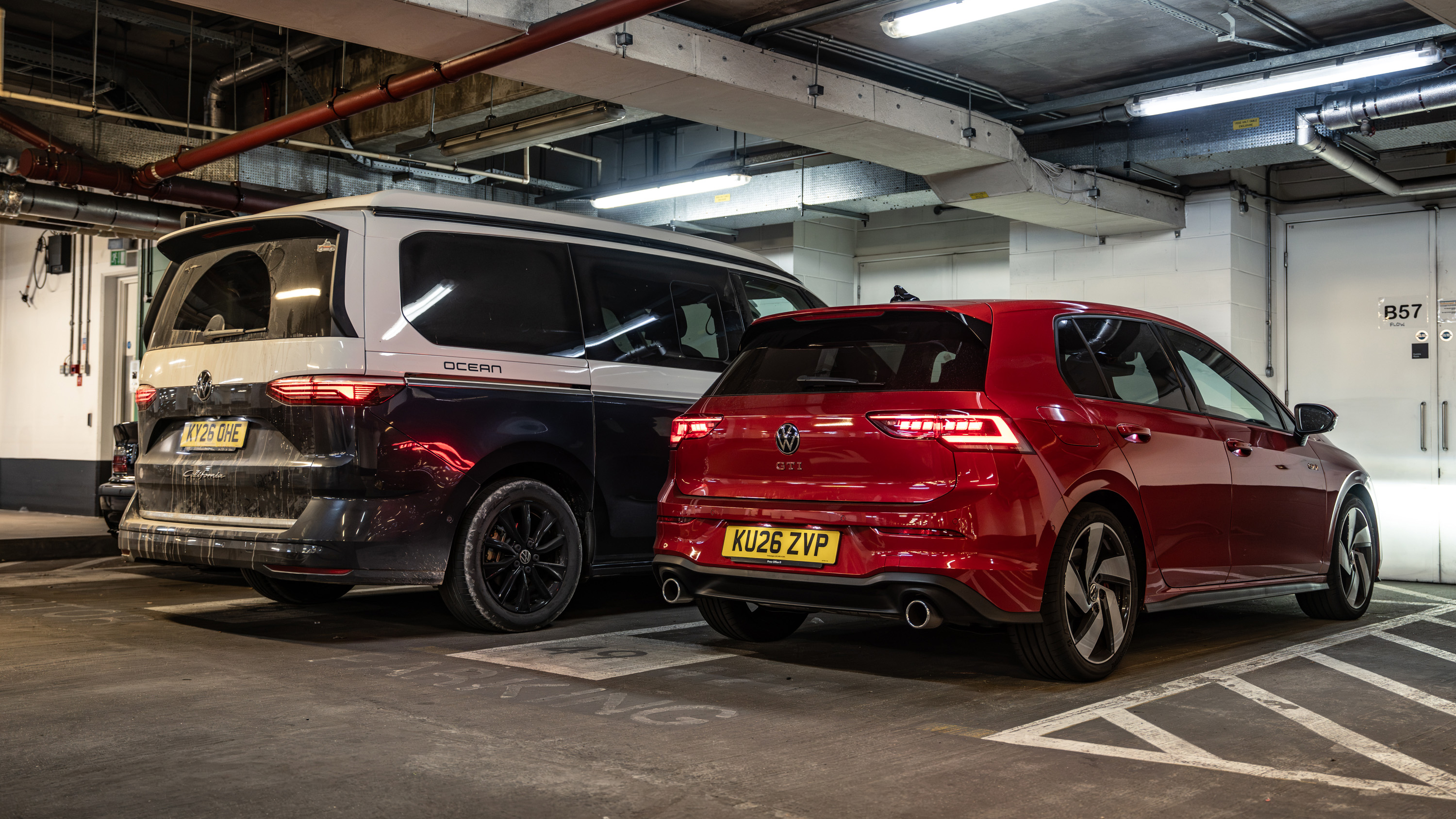
In the last report, I concluded that the Golf GTI might be the only car anyone actually needs. This month, I realised I may have been wrong. Because in order to really test my versatility theory, I upgraded the Golf to a Golf with a kitchen for a month. Ladies and gents, say hello to the GTI’s bigger, more practical and more homely Volkswagen sibling – the California.
The latest T7 Cali is the Golf’s practicality argument stretched to the point of having a pop-up roof. It is bigger, taller and better equipped for making tea, but underneath sits the same broad Volkswagen philosophy: transverse engines, front-wheel drive, clever packaging and enough shared MQB architecture to make a camper van feel disconcertingly like a family hatchback.
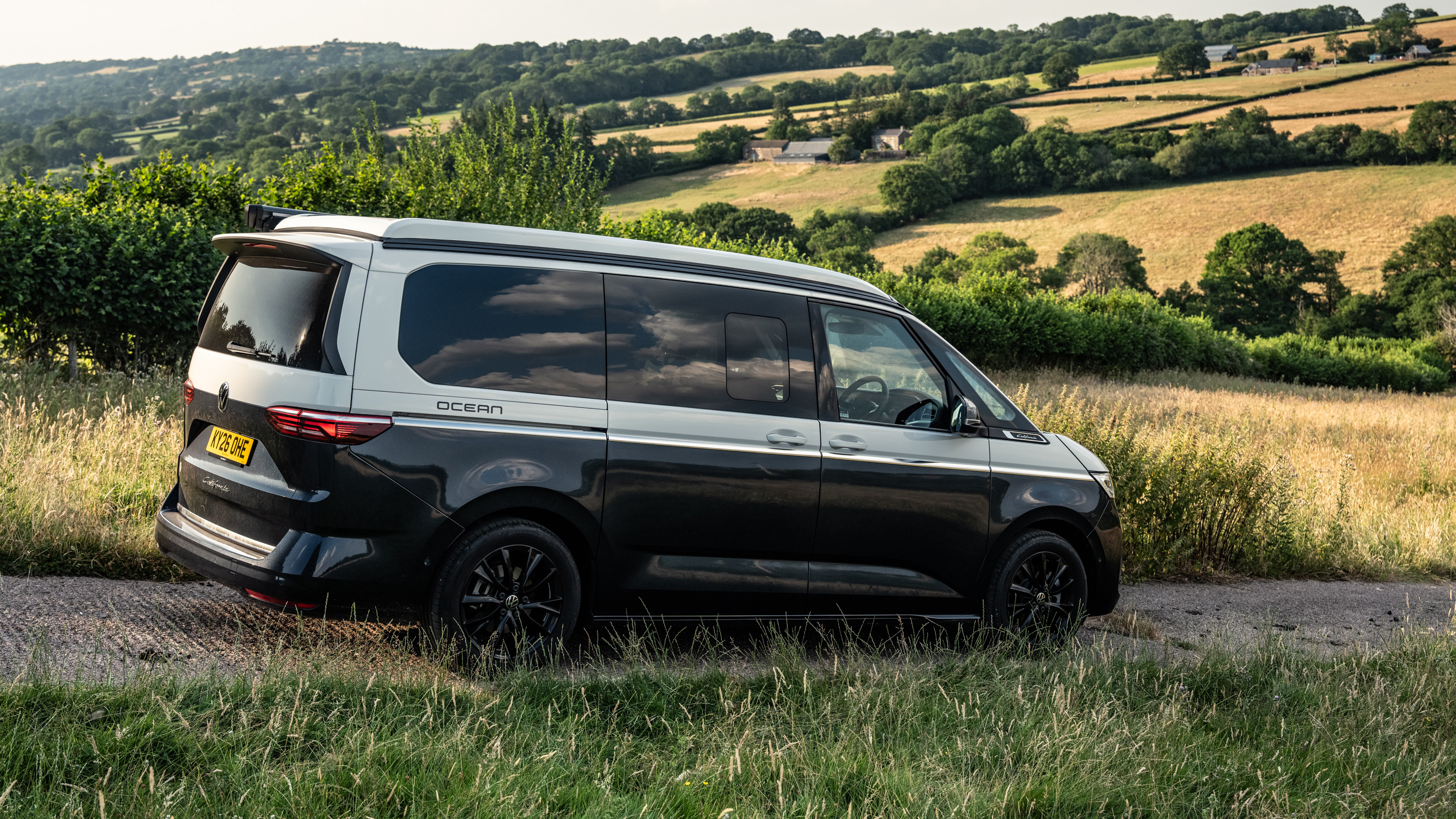
I had the 2.0-litre petrol California Ocean, which is powered by a less excitable version of the Golf GTI’s turbocharged four-cylinder engine and paired with the same seven-speed DSG. It has less power the the Golf, considerably more onboard furniture plus the aerodynamic properties of a semi-detached house, yet the resemblance when behind the wheel is striking.
The first surprise was how car-like it felt. Not in the usual faint-praise sense normally applied to vans, where “car-like” means the steering wheel is roughly where you expect it to be. No, the California has genuine composure. It steers accurately, controls its enormous body remarkably well and – as I found out when showing off to my colleague Simon Bond who was giving chase in his F80 M3 – can be hustled down a country road with far more enthusiasm than anything containing a containing two beds, a sink, chopping boards and enough multi-surface disinfectant wipes in the drawers to clean a hospital has a right to possess.
Not on the straights, obviously. The BMW still had horsepower, physics and Bavaria on its side. But through the bends, the California could be leaned onto its doorhandles – it has an electric sliding door on either side now – and driven like an enormous hot hatch. Simon was laughing because he was having to work rather harder than expected to keep a kitchen in sight. Behind me, the cutlery, kettle and crockery sounded like a branch of Robert Dyas being pushed down a staircase.
It was ridiculous, but deeply impressive. This is a vehicle tall enough to stand up inside, carrying 22 litres of fresh water, an outdoor shower, two beds, chairs in the bootlining and a hob. Yet its chassis never felt loose or that it was going to spit me off. You are aware of its mass, but the California never seems particularly troubled by it. Like the Golf, it encourages you to push harder.
While I had it, I crashed a Porsche party at Goodwood Festival of Speed with it, went on to the Wye Valley, then spent a week filming upcoming Stig Laps at the Top Gear test track. There it became a crew shuttle, equipment van, office, shade provider and, most importantly, refrigerator. On a hot filming day, a cold fridge outranks almost everything. Possibly even the director. This one is good, but again, not as good as the top-opening T6. Then it went to the Malle Mile, where it made perfect sense. It occupied the middle ground between tent and motorhome: more civilised than canvas, less grotesque than arriving in something with a chemical toilet.
For one person, the Cali is close to ideal. There is somewhere proper to sleep, somewhere to sit, somewhere to make tea and enough separation from the outside world to feel human the next morning. It’s not quite a hotel room on wheels, nor a miniature RV. It sits neatly between the two.
But the new California is not as intuitive as the old one. The second sliding door sounds useful but steals storage and breaks up the interior. The camping chairs are no longer integrated into the tailgate with the same satisfying ingenuity and click. Instead, they are Velcroed into place with tabs that look as though they came from a toddler’s shoe.
I was constantly moving things: from the floor to the seats, from the seats to the bed, from the bed back to the floor and, eventually, onto a table outside. Every attempt to use one part required the evacuation of another. Alone, it worked. With two people and luggage, I suspected it would feel less like freedom and more like an argument.
However my greater concern is what the California reveals about modern Volkswagen. Its modular approach is an extraordinary feat of engineering. It allows VW to make a camper that drives with some of the discipline of a Golf, shares familiar controls and can be understood within minutes. The problem is that almost every Volkswagen can now be understood within minutes and look and feel the same.
The screens are familiar. The graphics are familiar. The switches, gear selector, warning noises and digital atmosphere all feel copied from one car and pasted into another. At first, this is reassuring. Then it becomes boring.
The Golf and California should feel distinct. One is a hot hatch. The other contains a tap. Instead, Volkswagen has become exceptionally good at making everything competent, logical and recognisable. Admirable qualities in a washing machine; less exciting in a car.
After weeks in the California, climbing back into the GTI felt strange. It seemed tiny. The steering felt unexpectedly heavy, the roof absurdly close – I still wish it had a sunroof specced – and the boot almost decorative.
Then I reached the first decent B-road. The Golf immediately shrank around me. The steering weight made sense, the body stopped moving and the car tensed itself for the next corner. After the California’s height and momentum, it felt like a terrier released from a travel crate.
With the British, broken tarmac scorched by weeks of heat, I am increasingly surprised by how much grip the Golf has. Its Bridgestones bite hard, while the electronically controlled front differential pulls it towards an apex with an aggression you do not fully appreciate until you have spent time in something without it.
There is anger in the calibration. Especially when you put it into Sport mode. Get on the power early and the front axle does not merely tolerate the torque; it weaponises it. The diff tightens the line, drags the car towards the exit and gives the GTI that faintly unreasonable, supercar-bothering B-road pace. The California can be driven surprisingly quickly. The Golf can be driven indecently quickly.
That is the distinction Volkswagen needs to protect. Shared engineering can make a California handle far better than it ought to and make a Golf refined, usable and dependable every day. But the final layer – steering weight, differential calibration and sense of purpose – is what stops one Volkswagen feeling like every other Volkswagen.
The Golf and California share more than I had imagined. The worrying part is that, increasingly, so does everything else. I may need to borrow a few older Golfs to recalibrate. Watch this space.
Get all the latest news, reviews and exclusives, direct to your inbox.
