




Big Reads
Aston Martin DBX S vs Ferrari Purosangue: which is the best super SUV?
Remember when supercars were all low and wedgy? These days they come in SUV wrappers
The sky is overcast, and being somewhere on a single track road near the bottom of the Lake District’s Hardknott Pass at 11pm, that dark is reliably inky, unbothered by even the barest lumen of ambient light pollution. There is no phone signal, and the Ferrari Purosangue has a puncture. A tiny little pinch puncture slit on the sidewall of the 23in rear tyre that might as well be the Rift Valley for all the difference it would make.
As with many modern cars there’s no spare, and no bottle of gunk is going to ease away the tiny tear in the rubber, at least for the drive back to civilisation a scant 15 or 20 minutes up the road. The crew, glorious that they are, have gone to scout for help and... have dinner. I await my fate to whatever monsters roam these valleys after dark, and glumly chew some wilted crisps while writing this.
Advertisement - Page continues below
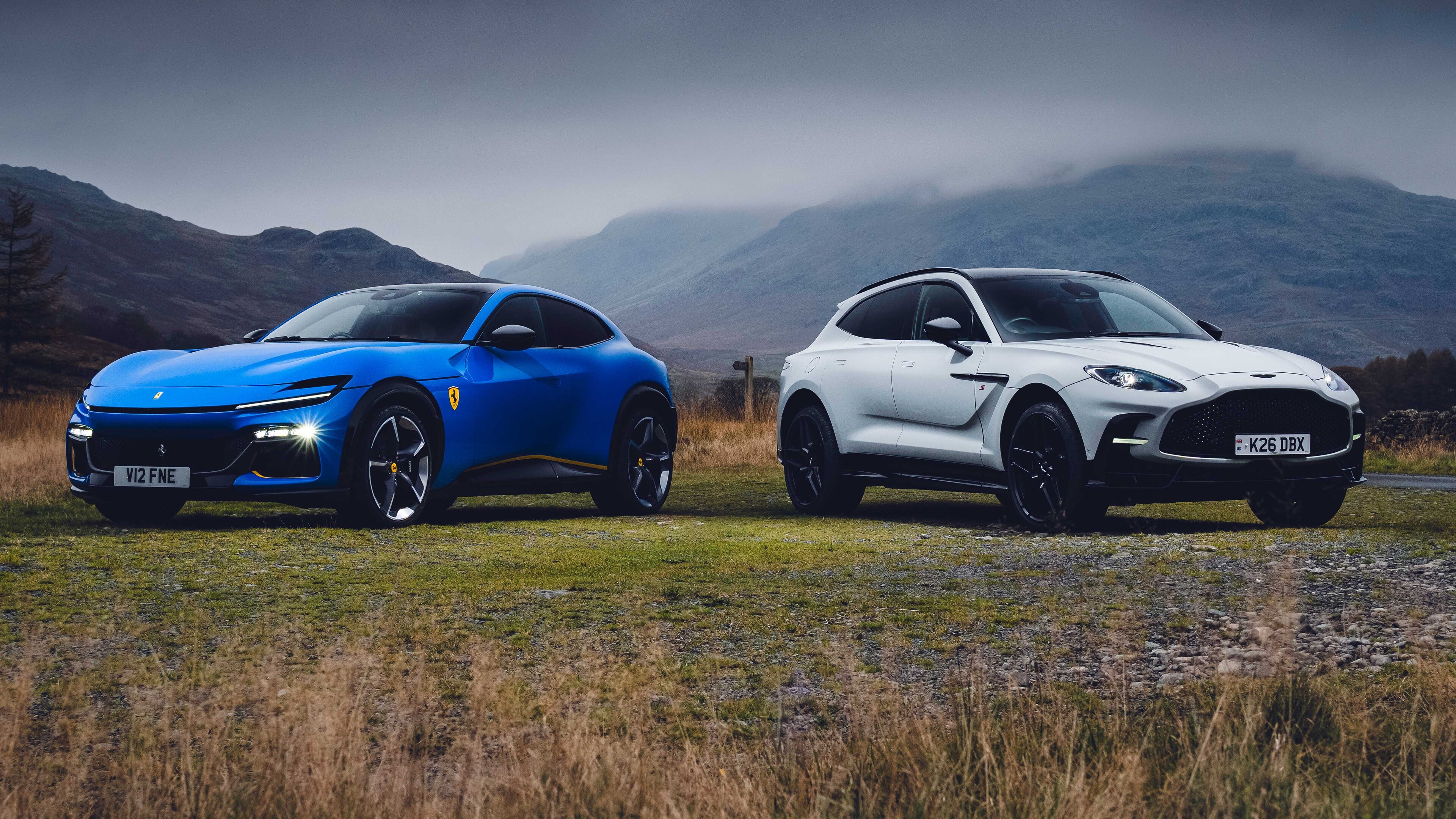
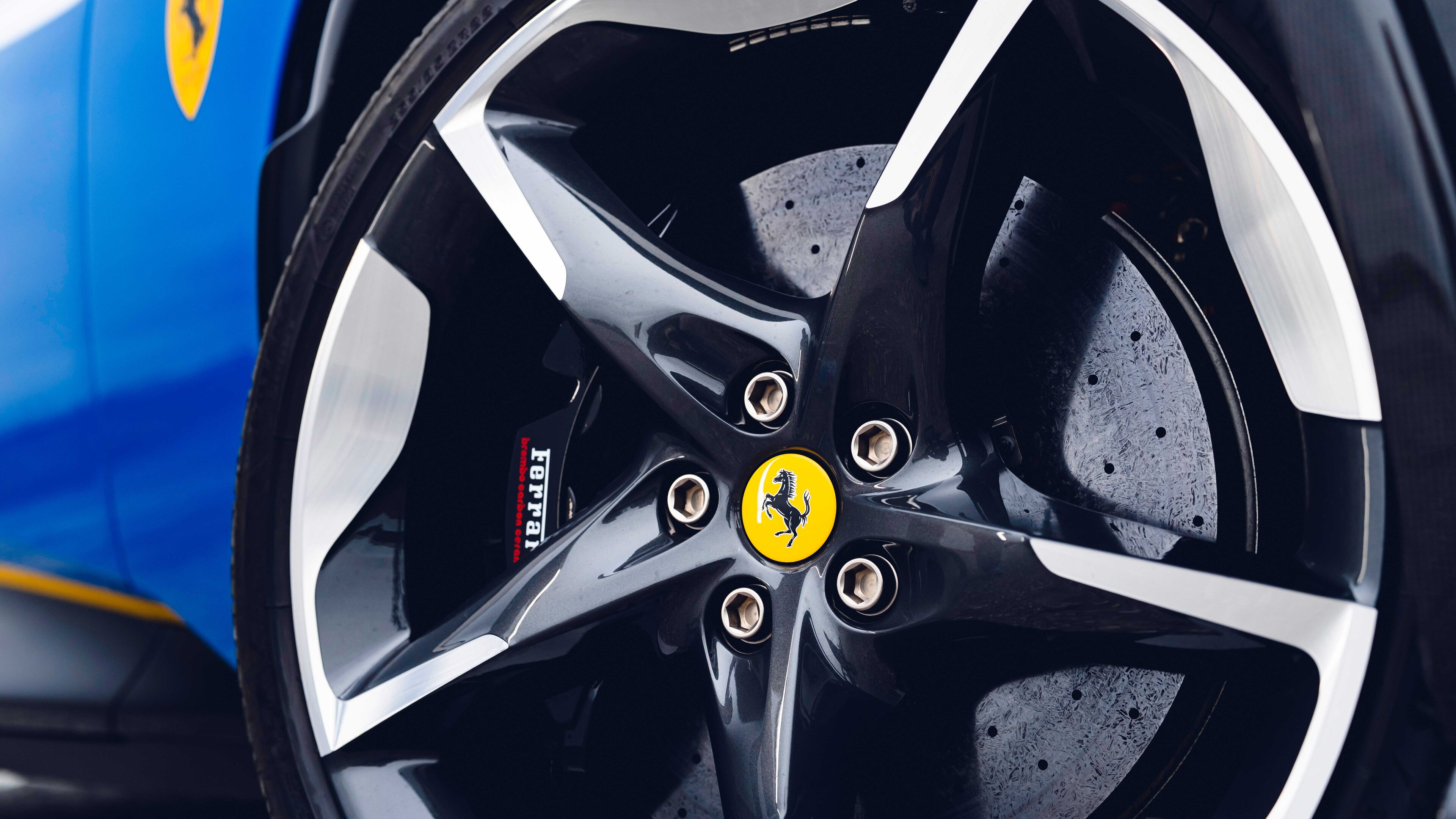
It started so well. Two of the very best super utility vehicles on the market, both honed by their respective manufacturers to be the best they can be. Ferrari’s Purosangue, born in fuss over its niche, a bespoke high riding four seater with a 6.5-litre V12 – a true supercar engine – and more in common with Ferrari’s usual sports car fare than any SUV with a mucky industrial bloodline.
Photography: Mark Fagelson
Then there’s the Aston Martin DBX S, the latest in the DBX line of big and brutal Astons. The basic 550bhp DBX is no more, the 707 model now the baseline, and the S adds faster steering, more committed suspension, a breath more power and quad stacked exhausts for... exactly the same money. So it’s not so much an upgrade as a preference.
They are both, it has to be said, very fast. Both hit 62mph from rest in 3.3 seconds, both top out at 193mph. Both are four wheel drive, albeit in very different ways, and they weigh the same – the DBX in standard form weighs 45kg more than the Ferrari, but add all the lightweight options like the magnesium 23in wheels and carbon roof, and it actually weighs 2kg less. So in terms of speed for your high waisted performance car, they look similar on paper. But paper statistics can lie. Or at least not tell the whole truth about a car’s character.
Advertisement - Page continues below
To discover what these two are really made of, we decided on a little roadtrip. Several hundred miles up north, A-roads and B-roads, motorways and car parks. We filled them with too much luggage and too many passengers, checked their usability and daily comfort, software convenience and largely withering economy.
Without straying too far into actual proper consumer journalism, the Aston is the more practical. It’s got five seats versus the Ferrari’s four, has a boot that’s almost a third bigger (632 litres plays 473) and a less awkward space when the seats are folded flat. It’s more economical, getting nearly 23mpg on the motorway when the Ferrari was getting more like 18, though both dropped to low single figures when pushed. You could almost see the petrol gauges of both freefalling as you accelerated, super unleaded turned into both noise and momentum with a mere flex of the right ankle.
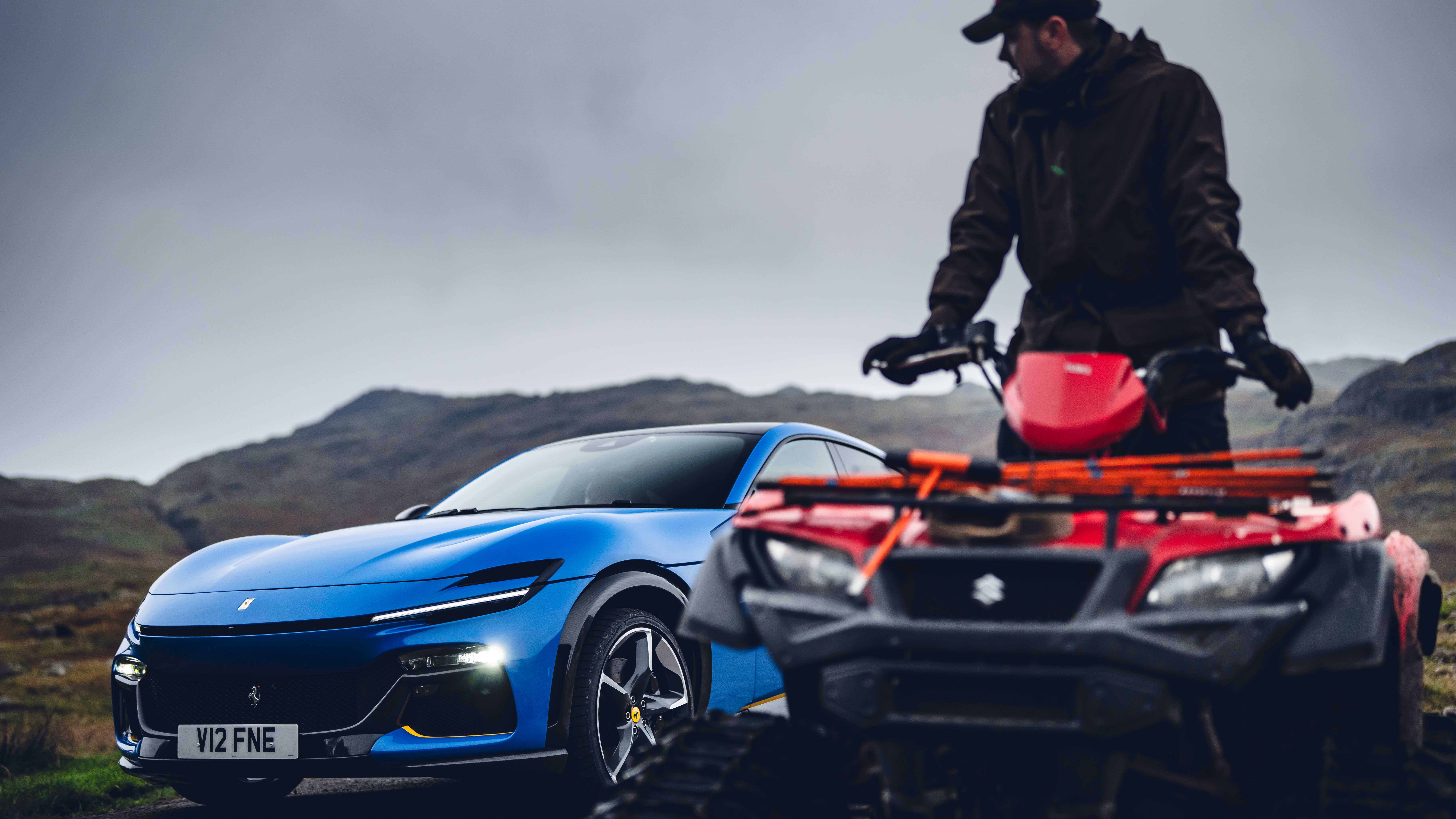
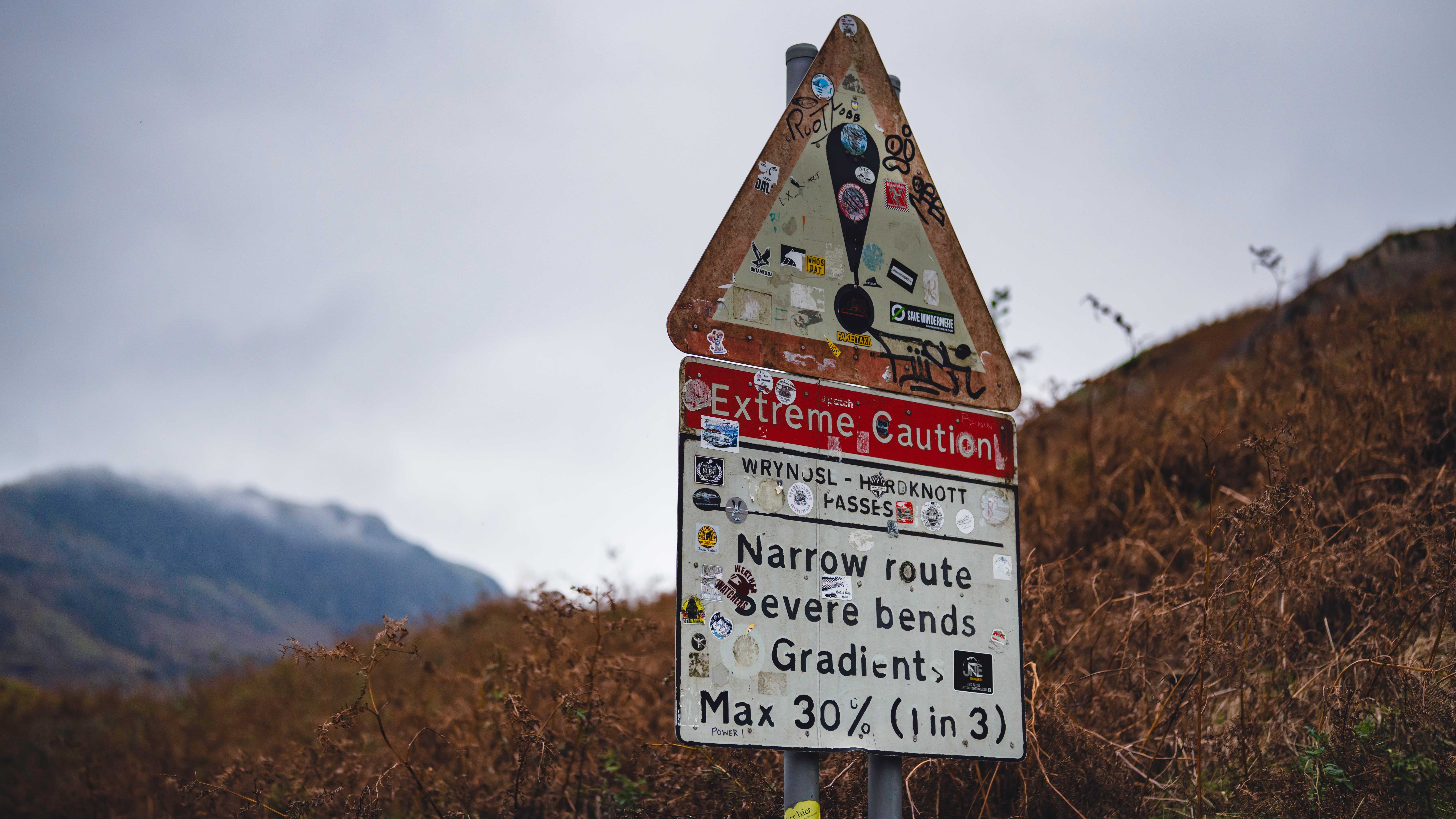
The Aston is also the most comfortable for normal driving, squidgier in GT mode, more of an armchair. The Ferrari is superlative in terms of damping – more on that later – but it’s got an edgier, more athletic reaction to pretty much everything. It’s a Border Collie where the Aston is a Rottweiler... the former agile and energetic, the latter brawny and powerful.
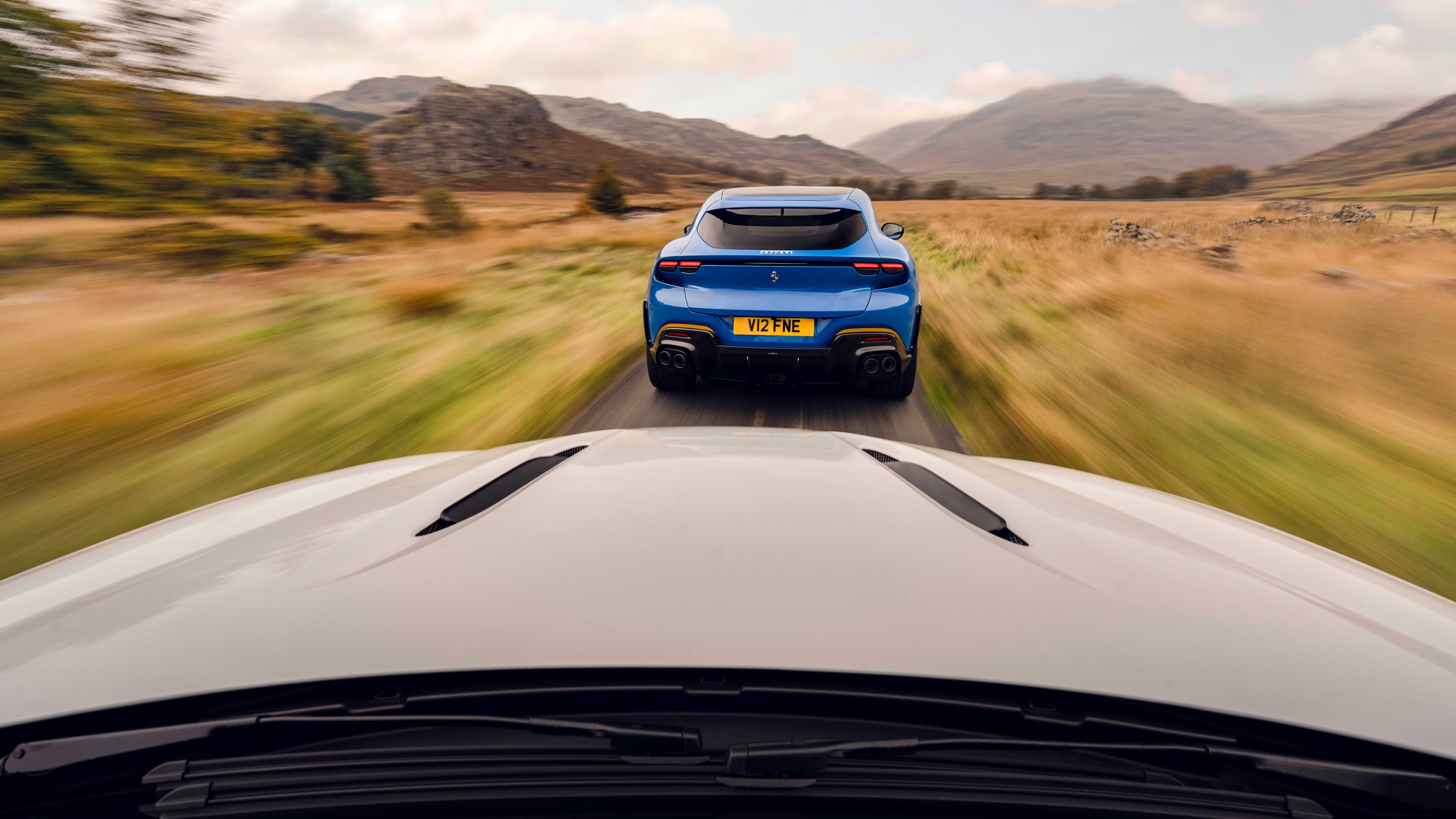
Still, the big idea was to take them somewhere and push them out of their comfort zones. Which, let’s face it, will likely be more urban than the back end of the UK’s Lake District on England’s steepest road. Yep, that’s the Hardknott Pass near Ambleside, a public strip of windy tarmac that has warning signs at the bottom, potholes you can lose your dignity in, hairpin bends with elevations that make your ears pop and road widths barely capable of taking these two. If they can cope here, they can cope with the King’s Road no problem.
The Ferrari is insanely good at coping with the bad. The damping features spool valves by Multimatic, and they’re basically little clockwork gearboxes in the damping system that are controlled electrically. So precise that they make anti-roll bars redundant, spool valves are magic, giving a much larger variation between full soft and track attack stiffness, adding a ruthlessness to keeping a tyre on the ground. In the Purosangue, you can bespoke the systems to fit the situation, so manettino control rotated to a click before ‘everything off’, but a forward push on the same knob to set the damping back to soft. So you get the throttle response and steering inputs but the wheels riding the cambers and bumps rather than headbutting them.
It’s here that the Purosangue’s animated reactions make sense: it doesn’t present much like a traditional SUV. The drivetrain is very rear wheel drive feeling, the front axle only helping out a little when things get very slippery. The steering is immaculate for the size of car, the way it can tuck into even the tightest of bends belies its not inconsiderable size, and it’ll flick through the eight speed paddlebox like a 296.
Top Gear
Newsletter
Get all the latest news, reviews and exclusives, direct to your inbox.
And then there’s the bare fact of the noise. This is a 6.5-litre V12 stuffed into an allroad type chassis, a supercar engine doing its best work. Not an off roader, but more capable on a bumpy UK B-road than a traditional sports car, backed up by far more low down torque than you imagine – with 528lb ft it doesn’t suffer –and the V12 wail is delicious, bouncing off the hillside like it wants to bait a landslide. But the Ferrari is intense. It’s joyful and fun, but tiring to drive ‘properly’. And yes, it’s much happier on a smooth A-road, where I swear it would keep a proper low slung sports car honest by clawing through that 8,250rpm redline.
The Hardknott and the adjoining Wrynose Pass are not smooth A-roads. This is angry, forgotten roadway, more track than travel. There really isn’t much room for manoeuvre, and there are large and toothy rocks embedded into the verges just inches from the margins. You can’t let your attention wander to the breath stealing landscape for more than an instant, no matter how majestic it looks. It’s not even really fun to drive so much as a challenge that makes you bare teeth and suck breath.
Roads like this should be the nemesis of a car like the big ’n’ brutal DBX. Too narrow, too bumpy, too claustrophobic. And yet we are in the presence of revelation, because the S is a different flavour to the standard DBX 707. Not a different dish entirely, but one with added spice. For a start, the leisurely commuting comfort can be moved aside by some judicious button pressing, again with the suspension reconfigured to better suit the road.
The steering is some four per cent more reactive than standard which doesn’t sound like much, but allied to more aggressive air spring settings and electronic ride control, it becomes a big car with more body confidence than it should have. It’s not got the housefly reactions of the Ferrari, but there’s a flow that comes with a touch of movement in the suspension that allows you to investigate where the grip lies. It’s stable front to back, reliable in its reactions.
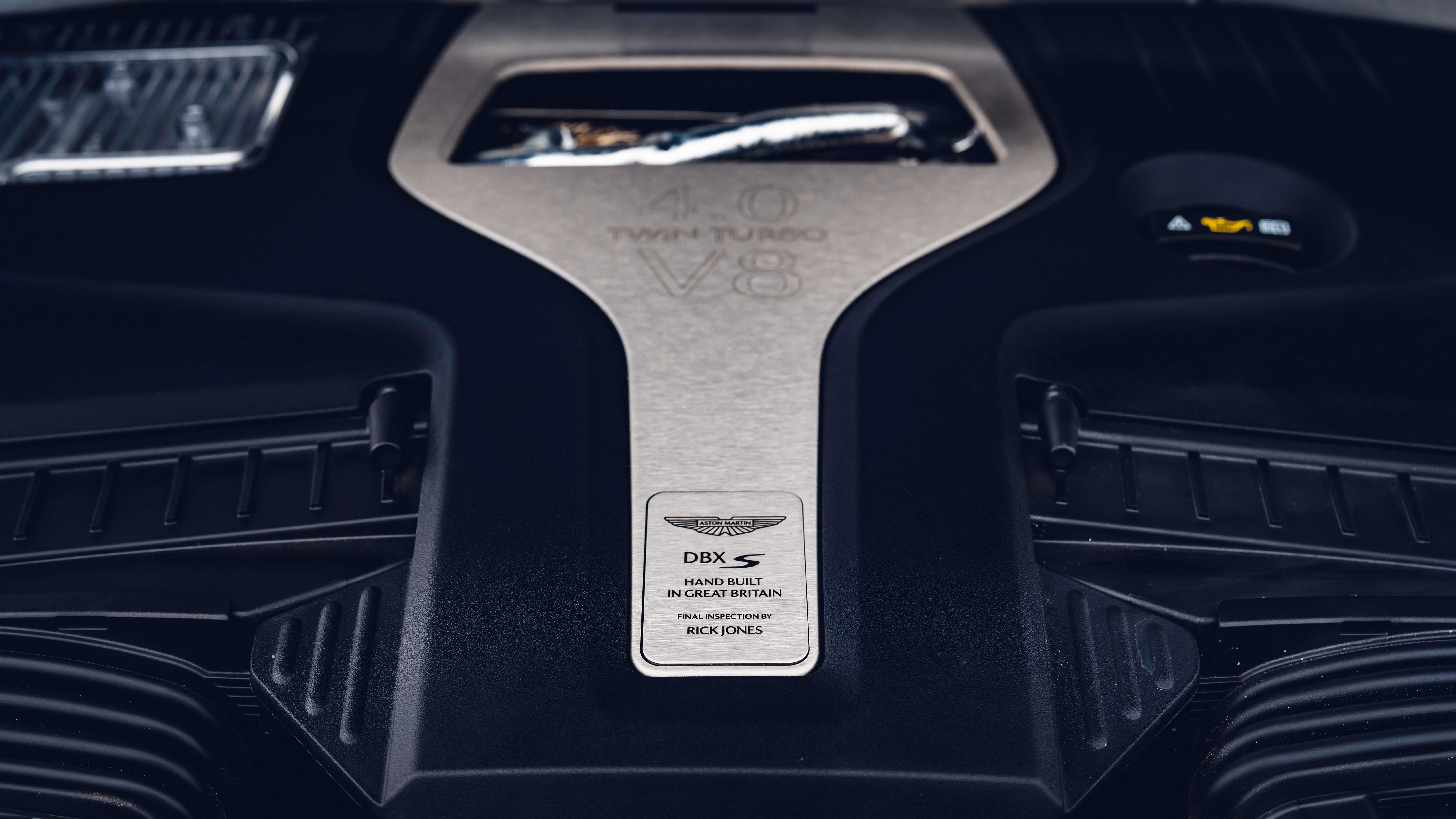
The steering is also precise, which it needs to be because like the Purosangue, the edges of the car are hard to see. But you can place this car on the threads of a button, feel the all wheel drive system calming things down when surfaces change mid corner. And the 4.0-litre twin turbo V8 carries it all along with the kind of guttural surge that entirely fits the look of the car, a deep, rich bass that forms up in your chest and flicks through the nine speed auto with abandon.
The S features the turbos from the Valhalla supercar, which provide a bigger rush towards the top of the rev range, but there’s more torque than the Purosangue lower down, and you can feel it. Yes, like the Ferrari it’s more at home on a bigger road where it can be indecently fast all over the place, but the S belies its size in some style. The only slight complaint? The throttle response feels slightly lazy if you’re not on boost. Not a problem on a normal road, but these tight tracks exacerbate any slight issues, and it’s noticeable.
Weirdly, the assumption was that neither of these cars would really cope here. Too big, too powerful, too hemmed. But they were both exceptional. Not the slightly unwanted but financially popular SUV half siblings of the sports car lines, but fully formed and realised. And also completely, utterly and brilliantly different. Specifications in exactly the same cells of a spreadsheet, characters from different dimensions.
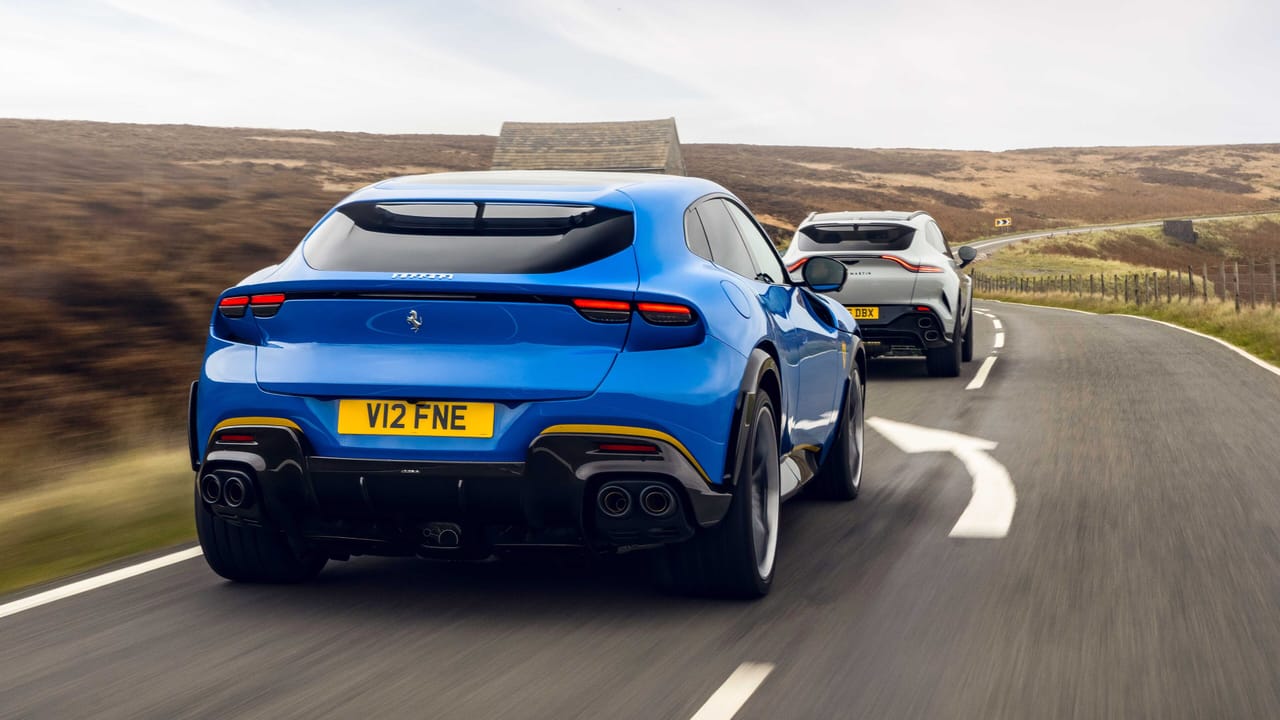
Which brings us to the thorny issue of which is best, because points score draws are the coward’s way out. In that, we must first consider what we were looking for, and that’s the best super SUV. A practical, useful SUV with performance and prestige to match. They both have prestige and performance enough to carry them. Delivered in very different ways, yes, but I honestly believe that neither would lose the other on a mix of roads.
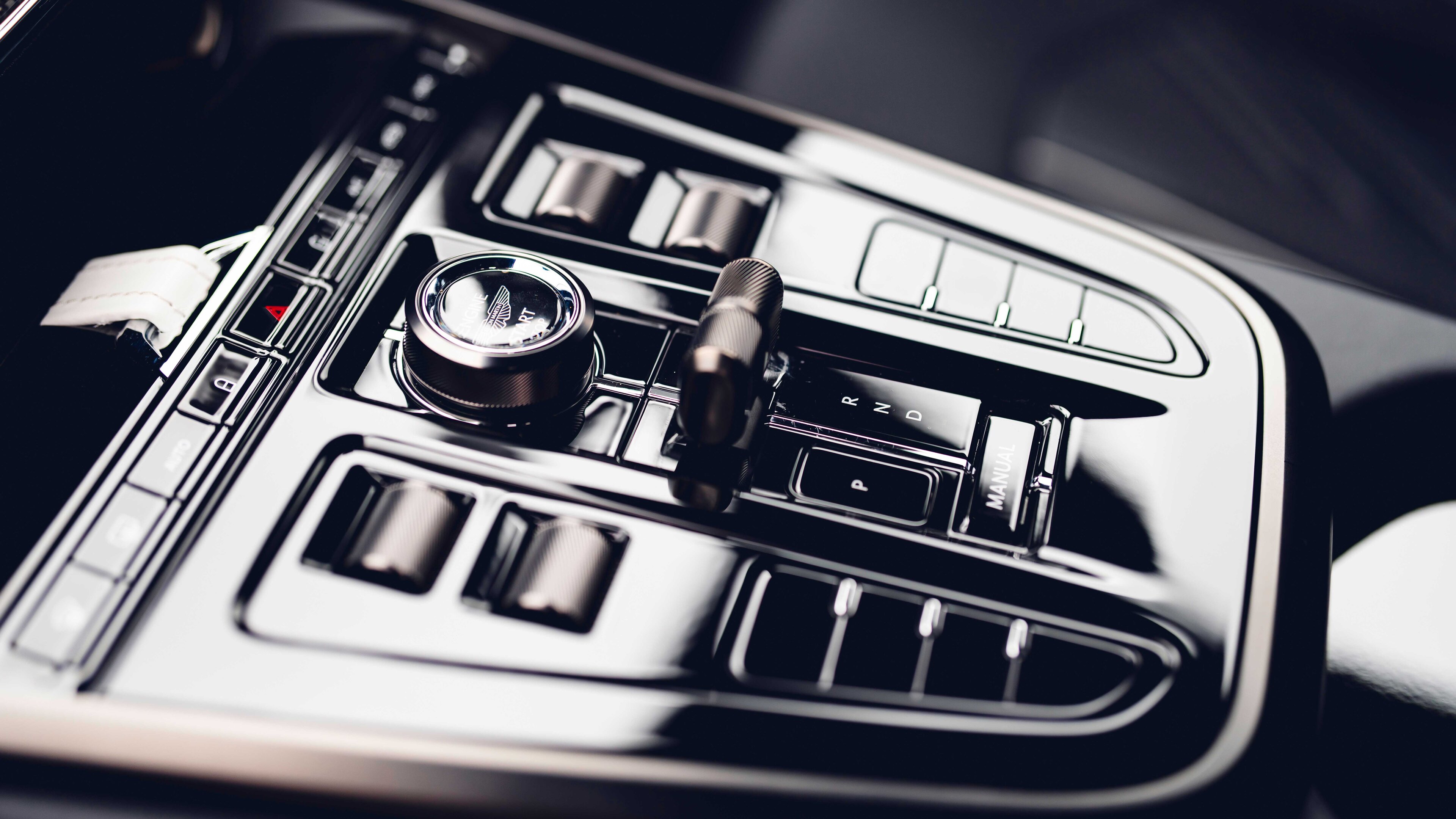
The interiors are equally lovely, the Ferrari still hanging on to a mess of pointless haptics, the DBX stalling out its CarPlay Ultra now and again. But the Ferrari also can’t beat the DBX’s practicality – something you’d look for in an SUV – and then there’s the price. The Aston clocks in at £210,000 base, with the car we have here £255,390 as specced. The Purosangue starts at £313,120 and the car you see in the pictures lists at £487,548. That’s just under £175k of options. Now this is a press car, which are usually highly decorated, but the fact that you can even spend that kind of money on extras suggests a little bit of wallet mining by Ferrari as a company. It’s not the decider in this test, but worth noting.
Still, a verdict. The Ferrari Purosangue is essentially unique. Ferrari has long played the PR game of saying that it’s not really an SUV, and actually it’s right. The engine is from a bona fide supercar, the roofline is low, the practicality equally marginal. It’s got a much narrower operating window than the Aston, and although it shines very brightly indeed through that window, it’s still... something else.
The DBX S is almost an archetype. With just a few adjustments, the S brings the edge that the 707 as a blunderbuss of a thing does not. It’s feral, noisy, brutish. But also precise enough, insanely fast and perfectly practical. And 50 per cent less money. And for those reasons, the Aston Martin DBX S wins this test. It’s not necessarily a better car than the Ferrari Purosangue, but it is the better super SUV.
Trending this week
- Top Gear's Top 9
Here are nine quite weird and wonderful car bonnet ornaments