


Big Reads
Does the Toyota Prius still make a good taxi car for app users?
We picked up a passenger and set the satnav for Scotland to find out
The Stig is currently surrounded by representatives of the foreign office. I have no idea why.
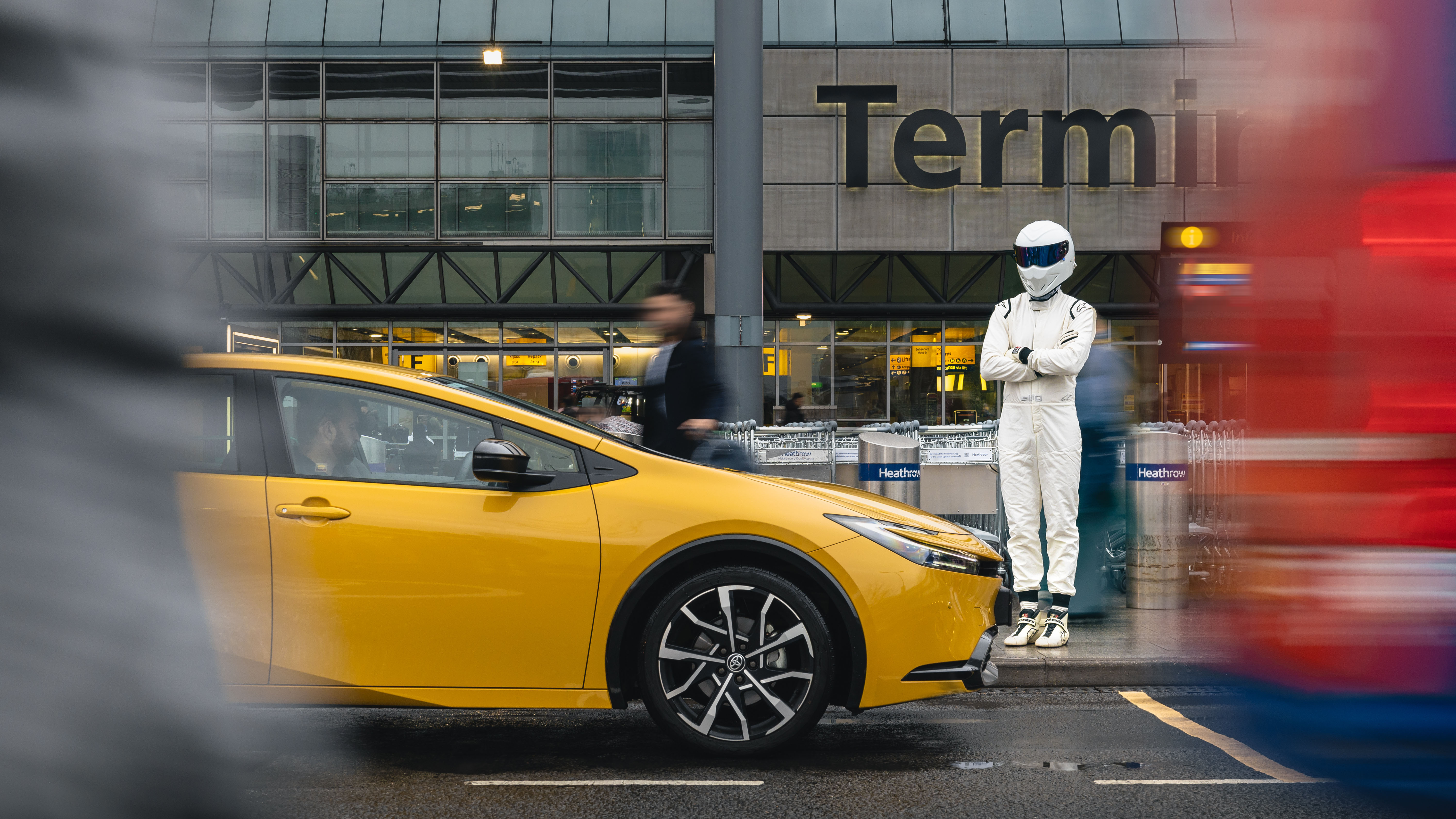
I also have no idea why they’d ask me if they can take a selfie with him, or what this represents for the future of international relations. Everyone seems very excited apart from The Stig, who shows about as much emotion as an oversized ball bearing. We’re outside Heathrow Terminal 3, nothing makes sense, it’s raining, and for some reason The Stig is not getting wet.
Advertisement - Page continues below
Still, after mere moments, the white suit strides over to my car, opens the back door, ducks awkwardly under the roofline, fastens the belt and folds pronoun unspecific arms. My satnav pings with a set of coordinates somewhere a very long way away, and I raise my eyebrows. “Are you sure? I mean, that’s not really within the M25...” Literal reflective silence is my only answer. And so my day begins.
Photography: Jonny Fleetwood

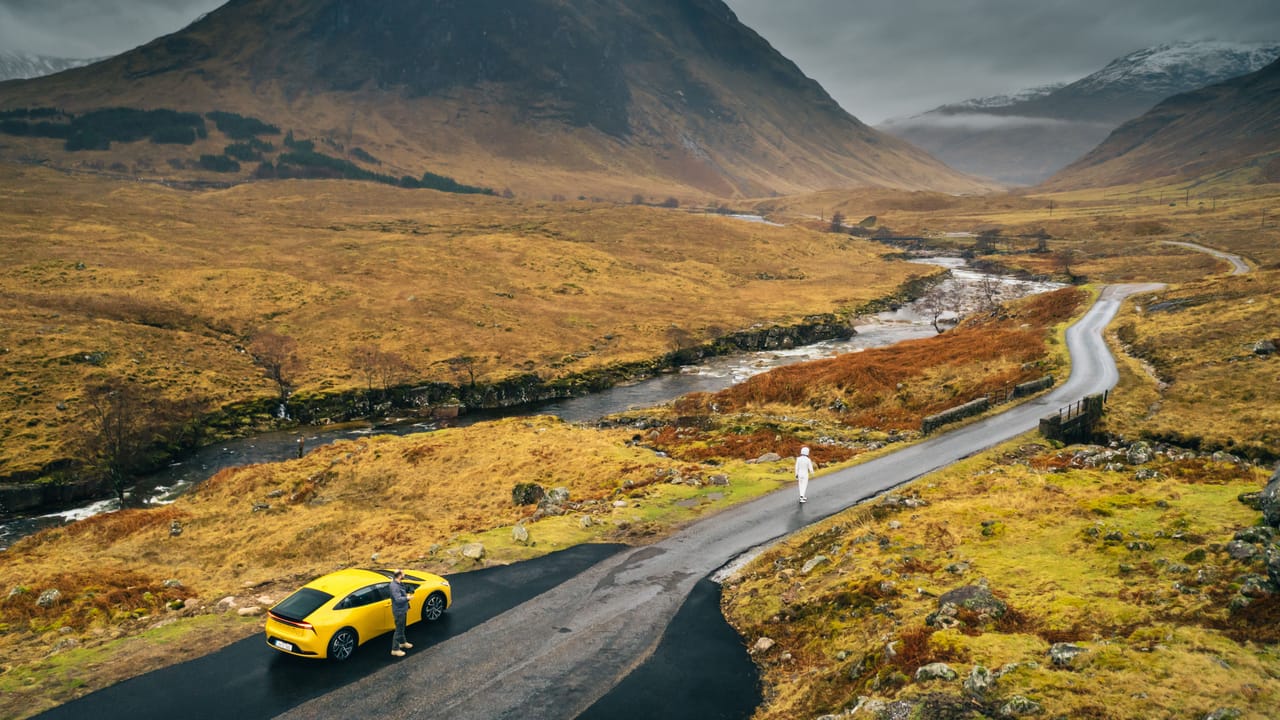
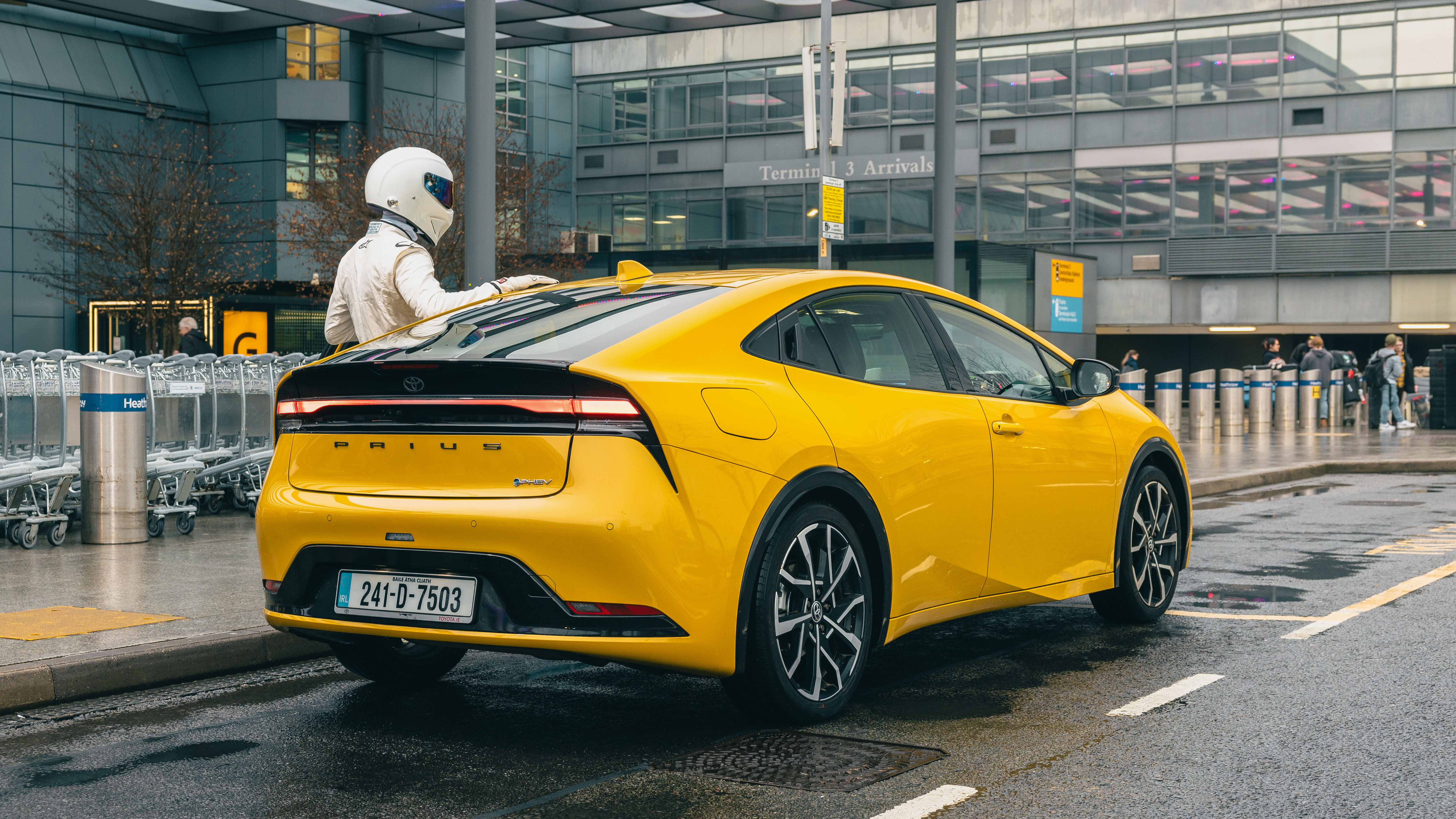
The backstory here is the car that I’m driving, a New York taxi cab yellow/mustard hued fifth-generation Toyota Prius. A car that wasn’t destined for the UK, Toyota believing that we would prefer a diet of SUVs and Corolla shaped things rather than a boring old saloon. Except that it’s not a boring saloon. The New Prius has caterpillared into a butterfly, and it no longer resembles something you’d buy from Office Supply Warehouse.
A brief angst of mild upset and customer reaction later, and we are set to get a Prius allocation, albeit not unlimited and priced at £37,895 for the Design grade and £39,995 for the Excel, both top end plug-ins. Which is good news. Top Gear borrowed one from Ireland and set about assessing it in the most Prius way possible. By becoming an Uber.
Advertisement - Page continues below
As cliches go, it’s worn translucent through overuse. But cliches are just proven truth in a colloquial hat, and you can’t get away from the fact that private hire loves a Prius. They’re frugal, reliable and relatively spacious, the OG hybrid that changed the game, and when you rely on your car for a living, that stuff matters. So I’ve collected my standard Magic Tree air freshener (New Car Scent), stuck a phone holder on the windscreen, plugged in some extra USB chargers and headed off to pick up my rider, who just happens to be Top Gear’s tame racing driver.
Why Heathrow? Well, Uber’s longest ever trip was Heathrow to Loch Lomond in Scotland, a 420-mile, six-hour odyssey that cost £540.45 plus a £45 tip. Which actually doesn’t sound too bad for a chauffeured transfer. Apparently The Stig would like to beat that – the current destination is well north of Uber’s previous best. And if you’re going to test a car, you may as well do it properly. So off we go.
From the start, it’s a trial. Idle conversation seems pointless. Inquiries into where The Stig has come from, where he’s going, what he thinks of the weather, personal information or other human niceties seem to slide off him like he’s made of social Teflon. So there’s nothing much to do except get on with the journey – a trip that sits accusingly on the satnav at a touch over eight hours and 482 miles. We slide out of Heathrow full of anticipation and energy and within three minutes are stuck in traffic on the M25. For an hour. The Stig doesn’t talk. A self improvement podcast does a lot of heavy lifting here, and it feels like this might have been a mistake.
Still, the Prius is good at traffic. This is the PHEV – the only variant we’ll get in the UK – with 40+ miles of realistic EV range, more if you get the Design grade with 17in wheels rather than the 19s on this car. With the brake regen and adaptive cruise set, it potters quite happily through 3mph vehicular porridge, gaining quite a few admiring glances as it does. I’m not sure most would even know what it was without the big Prius badge on the back, mind. A raked windscreen lopes away from a bonnet that’s almost at the same angle, spearing up from a full-width front graphic that makes it look much wider and lower than it really is, but not mean, or spiteful.
A coupe-like shape with the rear doorhandles hidden in the C-pillar, a chopped Kamm tail with another car-width light graphic at the back. It’s clean, and neat and... interesting. Accusations you never thought to aim at previous generations. There’s even a super sporty 24h Le Mans Centennial GR Edition that looks decidedly racy – though not for series production at the moment. There are, however, compromises – and pretty big ones. Headroom throughout is down – especially in the back if you have a crash helmet for a head – space generally is at more of a premium and the boot is small. A good thing there’s no luggage requirement for an inhuman racing driver, because we’d be struggling.
Still, as compromises go, they’re good ones – everyone we talk to is genuinely interested in the fact that the Prius need no longer be synonymous with ‘boring’, and plenty seem to want to take a picture. Though the camera phones may also have been interested in the rear seat passenger. But after watching the arrival time creep upwards, I spear off up the M40, wiggle around a bit and end up needing to stop after the first couple of hours. Moto Rugby, coffee, roadtrip snacks – the usual. Though the Prius needs no fuel yet, and The Stig doesn’t appear to be pleased with the weaknesses of human biology.
A Prius will merrily mount Knockhill's generous kerbs and cock both inside wheels in the air
Still, the motorway does not intimidate. There’s a CVT box which hums away with less elastic than most, and plenty of speed; with the 13.6kWh battery only half depleted, the PHEV is still providing 223bhp. That’s 0–62mph in just 6.8 seconds. OK, so that drops a bit when you’re out of juice, but for now, things are very comfortable. It’s also a car that seems to cut through the air on a blustery motorway and slip quietly between the raindrops – of which there are a lot. And even though the suspension seems relatively firm for a Prius, it’s not uncomfortable. Various enquiries as to The Stig’s comfort are met with... more silence. Motorways are boring. We’ll skip through the next bit, because absolutely nothing of note happened apart from a fuel stop we didn’t really need and a fast food joint. The journey being largely uneventful.
Top Gear
Newsletter
Get all the latest news, reviews and exclusives, direct to your inbox.
That is until somewhere just past Glasgow, where the satnav suddenly adds a stop. The customer always being right, I follow the directions to a small valley near Dunfermline. Which, as we come closer, resolves as Knockhill race circuit. Oh dear. It seems like someone needs some exercise. As soon as we slow, The Stig is out of the car and standing by the driver’s window. So we swap places, and it all goes to hell. Stuck in the back of the car, I watch with a kind of resigned fascination as we glide serenely onto the start/finish straight, load the car on the brakes, and hoof it.
The Stig, as it turns out, doesn’t have any truck with what should be possible in a Toyota Prius. In normal situations, you can’t turn the Prius traction control all the way off, but when the car is pitched into a wet uphill right-hander at 75mph, it simply seems to give up, allowing the usually unathletic ’Yota to engage in full sideways lunacy. When The Stig is driving, a Prius will merrily mount Knockhill’s generous kerbs, cock both inside wheels in the air and land – via its own bump stops – in a four-wheel drift. From the backseat it is a unique experience, being both terrifying and impressive all at the same time. Have I ever experienced anything like it? No. Could it be considered enjoyable? Also no. A Toyota Prius, no matter how sporty it looks, was never really meant to do this.
The thing is, this Prius is not embarrassed. Violating everyone’s comfort zone, yes, but not awful. There are driving modes, and as Stig cycles through to the hopefully named Sport (there’s Eco, Normal and Custom on offer too), I can figure some stuff out, even from the back seat. The suspension might seem firm on the road, but the damper stroke seems short for Knockhill’s diving, bucking tarmac (there’s a fair amount of bump stop battery), but body control is good. The steering is accurate enough, if not particularly chatty, and although there’s not a tonne of power on offer, it gets about enough to be worrying. And the brakes are solid – by the end, they aren’t even on fire, though I wouldn’t want to lick one. A few laps later, and the satnav pings again. The Stig pulls into the pits and gets out, forcing me back into the driving seat. Road driving, with all its ‘rules’ about speed and pedestrian ‘safety’ seems boring. We’re back on the grind. And I’m left wondering what just happened.
To calm myself, I have a ponder about the inside, the smell of brakes still lingering. The interior is current Toyota, much more emotionally passive than the outside. It’s not bad, but it’s about as inspirational as office carpet. Big touchscreen in the middle, driver’s display up front, both with weirdly dated graphics. The wheel obscures the dials for some sizes of people (you’re supposed to look over the top of the wheel rim), and the driving position is generally OK for most, perfect for no one. Especially the weirdly short-squabbed seats – if you’ve got long legs, they end at mid-thigh, which isn’t brilliant.
But the physical controls for the aircon and seat heating are nice, and there are loads of charge points and cubbies, so it’s a practical space. It’s certainly proving to be comfortable and convenient enough as we pad out past Perth, across to Crieff and a hotel stop in Crianlarich. The Stig might not want to stop, but needs must, and I’m only human.
Before the car has come to a stop, the back door opens and the Stig simply walks off into the distance
Very early next morning, and I find The Stig in exactly the same place in the back of the car, apparently on standby. The car fires up without any EV capability left, slightly more CVT-ish than when it has surplus electric help and we’re off, via a circuitous route of scything A-roads and broken, pitted Bs, with some tracks that rate quite a bit further down the alphabet.
The Prius is just fine. A faithful, reliable companion, lacking in dynamic sparkle, but striking looking and delivering 65–70mpg even without the extra electric boost. It’s a lovely car. Obviously I’d lower it with more expensive dampers and put on some nicer wheels, but even so. The Stig agrees with me, I think. Although it’s obviously hard to tell since he hasn’t spoken since... well... ever, but the tilt of his visor and the subtle angle of his folded arms speaks volumes. I’m not sure he likes it, seeing as it hasn’t got 500+bhp, but there’s respect there.
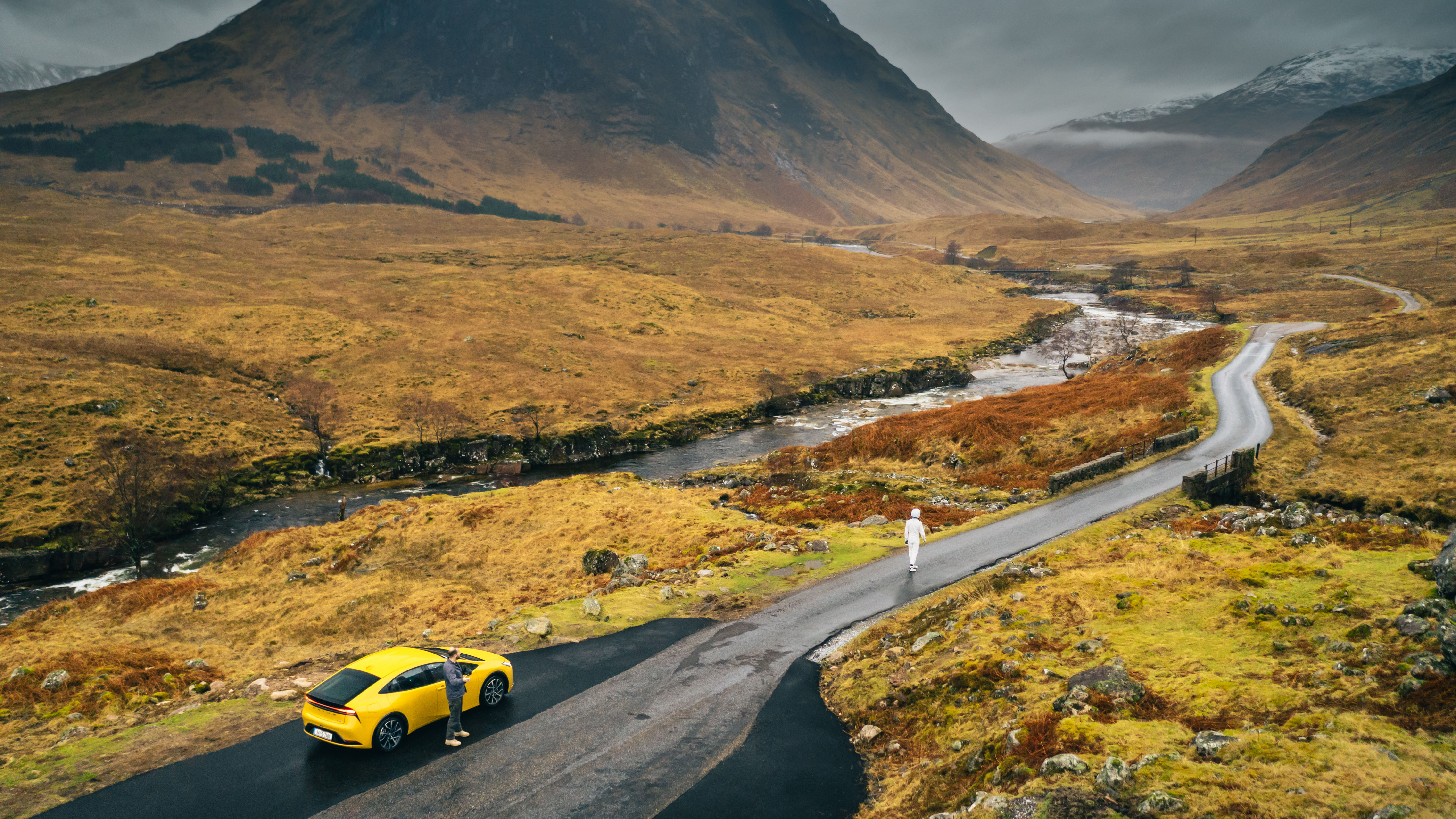
Still, despite The Stig’s effusive and overwhelming company, we arrive at our final coordinates some two hours later, the craggy, majestic geological shamble of Glen Etive, made famous as James Bond’s Skyfall road. Dawn has just blearily arrived, a fist of cloud gripping the mountains and squeezing rain into the valley. Before the car has come to a stop, the back door opens and The Stig simply walks off into the distance – without a star rating or tip to be seen – to do who knows what. And I’m left with a mustard yellow Toyota Prius and some of the best views in the world.
OK, so I’ve got a hell of a return journey, but somehow it’s not the trial it could have been: the Prius has bloomed. It might not be as practical as before, but it’s still frugal, reliable and sorted. And now it looks brilliant, too. At the end of all that, there’s really only one reasonable conclusion. The new Toyota Prius is without doubt a much worse Uber. But it’s a far, far better car.