


Retro
Godzilla, reanimated: on track in the all-conquering Skyline GT-R GT1
Three decades have passed since this competition spec Nissan last saw race action. Jethro’s on hand to help with the shakedown
I have many happy memories at Blyton Park, near Gainsborough, Lincolnshire. These range from trying to tame the mighty, maleficent Porsche 997 GT2 RS to flying off the end of the back straight in a Glickenhaus SCG 003 racecar as Jim Glickenhaus himself looked on. Not my finest hour. Anyway, it’s a great little track but most would concede this narrow, flat and short loop is a million miles from the towering challenge and fever dream mania that surrounds Suzuka circuit in the Mie prefecture of Japan. One of the great racetracks.
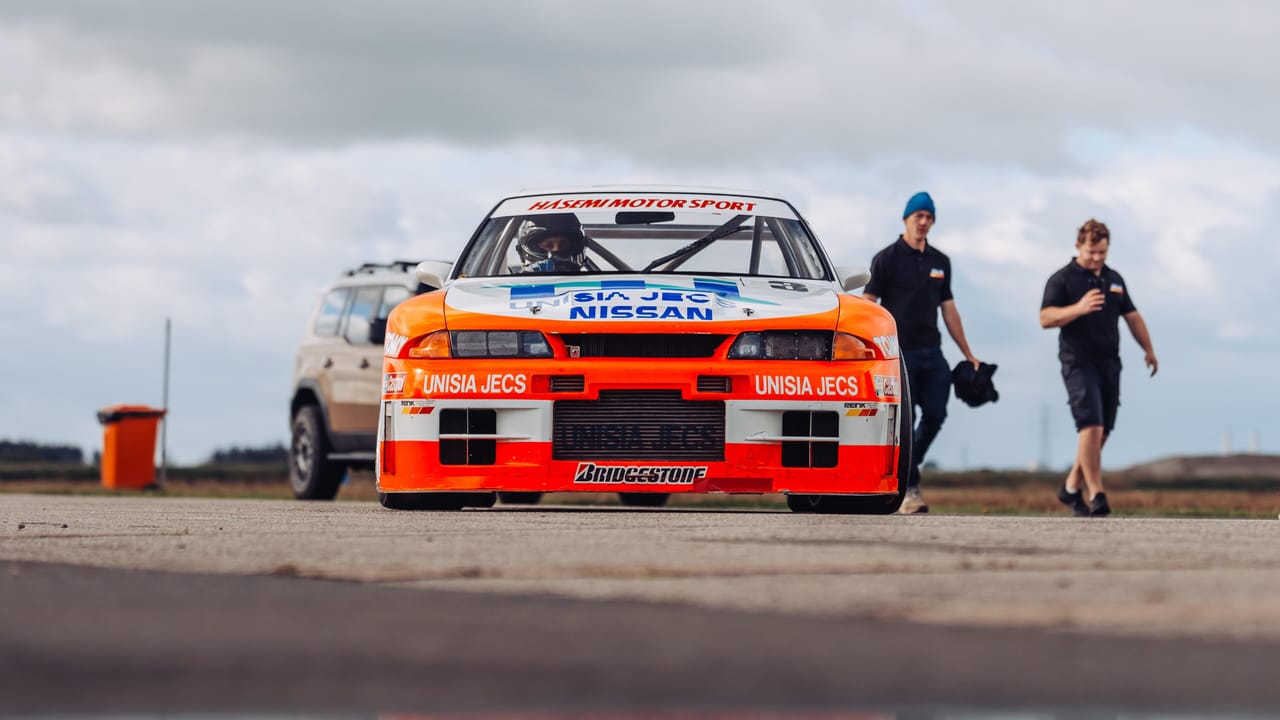
Today though, these two locations are linked by a very special car. An incredibly rare competition model that was last driven in anger around Suzuka at the opening round of the All Japan Grand Touring Car Championship in 1995. Back then it set pole position, then disappeared and now it’s rolling onto the unhallowed tarmac of Blyton Park. It’s running the original engine, the original six speed XTrac sequential gearbox, the original, gorgeous, hollow spoke, SSR magnesium wheels and it wears its battle scars with pride.
Advertisement - Page continues below
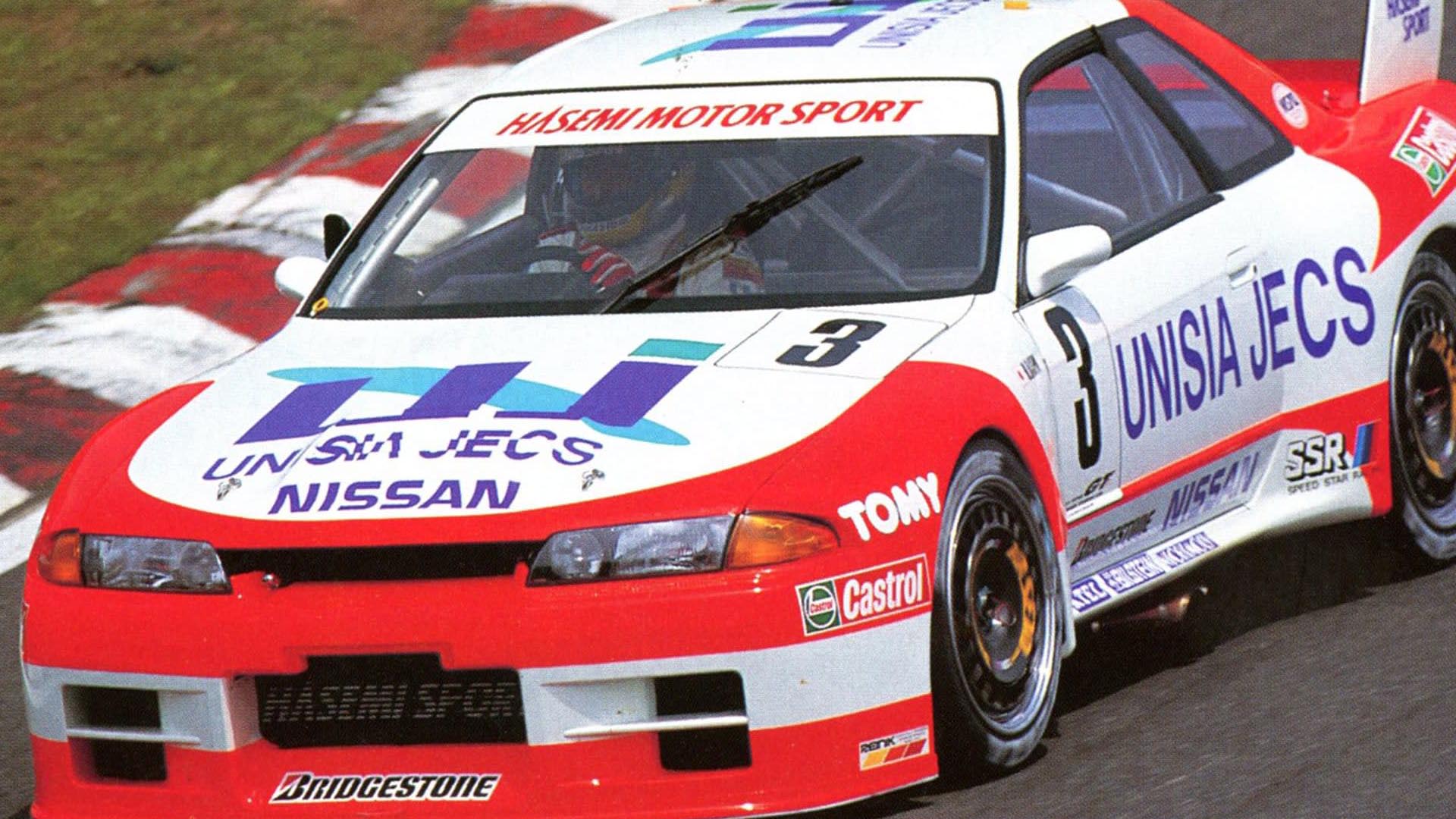
This is the UNISIA JECS Nissan Skyline GT-R GT1 by Hasemi Motorsport. A NISMO-backed semi works effort to evolve the all conquering Skyline GT-R from its Group A roots into the new GT1 ruleset for 1994 and a rolling laboratory that would inform Nissan’s assault on Le Mans in 1995. I guess you could say this is what Godzilla became when he grew up...
Photography: Mark Riccioni
The car’s history is complex and fascinating and its owner (sangfroid_shift on Instagram) is well and truly down the NISMO/Hasemi/Skyline rabbit hole. We can’t hope to tell the full story here, but it would be remiss not to explore the myth around the Skyline competition cars in general and this car in particular.
You remember I said “all conquering”, right? Well, that is no exaggeration. The R32 generation Skyline GT-R was created to satisfy Group A touring car rules and absolutely demolished the opposition. For four seasons from 1990–1993 the complex 4WD, 4WS coupe, powered by a twin turbocharged iron block straight six called the RB26DETT, won and set pole position at every single JTCC race. In Australia, it was developed still further and consumed the local V8 competition like a light snack. Bathurst cowered before the mighty Japanese interloper and the locals – who despised the Skyline – coined the name Godzilla through gritted teeth.
Advertisement - Page continues below
On rare forays to Europe the domination continued. Skylines rang rings around M3s, Sierra Cosworths and the rest to win the Spa 24 hours in 1991. Nissan’s bruiser was unhinged and untouchable. Emblazoned with iconic liveries, Skylines battered their way over kerbs, belched flames and their brutal ballet was simply mesmerising to watch. A myth and legend created by an intensely physical, mechanical fury that the world had never before seen. In the end the Skyline and Group A had to die for touring cars to live again.
The JGTCC of 1994 emerged from the ashes of the JTCC (Japanese Touring Car Championship), JSPC (a prototype championship for Group C cars) and the Japan Supersport Sedan Championhip or JSS. It was a strange mix of cars from Supras to Ferrari F40 LMs, a sole Porsche 962C and even a Lamborghini Countach run by the Japanese Lamborghini Owner’s Club under the name KEN WOLF with Terai Engineering.
There were also three widebody Skylines backed by NISMO. One from the Calsonic team, another ZEXEL – which both used modified Group A donor chassis’ – and one brand new challenger from Mr Skyline himself, Masahiro Hasemi. The legendary racer and now team owner decided to fundamentally shift the philosophy of the GT-R to make the most of the new rules and to simplify its mechanical DNA. Hasemi developed a new RWD Skyline GT-R, which allowed the straight six to be shifted rearwards for better weight distribution and featured a full carbon fibre wide body. The car would finish second in the championship, take victory in an additional programme at the 24 Hours of Tokachi and feed back vital information to NISMO as it prepared its next generation R33 LM for the big one at Le Mans for 1995.
Back to Blyton Park. When I arrive, the owner is already deep into a shakedown programme after a painstaking refurbishment by Group A Fabrication and the GT1 looks huge, stiff and very, very angry. Just as it did in period and at its last race in 1995, the very first of a new season, owing to the fact the new Hasemi-built R33 model wasn’t quite finished. Its pole position lap put it ahead of rival 4WD Skylines, a couple of F40s and a handful of new Porsche 993 GT2s, among others. It finished fourth after struggling to manage tyre wear. Not bad for the old stager, which had finished second in the championship in 1994.
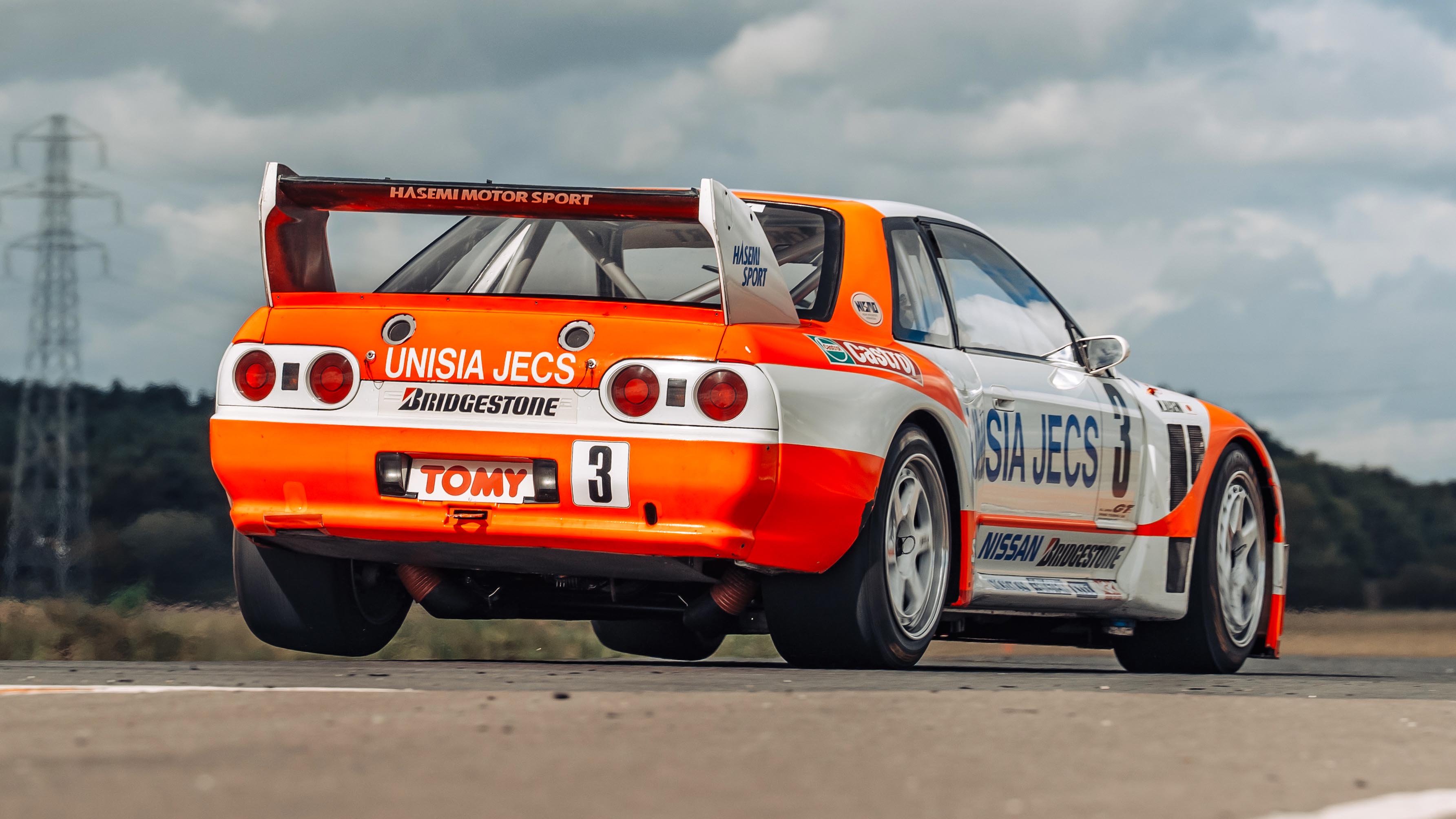
There’s no ceremony to my drive. “OK, so it has a sequential box and you need to be positive with it,” I’m told. “The brakes are brand new, exact replicas of the original APs, so maybe treat them a bit gently. But please really drive it. Get a feel for the car.” Back in period the car had to run a 31mm restrictor and probably produced circa 450bhp, but today it’s over 500 and there are plans to install a new Group A engine (to save this precious original) and push to 600bhp+. The GT1 weighs 1,200kg.
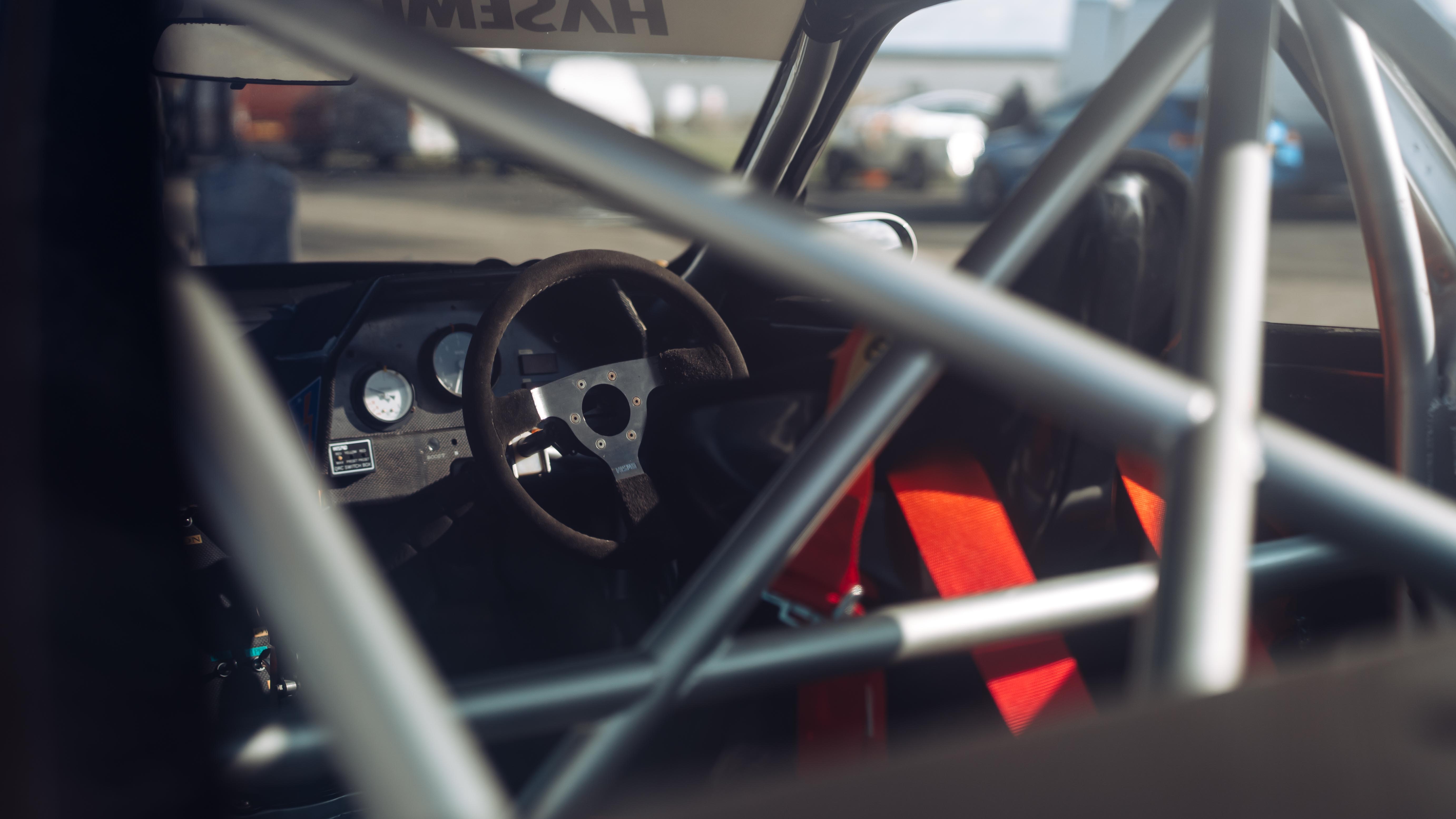
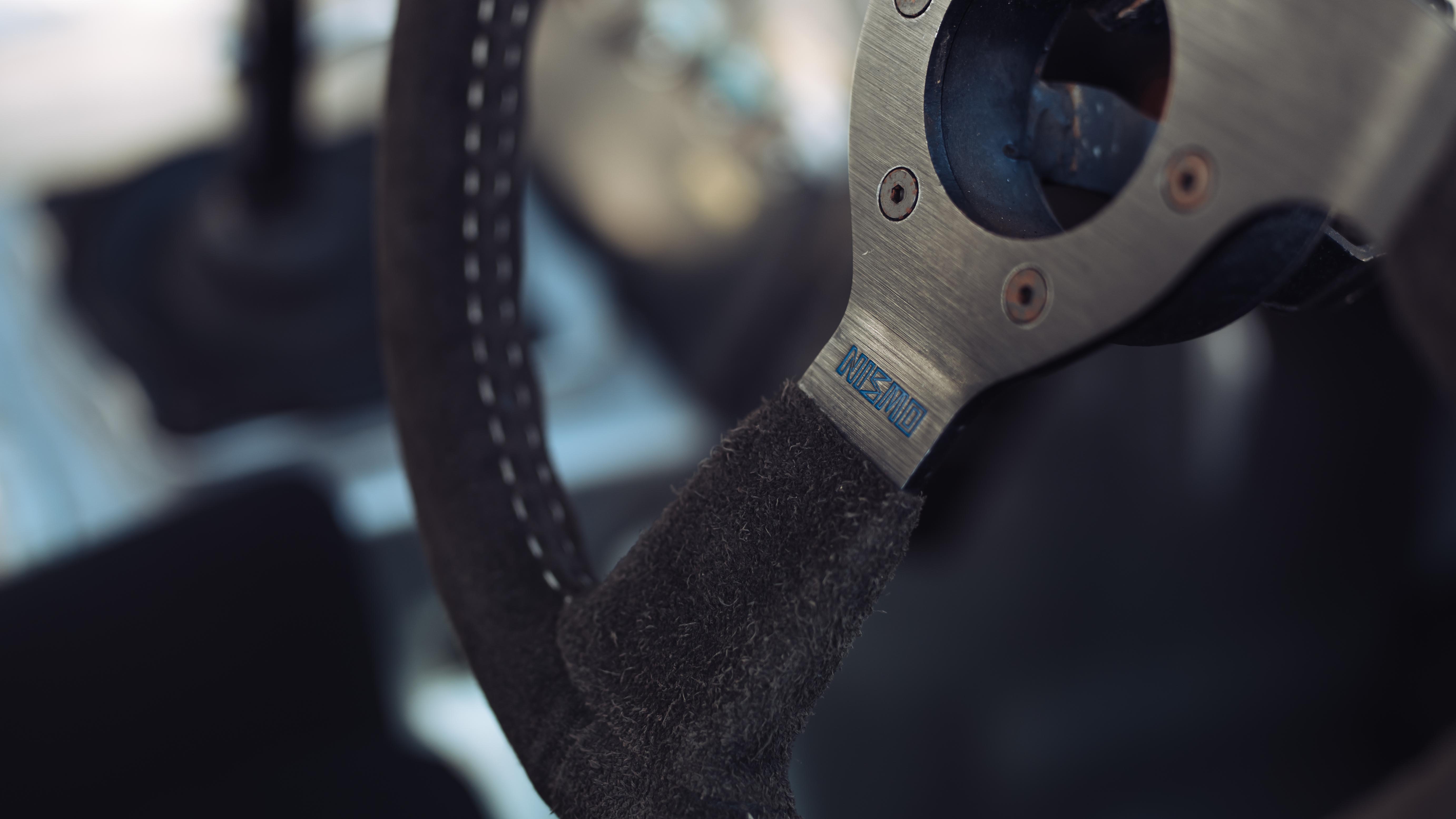
It’s so simple. Rudimentary even. A straight edged carbon dash with a roughly hewn, boxy binnacle housing a big rev counter marked with red gaffer tape at 6,800rpm, a boost gauge and two red digital displays for oil and water temperature. Ahead, a simple three spoke NISMO steering wheel, well worn. To my left a black lever with a round shifter for the sequential box. And that’s it. Flick the ignition switch on the centre console, press the starter button and the RB26 fires noisily to life. Turn on the pump for the gearbox, give the lever a tug, feel the car thunk into gear and then coax the Skyline gently out onto the circuit. For a JDM geek like me, this moment is akin to an audience with the Almighty.
Top Gear
Newsletter
Get all the latest news, reviews and exclusives, direct to your inbox.
The first moments are consumed with grappling with the forces required to nail the perfect upshift, getting used to the weight and travel of the brakes – which give fantastic feel – and just the overwhelming rawness of the experience. The GT1 digs for drive just like the old 4WD Group A cars I’ve always worshipped. You can almost feel the rear tyres clawing at the surface and as it does there are shock loadings thumping through the chassis. It leaps over even small kerbs too, and feels every bit as monstrous as the lore suggests.
Yet it’s easy. The steering, in fact the whole car, is alive with feedback and sensation. You can sneak up to the limits of grip and feel it respond just as you’d hope if you find any slip. With the engine moved back in the chassis it seems very resistant to understeer and the spikes of oversteer on corner exit are thrilling but easy to correct. Sensing the car edge sideways, almost feeling the hot flash of flaming exhaust and then pulling for another gear to hear the RB26 sing its distinctive tune all over again, is pure magic.
Godzilla is being reanimated all around me and its story starts anew. There are big plans ahead and many more races to follow. But its legend is already assured and the near mythical status of the Nissan Skyline GT-R GT1 is absolutely deserved.