




Big Reads
Kia EV9 GT vs Volvo EX90 Twin Motor: which posh, fast, seven-seat SUV is best?
Fear not, growing families of the world – there are now more electric seven-seaters than you’ve probably got kids
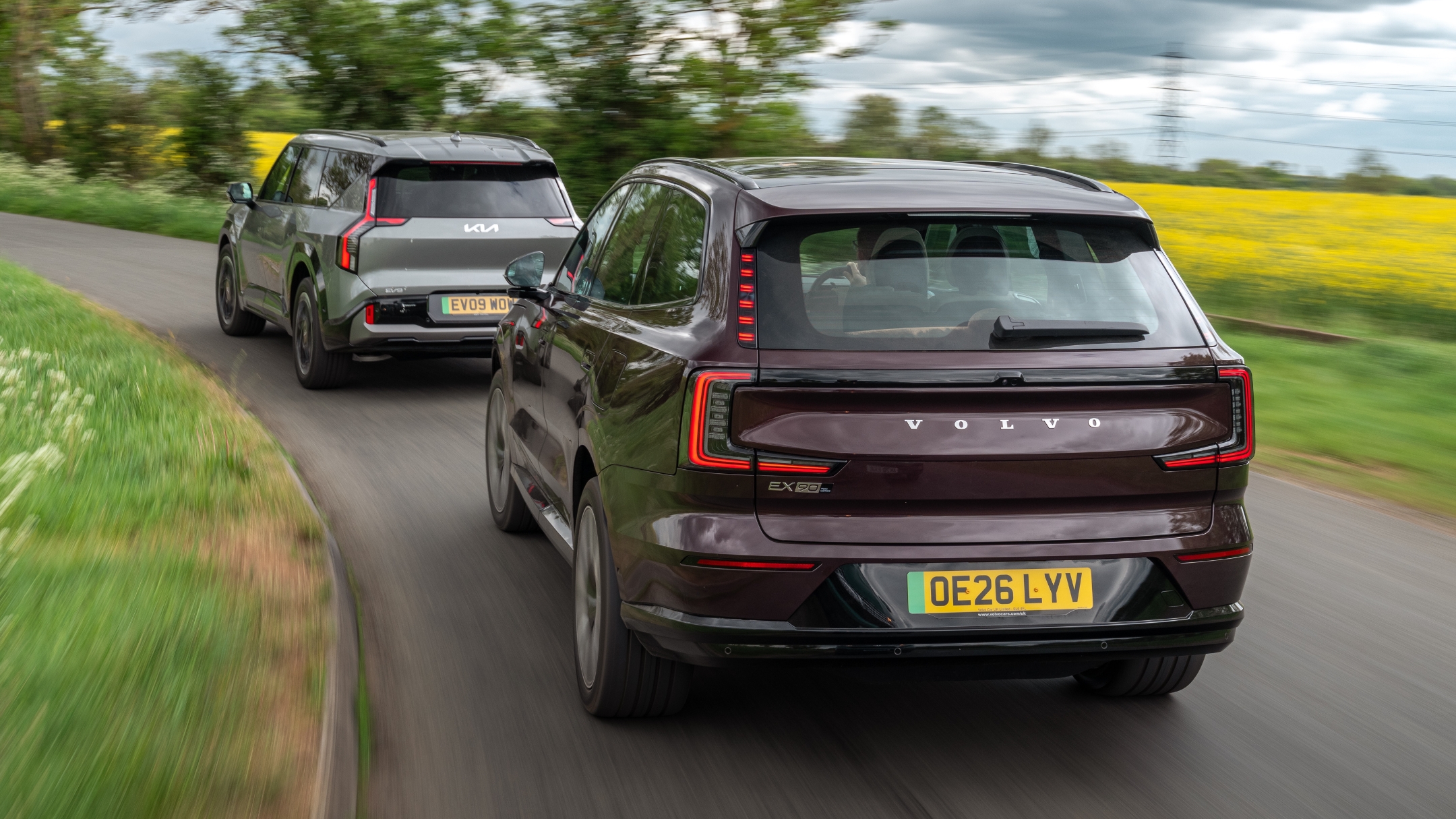
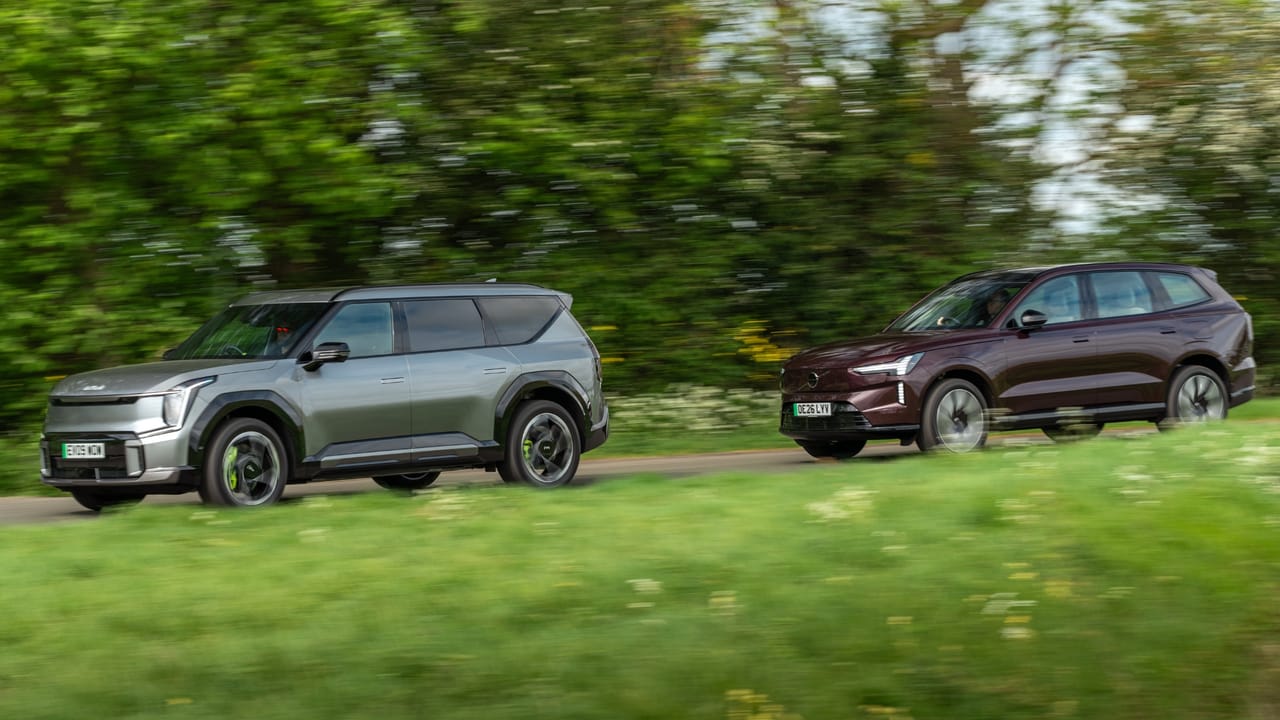
On paper, the Volvo EX90 Twin Motor and Kia EV9 GT seem largely similar: seven seat, pure electric SUVs with practicality qualified by sheer size and motivation more punchy than is strictly necessary. They list within about three grand of each other, both have dual motors and all-wheel drive, both run 800-volt architectures that see them charge from 10–80 per cent in the low 20 minutes.
But this is where it gets complicated, because although these cars are more than capable of meeting the brief, they attack it in wildly different ways. And it’s almost caricature.
Advertisement - Page continues below
We’re a mere 10 minutes into the drive when the Volvo pings and flashes up a message: ‘You seem tired, is it time to take a break?’. Unfortunately for me, that’s just my face. It pings again. I glance down at the central portrait touchscreen to see if there are any other messages, and it pings once more and announces ‘Driver distracted; keep eyes on the road’. Sigh. Welcome to the world of Volvo, where helicopter parenting comes in the shape of an overabundance of safety features and an underabundance of buttons.
Photography: Alex Tapley

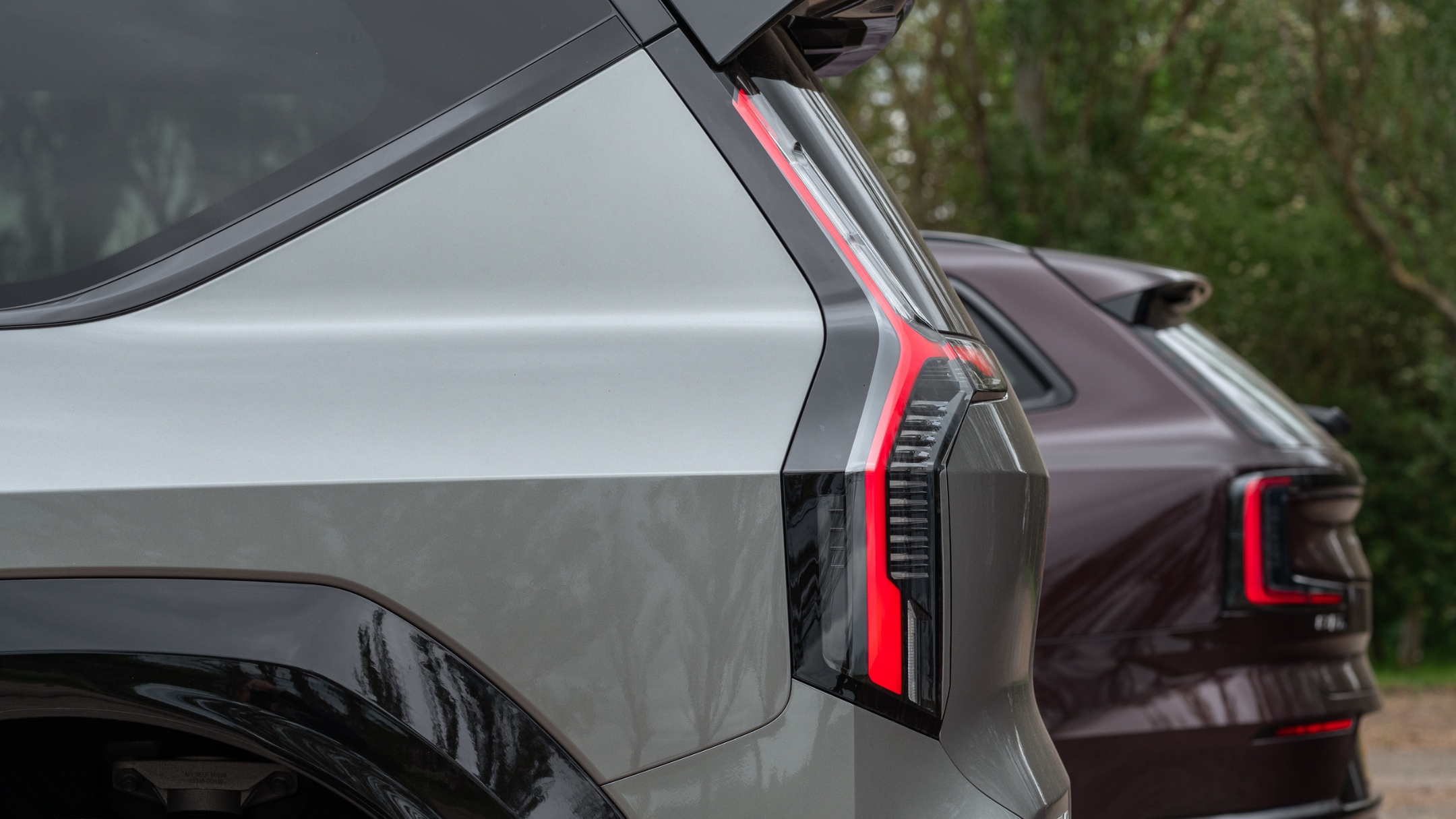
Your first impression will be one of clean, calm Scandinavian cliché, unvarnished woods and Cardamom leather, good sightlines and crisp finishes. Yes, it’s the size of an HGV but it’s a good looking, subtle lorry, with LED signature lighting all round, unfussy lines and a vague feeling of enforced serenity. But the wholesome stylings of the interior are unburdened by anything to prod but the screen, other than a volume control knob in the centre console.
Cue the usual doomscrolling of menus to switch off the twitchy lane keep assist and myopic traffic sign recognition. Adjust the mirrors? Touchscreen. Heated seats or airflow? Everything touchscreen and multiple swipes and presses. Cortisol levels will spike. It’s not a good start.
Advertisement - Page continues below
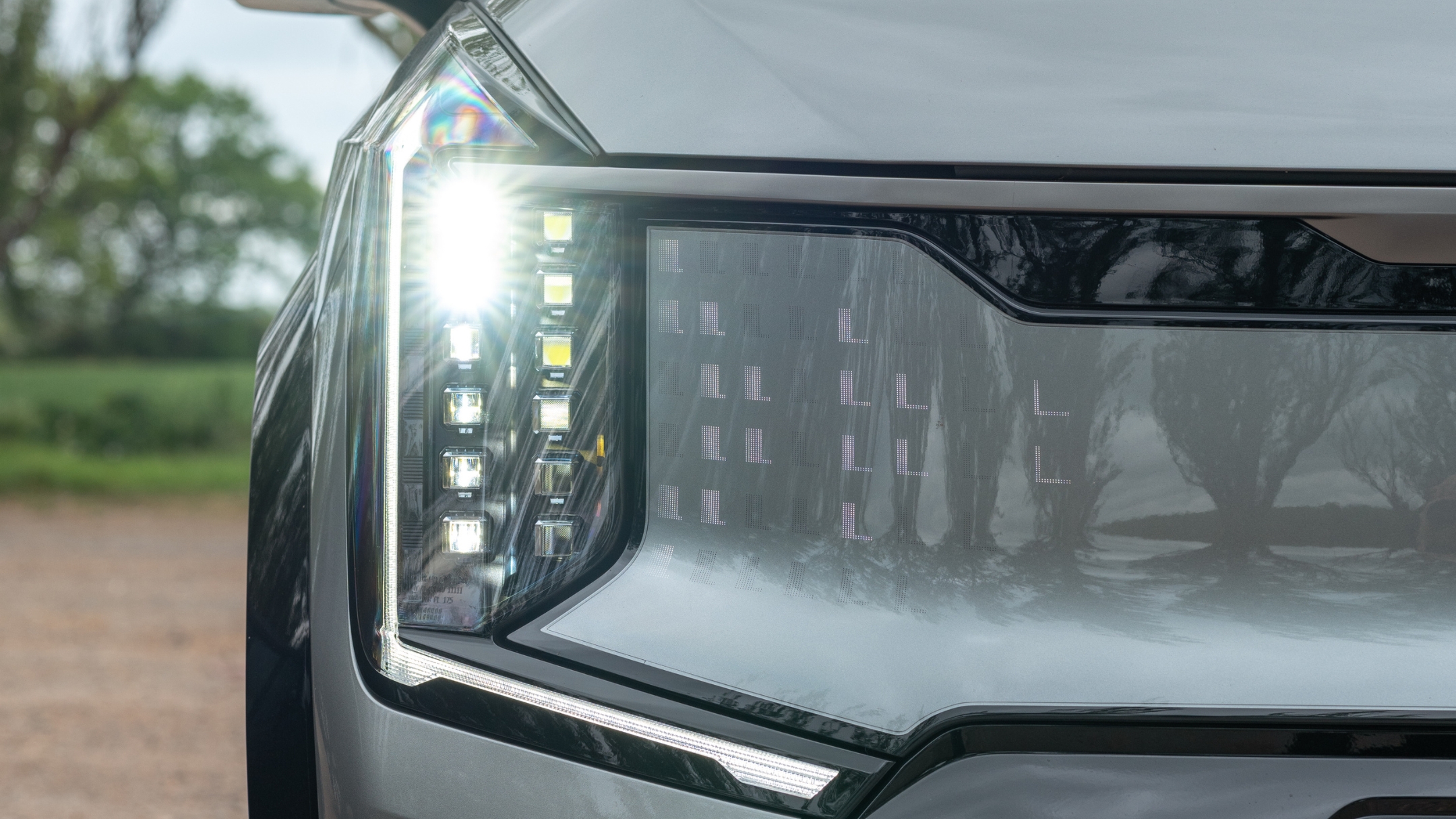
The Kia EV9 GT, on the other hand, is a lesson in geometric confidence, wearing its faintly military angles with pride. It’s even more massive than the Volvo and looks bulkier too, neon yellow brake calipers blinding against grey paintwork. Polarising, but interesting versus the Volvo’s attractive sobriety. One’s dressed in a suit, the other in a suit of armour, with the differences even more stark on the inside. The question may have been ‘How many buttons would you like?’, but the EV9 GT should have given a more specific answer other than ‘yes’.
There’s a 12.3in touchscreen paired seamlessly with a similarly sized driver’s display, but also a haptic mode bar underneath, buttons, rockers, switches and knobs. It’s initially just as overwhelming as the Volvo is confusing, two very different approaches. And it’s not immediately clear which one is best. Or least worst.
Better to pause for a moment and take a look at the other accommodations, seeing as that’s what we’re here for. And they make fantastic cases for themselves. Both have foldaway third row seats, both electrically operated from buttons in the boot. Both have some luggage space when arranged as seven seaters, truly massive boots when set up for five, Sprinter-sized cargo volumes with the seats all folded flat.
And yes, you can actually get an adult in the third row for either car, although access is more convenient in the Kia, which has electrical-flip for the second row and a bigger access gap. The Volvo’s second row all individually slide and recline, where the EV9 makes do with a 60:40 split. And while it’s fair to say that neither is lacking in space, the Kia edges it on sheer size.
Which brings us to the driving experience. Once you’ve programmed your settings and dialled down some of the more annoying unassistance systems, there’s a lot of horsepower to play with, and the Volvo delivers exactly as you might expect, because the EX90 isn’t really one for showboating.
There are three ‘modes’, which aren’t really: normal, permanent AWD and off road. No Sport or extra agility mapping. It’s fast, but in a measured, undramatic way, with none of the neck jerking of some electric cars, just a delivery that builds and builds and presses you back into the seat like a giant, soft hand.
Body control is excellent, the confidence into, through and out of a corner exactly as you might wish. No surprises, but in a car with a 500kg+ battery pack (it weighs up to 2,811kg, believe it or not), surprises are best kept to birthdays. It rides very nicely on the 21in alloys, bumps acknowledged rather than violated, a feeling that there’s work going on underneath that never sweats inside the cabin. The steering is accurate and light, the brakes reassuringly solid if not actually offering anything in the way of feel. It’s all a bit Rolls-Royce Spectre, and after a long day, it’s a diamond.
Top Gear
Newsletter
Get all the latest news, reviews and exclusives, direct to your inbox.
The EV9 GT is practically the polar opposite. Sometimes, it seems like the universe has weak seams and some of the logic leaks out, because this is a car that makes no sense in the best way. There are different settings for dampers and electronics and many modes: Eco, Normal and Sport, as well as terrain settings for off tarmac adventures.
Then there’s ‘GT’ accessed through the yellow button on the bottom left of the steering wheel. Press it and the EV9 stands to attention, like a Labrador eyeing up a pork chop. Seat bolsters grip your ribcage, every parameter sets itself to max and the electronic stability and traction control loosens.
Considering the fact that this is a car that weighs over 2.7 tonnes, that should be considered a worry. As is the fact that there’s launch control for a sub five second 0–62mph time. Both of which combine to present a rather obvious problem; the EV9 GT is a really big car that’s exceptionally rapid, but it weighs enough to have its own gravitational field. Yes, it punches from rest like a kicked football and maintains grunt way past 70mph, but come to a corner and there’s a lot to take into account.
Although these cars are more than capable of meeting the brief, they attack it in wildly different ways
The suspension is firm enough to contain things, and there’s a weirdly rear-wheel drive nuance to GT mode, but you’re battling big forces here, and it all feels like it’s one slick surface away from fatal understeer. You’re forced into tactical slow in, fast out. It’s funny, but not really fun. The excitement of the speed cannibalises its own enjoyment: the faster you go, the less you enjoy it. Meanwhile, the ride can be jiggly on a bad road and while the steering is precise enough and the brakes capable, you’re always aware of that mass and bulk. Probably something less of a problem in somewhere like North America, but hard to ignore on a B-road in south Lincolnshire.
Looking to finance either of these two? We thought we’d have a quick look, and the results are mortgage worthy. If you go for a typical six months deposit followed by a three-year PCP with an allowance of 10k miles annually, the EX90 will set you back roughly £1,200 and the EV9 GT some £1,100. Which is... not cheap. A lot of car for the money, but that’s steep.
So which to choose? Remember, this latest version of the EX90 now has 800-volt architecture, meaning both of these cars charge like champs. Stick them on a big enough charger and you’ll be back up to 80 per cent full in less time than you can plug in, pee, and refill your bladder with Costa’s finest.
The Kia has more toys as standard, the Volvo arguably the more desirable badge
The Volvo’s slightly bigger battery means it’ll offer up a tad more overall range both outright and for time spent plugged in. Both have heat pumps, vehicle-to-load (though the Volvo is also pre-prepped for both vehicle-to-home and to grid), both the usual apps, cameras and ADAS functions. The Kia has more toys as standard, the Volvo arguably the more desirable badge. In terms of purely getting the job done, they both manage in some style.
A caveat, then. The EX90 and EV9 both require a good dose of familiarisation. The former to manage a buttonless existence, the latter to learn where the buttons all live. But once you’ve spent some time in them, they simplify. A better car would be somewhere in the middle. More generally, the Volvo makes a journey feel like a deep exhale. It slips by relatively unnoticed, cossets and quietens. It’s fast but not disturbing, capable but not frustrating. It’s one of those cars that supplies a slow burn of everyday satisfaction rather than occasional spikes of adrenaline.
The Kia is much more extrovert, futuristic, silly and even a bit inappropriate. But that’s why it is also so appealing. It’s a seven seat electric SUV with a sense of humour, and the Volvo doesn’t do jokes. One suspects that the most useful versions of these cars are the ones with lesser performance, more range and the same practical capabilities. But in this case, it’s the more sensible Volvo that would be TG’s choice. By a whisker. And we’d still want to borrow the EV9 GT for the odd weekend.
Trending this week
- Top Gear Advice
Here are 17 cars that’ll (probably) do 300,000 miles or more
- Car Review
Mazda CX-6e