




Big Reads
Mini JCW Cabrio vs Mazda MX-5: which affordable convertible is best?
The attainable, fun, drop top is a very endangered species. We track down two of the last remaining examples
By now, spring has sprung, its brighter mornings and warmer evenings providing that tantalising little glimpse of the summer ahead. A perfect if somewhat clichéd time to convince you to buy a brand new convertible. That’s a significantly harder task than it used to be, however. Little over a decade ago, every mainstream carmaker had one – if not several – open-tops in its showroom.
We may not have been flowing in our affection for the 206 CCs and Renault Winds of this world, but boy, do we miss them now. The small coupe and cabrio market has been all but steamrollered by the march of the SUV and we’re left with fairly identikit streets and car parks because of it.
Advertisement - Page continues below
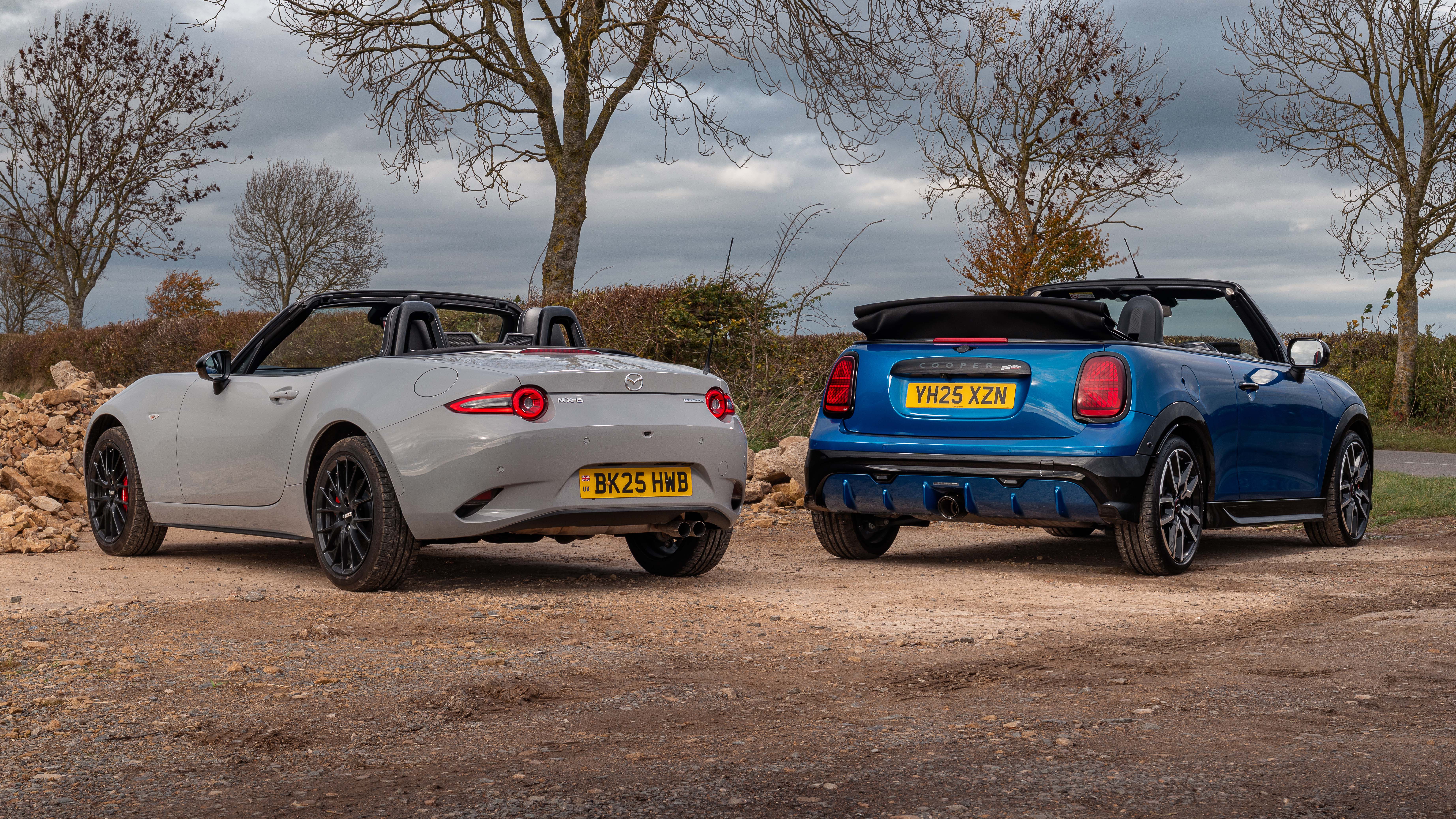
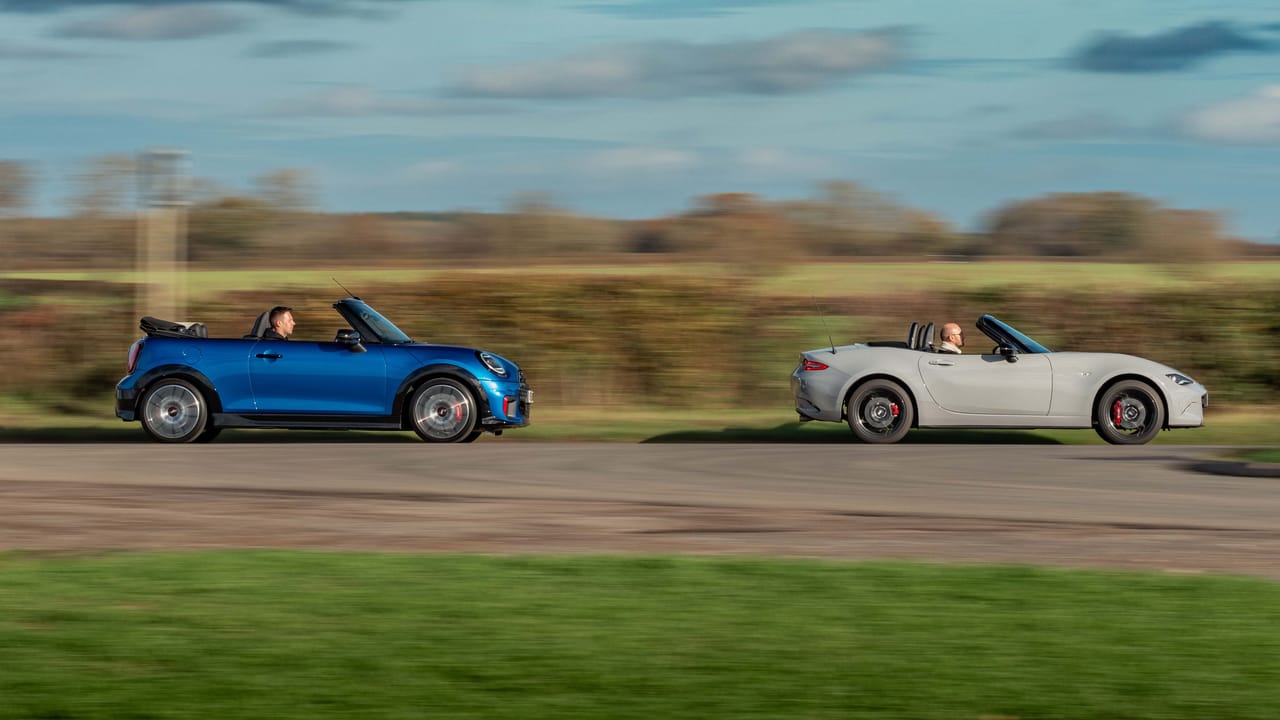
You’re looking at the last two affordable open-tops left on sale. Mazda and Mini are doggedly loyal believers in the art, and each of these cars still starts comfortably below 30 grand. The MX-5 has been with us through four very evolutionary generations since the late 1980s, when it helped reinvigorate the small roadster market following the dawn of the hot hatch; the new age BMW Mini has been produced consistently in folding soft-top form since 2004.
Photography: Alex Tapley
Each possesses the same silhouette as its multiple forebears, though each also demonstrates the passing sands of time via ever fussier detailing. We’re delighted they both still exist, nonetheless.
The Mazda kicks off at a tantalising £28,585 in base 1.5-litre trim and on 16in castors. That gets you 130bhp at a sonorous 7,000rpm plus a six-speed manual ’box. The option of this 181bhp 2.0-litre arrives alongside higher trim levels at £33,515, though it’s the top spec £36k Homura we have here with its host of brand name additions. Perky red Brembo brakes sit behind gorgeous, 17in multispoke BBS wheels.
Advertisement - Page continues below
There’s gnarlier Bilstein suspension, hugging Recaro seats, an astute limited slip differential on its driven rear axle plus a more mischievous setting for the stability control. You buy the cheaper, entry point MX-5s for pottering in the sun. You buy this one for driving.
There’s a folding hard-top version, too: the MX-5 RF (Retractable Fastback) adds precisely £2,000 to the cost of every MX-5, and it’s a delectable piece of car design. It’s just not as nice with the roof down, its cabin whipping up some turbulence at higher speeds (a Porsche 911 Targa suffers the same fate). We implore you to choose the cheaper Convertible.
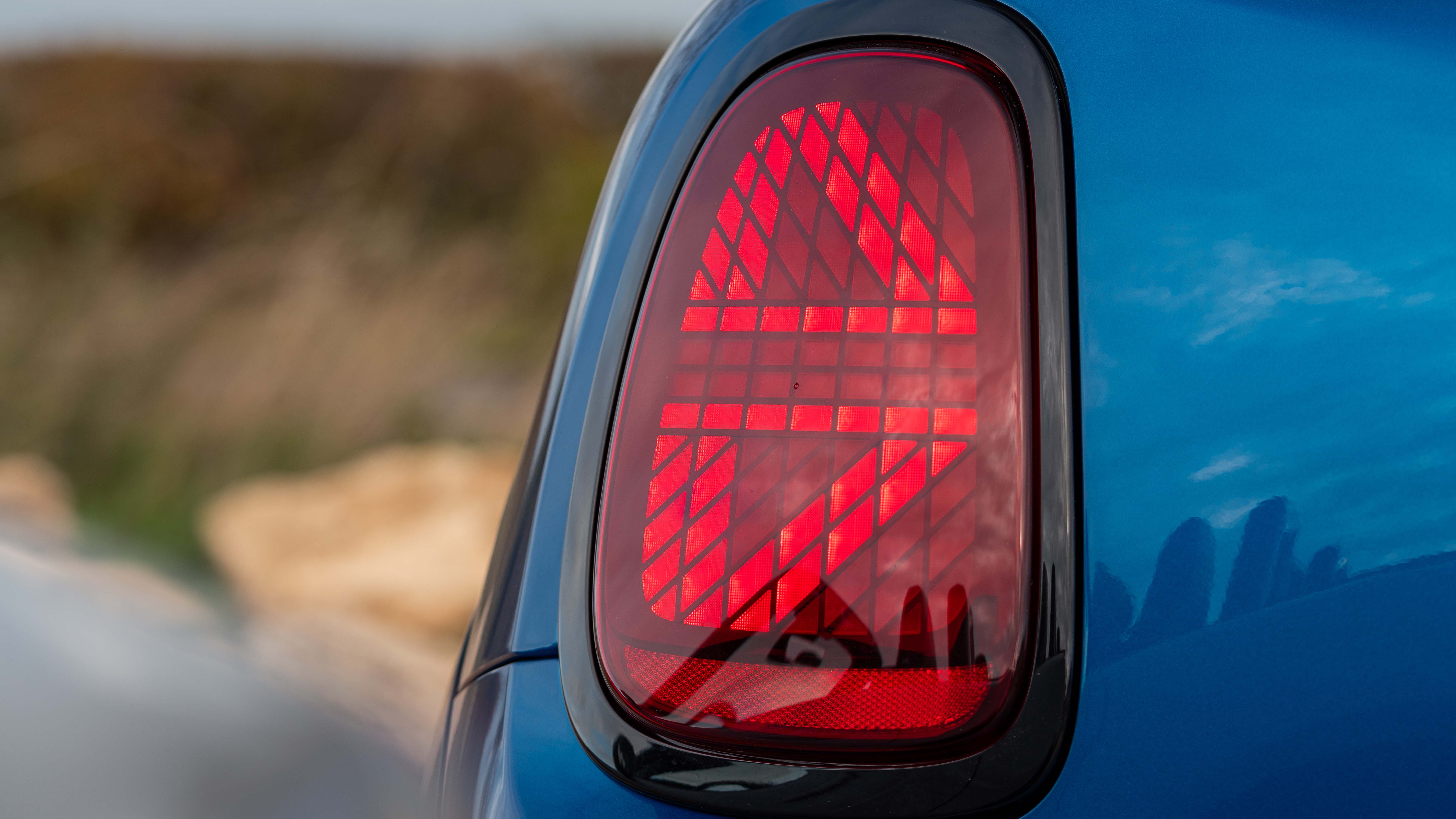
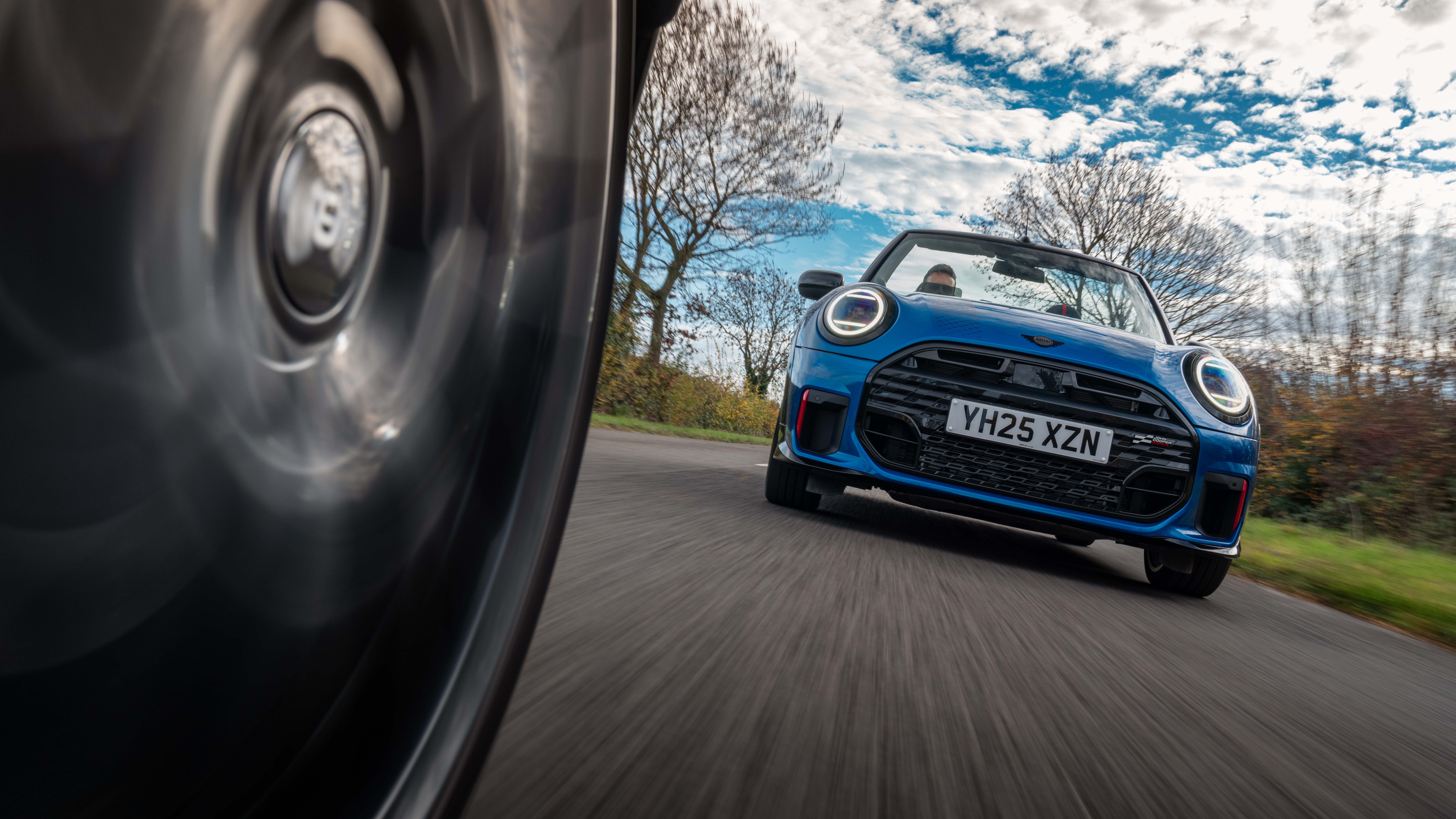
The Mini feels just as attainable. A 161bhp 2.0-litre turbo Cooper C Convertible opens at £28,955, also on diddy 16in wheels but with a mature seven-speed DCT auto as standard. Mini says it will never sell another manual shifting car ever again – how times change. Happily this is a keen and snappy transmission, although Mini does charge extra for paddleshifters and the opportunity to get stuck in yourself. Those are gatekept by higher trim levels and pricey option packages, which seems out of touch with the Cooper’s fun schtick. Maybe they spoke to customers and found no one uses them anyway.
Another three grand gets you a 201bhp Cooper S, while the halo of the range is this £37,825 228bhp John Cooper Works. It commands more money than the MX-5 and duly delivers more tech, its oversized dinner plate of an OLED touchscreen being the focal point of a car that walks a curious tightrope between new age ideas and old school thrills.
Whether you love its aesthetic or not, that central display is luscious to look at, resists glare better than any rival with the roof down, and brings a strong dose of Mini’s (in)famous sense of humour. Toggle through its many drive modes and you’ll be greeted by flapping birds, a Big Ben-esque clockface or a cloying ‘wahoo!’ as you engage its Go-Kart sport mode. You might bristle at stuff like this, but we say embrace it. In a world of identikit Chinese rivals, Mini is putting its less formal heritage literally front and centre.
Does the driving experience back it up? Kinda. Formalities are certainly in short supply if you’re trying to deploy even half throttle on a damp road. As John Cooper Works tradition demands, it spins its front wheels up and generally pervades ‘hooligan’ as soon as you hint at wanting to have a good time. And it’s quick: 280lb ft ensures this is a thoroughly rapid car, the twin clutch ’box feeling almost single speed if you’ve left the paddles alone, its shifts barely punctuating a breathless surge forwards. Its on paper claims appear modest when the road is dry and everything is hooked up.
The more you commit, the more its ragged dynamics start to make sense, though it never coalesces into a car of smooth, accurate agility; rather one you bully through corners as you withstand occasionally punishing ride quality. Yet it’s a hard car to resist and an easy one to like. Does a cabrio version of the most hardcore Mini present a paradox? When the car rides so boisterously in the first place, you won’t resent any additional shudder from folding the roof, though the engineers have fitted lots of chassis reinforcement to ensure the Cooper S and JCW drop-tops aren’t wobbly blancmanges.
Top Gear
Newsletter
Get all the latest news, reviews and exclusives, direct to your inbox.
Calm things back down and it’ll also act the professional. Its semi-autonomous cruise control is really very good, and there’s augmented reality built smartly into its nav. There’s plenty of reason to explore its tech rather than incessantly ignore it. Pop the roof back up on longer motorway runs, let the systems take the strain, and enjoy music or podcasts with cossetting clarity. In moments like these, it feels like the entry level BMW it essentially is.
A claim it can share with lowlier Mini Convertibles too, of course, and we suspect a Cooper S with the optional paddleshifters might be a more cohesive thing. Albeit not much cheaper on the configurator – the JCW bundles in extra kit with its additional power and is probably the best value spec outside of a pure base car. If you can cope with how it rides.
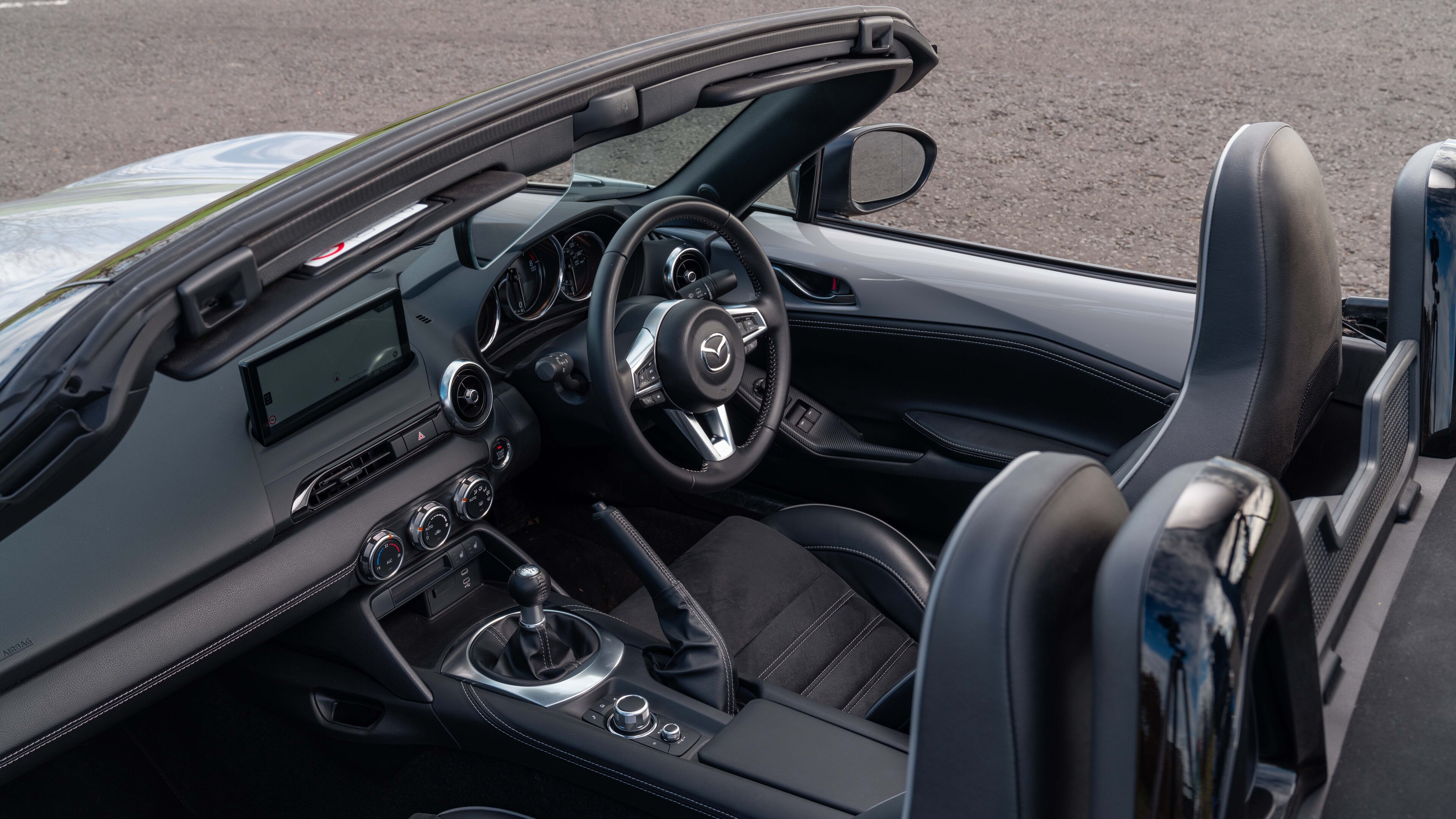
The MX-5 rides on smaller, 17in wheels and positively skips along the road in comparison. Car folks like us prattle on about lightweighting all the time, and just 50 yards in a dinky two-seat Mazda should win over even the most bullish of cynics. You feel its deft reactions through the thin rimmed, right sized steering wheel. You feel every millimetre of throttle travel relate directly to its linear, turbo free power curve. You feel the muscle its modest (albeit Brembo branded) brakes impart upon the BBS wheels to slow you back down again. The Mini is more boisterous but places a filter between you and the road, somewhat gamifying the driving experience. The more informative Mazda comes across with far greater authenticity.
Part of its chattier dialogue is down to its dramatic body roll. Always one of its most overt handling traits, it helps validate more fastidious fast car folks who question the MX-5’s true ‘sports car’ status. If you’re offended, there are dozens of tuners out there who’ll do just about anything to these things including turbos, big V6 engines and all manner of chassis mods. But there’s a cuddly approachability in stock form. Even though it’s rear drive, you have to deliberately bung it into a corner to truly unstick the back tyres. It’ll slide easier in cold or wet weather but is no easy drifter at sane road speeds. Driving it beneath its limits, revelling in how its scant kerbweight breeds a now rare litheness, is where it feels cheeriest.
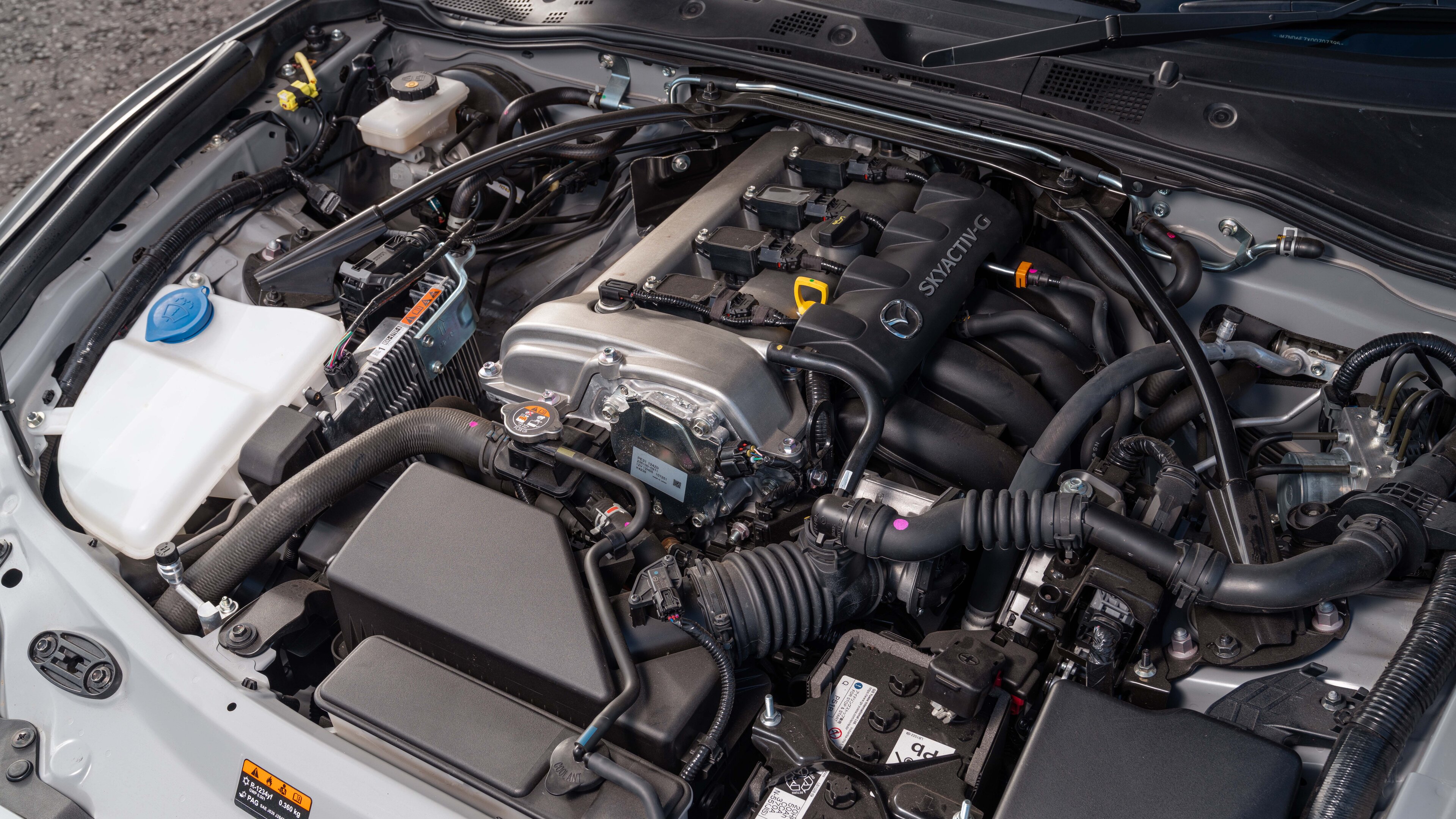
The engine is no all time great but shines in this company; where the Mini offers limited interactivity beyond its paddleshifters, the Mazda zings past 7,000rpm and invites you to snick its short, stubby gearlever as close to its redline as you dare. You can practice the dark art of heel ’n’ toe on the way down, too, its cosier cabin grouping the pedals neatly together. Crucially it doesn’t demand any such geekery to gratify its driver. This car is as involving as you want it to be.
You’re looking at the last two affordable open-tops left on sale
It feels the more focused car inside. Your bum is dropped close to the floor beside the more upright Mini, and with the roof up, it’s a darker, slightly more sombre place to be. Its central screen operates via touch (a long stretch from the seat) or a tactile clickwheel and feels a far cry from the ginormous display in the Mini, but that’s arguably this cabin’s USP. It’s old school, right down to its analogue dials and manual handbrake.
And, of course, its physically operated roof. Loosen the clip at the top of the windscreen and it’s a simple swing of your left arm to fold the fabric back, before a brief shove down to secure it in place. Such simplicity feels emblematic of the car it adorns, and more ‘MX-5’ in character than the electrically whirring hard-top of the RF.
The Mini is soft-top only and carries over the roof setup from its previous generation, a point proven by its fatter old gen tail-lights beside the hatch (for structural reasons, see). Its large fabric hood stows electronically in 18 seconds at up to 19mph, boasting a halfway sunroof mode for when you crave fresh air with a side order of privacy – or brisk shelter when the weather suddenly turns. Its pram folds nibble away at rear visibility with the car fully open, though even its 160-litre roof down boot capacity beats the Mazda’s 130-litre volume. And you’ve a pair of back seats here for further stowage opportunities.
So, conclusion time. The Mini is clearly the more versatile, practical and premium car but it lags the Mazda by a considerable margin if we’re judging these on driving ability. Which, when you’re presented with a lightweight, rear drive roadster with a gearstick, is hard to avoid. Both cars are thoroughly welcome on British price lists against the backdrop of their fallen rivals and while the JCW covers more bases, it’s the MX-5 which feels like the true icon of our pair.
The MkI’s arrival invigorated the small soft-top market almost 40 years ago. Let’s pray that when the fifth gen lands, history repeats itself.
Trending this week
- Fail of the Century
Fail of the Century: 45 of the worst cars from 2000 to now