


47
From A1 GP to the wedge-tastic Lagonda, here are some of the car world’s greatest flops

To misquote Oscar Wilde, for a car brand to die once may be regarded as misfortune. For the same brand to die twice looks like carelessness. But such was the fate that befell poor Borgward, the German car company that, in 2022, suffered the ignominy of kicking the bucket not for the first, but second time.
Borgward was founded in Bremen in the 1920s, and hit its zenith in the 1950s, when its Isabella briefly became one of Germany’s bestselling posh saloons. In 1953, Borgward’s Porsche-ish 1500 competed at the Le Mans 24 Hour Race.
It didn’t quite make it to the finish, but it went quite a long way and looked rather pretty while doing so. But in the early 1960s, Borgward suffered financial meltdown, blamed by some on a sprawling product portfolio, and by others on totally mad finances.
Variety is the spice of life. If every carmaker sang from the same song sheet, the world would be a duller place.
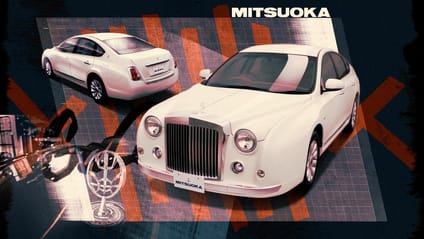
Therefore we should salute those who choose to zig where others zag. Those who swim against the current, who colour outside the lines. Companies like Mitsuoka, the small volume Japanese manufacturer that, for the past three decades, has been taking sensible JDM offerings and rebodying them to resemble old timey cars in a proudly off-kilter way.
But there’s swimming against the current, and then there’s the distressing monstrosity that is the Galue. It’s good to be unique, but maybe not... this unique?

What’s the opposite of nominative determinism? Whatever it’s called, meet the dictionary definition: Arrival, the British electric vanmaker that never quite... arrived.
Founded in 2015 by former Russian politician Denis Sverdlov, Arrival appeared destined for the big time. Instead of a single megafactory, Arrival planned to establish a bunch of small assembly facilities around the world, building intelligent, battery powered vehicles spun off their scaleable ‘skateboard’ platform. These vehicles would include vans in a range of sizes, a bus and even, if things went well, a car.

As a rule, Epic Fail steers clear of featuring motorbikes, for two reasons. First, Epic Fail is not a motorbicyclist, and does not understand the subtle nuances of the craft, or indeed why motorbikes don’t just fall over all the time. Second, many motorbicyclists are both musclebound and also leatherbound, and thus not the folk to anger by saying something out of place.
Nonetheless, Epic Fail feels confident in its decision to consign this motorbike in the ‘big ol’ crash and burn’ category. This particular motorbike was the magnificently named Johammer J1, a machine Epic Fail would applaud for its ambition were Epic Fail’s hands not busy shielding Epic Fail’s eyes.
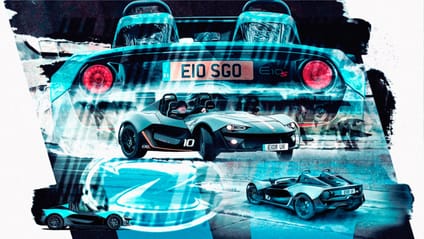
There was much to admire about the E10. It weighed barely 700kg thanks to an innovative lightweight structure, with a central aluminium beam ‘straddled’ by a carbon-plastic tub. Double wishbone suspension with inboard dampers provided tidy handling. Turbocharged Ford engines generated as much as 350 horsepower, which, with no windscreen as standard, provided acceleration of up to 75 face wasps per minute.
The E10 wasn’t flawless. It looked like a melted KTM X-Bow. It didn’t have ABS, which was good for brake pedal feel but also good for crashing in the wet. That said, its total lack of a roof precluded going out in the wet in the first place.
But the problem wasn’t the E10. The problem was the general public. Specifically, the general public’s boneheaded insistence on buying the wrong sort of cars. Because you didn’t buy a nice fizzy E10, did you? No, you bought many Vauxhall Mokkas and Nissan Qashqais and Suzuki Celerios, and look where that got us. Zenos shifted barely five dozen cars in the UK before entering administration in January 2017.
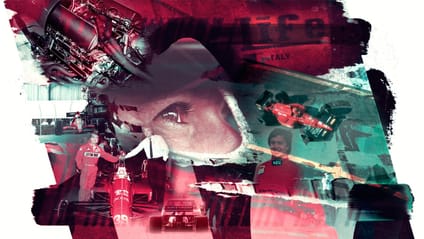
At pre-qualifying for 1990’s opening race in Phoenix, the L190 was 35 seconds off Gerhard Berger’s eventual pole time, too slow even to make it through to quali. At Monaco, the L190 lapped 14 seconds off quali pace. In Mexico, it was nearly three minutes off. In 12 attempts, the W12 entirely failed to power Life out of pre-qualifying, instead opting to detonate in a variety of novel ways.
At the Portuguese Grand Prix, Vito bit the bullet, swapping out his beloved W12 for a Judd V8. It proved no more successful: after two more races failing to make the grid, Vito pulled the plug on Life. The team evaporated before the season was complete, exiting with vast debts and not a single race start to its name. That’s proper failure. That’s Life.
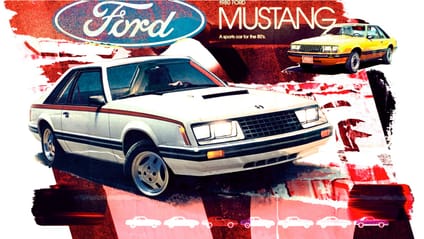
Many wise, knowledgeable car enthusiasts will sagely inform you the third gen ‘fox body’ Mustang is anything but a fail. They will inform you that, in the near half century since its launch, it has proven itself an ultimate tuner car: cheap to buy, easy to work on, straightforward to boost to big horsepower. The fox body Mustang, they will tell you, is a legend.
Epic Fail is here to tell you that these people are wrong. Yes, the Gen 3 Mustang has indeed proven itself a fine platform for modification, but that’s just proof of how badly Ford ballsed it up first time round. No one’s ever felt the need to modify the Mona Lisa.
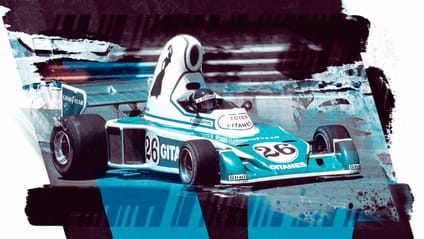
Sure, the good old days did contain some very pretty F1 cars – when Epic Fail is sad, Epic Fail spends a while looking at photos of the Lotus 72, which tends to help matters – but they also contained a whole bunch of utter horror shows.
Such as Ligier’s JS5, the 1976 F1 entrant that sported an airbox so bulbous it was christened ‘The Teapot’. Consider it an automotive Rorschach test: what do you see in that curvaceous funnel? Smurf hat? Squid Game guard? The exit hole of a marsupial?
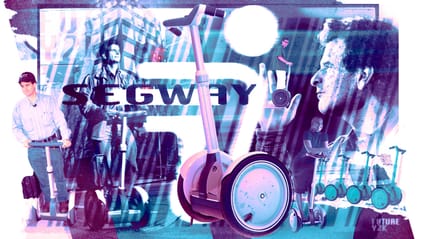
Its aim was noble: to replace heavy, bulky passenger cars as a preferred means of urban transportation. Trouble was, when it came to getting around cities, humans already had many other convenient options: bicycles, scooters, legs. The Segway didn’t offer a notable improvement on any of these. The first gen ‘PT’ model topped out at around 10mph, with a range of about 10 miles.
The self levelling tech – which used tilt sensors and gyroscopic sensors to keep the Segway unerringly erect – was interesting, but one thing you’ll notice about humans is that they’re generally pretty good at self levelling of their own accord, even while riding a bike or scooter. Of course there are plenty of folk who require assistance with support or mobility, but the Segway didn’t better cater to this audience than the existing three and four wheeled options.
Most crucially, it made its rider look naff. Segway hoped its creation would say to the world, “Welcome to the swooshy future”. It didn’t. It said, “When did nan get a job as a store security guard?”
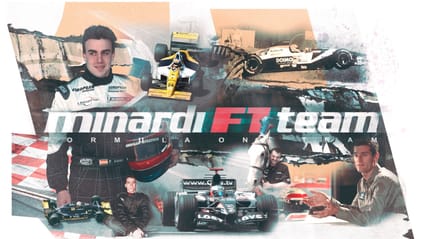
"I have not failed,” Thomas Edison once said. “I’ve just found 10,000 ways that won’t work.” And when it came to winning Formula One races, no team found more ways that didn’t work than Minardi, the plucky Italian outfit that, over 21 glorious years, became a byword for wholehearted motorsport failure.
A family business, Minardi competed in Formula Two in the early 1980s. The fact this yielded no great success failed to dissuade the team from stepping up to F1 in 1985, where it continued its admirable strategy of ‘losing, but enthusiastically’.
The stats are impressive, just not necessarily in a good way. Over two decades in F1, Minardi contested 346 races and some 20,000 laps in total. Championships? Zero. Wins? Zero. Podium finishes? Also zero.
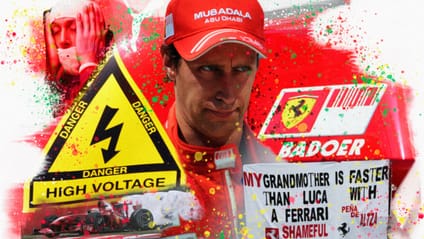
Let’s be clear. We’re not branding Luca Badoer himself as an epic failure. After all, the Italian racing driver has lived, it seems, a happy and fulfilled existence. We’re talking specifically about Luca Badoer’s racing career. And, even more specifically, the bit of Luca Badoer’s racing career circa summer 2009.
A talented junior racer, Badoer spent much of the 1990s as an F1 journeyman, competing in four-dozen Grands Prix for back marker outfits – BMS Scuderia, Minardi, Forti – without ever troubling the scorers. At the turn of the millennium, he became Ferrari’s official test driver. Then, in July 2009, when Ferrari driver Felipe Massa was injured by a flying spring in qualifying at the Hungarian Grand Prix and ruled out for the rest of the season, Maranello turned to its loyal test driver to fill the vacant seat.
It was a moment charged with romance: competing in his first F1 race for 10 years at the European Grand Prix in Valencia, Badoer would become the first Italian to drive for Ferrari in 15 years, finally getting his shot in a car capable of mixing it at the front of the grid. It could have been glorious.
It wasn’t.
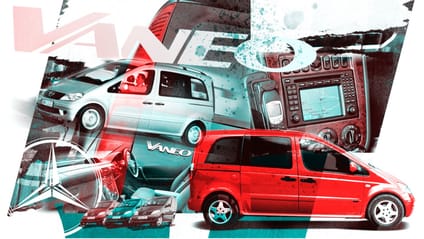
Some cars achieve Epic Fail status thanks to their shoddy build quality, or their lacklustre performance, or the botched business plan that underpinned their creation. The Vaneo, however, flopped for none of these reasons. It achieved its fail status on account of oh God will you just look at it.
Top Gear takes no pride in being so very shallow in its judgement. Beauty, after all, is only skin deep. You should never judge a book by its cover. On the other hand, oh God will you just look at it.
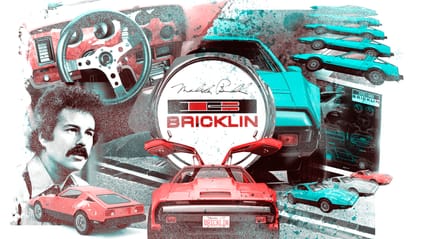
At its launch in 1974, founder Malcolm Bricklin heralded his new sportscar as nothing less than “the safest production car in the world”. As it turned out, the SV-1 (short for Safety Vehicle) would indeed prove near impossible to crash. Just not necessarily for the reasons Bricklin had envisaged.
For starters, shunting the SV-1 required getting into it in the first place. Which, with a 41kg gullwing door to negotiate, was easier said than done. Sure, a hydraulic cylinder was intended to do the heavy lifting, but the mechanism would frequently fail, leaving owners helplessly trapped outside their $10,000 sports car. Which, with hindsight, was better than being helplessly trapped inside their $10,000 sports car in the event of a rollover crash.
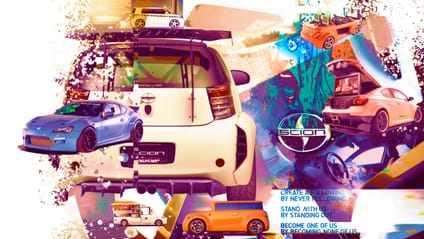
In 2004, Toyota announced the average age of a Scion buyer was 35 – pre-pubescent, by car buying standards. By 2006, Scion was shifting 173,000 units annually.
And then it all went – as they used to say in the 2000s – decidedly Pete Tong. Some blamed the financial crisis. Others blamed a run of ropey facelifts that left the Scion range looking more frumpy than funky. But the true culprit was... Gen X. Scion’s youthful audience became infiltrated by the middle aged. Turns out 50-somethings were just as enamoured by mildly sporty styling and not having to ingratiate themselves to a dealership salesperson. They also had a chunk more disposable income than 20-something college grads. By 2007, the average age of a Scion buyer had risen to 43, kiboshing any early kudos the brand might have garnered with the millennials.
By 2010, annual Scion sales had sunk to 45,000 units and Scion was quietly euthanised in 2016. Company sources optimistically claimed this was merely the natural conclusion of a successful market experiment, but you don’t tend to terminate experiments if they’re making you millions of dollars a year. The millennials had issued their Scion verdict – less OMG, more meh.
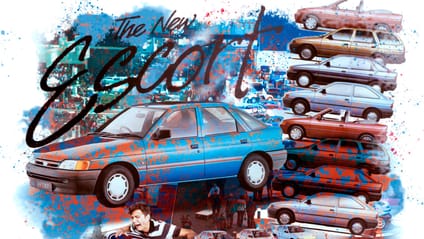
The real reason the first Focus was so good? Because the MkV Escort was so very bad. Arriving in 1990, Ford boasted it had spent a billion pounds on its development. Must have been some very fancy biscuits in the Dunton meeting rooms, because they sure as hell didn’t spend it on engineering the thing.
The styling was as underwhelming as the engines, the MkV inheriting the pensionable CVH units from the previous Escort. The gearshift was in dire need of a blue pill. The handling was floppier still, Ford ditching the independent rear suspension of the previous Escort in favour of a simpler torsion beam setup. Epic Fail briefly owned an early Nineties Escort MkV, and vividly recalls its ability to understeer catastrophically into the verge, often on sections of road that didn’t obviously contain a corner.
The MkV wasn’t just bad, it was unexpectedly bad.
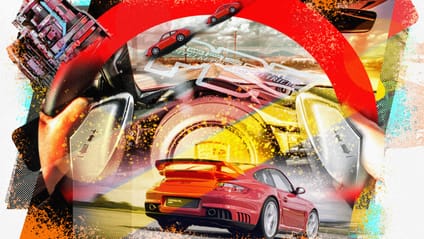
In 2008, Porsche offered for the first time its race proven, lightning shifting PDK gearbox in a road car (specifically the 997.2-gen 911). This was good. Less good was how the driver was forced to operate it: a pair of push me pull you buttons mounted on either side of the steering wheel. Tap either button away from you, and the PDK would upshift. Tap either towards you, it’d downshift.
On the plus side, this allowed the keen helmsperson to change up and down with a single hand, and thus to chug coffee while also tackling the Nordschleife at full chat. On the minus side, everything else. The buttons didn’t just look cheap, they felt cheap, click-shifting with all the mechanical satisfaction of a service station biro. And the push/pull thing just seemed illogical. Unnatural. Wrong.
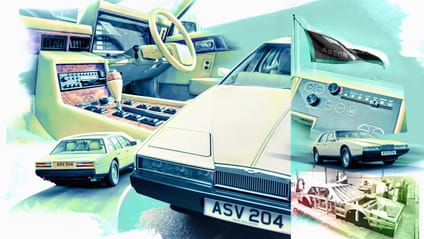
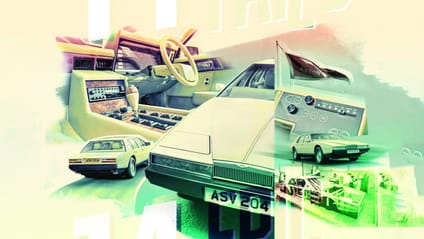
After revealing the display car, the Aston engineers spent another three years – and four times the original development budget – trying to figure out how to make all that tech actually function. It broadly failed. Early customers discovered the electronics on their long awaited Lagondas were less ‘unreliable’ and more ‘absent’, raising the interesting philosophical question of whether a digital dash is still a digital dash if it doesn’t switch on. The touch sensitive buttons... weren’t. The Lagonda’s own chief of engineering later described the tech development process as “an appalling mess”.
It’s good to aim high. But Aston maybe got a bit too high with this one.
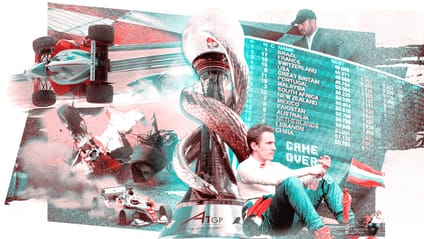
With its founding sheikh departed and the global financial crisis beginning to bite, A1GP’s financial situation morphed from ‘wobbly’ to ‘entirely disintegrated’, the series collapsing in 2009 with just four seasons complete.
Surely the real issue with A1GP, however, was that it was a global, open wheel, no contact(ish) motorsport. And the world already had one of those, in the robust shape of Formula One.
Get all the latest news, reviews and exclusives, direct to your inbox.