


12
They came, they saw, they conquered. Then came back again for another bite
Left: 1981
Returned: 1982
Comeback rating: Brief
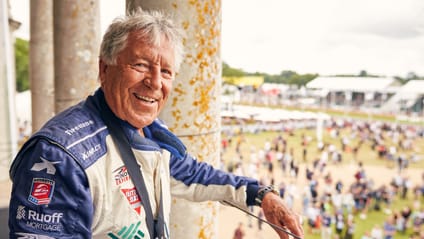
There’s no arguing with Andretti’s talent. Even though his name became a byword for speed, it was his ability to extract the most out of any car he got into that really made him a force to be reckoned with.
Whether he was driving in IndyCar, NASCAR or F1, he was immensely quick. That said, towards the end of the 1970s and the beginning of the 1980s, Andretti became increasingly disillusioned with the brutish, crude cars he was driving and decided to leave in 1981.
In 1982, however, he was lured back for a drive in a Williams for the US Grand Prix West, before Enzo Ferrari himself asked Andretti to fill in for the injured Didier Pironi for two races at the end of the season. Andretti managed to claim a pole position and third place overall at Monza.
But that was the extent of Andretti’s return – he’d go on to put in a 12-year stint in IndyCar and tackle endurance racing at Le Mans.
Left: 1981
Returned: 1983
Left: 1983
Returned: 1985
Comeback rating: Sporadic
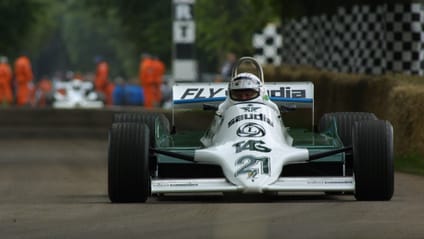
A lot of F1 drivers come into the sport riding oodles of money. Jones… didn’t. Moving to the UK with only a few quid in his pocket, he scratched and scraped until he could fund his own Formula Ford entry. From there, he raced on a shoestring until finally getting into F1 in the mid-1970s. Reaching the top of his game (and the top of the drivers’ championship) in 1980, Jones then retired – quite abruptly – a year later after finishing third in the standings. He finished on a high with a win in the last race of the season, and that was pretty much that. Except it wasn’t.
Jones got a call from Ferrari to take on a few races in the 1982 season, but he was enjoying a life of comparative leisure in Australia too much, so Andretti got the job. Unfortunately for Jones, Ferrari’s 126C3 – which he could have had access to, had he taken the gig – was the best all-round package of 1983, winning the constructor’s championship.
In 1983, he came back for a couple of drives in an Arrows F1 car, showing he still had pace with a third place at a non-championship round at Brands Hatch. And that was pretty much that. Except it wasn’t.
In 1985, Jones returned with Team Haas (the original one), but delays in the turbocharged Ford engine’s development meant he had to race with an unreliable and underperforming Hart engine. In 1986, with the Ford V6 finally in place, Jones managed to finish as high as fourth in Austria. Then Haas’s major sponsor pulled the plug ahead of the 1987 season. And that was pretty much that.
Left: 1979
Returned: 1982
Comeback rating: Triumphant
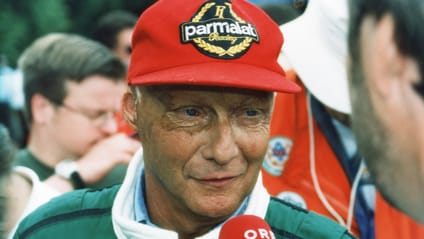
After he chose to retire from the 1976 Japanese Grand Prix after just two laps, Lauda’s relationship with Ferrari started to sour. Never mind the fact that torrential rain – a Japanese GP speciality – had made the track conditions exceptionally sketchy. Or the fact that his flame-seared tear ducts made his eyes water incessantly and he couldn’t actually blink. Or the fact that he was back in a car at all, considering the horror he endured at the Nürburgring just weeks earlier.
In 1977, Lauda returned with a vengeance, outscoring second-placed Jody Scheckter without even contesting the final two races of the season. But Lauda didn’t get along with either Ferrari or new teammate Carlos Reutemann (who also earned the ire of Alan Jones when they both drove for Williams) and announced that he’d quit the team at the end of the year. He left before the season was over, as Ferrari had recruited Gilles Villeneuve to race in a third Ferrari in Canada. Then, after two seasons in a thoroughly unreliable Alfa Romeo-powered Brabham, Lauda retired and started up an airline.
But the itch wasn’t scratched for the two-time champion. After scoring a seat with McLaren for 1982, Lauda showed he hadn’t lost his knack, with strong finishes in 1982 and 1983. But 1984 was his swan song – beating Alain Prost by just half a point to claim the drivers’ championship.
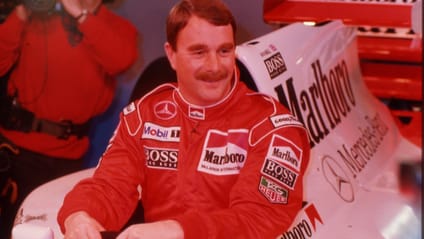
Left: 1992
Returned: 1994
Comeback rating: Fleeting
Mr Mansell, it seems, is one tough nut. His win in the 1977 British Formula Ford Championship came only after he sold most of his possessions to fund his career, and despite a broken neck, courtesy of an accident at Brands Hatch. The story goes that a doctor told Mansell he’d come perilously close to quadriplegia and would never race again. Mansell, being the possessor of a stiff upper lip (underneath that majestic moustache), decided to sneak out of hospital and continue racing.
Then, after selling his house, enduring a broken back and second-degree burns, and driving rather quickly, Mansell scored a job with Lotus F1 as a test driver and then a racer. Moving to Williams, Mansell was consistently quick without ever taking the championship title, and consistently quick to start a feud with other drivers, teammates, team bosses and journalists.
In 1992, shortly after he was crowned as the F1 world champion, Mansell announced that he was going to quit. He was fed up with Williams and infuriated by the prospect of Alain Prost (who’d manoeuvred into a position as Ferrari’s golden boy when they were teammates at the Italian team) as a teammate for 1993. Williams offered him everything under the sun to stay, but Mansell had already defected to IndyCar, where he became the 1993 champion.
But it wasn’t over. In 1994, Williams enticed Mansell to return for four races in the wake of Ayrton Senna's death, and he once again tasted F1 success with a win in Australia. That was the last time Mr Moustache ascended the top step of the podium. Two races in a severely off-the-pace McLaren in 1995 saw Mansell leave for good.
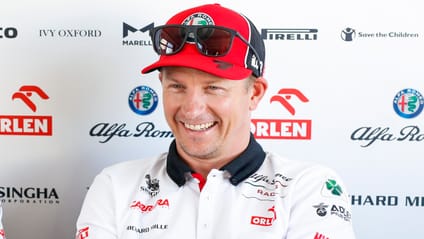
Left: 2009
Returned: 2012
Comeback rating: Bwoah
In terms of capitalising on success, Raikkonen is a man apart. Of course, drivers such as Senna and Alonso could take dynamically and mechanically compromised cars and do exceptional things – and for that, they’re basically gods in our book – but Raikkonen only really worked when the car did.
The reticent racer excelled in good cars – finishing as a runner-up in 2003 and 2005, for instance – and floundered in bad ones. In 2007, he took the F2007 (a wondrous machine) to victory from pole position in his first ever race in a Ferrari. He then campaigned against seriously quick drivers – Alonso and Hamilton – both driving well-sorted McLaren-Mercedes. But Kimi’s ability to make the most of a good thing meant he edged out both drivers by just one point to claim the 2007 title.
After conceding his crown to Lewis Hamilton in 2008 with a third-placed finish in the driver’s championship, and a disappointing sixth the following year, Raikkonen agreed to leave Ferrari to make way for Alonso. Kimi was going to sign with McLaren but negotiations failed, Mercedes signed Schumacher and Rosberg instead and Toyota’s offer of a slow car and (comparatively) small salary meant Raikkonen was out of F1.
The monosyllabic driver then turned to rally and even truck racing in the US of A, but the F1 bug wasn’t out of his system by a long shot. Returning with Lotus in 2012, he went back to Ferrari for the 2014 season. Unfortunately, the F14 T was a bit rubbish, which meant that Kimi was as well. Alonso was able to drive around the worst of the Ferrari’s foibles, registering a sixth-position finish in the 2014 championship, but Kimi wasn’t, claiming 12th overall.
But, as Ferrari clawed back Mercedes’ advantage, Kimi’s results started improving. He recorded a fourth-place finish in the 2015 championship, sixth in 2016, fourth in 2017, and third in 2018 – including victory at the United States GP, becoming, at 39, F1's oldest race winner since Nigel Mansell in 1994.
At which point he promptly left, rejoining Sauber – the team he made his Formula One debut with in 2001 – on a two-year contract. In his first season with the team he completely outshone (significantly younger) teammate Antonio Giovinazzi, finishing 12th in the drivers' championship with 43 points, the best result for a Sauber driver since 2013.
The Iceman was to remain with the team for the following two seasons, breaking Rubens Barrichello’s record for the most Formula One race starts in history (349, though this record is now held by Alonso), and giving us such heroics including his opening lap at the Portuguese Grand Prix, where he overtook 10 cars.
He announced ahead of the 2021 season it would be his last, and prior to his final race in Abu Dhabi the team inscribed "Dear Kimi, we will leave you alone now" on his car. Jokers. Sadly he was forced to retire on lap 25 because of a loose wheel nut – not the way he’d have hoped to go after 19 seasons at the pinnacle of motor racing.
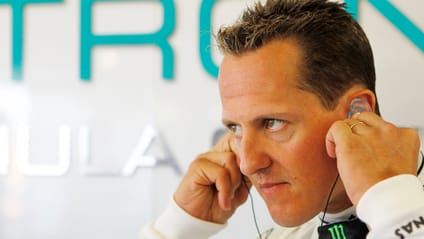
Left: 2006
Returned: 2010
Comeback rating: Brave
Even if you’d never seen an F1 race, you’d still know the name of Michael Schumacher. Alongside a certain Lewis Hamilton, he's won seven driver's titles, 91 races, finished on the podium 155 times, taken 68 poles, 77 fastest laps and at one point five consecutive titles. Of the 308 races Schumacher entered, there was a better than 50 per cent chance that he’d be standing on the podium at the end of the day. And, if that wasn’t enough, he was instrumental in transforming Ferrari – which hadn’t won a constructor’s championship since 1983 – into a dominating force.
So, he was putting quite a legacy at stake when he rejoined F1 in 2010. Schumacher’s record before starting with Ross Brawn’s new Mercedes GP team was almost unimpeachable. And, where so many would rest on their laurels and enjoy their millions, Schumacher wanted back in the thick of it.
And okay, it wasn’t that successful, especially compared to his heyday, with just one podium finish in three years. But the Schumacher magic was still there – qualifying fastest in the 2012 Monaco GP, for instance, even if a penalty from a previous race relegated him to sixth on the grid – and we’re glad he scratched the itch.
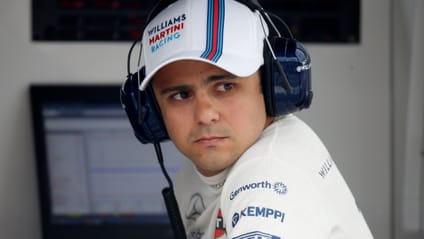
Left: 2016
Returned: 2017
Comeback rating: Unfulfilled
The popular Brazilian retired from Formula One at the end of the 2016 season, before making a U-turn a few months later when he rejoined Williams on a one-year deal.
It all came about after newly crowned Nico Rosberg’s surprise retirement, leaving a position open at Mercedes, which saw Valterri Bottas jump ship from Williams – who in turn managed to lure Massa away from his sun lounger. Having started his Formula One career with Sauber in 2002, Massa had raced for Williams since 2014 and stated at the time: “I would not have returned for any other team.” Aww, cute.
Despite a strong start to the season, it was a short-lived fairytale. Two sixth place finishes in the opening races were as good as it got for Felipe, who then had to suffer the ignominy of watching rookie teammate Lance Stroll bag a maiden podium in Baku; a race Massa had been running in third himself until a broken suspension forced him out. Ouch.
Later that year he announced for the second time that he would retire from Formula One, eventually finishing 11th in the drivers’ standings – one place and three points ahead of Stroll. In total he won 11 grands prix across 15 seasons.
Left: 2018
Returned: 2021
Comeback rating: Wishful
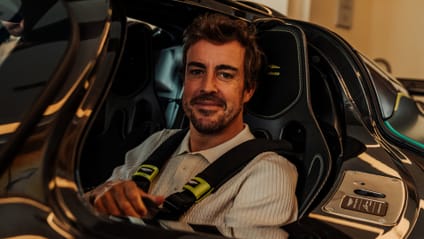
One of the most seismic returns in Formula One history saw Fernando Alonso rejoin Renault (rebranded as Alpine) in 2021, the same team with which the Spaniard won two World Championships in 2005 and 2006. Naturally F1 fans lapped it up, and technically it was his second 'return' to the team having retreated to Renault when life at McLaren blew up so spectacularly. But that's another story...
By then 39 years old, he was partnered with Esteban Ocon, and although the season was a mixed bag, it came with two memorable highlights: an unlikely podium at the Qatar Grand Prix (his first in seven years), and the mother of all defensive drives at the Hungaroring which allowed Ocon to score the only F1 race win of his career to date.
You remember the one, massive crash at the start that took out half the field? Estie surged into the lead and never looked back - he didn't have to, because behind him Fernando was perfectly placed to act as a human roadblock, keeping the resurgent Lewis Hamilton at bay lap after lap after lap until Ocon had enough of a buffer to bring it home. "What a legend!" he said of Alonso afterwards. Too right.
Alpine rewarded him with a one-year contract extension, but after another middling season and another offer of a mere one-year deal, he opted to jump ship to Aston Martin instead.
Where he immediately proved a hit, scoring six podiums (two seconds, four thirds) in his first eight races. That brought his total podiums to 100, only the sixth driver in history to have hit triple figures. Sadly results tailed off as the season progressed, but his early form was enough to secure him fourth place – his highest finish since the 2013 season – in the drivers’ standings.
Alonso suffered another second season syndrome the following year, with no silverware to show for his efforts. And 2025 was no better. But the 44-year-old is still going, and currently holds the record for the most F1 race starts in history at 425 (and counting). Though given Aston Martin’s pre-season form, he may well be wishing he’d hung up his helmet...
Get all the latest news, reviews and exclusives, direct to your inbox.