


Report 4
F1 claims to be the pinnacle of motorsport. But which pinnacle?
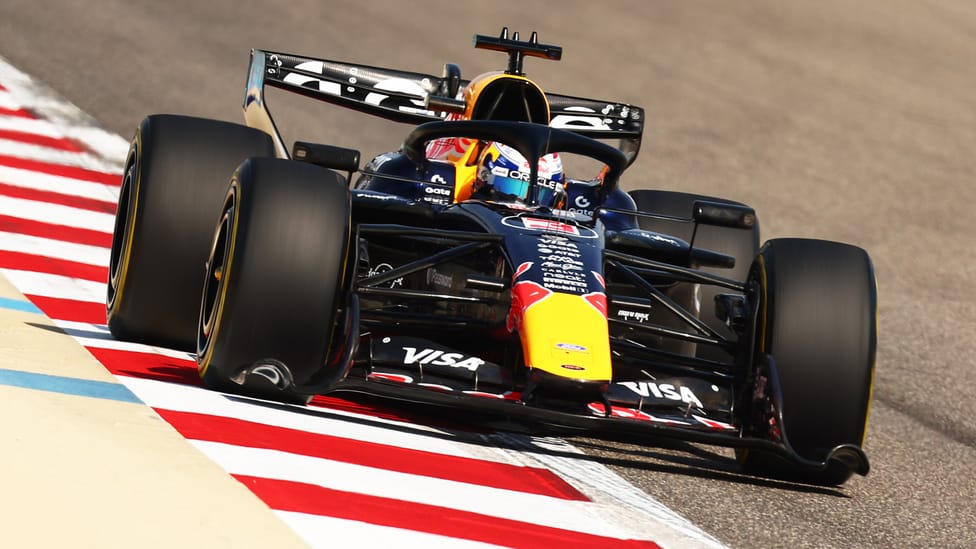
“As a pure driver, I enjoy driving flat out. At the moment, you cannot drive like that,” grumbled Max Verstappen after his first outing in the new generation of F1 cars. “That’s just not Formula One.”
Verstappen’s comments raise an important question. Not ‘is he ever not grumpy about something?’ but a bigger one: so what is Formula One, then?
According to Max, it’s about going absolutely flat-out until you win, or the car explodes, or both.
Fair enough. Except the new regulations Verstappen’s moaning about were designed to improve racing. More overtaking. Closer following. The stuff fans supposedly want.
So which is it? Flat-out driving, or wheel-to-wheel racing? Or something else entirely? What’s the point in F1?
Well, according to Formula One's website - which contains more sponsor logos than actual information - F1 is "the pinnacle of motorsport".
Great. But… pinnacle of what, exactly?
Speed? Hmm. F1 cars are very fast, yes. But don’t forget they could be much faster if they weren't hamstrung by 267 pages of regulations. Stick a McMurtry fan on the bottom, allow active aero, remove the cost caps, and you’d have cars lapping ten seconds quicker. Would it be very dangerous? Yes it would. But hell, it’d be fast.
Driver skill? Yes, piloting a furiously complex machine at high G-forces for two hours in cockpit temperatures that'd melt civilians is superhuman. But how often do we truly grasp that superhumanity? Managing tyre degradation is tougher to appreciate than this bike save.
Race action? Come on now. You'll see more wheel-to-wheel action in a single lap at your local banger track than a modern Grand Prix.
Get all the latest news, reviews and exclusives, direct to your inbox.
Engineering? Finding loopholes in a phonebook of regulations is clever. But is it exciting? No one lies awake at night thinking, “I wonder what Mercedes have done with their endplate canards?” Want to get kids excited by STEM? Show them VW’s Pikes Peak racer, or the Bloodhound LSR car.
F1 isn’t explicit which of these pinnacles it’s attempting to summit, perhaps because the answer is… none of them, really?
It might, then, be tempting to conclude that F1 doesn’t have a single point so much as a bunch of lumpy protuberances. But that would be unfair.
Because F1 is indeed the pinnacle of something. Something to which they’ll never explicitly admit.
It's the pinnacle of sport-adjacent soap opera.
Every season, more people tune in to watch F1 than MotoGP (which has better racing) or WRC (more spectacular) or pretty much any other motorsport.
Not because F1 is the fastest, or has the best wheel-to-wheel action, or is the most groundbreaking.
Because it's become something else entirely: a £2bn reality TV show featuring beautiful people, expensive machinery, exotic locations, and just enough carefully managed interpersonal tension to keep punters returning week after week.
The drama’s the product. The racing is just the plot device to give them something to argue about on Drive to Survive.
Hence why F1 fans are always furious about something. Half of them think it should be about speed. The other half think it's about racing. The other other half think it's about engineering. They’re watching different shows. But they’re all watching.
This vagueness is nothing new. Despite what Max might believe, Formula One was never an unsullied, simple test of pure driver skill – the internally-combusted equivalent of a dozen Greek athletes whipping off their kit for a couple of laps of Olympia. It’s always been an awkward dance between driving skill and engineering innovation, between speed and safety, between pushing the letter of the law and all-out cheating.
But here’s the genius: by accident or design, F1’s vagueness of purpose doesn’t hurt its modern popularity. It helps. By failing to commit to being purely about speed, or racing, or technology, F1 lets everyone project their own version onto it.
Speed fans rage when regulations slow cars down. Racing fans despair when aero ruins overtaking. Tech fans fume about cost caps. Then they can all argue about whose version is correct. For F1, that’s not a problem. That’s engagement. Controversy drives clicks.
If you disagree, that’s exactly the point. Max Verstappen complaining ‘that’s not Formula One’? Turns out that’s the most Formula One thing of all: arguing about what F1 actually is.
Get all the latest news, reviews and exclusives, direct to your inbox.