





RetroTop Gear
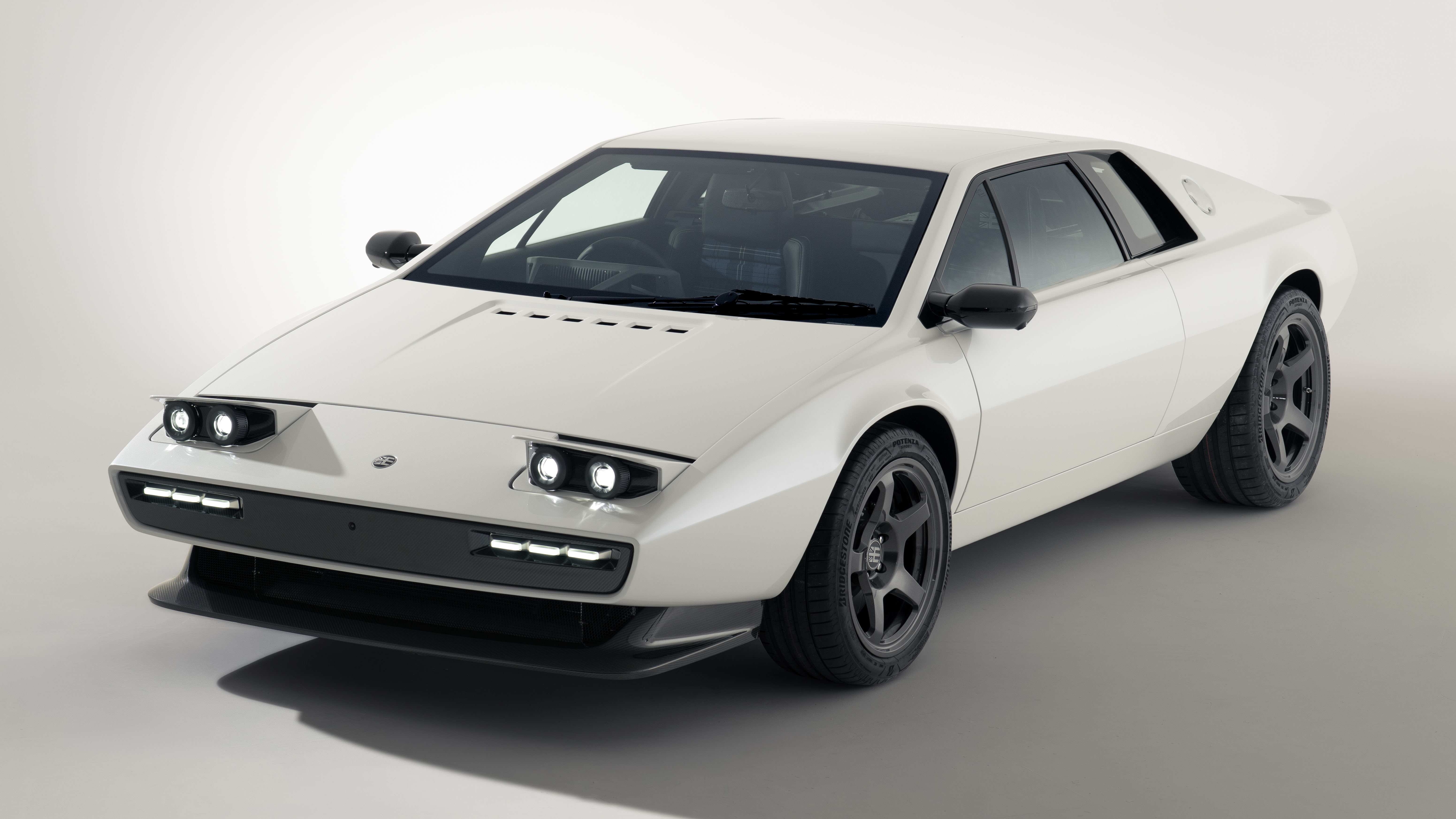
The Encor Series I is a fully remastered Lotus Esprit V8, and it looks pretty much perfect
And yes, Top Gear has already asked for a submarine conversion
Encor is a British start-up that has ‘Singer-ed’ the OG Esprit. But there’s another idea at play here: 400bhp is plenty in a car that weighs less than 1,200kg.
Any suspicion that we’ve passed peak restomod is sent packing the second you see the Encor Series 1 in the flesh. It’s stunning. It helps that it ‘remasters’ the original Lotus Esprit, a Seventies statement car that united the generational talents of Colin Chapman and Giorgetto Giugiaro, and then became one of the pop culture cars when some bloke called James Bond went submersible in it during The Spy Who Loved Me. (A top five 007 film? Discuss.)
Advertisement - Page continues below
Encor can do this because it uses a donor car, and can neatly sashay round the emissions and safety regs that have made modern cars overly heavy and complex – not to mention ruinously expensive to develop. So although this looks like an Esprit S1, it’s actually a last-of-the-line 3.5-litre V8 underneath. That version was in production until 2004, and it’s the cognoscenti’s Esprit of choice in performance terms.
“We all own or have owned Esprits and we think there’s space to do something really cool here,” Encor’s managing director Will Ives says. “There’s a push now to get back to lower power, lighter weight cars, which are hard to make new now because of all the regs.”
Developed in-house, the Type 918 engine is an all-aluminium unit, has a flat-plane crank, 32 valves, and two whooshy turbos. But there were issues. The rear transaxle did service in the Renault 25, and even with major mods the gearbox was never particularly sweet shifting. Or strong. In fact, Lotus detuned the V8 from its 500bhp-plus potential to 350 so that it didn’t lunch the gearbox. The donor car’s fundamentals are carried over here – the steel backbone chassis, engine block, gearbox casing and a few ancillaries. That’s about it. On which basis, Encor says that its S1 is pretty much a new car.
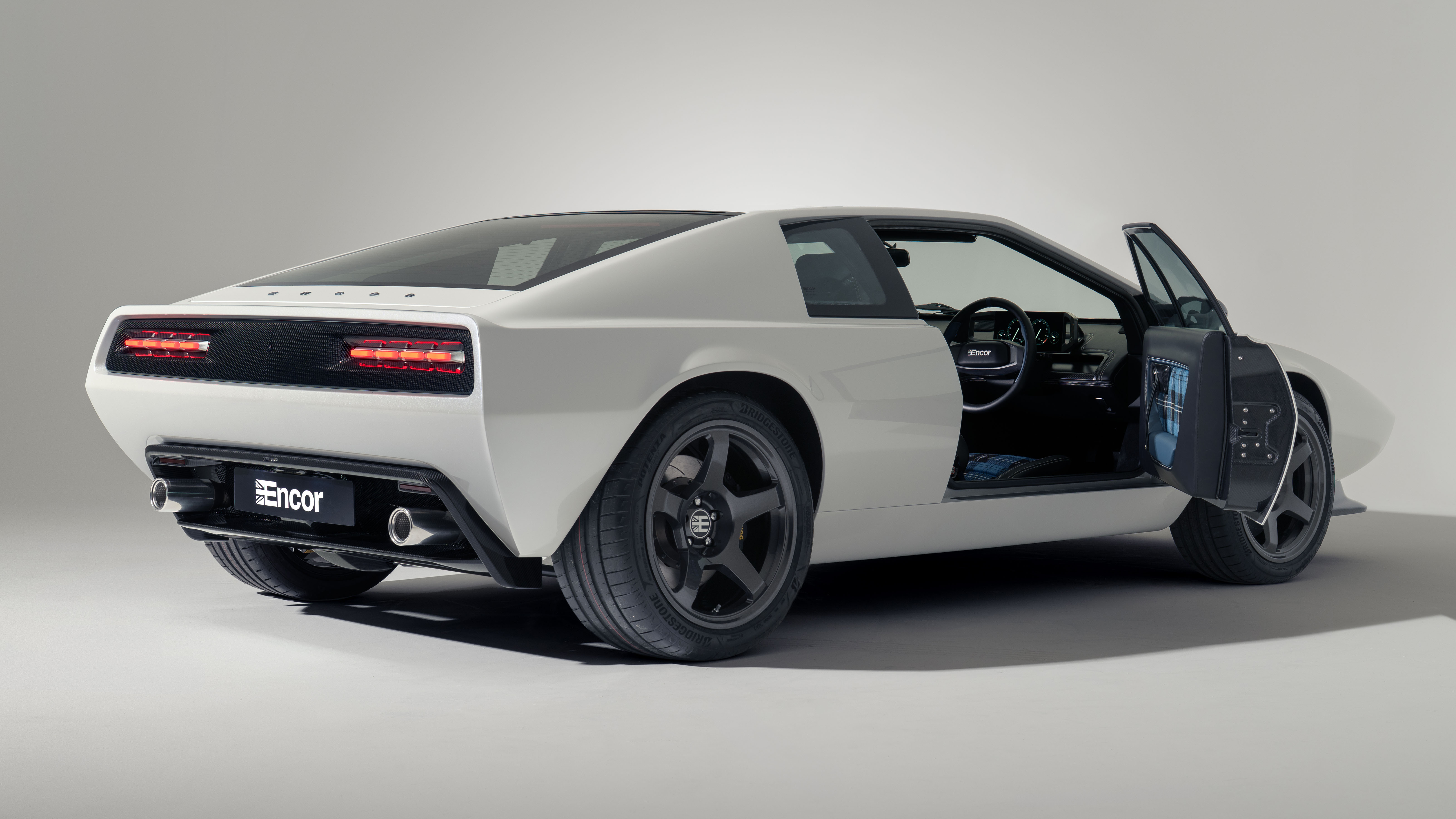
It looks damn near perfect. Because it’s based on the Esprit V8, its front and rear track are wider than the original Esprit. But this extra heft suits the car’s form, which gets closer to Giugiaro’s early Seventies concept. The line that runs around the middle of the S1 has gone; that was a cheeky fix to disguise the join where the two halves of the GRP body were glued together. Keyless entry replaces the old door handles; few will mourn their passing given that they came from the Morris Marina.
Advertisement - Page continues below
The pop-up headlights are reborn as low profile LED projectors, the old parts-bin Fiat X1/9 rear lights now similarly hi-tech. The glazing is mostly new and abuts the body with a precision that boggles the mind. Dan Durrant, who led the exterior design on the Lotus Emira, says the team 3D-scanned countless cars to establish a detailed data map on the car, and respected the original at every step.
The Esprit S1’s body had the structural rigidity of a prawn cocktail and minimal roll-over protection. The Encor remaster is made of carbon fibre, and the company has gone to British specialist KS Composites to do the work. Those are the same experts that Gordon Murray Automotive uses for its T.50, so the provenance is unimpeachable. “Carbon fibre is a design cheat code in a sense,” Durrant explains. “You can generate shapes in carbon fibre that would be difficult to do in steel using conventional processes. It also gives us a very high level of accuracy.” The result is so stiff that the Encor doesn’t need the backbone chassis, other than to maintain its identity. It’s also galvanised, vapour blasted and coated.
The V8 has been transformed. It gains forged pistons, new turbos, new impellers, a new throttle body, and an electronic throttle with a bespoke aluminium case. (It’s also visible under the rear glass for the first time.) The original’s propensity to idle lumpily should be eradicated by a new ECU. A new exhaust promises to enhance its sound. The ’box has new gears, rings and bushes, and a twin-plate clutch aids low-speed driveability. A Quaife limited slip differential elevates the Esprit’s handling even further, and the hydraulic power steering has been refurbished. Traction control is absent but may become available if clients ask. New radiators and extra intakes and ducts alleviate the original’s tendency to over-heat in stationary traffic.
The suspension has new uprights, Bilstein shock absorbers, and Eibach springs. There are new AP Racing brakes with six-pot calipers on the front, four pot on the rear, and the old fly-off handbrake has been replaced with an electronic one. The wheels are machined from aluminium billet, 17in at the front, 18in at the rear. The tyres are Bridgestone Potenzas, the most modern rubber Encor could find given the wheels’ old-school dimensions. The sidewalls remain chunky to protect the car’s legendary overall compliance.
Top Gear
Newsletter
Get all the latest news, reviews and exclusives, direct to your inbox.
The Encor has an all-new electrical architecture, and the infotainment runs the same set-up used by GMA and Pagani. The button to open the doors is hidden in the air intakes, and you drop low into an interior that’s up there with Singer Vehicle Design in terms of quality. The S1’s distinctive instrument binnacle is now fashioned out of two pieces of aluminium billet and sits on beautiful exposed brackets. The wheel is all-new but has the same twin-spoke design as the original. The entire dash structure is made of carbon fibre, and there’s visible carbon in the sills. Composite construction helps simplify and lighten the doors.
A central touch screen and new climate control system – with hidden air vents – complete the cross-decade mash-up. The gear-lever sits a little high for our tastes, but gets a pass because it’s attached to a manual gearbox. The Tartan trim is another callback to the S1; it’s a tricky material to work with by all accounts, but a reminder that Lotus’s designers were influenced by designers like the late, great Vivienne Westwood. Norfolk punks, you could say. A 360-degree parking camera is a welcome update, as is a premium audio system.
Lotus made 1,237 Esprit V8s, not all of which are still accounted for or in especially good nick. Encor is confident that sourcing the intended 50 should be doable. (The very desirable limited run Sport 350 is sacrosanct, don’t worry). A prototype is currently doing the hard developmental yards, with the first customer car due to be delivered in April. Encor has also financed everything without needing to take customer money upfront to pay for it all. Like Singer and Kimera – Top Gear’s recently crowned PCOTY – Encor intends to provide a knock-out customer experience programme.
That the Encor is not a Porsche 911 is both a master-stroke and an obstacle. Is the Lotus Esprit a big enough draw? It is when it’s done as beautifully as this. The company is run by ex-Aston and Lotus personnel along with the team from Essex-based engineering firm Skyships, all of whom are hugely experienced. Needless to say, prospective owners will be required to dig deep: you’ll need around £550k to get into one (including donor car and local taxes). No word yet on whether a submarine conversion is on the options list.