





RetroTop Gear
'There’s a push to get back to lower power, lighter weight cars': up close with the Encor Series 1
No classic is safe from the clutches of the restomod movement. Now it's the Lotus Esprit’s turn for an... Encor
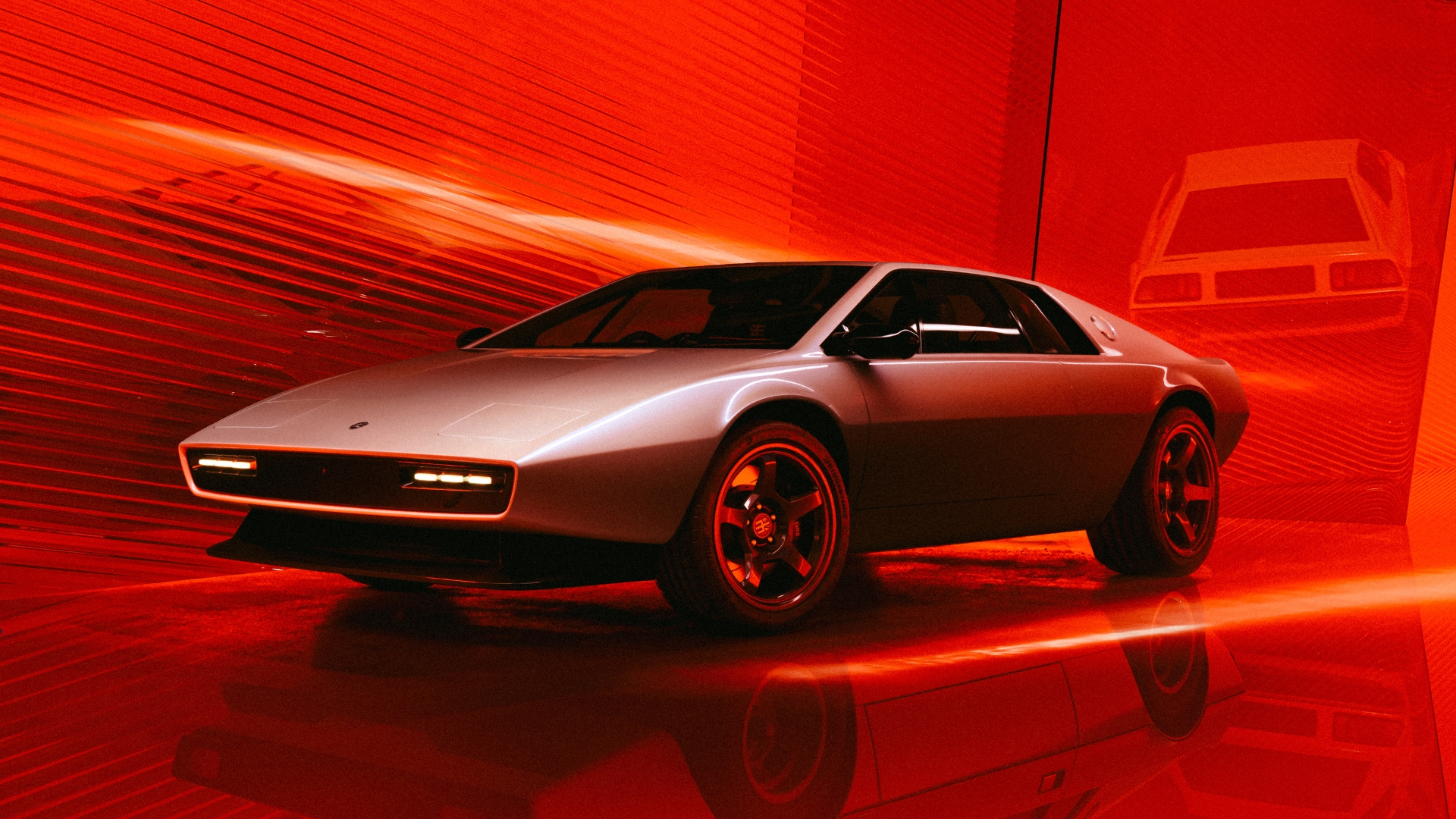
Wait, what… another restomod? Any fatigue is extinguished the nanosecond you set eyes on the Encor Series 1. Sounds like a photocopier, but rare indeed is the car that looks this good straight out of the box.
Sure, it helps no end that it ‘remasters’ the original Lotus Esprit, a 1970s statement car that united the maverick engineering talents of Colin Chapman with the audacious design vision of Giorgetto Giugiaro, and then became globally famous when some bloke called James Bond drove it into the Tyrrhenian Sea in The Spy Who Loved Me. That’s quite the USP.
Advertisement - Page continues below
Encor, which consists of senior ex-Aston and Lotus personnel along with a British engineering firm called Skyships, is addressing a very modern malaise, though. New cars might be fast and clever but they’re also porky, complicated, and often too powerful. So this new machine is a philosophy as well as a car. It emphasises the stuff that made the original Esprit so cool – the wedge design and its amazingly alert chassis – but junks the stuff that compromised it. Most importantly, it commits to the idea that 400bhp is plenty in a car that weighs less than 1,200kg.
Photography: Olgun Kordal

Encor can do this because, of course, it uses a donor car, and isn’t bound by Byzantine emissions and safety regs. So although this looks like an Esprit S1, underneath it’s actually a last of the line 3.5-litre V8, in production until 2004. Peak Esprit, in terms of dynamics and performance. The Type 918 engine was all aluminium, had a flat plane crank, 32 valves, and two turbos. The rear transaxle originated in the Renault 25, but even with major Lotus modifications it was never particularly sweet shifting. Or strong. In fact, it detuned the V8 from its 500+bhp potential to 350 so that it didn’t lunch the gearbox. The donor car’s fundamentals are carried over here – the steel backbone chassis, engine block, gearbox casing and a few ancillaries. Encor insists, with some justification, that its S1 is pretty much a new car.
Dan Durrant, who led the exterior design on the Lotus Emira, has managed to preserve the original’s form, although its V8 powertrain means it’s wider and has more heft than Giugiaro’s lissom mid-1970s dart.
Advertisement - Page continues below
The line that runs around the middle of the S1 has gone; that was only there to disguise the join between the two halves of the GRP body. The Morris Marina doorhandles are no more. The popup headlights are reborn as low profile LED projectors. The glazing is mostly new and is flush with the new shell. Detail stuff like this was never a Lotus forte back in the 1970s. The shutlines are tight, the tolerances millimetrically precise.
And it gets better. The Esprit S1’s body had the structural rigidity of a trifle and minimal rollover protection. This one is made of carbon fibre, the work done by KS Composites in Leicestershire. That’s the firm responsible for the composites on the GMA T.50, a 24-carat endorsement if ever there was one. “It’s a design cheat code in a sense,” Durrant explains. “You can generate shapes in carbon fibre that would be difficult to do in steel using conventional processes. It also gives us a very high level of accuracy.” In fact, the Encor S1 is so stiff it doesn’t need the backbone chassis, other than to maintain its identity. The original was galvanised, but it’s also been vapour blasted and coated here. So corrosion shouldn’t be an issue.
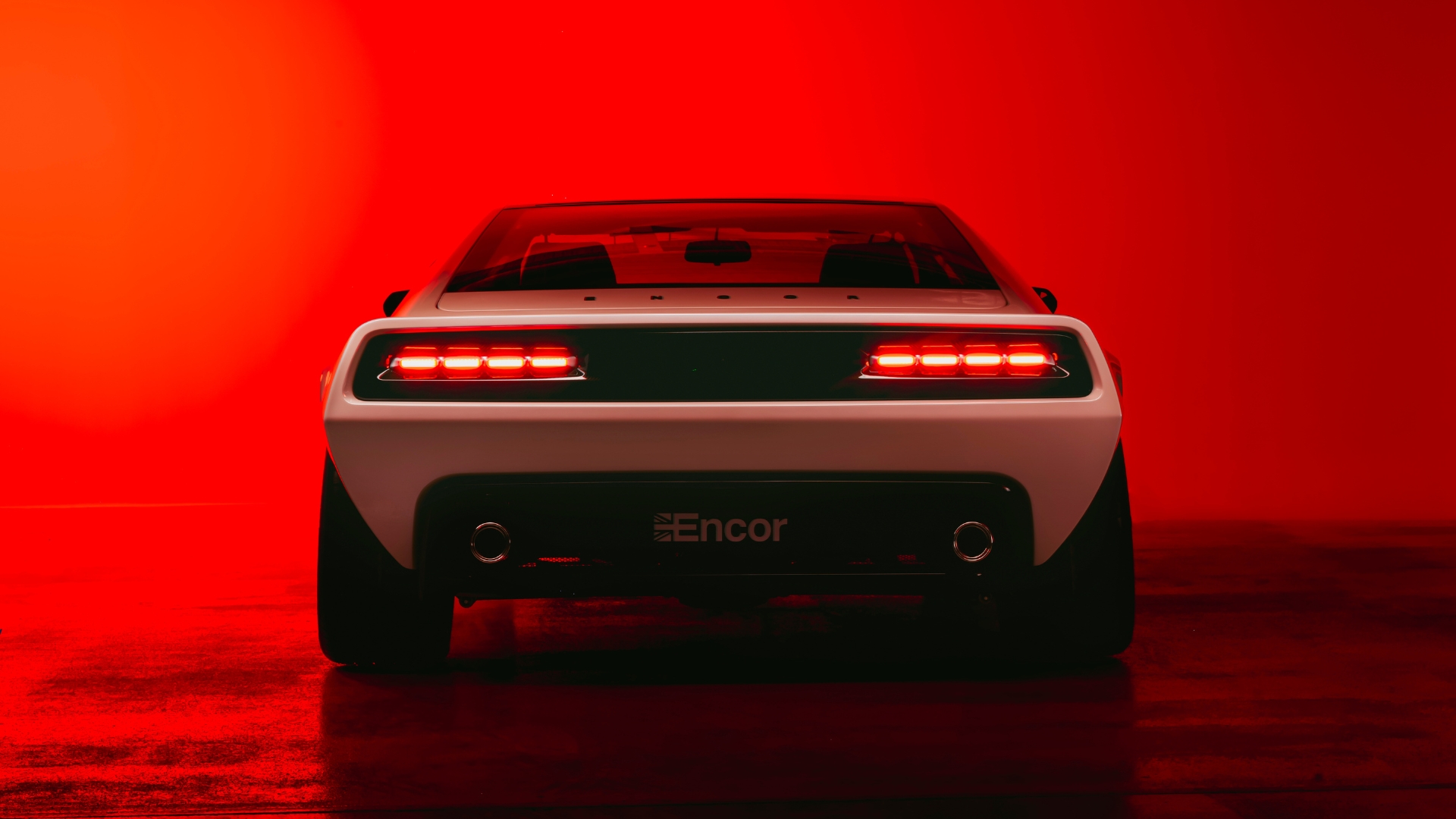
The engine has forged pistons, new turbos, new impellers, a new throttle body, and an electronic throttle with a bespoke aluminium case. The original was a lumpy idler but a new ECU should eradicate that. A new exhaust promises to sweeten the soundtrack. The gearbox has been significantly upgraded, too: there are new gears, rings and bushes. In comes a twin plate clutch, and Quaife LSD to amplify the original’s handling smarts. Not that the Esprit V8 was lacking in that department. See also the hydraulic power steering, which has been refurbished rather than altered.
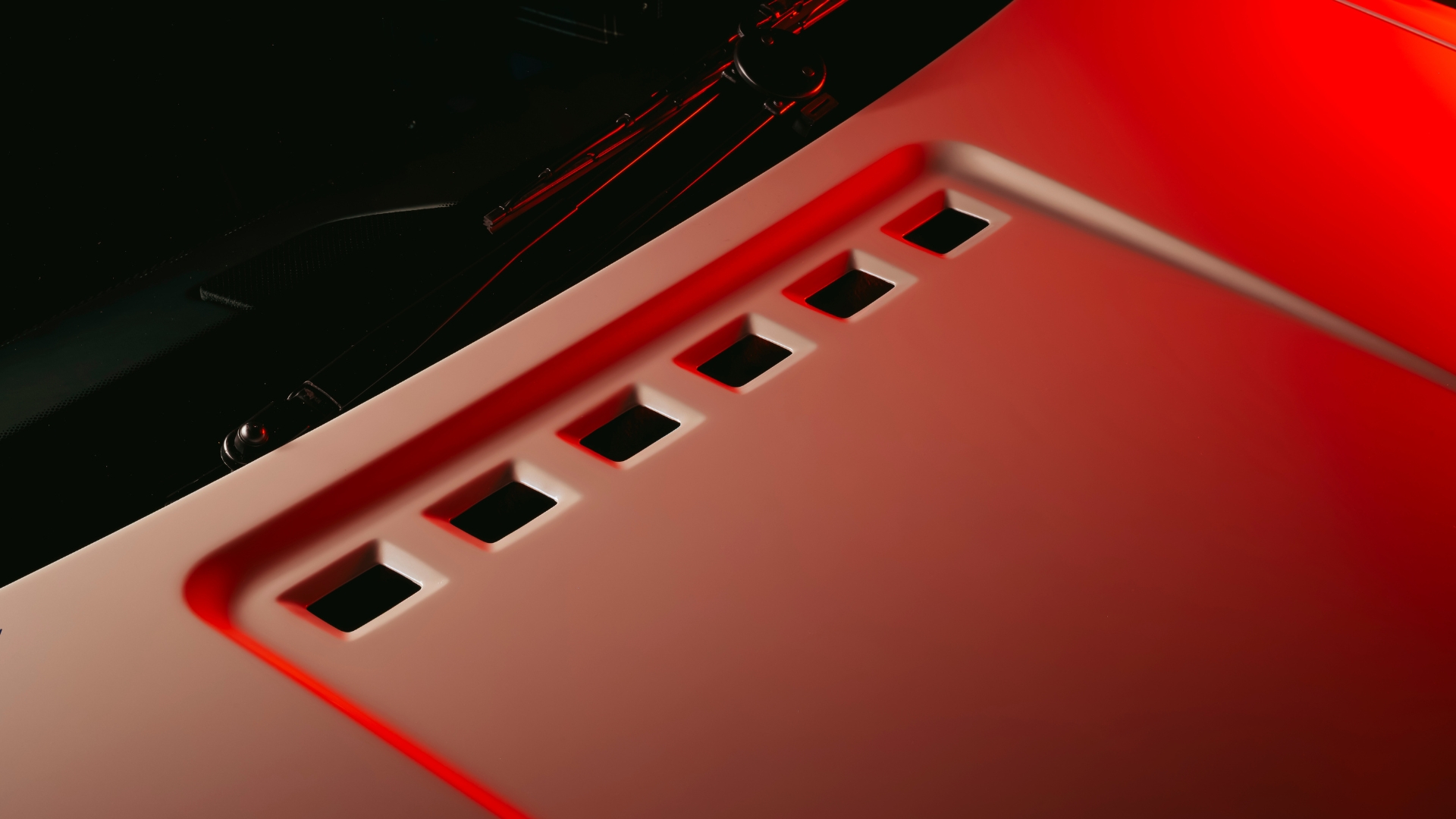
Esprits are notorious for overheating, so the Encor has new radiators. At the rear, cooling air is drawn into the engine through intakes by the rear quarter lights. There’s also a little strip at the top of the tailgate for more cooling. And there are more ducts underneath to vent hot air.
Top Gear
Newsletter
Get all the latest news, reviews and exclusives, direct to your inbox.
The suspension has new uprights, Bilstein shock absorbers, and Ibax springs. There are new brakes with six pot calipers on the front, four pot on the rear, and the old fly-off handbrake has been replaced with an electronic one. The wheels are machined from aluminium billet: 17in front, 18in rear. The tyres are Bridgestone Potenzas, the most modern rubber usable given the wheels’ old school dimensions. The sidewalls remain chunky to protect the car’s overall compliance. Lotus is famous for making cars that ‘breathe’ down the road, and this’ll do that too.
The Encor has an all new electrical architecture, and the infotainment runs the same setup used by GMA and Pagani. So not only is there connectivity to fry the mind of any Esprit owner, it should also be reliable. That’s Skyships’ bread and butter, after all.
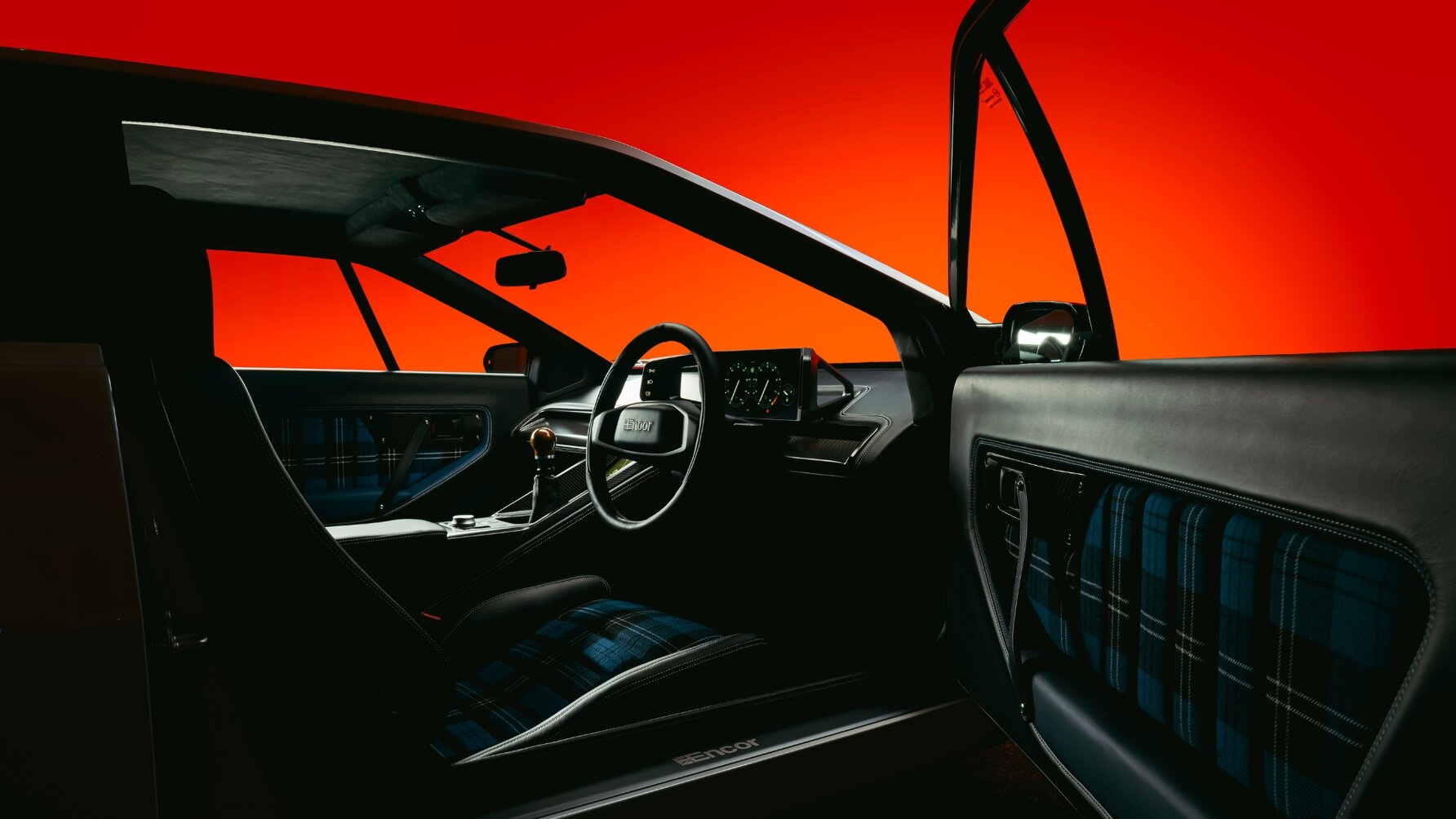
The button to open the doors is hidden in the air intakes, and you drop low into an interior that’s more extensively reworked than any restomod we’ve ever sat in. The instrument binnacle looks familiar but it’s been fashioned out of two pieces of aluminium billet. The supports are artfully done. The wheel is new but copies the S1’s distinctive design. The entire dash structure is made of carbon fibre, and there’s visible carbon in the sills. That helps simplify and lighten the door structure. A central touchscreen and new climate control system – with hidden air vents – complete the generational mashup.
Then you notice the gearlever, mounted high as per Colin Chapman’s preference, topped with a knob made of oak. Equally parochial, and brilliantly so, is the tartan trim. It’s another callback to the original, and a reminder that Lotus’s future focus didn’t just apply to its revolutionary F1 cars. Giugiaro did the exterior; inside, the company’s designers were influenced by contemporary street fashion and Vivienne Westwood. Norfolk punks, basically. A 360° parking camera is a welcome update, as is a premium audio system, also developed by Skyships.
Lotus made 1,237 Esprit V8s, not all of which are in particularly good shape. Encor is confident that sourcing the intended 50 should be doable. It has no intention of butchering the desirable limited run Sport 350 iteration or any other garage queens. A prototype is up and running, with the first customer car due to be delivered in April. Encor has also financed everything without needing to take customer money upfront to pay for it all. Like Singer and Kimera – Top Gear’s recently crowned PCOTY – Encor intends to provide a full customer experience programme.
“Between us, we’ve worked with a lot of small volume manufacturers, we’ve seen the journey someone like Pagani has been on,” managing director Will Ives says. “We also all own or have owned Esprits and we think there’s space to do something really cool here. There’s a push now to get back to lower power, lighter weight cars, which are hard to make new now because of all the regs.”
The Encor will also be ludicrously exclusive, not least because prospective owners will need around £550k to get into one (including donor car and local taxes). That’s big money for a reborn Esprit, but the execution here is mesmerising. Just don’t drive it underwater.

Trending this week
- Fail of the Century
Bingo wings: why the MkIV Renault Megane was a fail
- Top Gear Advice
Here are 17 cars that’ll (probably) do 300,000 miles or more
- Car Review
Volkswagen ID. Polo