


TechTop Gear
10-70 per cent in five minutes: is 'flash charging' the next big thing for EVs?
BYD's tech wants to make recharging an electric car as fast as refuelling a petrol one...
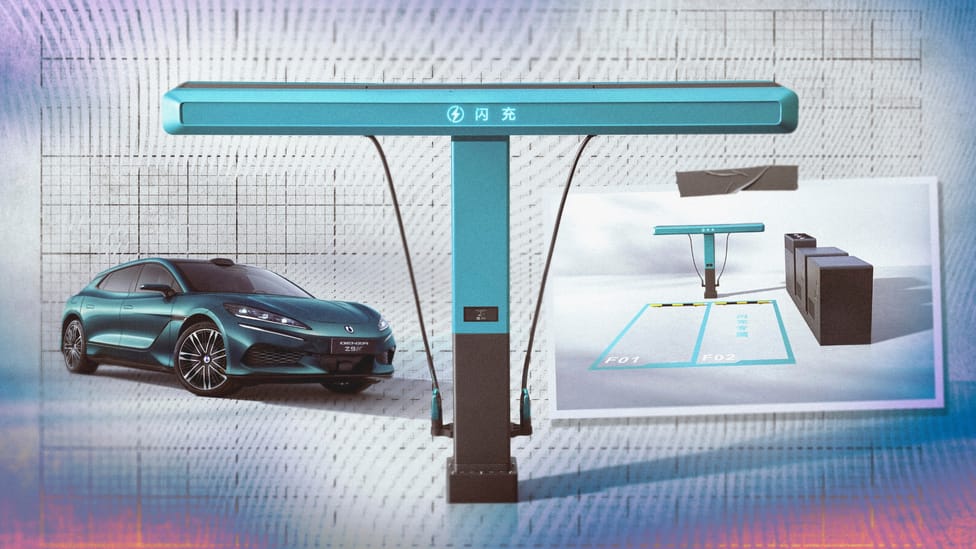
Lots of startups tell me they've sorted electric-car charging at petrol-stop quickness. It hasn’t taken off, for two reasons. The battery chemistry itself, but also about getting enough compatible cars to support a network of the chargers. Chicken, egg, and all that. Now BYD claims to have the answer. BYD was founded as a battery maker, and still is at heart. It’s also accelerating car sales here in Britain. The plan is for 600 ‘Flash Charging’ connectors in the UK within a year.
They can do 10-70 per cent in five minutes on the Denza Z9 GT. That’s 74kWh added. Want more? It’s 10–97 per cent in nine minutes. To do that, Flash Charge power goes to 1,500kW. Yes, 1.5 megawatts. To ease the grid connection stationary buffering batteries are built into the charger, plus local solar. The connector is your standard CCS socket.
Advertisement - Page continues below
So if the chargers are the chicken, what about the egg – the battery? (Feel free to reverse the analogy.) The cars still use the company’s ‘blade battery’ architecture. That means LFP chemistry, and cell-to-pack layout. But it has taken six years of careful tweaks to the layer structure, the chemistry and the cooling to get it to robustness.
The enemy to any rapidly charged battery is heat. High charge currents generate heat, which damages the cells. BYD has attacked it on three fronts. Firstly, lower the cells’ electrical resistance, which reduces heat generation. Second, increase the cell’s tolerance to whatever elevated temps are generated. Third, improve the cooling.
Resistance is cut by using an ultra-thin separator layer. Lots of nano-level engineering and structural optimisation here. Then the anode and cathode are both better optimised to accept and release the lithium ions. All of which, says BYD, means the pack is actually more robust against repeated rapid charges than the ones it has out there now. It’s also a bit more energy dense.
BYD tells us there’s no restriction on other make cars using the Flash stations. Of course their own charge speed limit won’t be overcome, so if your car needs 40 minutes on a 150kW charger it’ll still need 40 minutes. No surprise BYD is considering a plugged-in time limit, or ramping up the bill for cars that sit there too long, but isn’t being specific yet.
Advertisement - Page continues below
Top Gear
Newsletter
Get all the latest news, reviews and exclusives, direct to your inbox.