


Tech
Top Gear
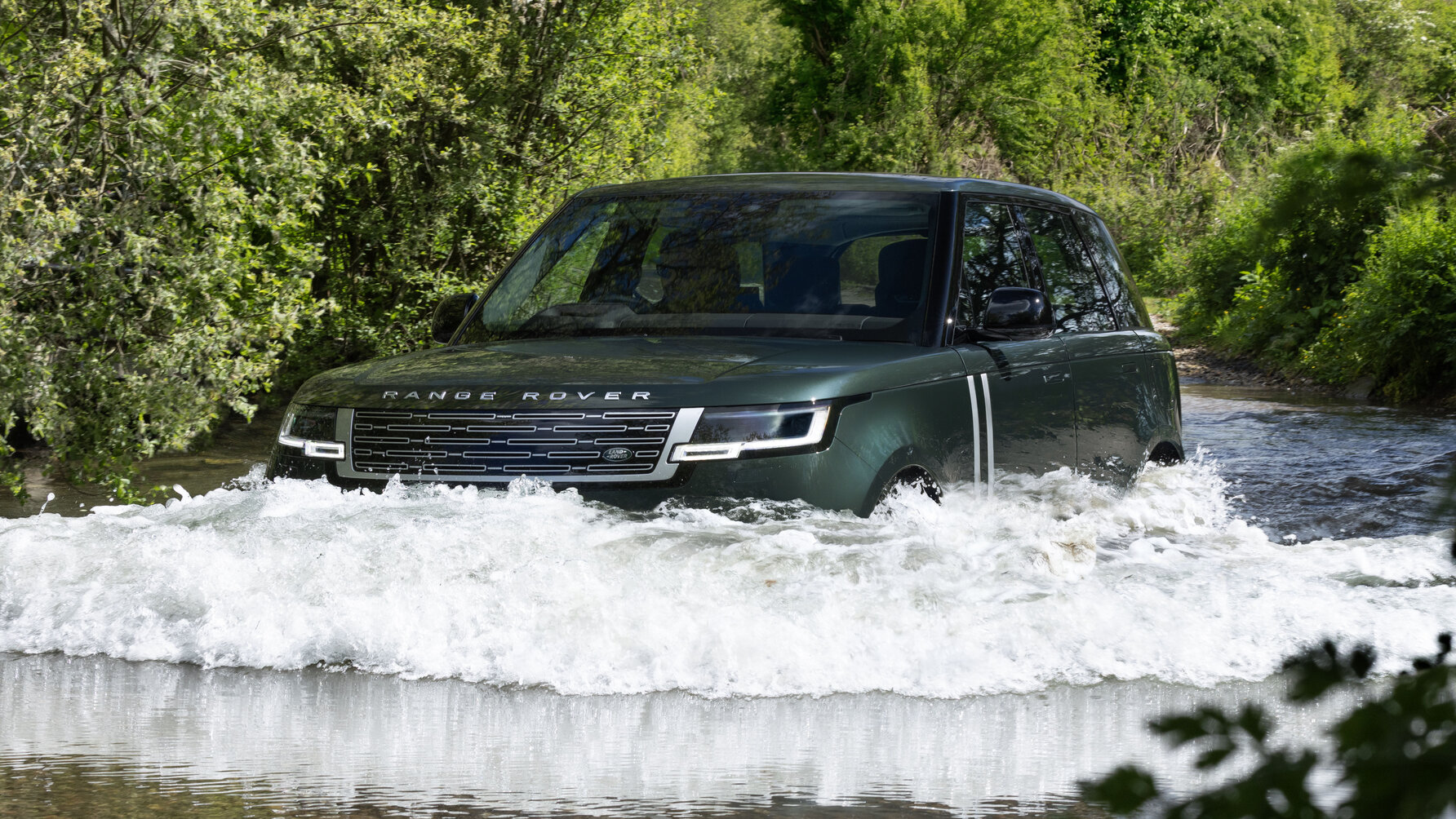
Behold: the new Range Rover Electric, and yes, this EV can wade through water
Lots of tech, lots of ability, lots of... Range Rover - can this big, luxury electric car succeed?
A vast amount of tech has been thrown at the electric Range Rover, with the simple aim of making it just a Range Rover. Or more accurately of making it the Range Rover that we all think existed before, but never really did.
A Range Rover, we think, has a fabulously refined powertrain. In reality of course even a well-muffled V8 engine and superbly calibrated eight-speed gearbox can never be as smooth, quiet or proportional to inputs as an EV, not even a decade-old Renault Zoe. By the same token, we all think a Range Rover has near-perfect off-road traction systems, but actually they're nowhere near as subtly effective at controlling wheelspin with a combustion engine as they can be with electric motors.
Advertisement - Page continues below
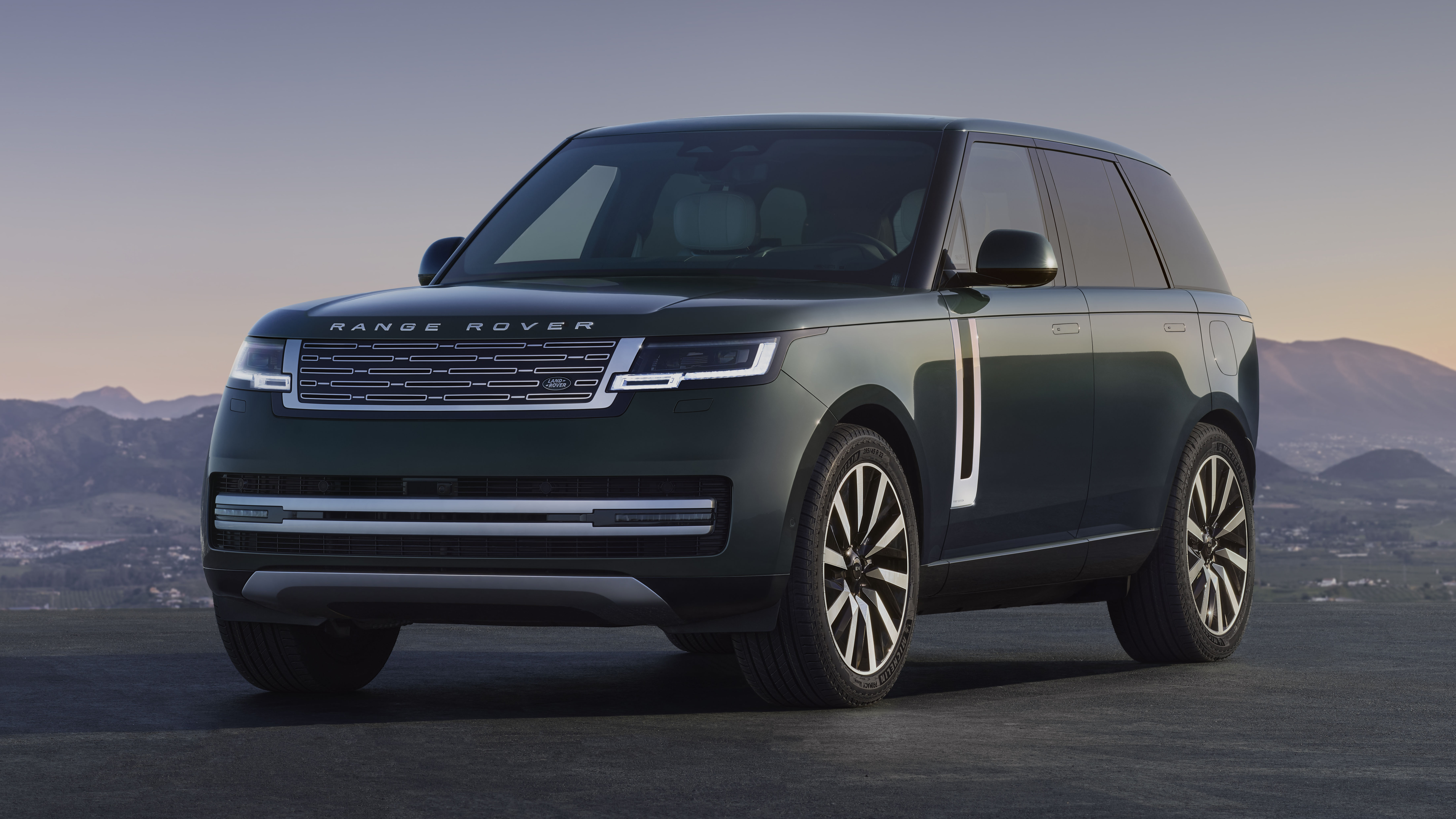
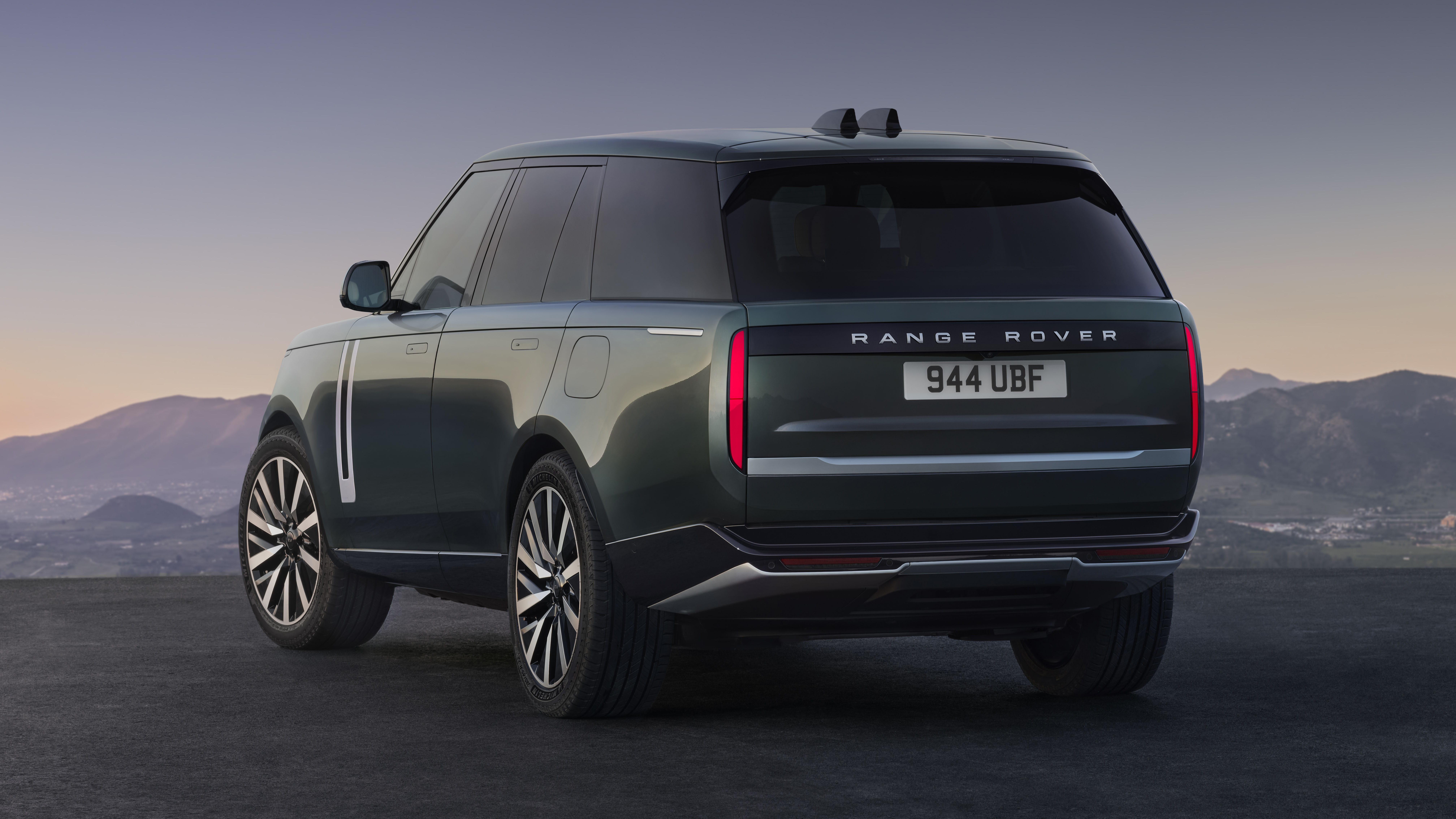
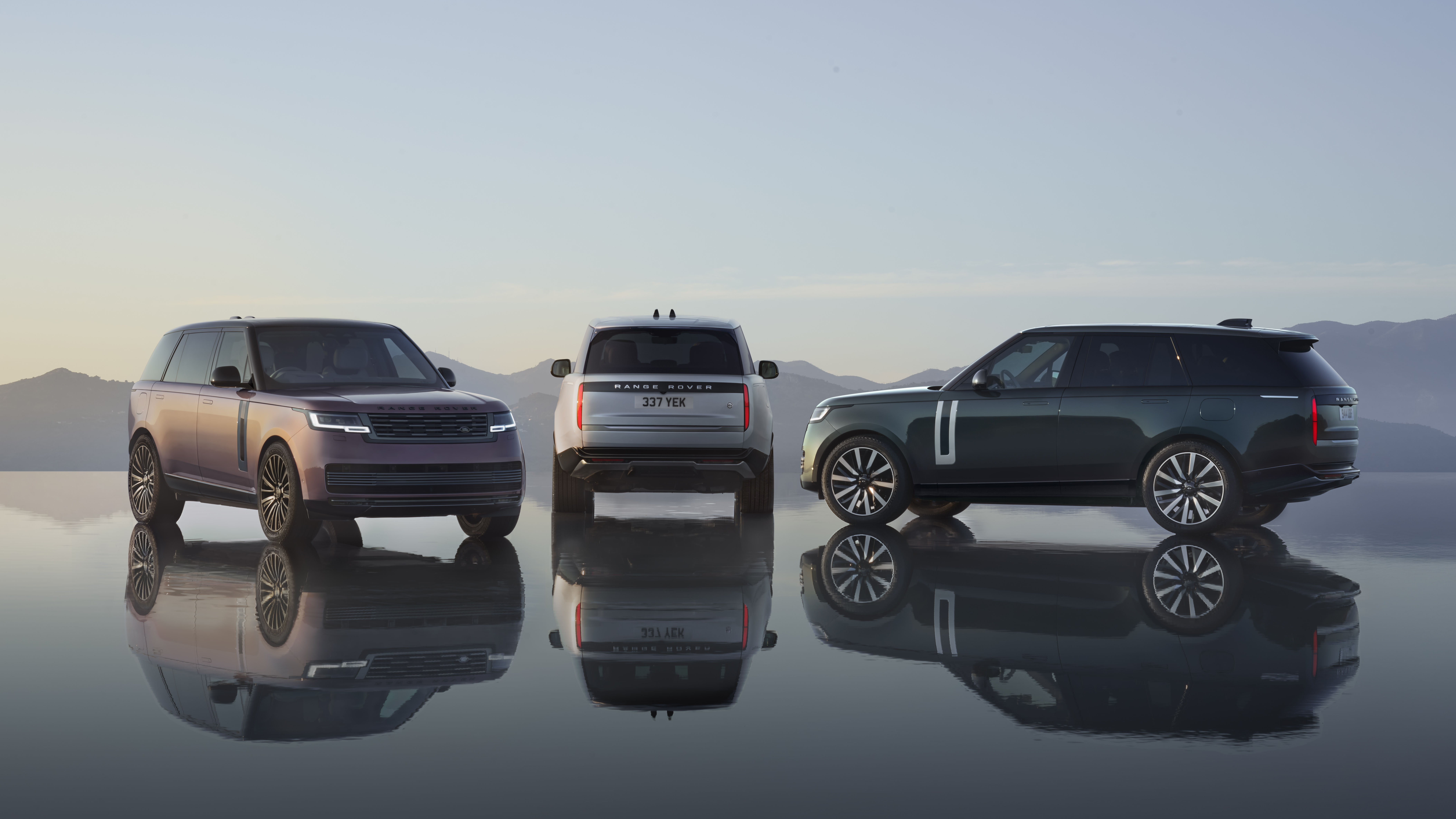
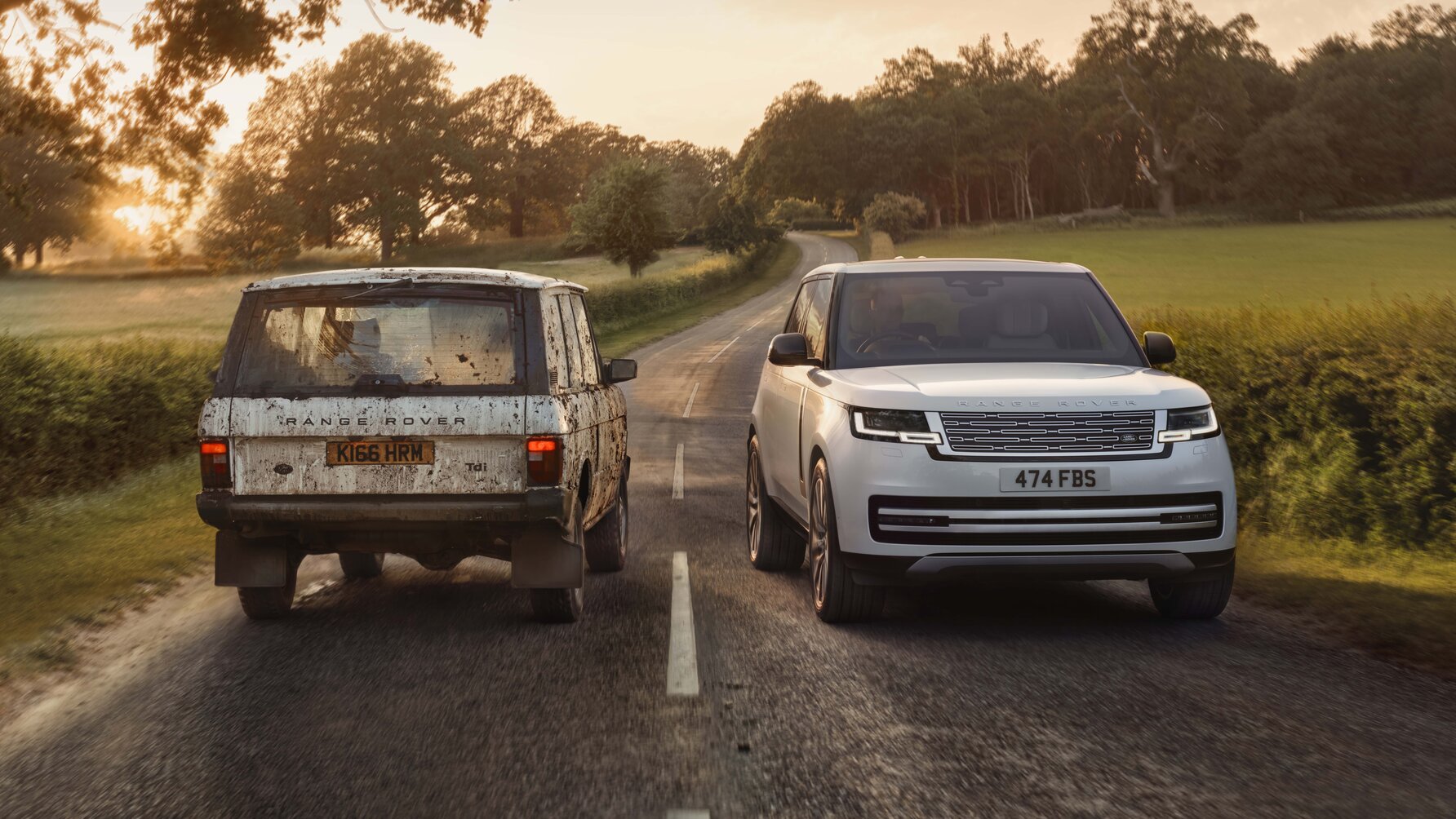
This explains the 'nothing to see here' visuals. The Range Rover Electric looks like what it is: a Range Rover. The grille is blanked off (but at a glance appears otherwise) and there are aero tweaks in the underbody and wheels – anti-drag measures that are good for 10 miles' motorway range. Oh and there are no exhaust pipes, but anyway in the petrol car they're coyly hidden behind the rear valance. So you might already have seen one – they've been testing for some years, with no camouflage.
Prices start at £154,070 in Autobiography spec, and head towards a quarter million. Before spluttering at that cost, you might like to check the money combustion Range Rovers command these days.
The raw numbers keep it at the sharp end of the luxury EV phalanx. A honking battery capacity of 118.5kWh unlocks a WLTP range of 372 miles even from a car that by its size and nature is never going to be efficient. Expect a real-world range of 300-plus miles, then. (You won't get much further on the V8's £150 tank. And the Electric accelerates quicker.)
The 0-62mph time is 4.5 seconds, thanks to an overall output of 550bhp. Actually as with most EVs that's limited by the power the battery can deliver; each of the front and rear motors is rated at 326bhp, more than half the combined total, so they have some headroom for torque vectoring.
Advertisement - Page continues below
The electrics run at 800 volts, enabling a 350kW peak charge power, or a 22-minute stop for 10-80 per cent. Not the world's very briefest, but you're gulping in a whole big total of electrons. It also has split-pack charging so can use older sub-150kW 400V chargers, if you're patient enough. It also accepts useful 22kW three-phase. There's an AC input on one rear three-quarter panel, and an AC plus DC combo on the other.
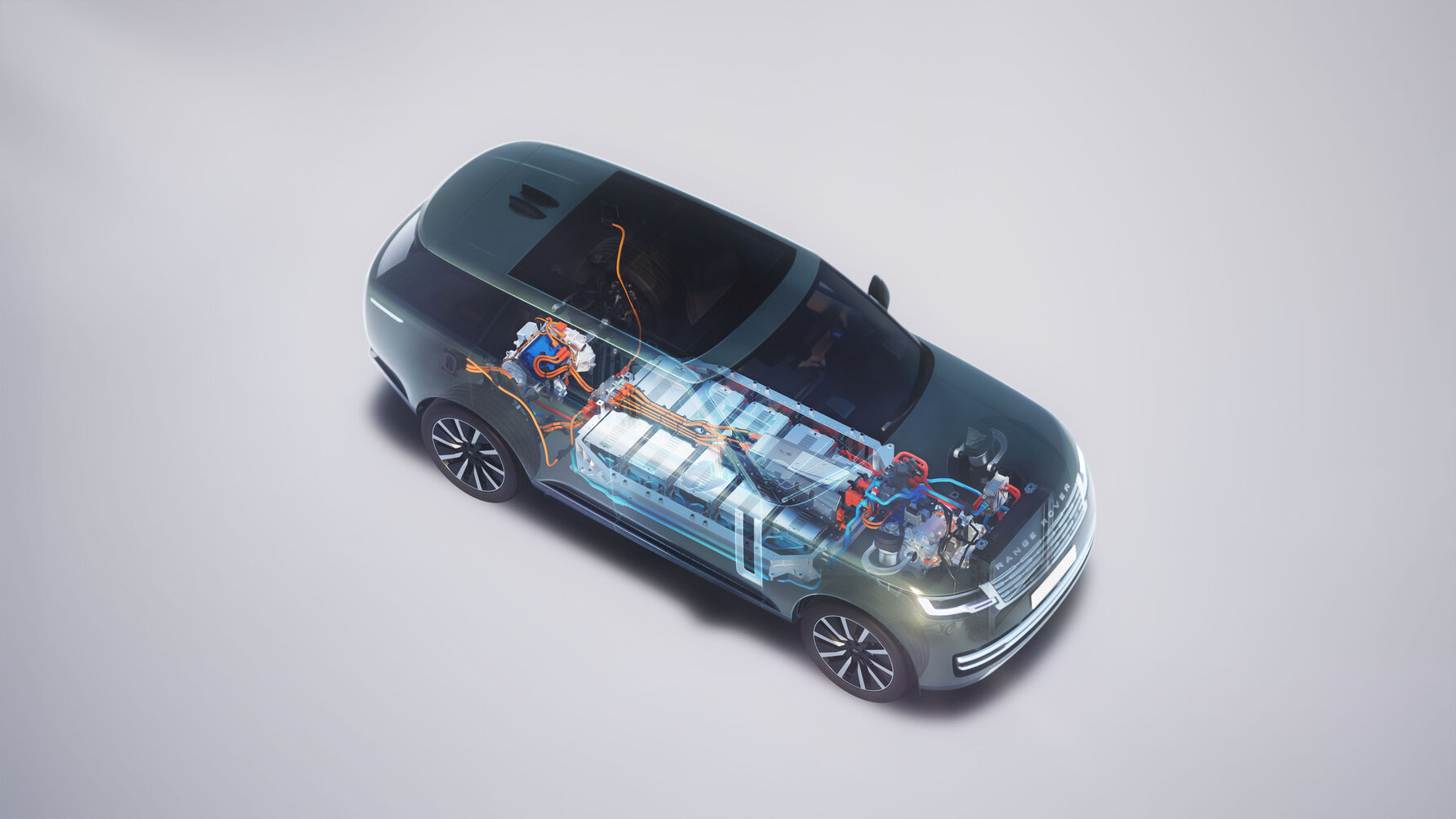
Inside, boot and people space are as for other Range Rovers. The depth of the battery pack means a slight loss of ground clearance, just 18mm. It'll still wade to 900mm. Think about that. It's lapping over the top of the tyres, fully submerging the battery, motors and high-voltage electronics. At that point it's actually very close to floating, and if the suspension senses that's happening it extends another 60mm from the normal max ride height.
Because the C of G is lower than the combustion car's, the active anti-roll system has been done away with, saving some weight and complexity, but four-wheel steering remains. The Electric is 80kg heavier than a features-matched PHEV, but in Range Rover terms that's gossamer.
This aluminium platform, known as MLA-Flex, was always designed for three sorts of power: combustion, plug-in hybrid and electric. So everything fits neatly in the new version. Also, if the balance between buyers of the three powertrains changes, that won't be a headache because all go down the same production line in Solihull.
Top Gear
Newsletter
Get all the latest news, reviews and exclusives, direct to your inbox.
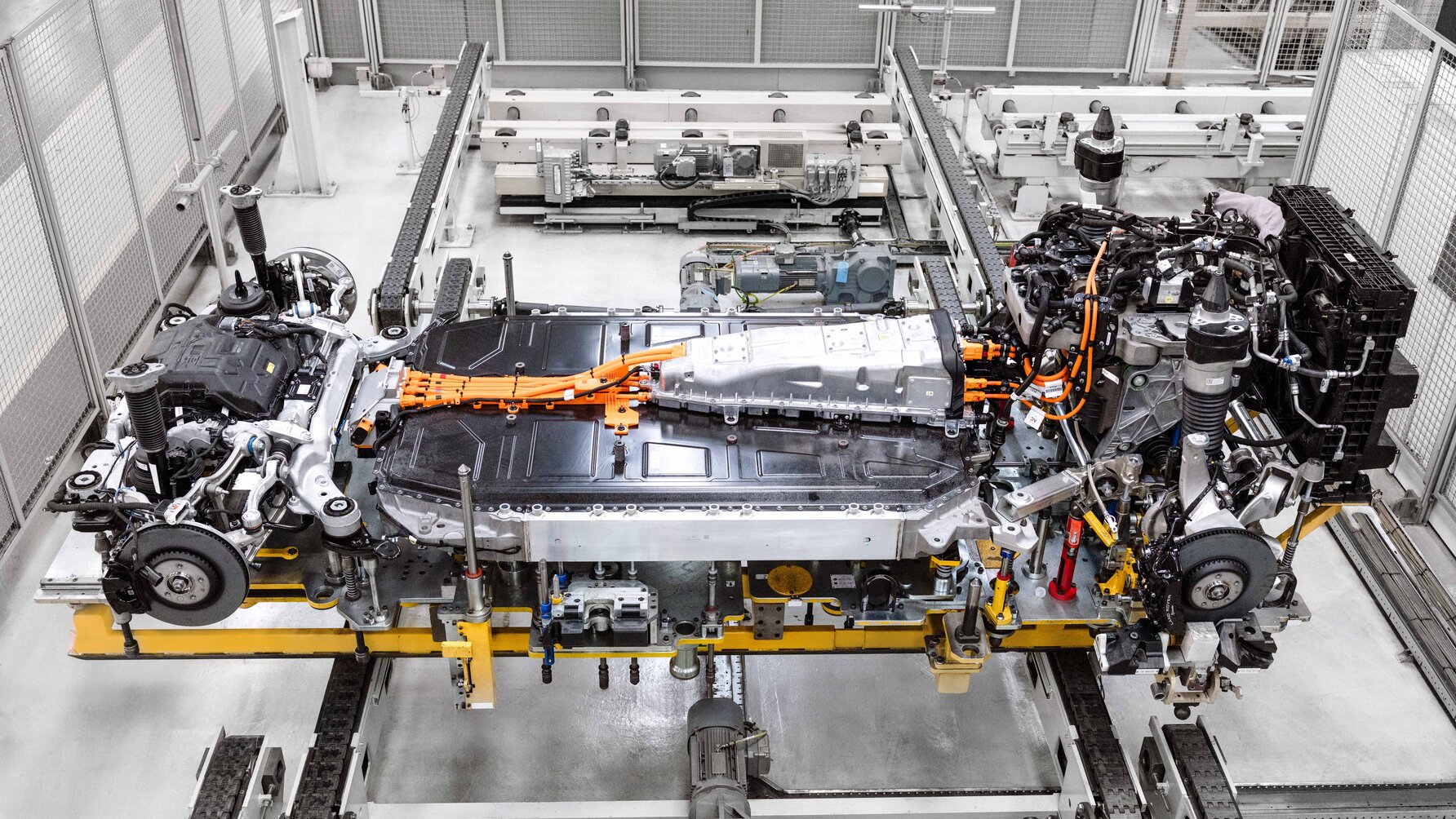
Headline figures done, let's now get into the boondocks of the EV tech and packaging. The battery slab is under the main floor, and then the high-voltage charge and battery management system is shaped to fit above it, in a tapered case closely matching the shape of a gearbox.
Meanwhile under the bonnet is a large but worthwhile block of valves and plumbing that move heat around the car – battery, motors, electronics, cabin – from where it's in excess to where it's short. No froot then, but the normal boot is big enough surely, and you wouldn't want to be leaning over a grubby front bumper.
Despite getting a head start in EVs with the Jaguar I-Pace, JLR's engineers carried over nothing. Lovely car though it was, the I-Pace was hardly a paragon of efficiency, and is now showing battery module failures. Next they looked for external suppliers for motors, inverters and batteries. None met the requirements, so JLR decided to go it alone. Which has taken time. It was 11 years ago that the platform was first drawn up.
The first in-house plan was to use an induction motor at the front, because they are simple and have no freewheeling losses, and permanent-magnet motor at the rear because they can be more power-dense than induction motors and have better low-speed torque than the all-coil types. The engineers built prototypes and headed off to the desert. Where they found that driving up sand dunes in fierce temperatures caused that front induction motor to overheat and lose power.
The solution was to abandon that motor and its electronics, and instead use a duplicate of the PM motor from the rear. That caused a delay of more than a year, because they had to re-do the packaging, re-calibrate it all, re-test, and re-jig the supply chain for double the number of rear-end drive units.
These motors' rotors consist of a stack of 0.2mm circular laminations through which the electromatic flux circulates. Making them thinner than the industry 0.3mm norm helps that happen more efficiently. Channels in the laminate stack, the cross-sectional shape of pretty snowflakes, carry cooling lubricant. The flow of that oil depends on drive mode, so when you want maximum efficiency in gentle driving, the pumping is slower.
Bolted to the motor case on each axle are the inverters. As normal these days they're the silicon-carbide kind. That doesn't only help efficiency but also, because they switch more quickly, they let the traction control operate more smoothly and subtly.
Why not four motors? That would spoil efficiency, and their theatrical tank-tun ability is, say the JLR engineers, moot. It can't be used if you're in ruts, and if you're on any kind of hillside you just slide down.
The battery is the cell-to-pack construction. That helps energy density, but if something goes wrong it's not like you can easily replace a module, so the whole pack unbolts for specialist repair. Also, every car's battery is constantly sending data on cell-level state of health to JLR's AI analytics lab, and that can send fixes to the car – voltage and thermal management – without the driver even knowing.
Each cell is surrounded by aerogel, a rigid foam that allows for expansion and contraction during heat cycles, and isolates fire. NASA used it in the newest lunar rover. The battery has cooling/heating plates top and bottom, and a double skin beneath to absorb the odd off-road ding.
Remember I said a Range Rover Electric has unprecedented powertrain silence? That needs qualifying. There are two issues. First, when you take away the noise of engine and exhaust, you hear the tyres and wind more. Second, there is noise from the electric drive. Even the big wires that connect it all together issue quite a hum – think of grid transformers and wires on pylons. So they did a mass of simulation, plus installed hundreds of mics around test cars, figuring out the noise sources and paths, and staunching them. Finally, the mid-spec cars with Meridian hifi get noise cancellation with speakers in the headrests.
You can also switch on a synthesised noise, which varies in pitch and volume with your accelerator input and speed. It's based on the F-minor chord, and sounds a lot more agreeable than many of the kind.
At the audio pinnacle, there's the option of 21 electrostatic panel speakers around the car. They're lighter than coil cones, use much less power and produce absolutely captivating music, in my experience unprecedented in its clarity, spaciousness and detail.
So there's lots of electric-car tech, and luxury-car tech. But back to the Range Rover bit, the way it goes along the road and off it.
It uses two-chamber air suspension at each corner, so can vary its spring rate by isolating one chamber and reducing the air volume. That's used to control pitch in braking, and all the time to firm things up when the car's in dynamic drive mode. Adaptive dampers join that party too.
On the 'transmission' selector there's an S position, which get you single pedal drive: it uses stronger regeneration and applies the discs to bring you to a stop at up to 0.2g. The engineers call it a chauffeur mode. Otherwise you have to dive into the screen to alter regen (no paddles here). So toggling S is mostly all you'll do.
It's good enough – easily – to find buyers
Going off-road, the fact e-motors give max torque at zero revs means there's no need for a low-range transfer box, so you don't have to stop to engage that. You've got the usual terrain modes that reconfigure accelerator action, suspension height and traction control: an auto-sensing one, plus sand, rock crawl, mud/ruts, and grass/gravel snow. If any of them get much real-life use it'll surely be the last of those, for freezing weather or the car park fields of a rainy Goodwood.
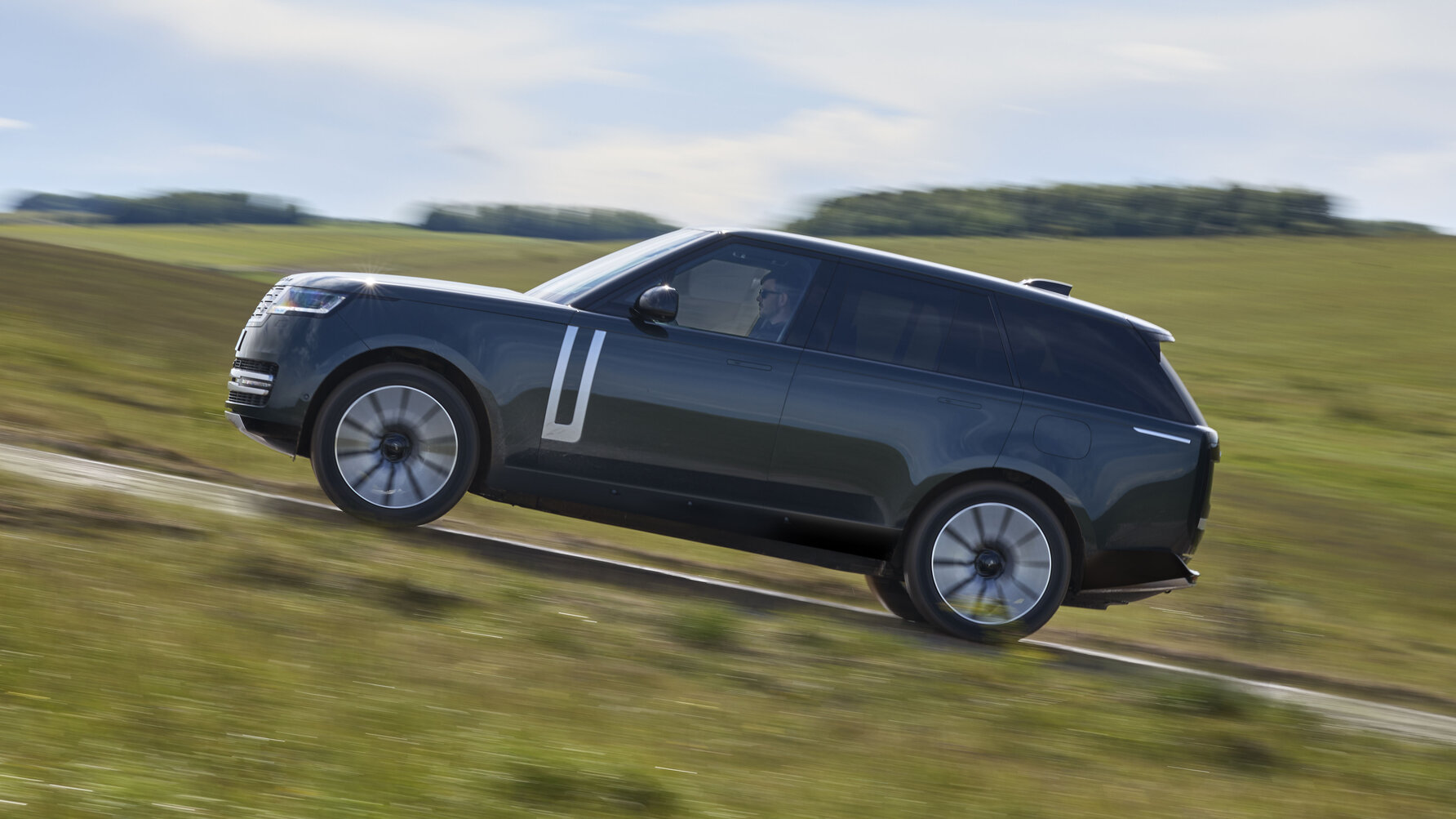
As you might imagine this summer, any attempt to find mud in Warwickshire was thwarted. But we went up a rocky hill and it was a revelation. Steep? This thing can go up a 45-degree slope if you don't stop, or 33 degrees if you stop and pull away. But the main difference versus the one with an engine is the control, thanks to its extremely fine metering of torque in answer to your foot. If a wheel loses traction, the systems very finely feather it out and back in, with none of that juddering and overshoot you get with an engine and brake-applied traction control.
So, yeah, it looks and feels like Range Rover's engineers have poured diligent enough effort into this car that it deserves to succeed. It's good enough – easily – to find buyers. Whether or not it does will depend not on that, but on the market's general attitude to electric cars.