


Car Review
Aston Martin Valhalla review
Advertisement
“The marque’s first mid-engined supercar is also a plug-in hybrid. Don’t worry, though. It has a V8, 1,068bhp and a carbon fibre chassis”
Good stuff
Massive ability on road and track but just as rich in character, feels and looks extremely special
Bad stuff
Lack of luggage space undermines usability, gearbox lacks zing of Ferrari’s
Overview
What is it?
Aston’s first mid-engined supercar. Sort of. The Valkyrie exists in a higher realm and only 275 were built across coupé, Spider and AMR Pro variants (with another 10 Valkyrie LM being delivered in 2026). The Valhalla is more usable, a proper step into the mid-engined supercar arena for Aston Martin.
It’s also a real in-house project for modern Aston Martin – a collaboration between the road car team and AMPT (Aston Martin Performance Technologies), the consulting arm of the F1 operation. Aston will produce 999 Valhallas… probably more when they inevitably launch a Spider.
Advertisement - Page continues below
So, it’s nearly twice the price of a Revuelto? It better be good…
Yep, judged against the similarly powerful Lamborghini or Ferrari 849 Testarossa, the Valhalla does seem punchy. However, Aston would prefer we think of this car as a step between traditional supercars and the more radical and extreme hypercars like the dazzling Ferrari F80 and hotly anticipated McLaren W1, which themselves cost many multiples of Valhalla.
The core of the car is a carbon fibre tub – the lower section produced by a more automated Resin Transfer Moulding process, combined with the more familiar pre-preg upper section. Aluminium subframes are used front and rear and the Valhalla features inboard front suspension, two electric motors for the front axle and a third built into a brand new eight-speed dual clutch transmission.
The engine itself is the flat-plane crank version of AMG’s 4.0-litre twin-turbocharged V8, as seen in the AMG GT Black Series, although much modified and with bigger turbochargers. The total output is 1,064bhp and 811lb ft, with the highly-evolved V8 generating 817bhp and a further 248bhp from the electric motors. A 6.1kWh battery provides a range of up to 14km at speeds of up to 80mph.
Aston Martin claims a top speed of 217mph and 0-62mph in 2.5-seconds. AMPT were also heavily involved with Valhalla’s active aerodynamics and it boasts 600kg of downforce from 149-217mph. It all sounds very tasty indeed.
Advertisement - Page continues below
However, despite the spec and some shared styling cues the Valhalla is a million miles from the Valkyrie in some ways and Aston is very keen to suggest that this is a hypercar in terms of performance but is really supple and usable as a road car, too.
Mid-engined Aston Martin… is this a car with an identity crisis?
Absolutely not. In some ways the Valhalla really excels at being a proper GT car. The ride is excellent on Bilstein DTX dampers with three levels of adjustment, despite a reclined Le Mans prototype-style driving position (although nothing like as extreme as the Valkyrie), the cabin is spacious and really comfortable and aside from the usual road noise transmitted by a carbon tub, you could happily spend many hours here. Just as it should be in an Aston. It looks a little stark and minimalist, especially compared to something as sumptuous as the Vanquish, but actually works rather beautifully.
There’s the right amount of monster, effortless power, too. Massively enhanced by the electric motors, of course, which deliver spookily instant grunt. And although the engine is a motorsport-style flat plane crank V8, in Sport mode it settles down and is really pretty quiet and refined. It is thus deeply tragic that the Valhalla has precisely zero luggage space. Blame the aero concept, that inboard front suspension and the electric motors.
So it ticks most GT boxes. But what about the hypercar stuff?
On an empty track and with Race mode engaged, which switches on the active aerodynamics, the Valhalla is mighty. Aston Martin chose not to go for the most extreme Michelin Cup 2R tyres, but the bespoke Cup 2s still provide superb positivity and in combination with the aero, a huge amount of G force in every direction.
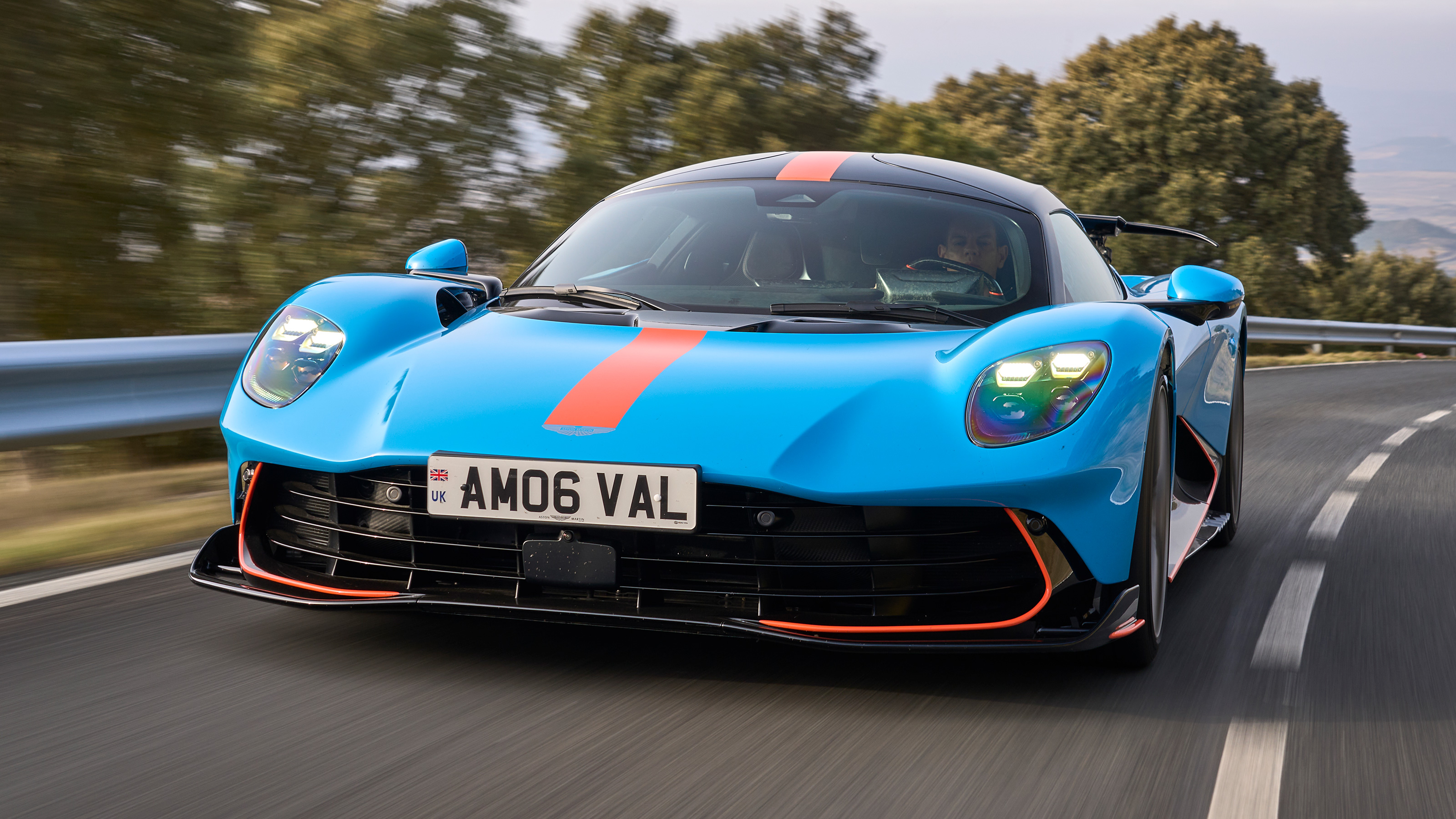
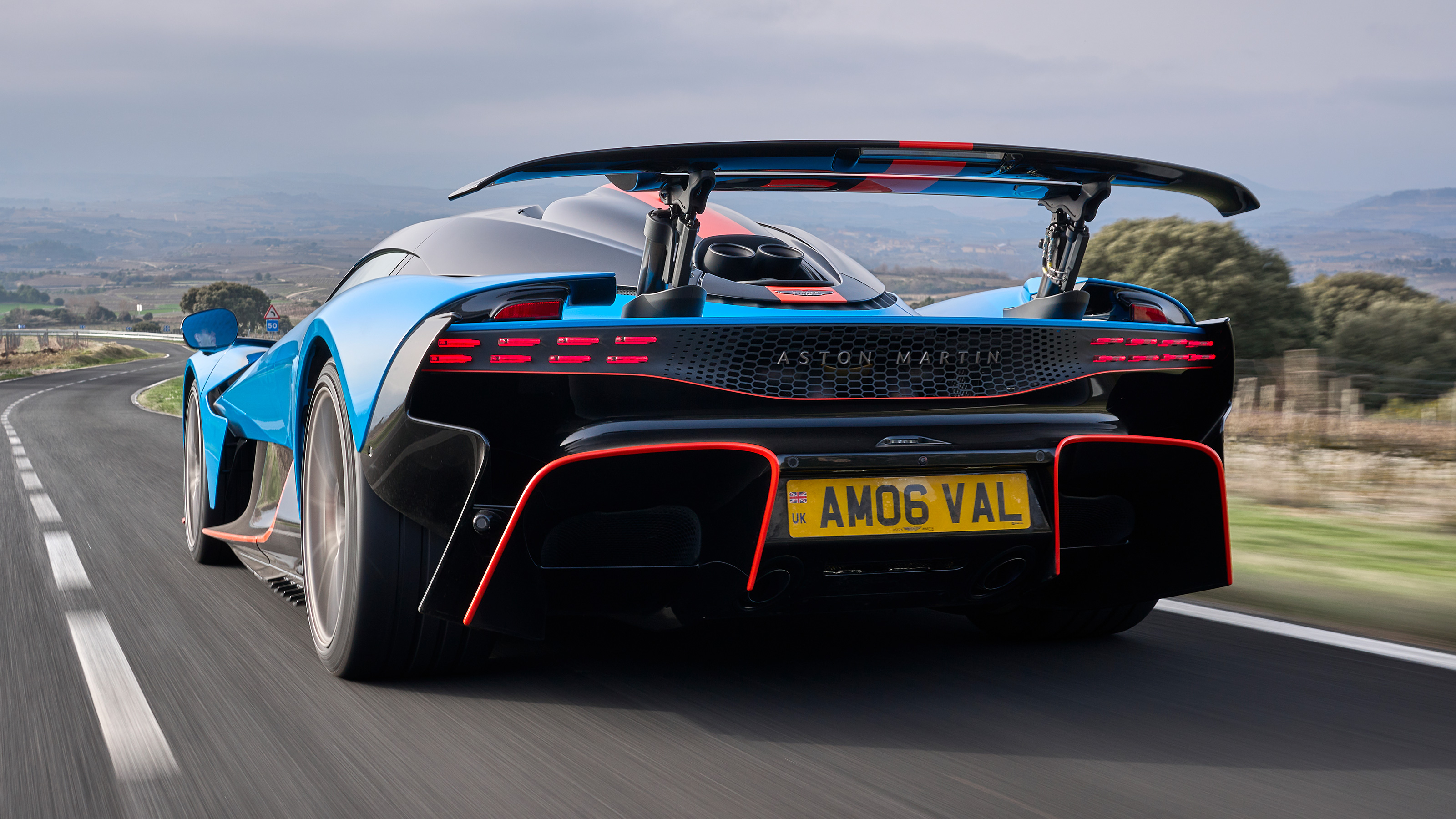
The aero is the real party trick here. There’s a full width front underbody wing. In EV, Sport and Sport Plus modes it essentially sits flush with the floor, just a small gurney flap directing airflow. In Race the wing retracts, switching on the underbody turning vanes and feeding the rear diffuser. At the rear the active wing also raises 255mm and moves between air brake, DRS modes and a whole variety of settings in-between.
You can see it dancing in the side mirrors all the time, which is pretty fun. Consistent downforce ensures the tyres aren’t overloaded but also provides a predictable platform for the driver and progressive manners, according to Aston Martin.
Race mode targets consistent performance for track work, so you don’t get access to the full 1,064bhp, but the performance is still mighty. Not F80 mighty, mostly because the Ferrari has a slight power advantage and is 1,525kg dry. The Aston comes in at 1,655kg dry. Not bad, but considering the carbon tub you’d hope it could at least match the all-aluminium chassis 849 Testarossa… which is 1,570kg dry with lightweight options.
Anyway, it is still unbelievably fast and cleverly melds the hyper-alert, locked-down feel of a proper hypercar with a more playful, progressive and indulgent chassis. You can attack braking zones and corner entry with real aggression, like you might in a Valkyrie. But on corner exit it’s happy to slide like a Vantage. I think you can see the appeal.
How about on the road?
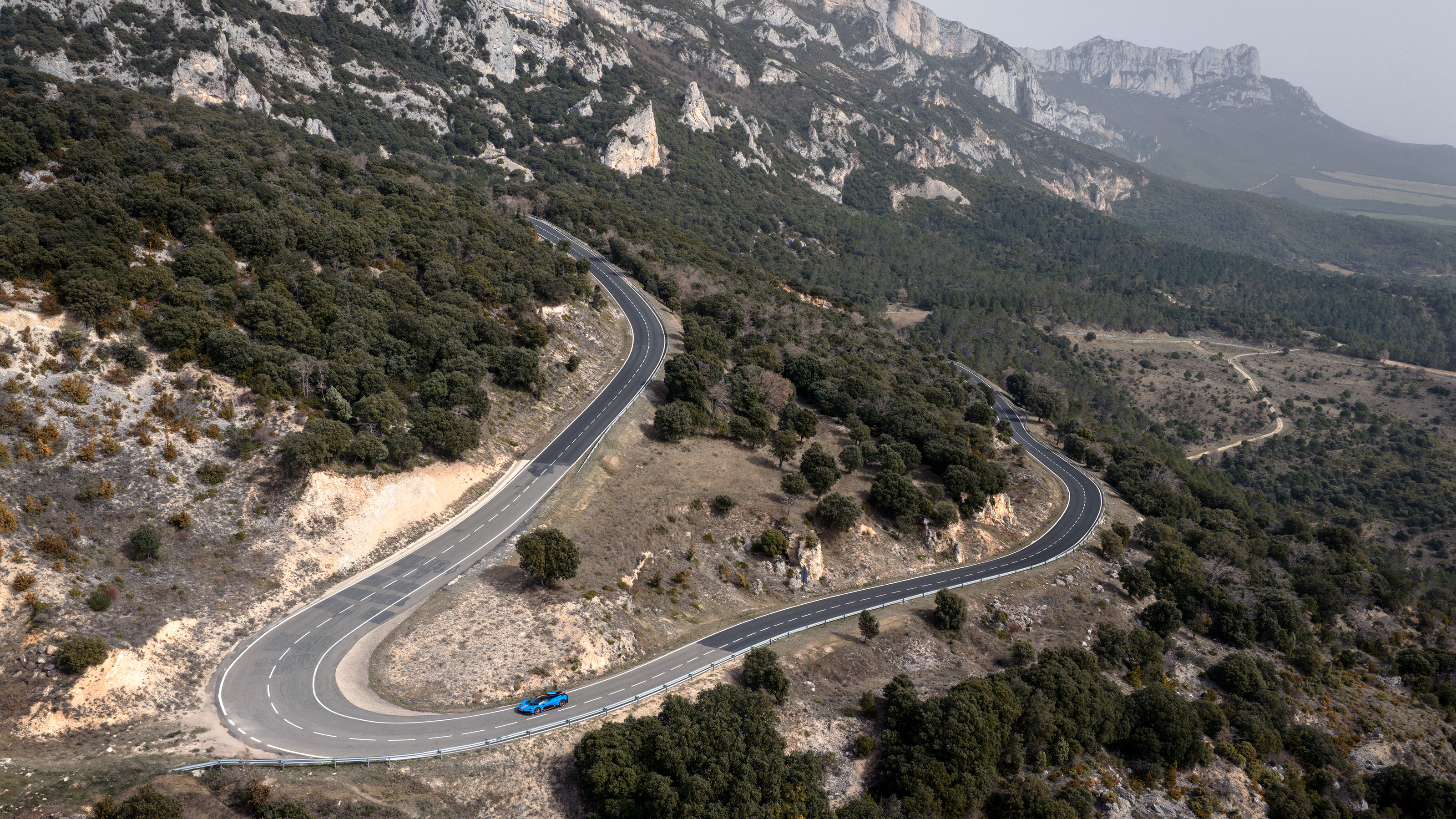
This is the coolest part. Just like the F80, the Valhalla only gets more convincing on the road. However, for the Ferrari the intensity seems to turn up. The engine and ‘box feel completely wild, the chassis laser-focussed. Aston Martin has gone in another direction. In Sport Plus the Valhalla is light on its feet, playful even. The steering is quite light and doesn’t possess gritty feedback, but there’s such good communication through the whole car that you feel nicely dialled into the whole experience. It really just flows. At huge speed.
It’s hard to overstate just how impressive the Valhalla is on road and track... it feels brilliantly realised and has real breadth of talent
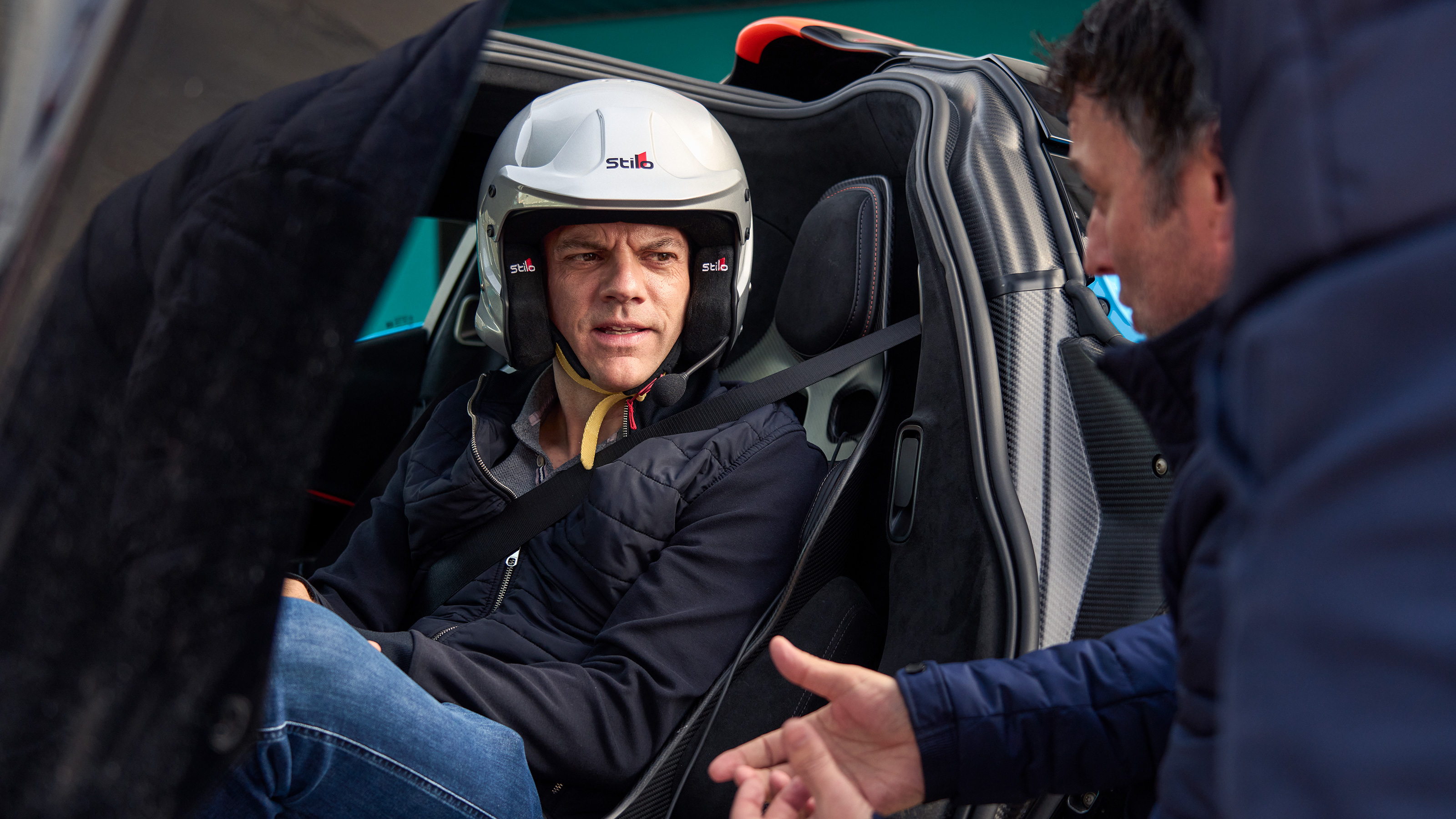
In fact, the whole experience melds sharp dynamics and breathtaking performance with a real sense of joy. Without the muffling effects of a crash helmet, even the engine comes to life. The V8 isn’t exactly sonorous, but it’s hard-edged and Aston hasn’t disguised the various organic turbocharger noises, so there’s real intrigue and texture to the soundtrack. Everything feels really well-judged. You can really attack and revel in the pure pace and control, or dial it back and just enjoy the sensations. You can also switch the suspension setting independent of the driving mode, which could be useful in the UK.
EV mode? How much do you want to drive an £850,000 front-drive EV? Nah, nor us. But nice to know it’s there for early starts or to look innocent as you trundle through a village after the residents have heard you coming… ‘What? Not me, governor. It’s an EV.’
Photography: John Wycherley
What's the verdict?
“As a driving experience there’s no doubt that the Valhalla is an overwhelming triumph”
We like the Valhalla. A lot. It’s not as intense and thrilling as an F80. But then again, very few cars in the history of, erm, cars can make that claim. However, it feels more special and more exotic than the 849 Testarossa or even the stunning Revuelto. The way the engineering team has imbued a whole new sort of car with an authentic sense of Astonness is also really impressive.
For us, the interior is maybe a bit too stark and more of a break in the relentless carbon fibre would be nice, but the whole demeanour of the car just has an innate Aston Martin feel. With a little helping of McLaren thrown in for free.
Overall, it’s a wickedly desirable car and looks quite stunning amongst normal traffic. The lack of any luggage space is slightly criminal, but as a driving experience there’s no doubt that the Valhalla is an overwhelming triumph. On track it’s fast, consistent and can be enjoyed as much on a quali-style lap as a silly but rewarding sideways run. On road, it’s alive and has a lovely sharp-edged flow to it. Aston Martin is on a roll lately, but the Valhalla is next level.