

the fastest
1.6 Plug-in Hybrid Max 5dr Auto [20" Alloy]
- 0-628.3s
- CO2
- BHP191.8
- MPG
- Price£38,670
Citroen has made a big thing for a decade or so about its 'advanced comfort' philosophy, which includes the suspension, as well as seats and wider definitions of comfort like a simple but intuitive interface. Anyway, we'll talk about that latter stuff in the Interior tab of this review. Suspension first.
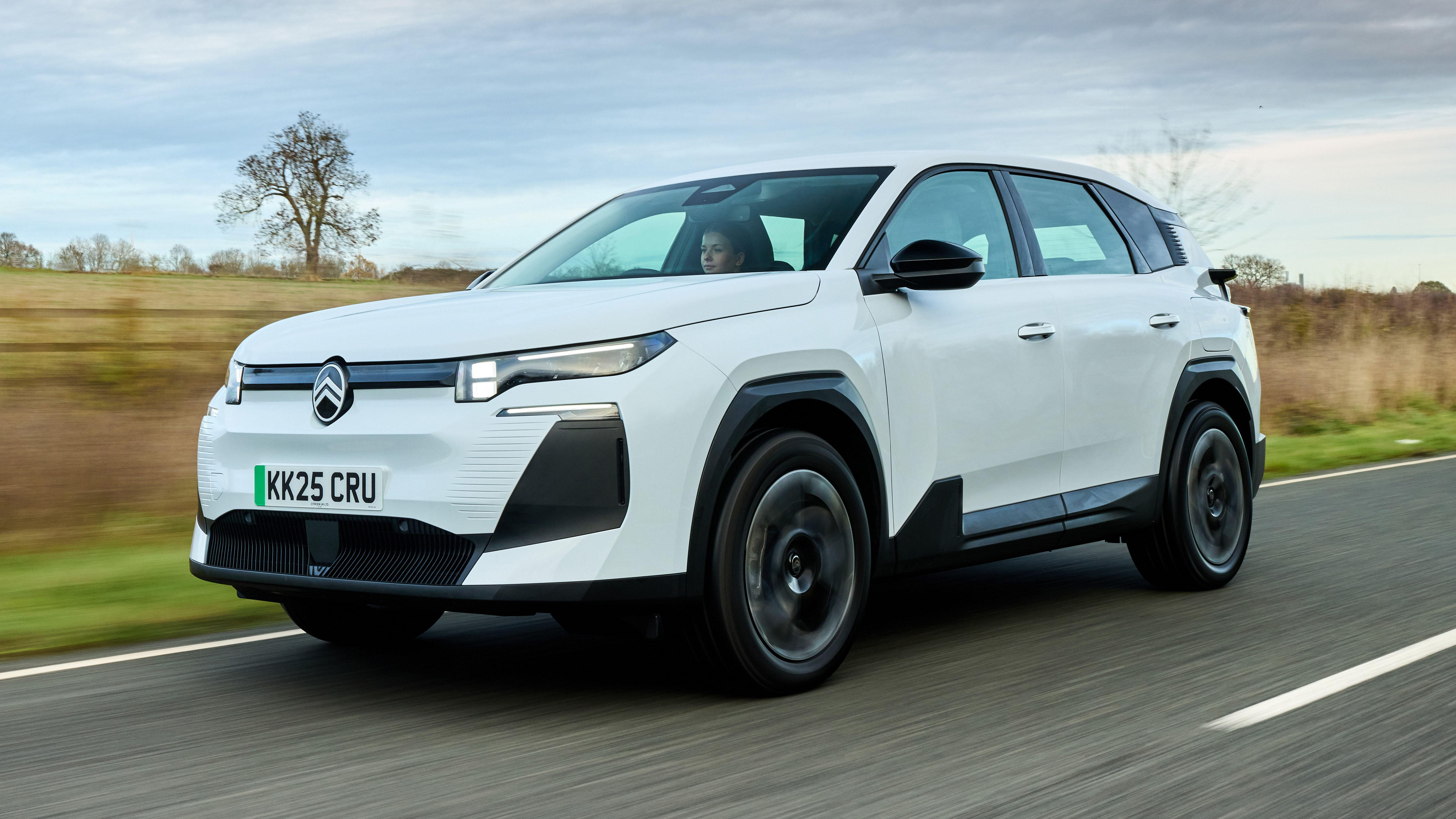
The C5 Aircross is set up to be supple. At town speeds it isn't quite a magic carpet, but it's decently controlled. Get rolling and things smooth out very nicely indeed. But it's no waterbed. Citroen uses special progressive dampers to control big slow movements, which quells body heave, while allowing smaller quicker ones, which is absorbing sharp bumps.
So it proves. The Aircross is remarkably adept when you go over a series of dips and crests at speed, even when you mix in steering inputs. And at normal speeds that talent should stop the kids feeling sick.
The previous C5 Aircross had the same idea, but its steering was too light and initial inputs got sloppy answers. Here it's progressive and intuitive to steer, if still short on front tyre feel through the wheel.
This applies to both the electric and mild-hybrid versions. It's impressive how the electric one manages this given the mass. The 74kWh version is a portly 2,109kg plus driver. (For comparison a Renault Scenic is 1,842kg for one with 87kWh.) The 97kWh version adds an extra 62kg.
We hoped the mild-hybrid, at 1,600kg fuelled up, would be more nimble but it feels pretty similar to the electric in its ride and handling. Likewise the plug-in hybrid, which weighs in at 1,874kg, but isn’t quite as refined as the other variants. To our mind, electric power suits the C5 Aircross best.
The little petrol engine has its work cut out, but it's game. Its hybrid motor takes total power to 145bhp and masks low-rev turbo lag, supplying a 38lb ft torque pulse. A time of 11.2s 0-62 shows how hard you have to work it, but it doesn't mind too much. At mid revs and full throttle the three-cylinder noise is a bit of a rasp, but never too loud, and gets more interesting again higher up.
The twin-clutch transmission selects between its six gears with decent sensitivity and smoothness. At town speeds the engine cuts in and out almost without you noticing, allowing the electric to trickle you along for a few seconds in queueing traffic. Oh, and in sport mode you have gearshift paddles that work well. Citroen quotes 43.2mpg and 121g/km.
The full electric has 213bhp in standard range guise, or 231bhp in long range guise, but that has to overcome more weight. So it still takes 8.9 seconds to get to 60mph in the former, and 8.8 seconds in the latter. Still, solid immediate torque sees you right in most driving. Switching to eco drive mode quells the aircon power for more range, and magically replaces the accelerator pedal with a very soggy croissant. Over a 50-mile route we managed 3.5mpkWh, which isn’t bad given the size of the thing.
The plug-in hybrid gets a combined 195bhp, courtesy of its 148bhp engine and 123bhp electric motor, for a 0-60mph time of 8.3 seconds. But more pertinent is its (up to) 53 miles of electric range, courtesy of the 21kWh battery – nearly double that of its predecessor. We saw 88.1mpg with a fully charged battery, though this plummeted to 34.8mpg with no juice left.
Road noise isn't bothersome, but there's a bit of air rustle, and crosswind stability wasn't great on the blustery day we tried it.
All versions get active cruise control, but without lane-centring assist. That comes in the full ADAS pack. The legally mandated lane departure warning and speed limit systems can be quickly quenched if they start to make mistakes – a hard button brings up one-tap screen shortcuts.
Get all the latest news, reviews and exclusives, direct to your inbox.