

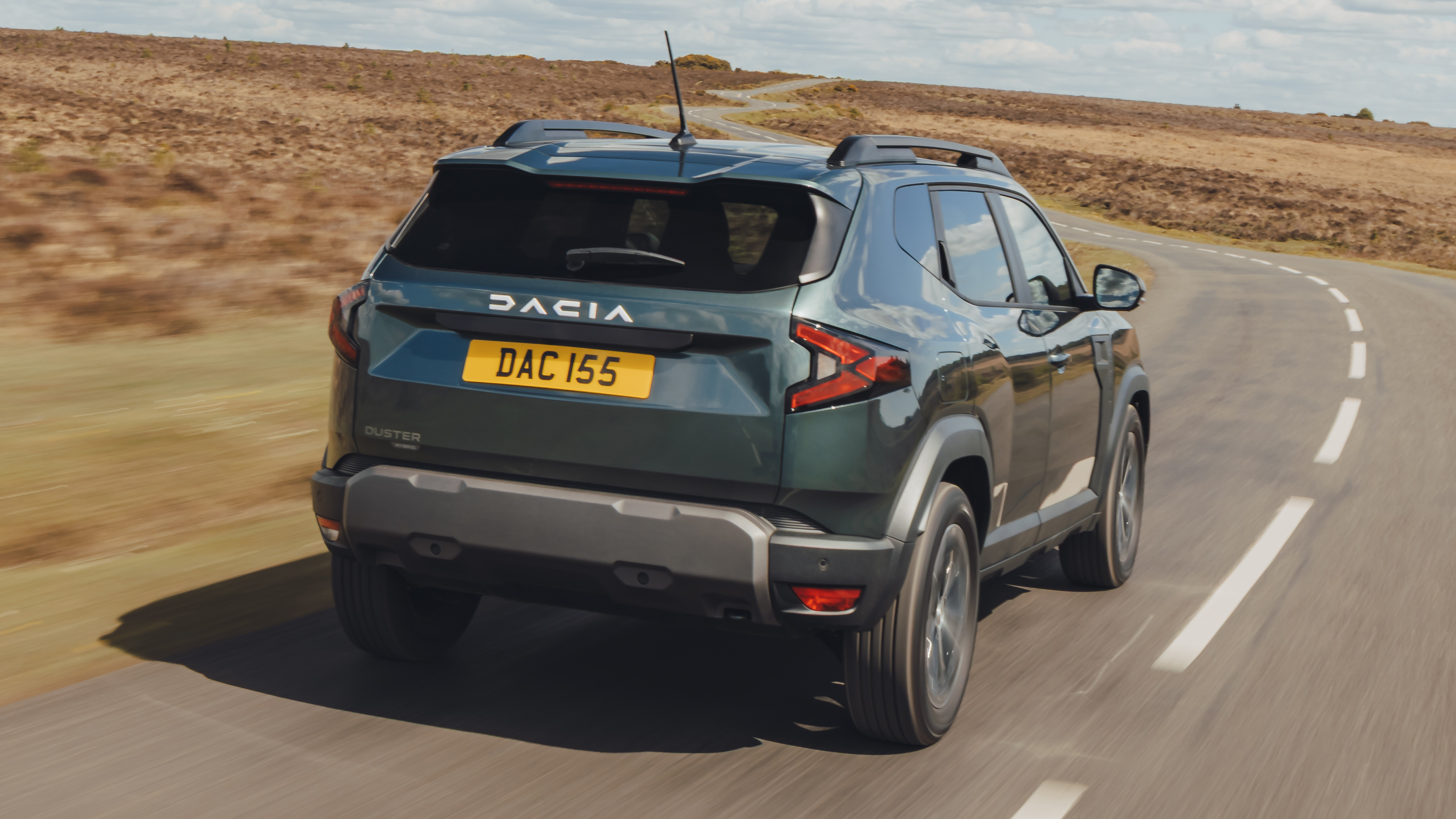
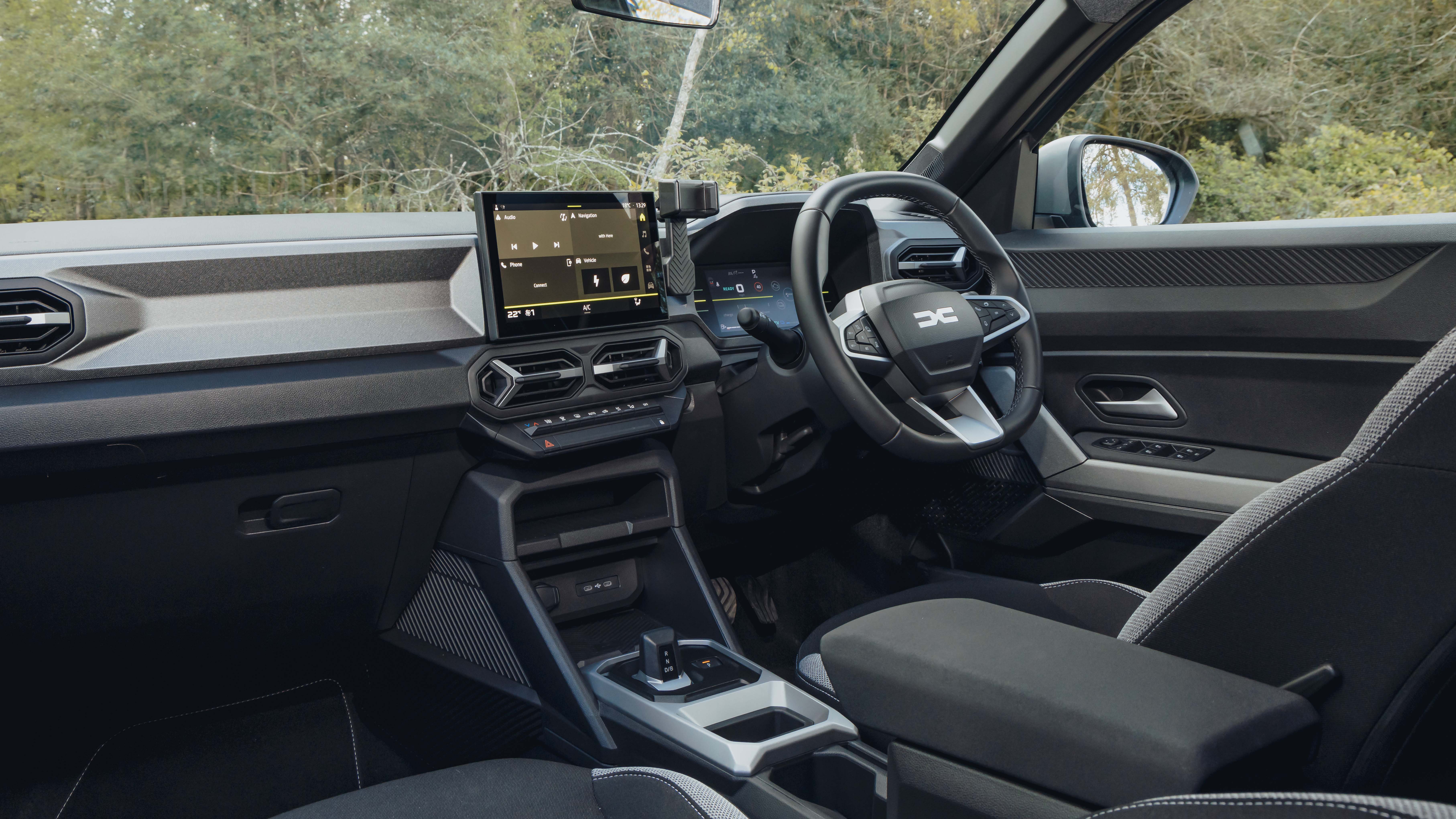
the fastest
1.8 Hybrid 155 Extreme 5dr Auto
- 0-629.7s
- CO2
- BHP154.2
- MPG
- Price£27,135
Perhaps because the Duster isn't designed with some top range high performance version in mind, it feels comfortably at ease with itself. It lopes along, pliant and relaxed without being baggy or vague – it’s actually quite fun to drive in its pure petrol form.
Slightly unexpectedly given the emphasis on off-roadery styling, the controls are supermini light. The steering is strongly assisted, but accurate and settled, and the brakes and gearshift ask for little effort. Don't confuse lightness with fragility though. The bodyshell always feels stiff.
The ride is nicely supple over big bumps, and the tallish tyre sidewalls soften off harshness. Road noise is low too, though on the motorway you'll notice the wind noise.
The mild hybrid 140’s 1.2-litre three-cylinder is fairly chirpy, and it doesn't mind being worked hard. But as it's only 1,370kg as a 4x2 there's little stress. It gets 48V mild hybrid tech (a small e-motor and battery essentially) which is well integrated. Better yet, you've a six-speed manual to play with, and it's a co-operative shift.
The full hybrid is Renault's familiar system, and now pairs a 1.8-litre 4cyl with two electric motors, a small-self charging battery and a six-speed auto. So there are actual gearshifts, and the system manages them smoothly, even if the choices it makes can be confusing: sometimes it'll labour at low revs, drone at high revs, or switch annoyingly between the two.
Still, you can always drown it with the stereo as it's not actually that loud and in town you there's a lot of silent electric running. Both powertrains cover the 0-62mph sprint an identical 9.4 seconds, but while the mild hybrid is good for 52.3mpg WLTP, the full hybrid returns 60.1mpg WLTP – we saw 58mpg when we tested it. Impressive.
Even the FWD one will tackle most lumpy trails if it's dry, but the 4x4 has a bit more ground clearance, grippier tyres as standard, a different rear suspension and a knob to reconfigure settings (accelerator, traction control and so on) for different terrains, plus hill descent control. No low box or mechanical diff locks though.
The car will scamper across some surprising terrain, thanks as much to its light weight and judicious choice of all-season tyres as anything else, there’s barely anything out there that will do the same for the price, especially since the Fiat Panda 4x4 isn’t around any more.
Worth noting that the 1.2 mild hybrid will tow up to 1,500kg, whereas the full hybrid car will only manage 750kg of braked trailer.
Famously Dacias haven't done well at Euro NCAP, partly because they lack advanced driver assist features. But now those features are mandatory. So the Duster has auto emergency braking (including for pedestrians), drowsiness alert, lane assist, speed limit warning, etc.
As with every other car, the lane assist tugs annoyingly at you on twisty roads, and the speed limit bonger often gets the limit wrong. Of course they activate every time you restart the car.
Fortunately you can set up a custom setting for those systems, and for us that means the lane assist and speed warning off. These are programmed into a button on the dash which you just quickly jab twice. Jab it again on a motorway, where they're useful, and the systems come back on.
Get all the latest news, reviews and exclusives, direct to your inbox.