

the fastest
435kW 105kWh S Vorsprung 4dr Auto
- 0-623.6s
- CO20
- BHP583.3
- MPG
- Price£130,660
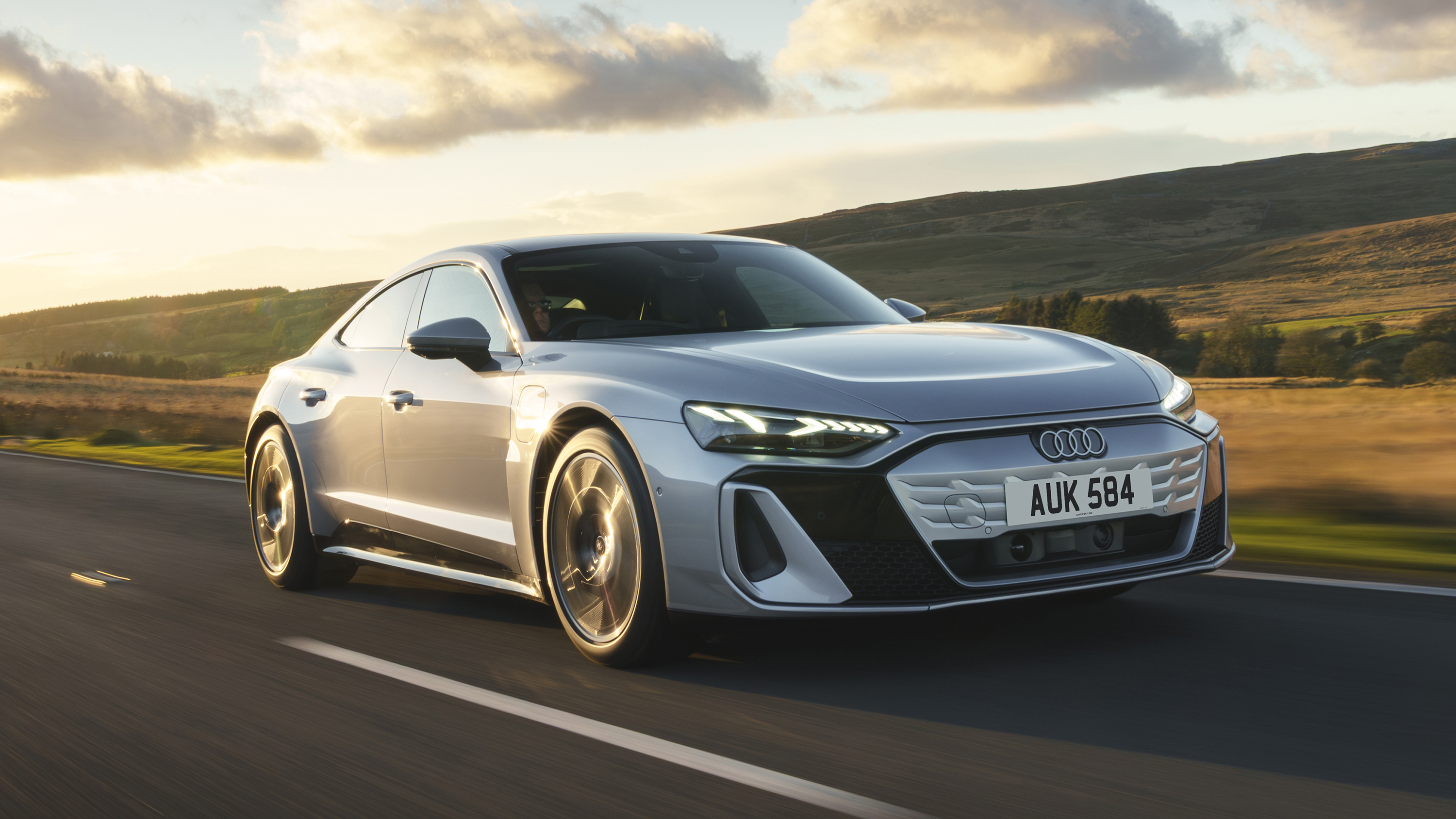
Well, it’s certainly quick enough. The acceleration is ballistic - even in base e-tron GT quattro trim. That car boasts 496bhp normally, or 576bhp with launch control deployed. The latter makes you question the need for a model with over 300bhp more, while the rest of the time, it's as effortlessly swish and swift as anyone needs a fully electric saloon to be.
Pair its easygoing drivetrain with plush air suspension, generously standard on all cars, and you have a supreme everyday device and a mind-bendingly fast EV that slots comfortably under £100k. Which should help take at least a tiny bit of sting from the impending depreciation...
Yup, you have three more rungs to climb to the towering RS Performance halo. By which point bragging rights are surely more important to you than actual, daily usability.
Even if you’re trying to eke out the maximum range in Efficiency mode, the RS will surge towards the horizon with just the slightest extension of your big toe. The sensation is of a bottomless well of power, always at your disposal – revs don’t matter, gears don’t matter. Supercar pace without any of the effort.
The steering is fast and precise, but not particularly engaging, much like any other modern fast Audi bar the R8. The grip is otherworldly though (honestly, the speed you can carry around a roundabout is naughty) and the four-wheel steering is a must-have if you often find yourself manoeuvring in tight spaces. It comes as part of a 20-odd-grand Vorsprung pack lower in the e-tron GT range.
The new two-chamber, two-valve air suspension setup is mightily impressive. It gives the e-tron GT such composure when dealing with bumps and lumps in the road, even when it’s wearing hefty 21in wheels. It’s adaptive too, so obviously you can firm it up when things get twisty. It feels agile and alert when physics dictate it should be heaving around on its suspension.
If that’s what you’re worried about, we have also experienced the active suspension setup of fully loaded cars. This essentially aims to keep the e-tron GT’s body flat at all times, meaning it’ll pump up the outside air chambers during cornering, or the front two under hard braking/rear two under hard acceleration.
It’s a quite remarkable experience, but the end result is a car that doesn’t flow down a road quite as sweetly. Turns out a bit of pitch and roll isn’t always a bad thing.
Great question, given the masses of power now on tap. Lower-spec models get steel brakes, while the RS ups the ante with larger tungsten carbide coated steel brakes as standard. Our test car came fitted with mighty carbon ceramics which are a £6,250 option here but standard on the RS Performance. Probably wise. As expected, they offer huge stopping power and there’s decent feel through the pedal’s travel despite it balancing regen and pad on disc friction.
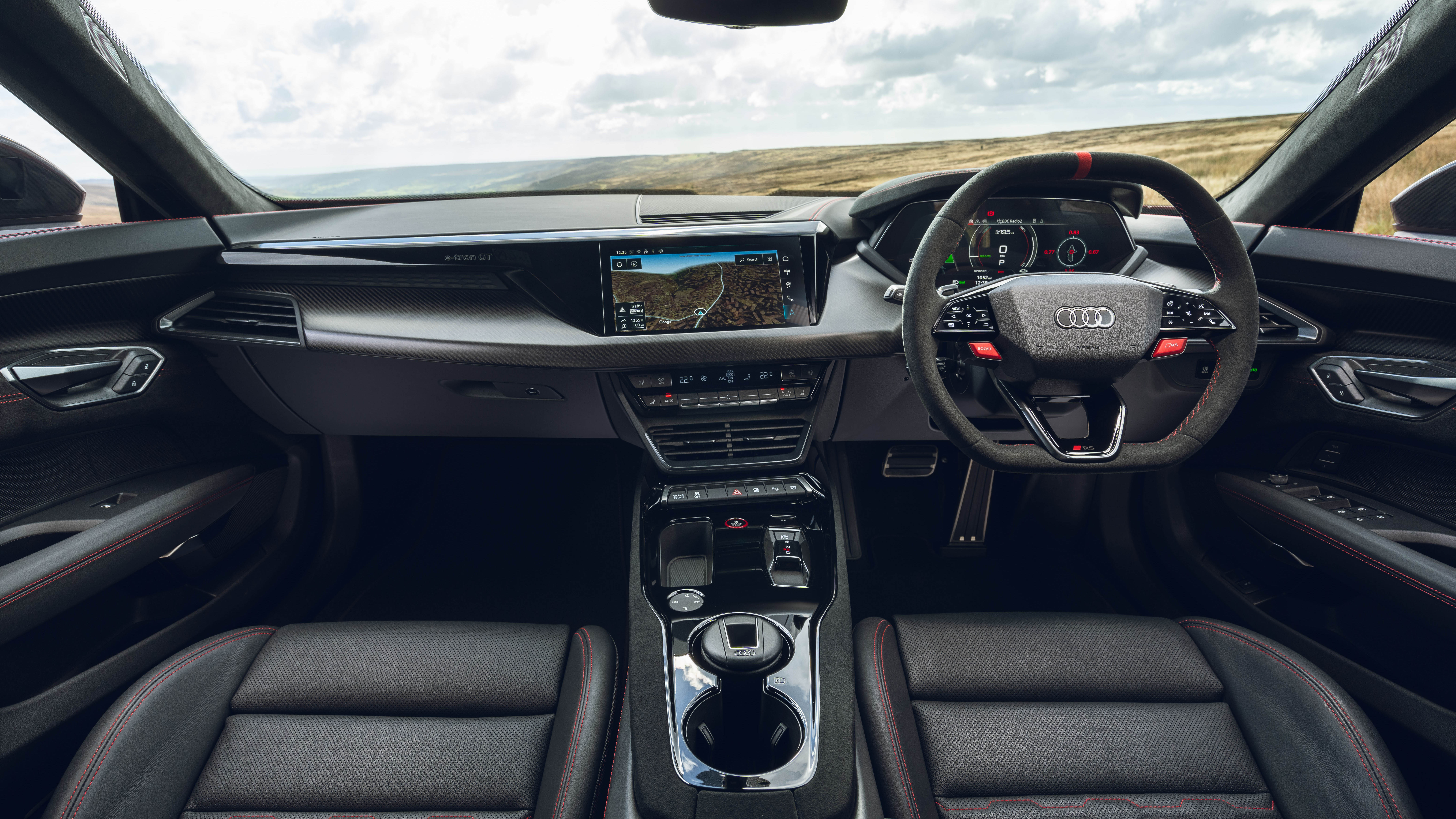
Speaking of regen, Audi has actually upped the amount of energy you can recover to 400kW. Oh, and there are paddles behind the wheel to adjust the level of regen that occurs when you lift off the throttle. Bonus marks for this – we reckon it makes an EV that little bit more engaging to drive.
Resist your urges to boot it at every opportunity, and Audi claims a range of between 364 and 386 miles across the range. That’s a useful increase on the pre-update car, and a nice, tight spectrum given the wildly varying power outputs on offer. Or maybe it just proves the WLTP cycle doesn't really account for dalliances with launch control.
Where its range figures were previously a bit of a limiting factor, Audi’s battery upgrade (and its charging speed boost) means the e-tron GT can be considered a proper grand tourer now. It’s still not the most efficient EV – we saw around 3.0 mi/kWh in an RS over a couple of hundred miles – but that at least ensures a real-world range of above 300 miles.
An 800-volt architecture means DC charging at up to 320kW is now possible, if you can find a point capable of it. At peak speeds in optimum conditions that means you should be able to add 174 miles of range in just 10 minutes, or go from 10 to 80 per cent in 18 minutes.
Like Porsche with the Taycan, Audi worked hard on producing a sonic replacement for a V8's distinctive throb. The ‘e-tron sport sound’ uses two control units and amps in the boot to feed speakers inside and outside the car. Using data on the motor speeds, throttle input and your ground speed, it pumps a sci-fi-style synthetic warble into the cabin that’s not unpleasant but not as obvious as the one you get in a Taycan (or, indeed, Hans Zimmer-soundtracked BMW EVs).
Turn the car on and there’s a surprisingly loud hum from the outside, to warn pedestrians of your imminent arrival.
Get all the latest news, reviews and exclusives, direct to your inbox.