


25
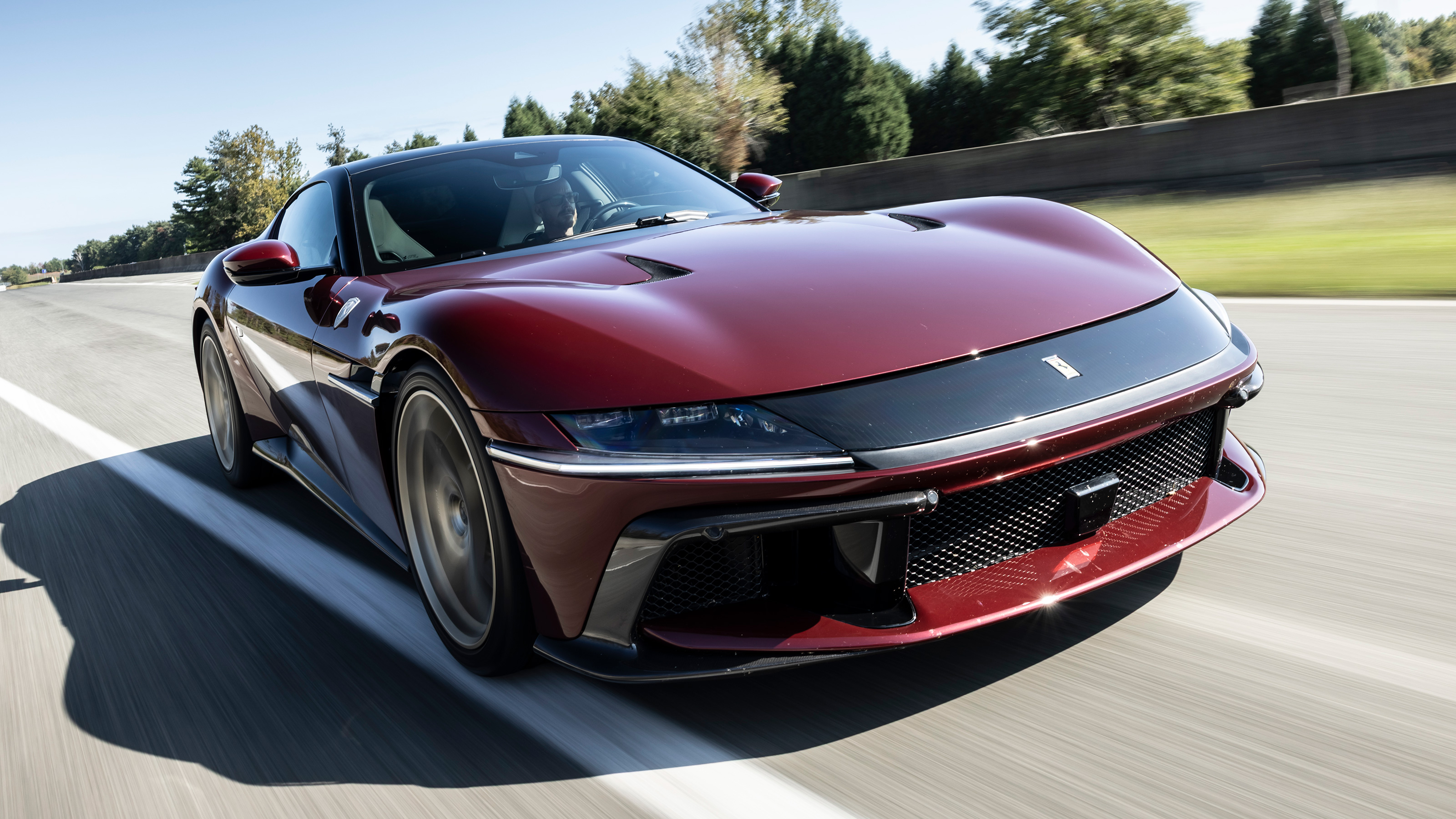
It’s a manual. Yes, it uses the same twin clutch gearbox as the regular Dodici Cilindri, but in operation, use, look and feel, this is a manual gearbox. And one of the very, very best. Be sniffy all you like, say it’s not a true manual, but I honestly think if Ferrari hadn’t confessed the technology behind it all and you’d hopped in, you’d be very hard-pushed to tell this wasn’t a true manual.
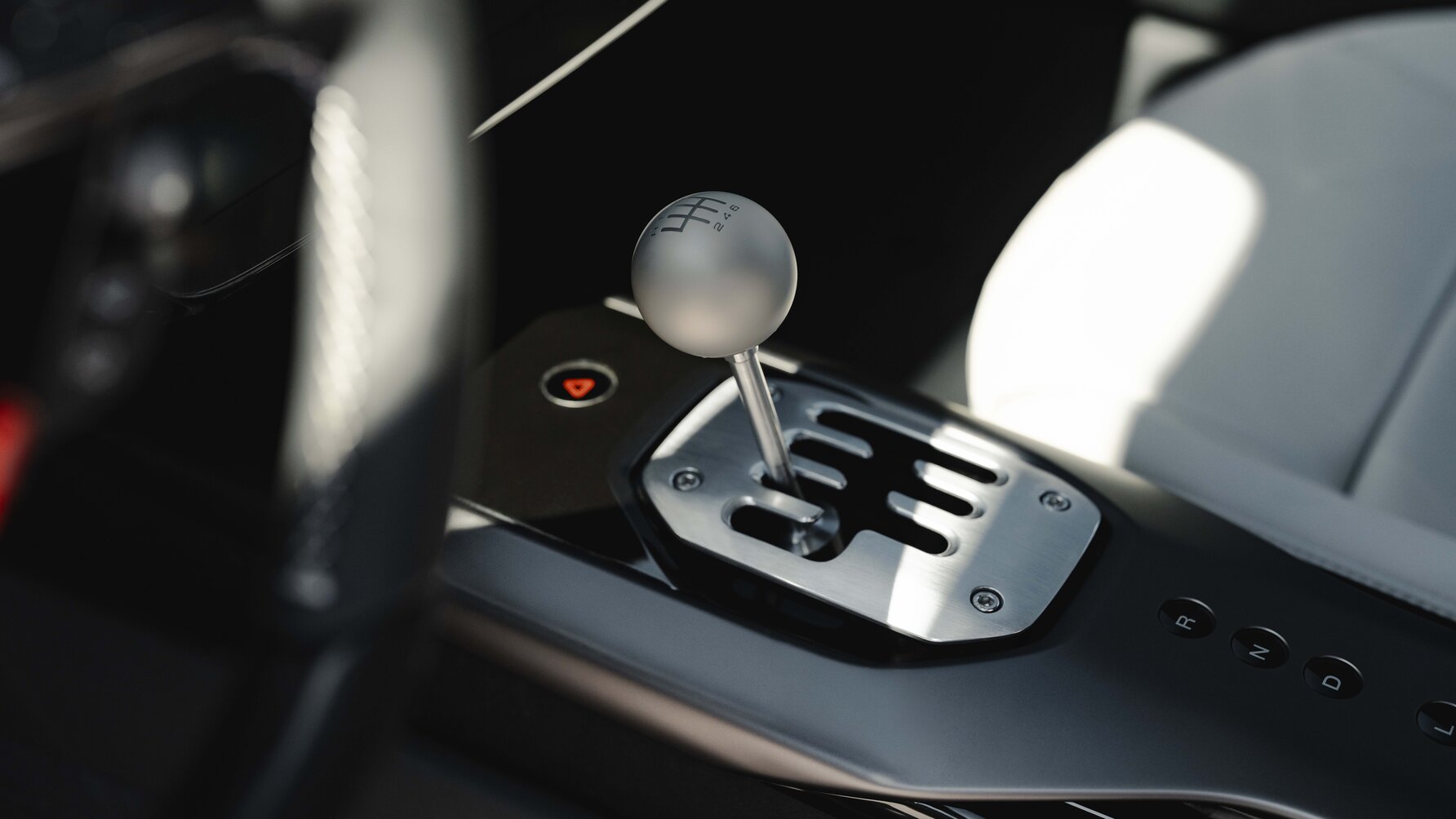
Ferrari has bought back the manual gearbox. It’s done this by adding manual control to the first six gears in its eight-speed DCT gearbox. There is no physical connection between your hand (or foot – after all this is now a three pedal car) and the transmission signals pass electrically from one to the other.
Now, anything – anything – electrical seems to be controversial these days, and you could accuse this car of being disingenuous, of concealing the reality. You get in and it’s a manual – the lever dominates the centre console. It’s the first thing you notice, perhaps because it’s such a rarity these days. But as we all know, the manual appears to be making a gradual comeback.
I guarantee every other sports car company is looking at this manualised automatic technology with a very keen eye. Manuals have their drawbacks after all. A human can’t operate the gears as cleanly, quickly and efficiently as an automatic, which means manuals have shorter service intervals, are more prone to damage. And are manual shifts really that good? I can count on the fingers of two hands cars with lovely manual gearboxes and most of them are small, cheap and Japanese.
But Ferrari did have iconic open gate manuals. Not for a while now. The 599 is widely seen as the last manual Ferrari back in 2012, but in actual fact you could have a self-shift option on the drop-top California. Two were built. Not two versions. Two cars. Hardly surprising the manual died out. Customers were fixated on performance rather than experience, and manuals were slow and awkward. Now here’s one that offers the best of both worlds.
Every movement, every sound it makes is mechanical. There’s no artifice. It’s just the signals travel from the base of the lever to the gearbox electrically, rather than via cables and linkages. Ferrari put a dismantled gearbox on a plinth to have a poke around at. A whole subterranean strata lurks beneath the open gate: solenoids, springs, pistons, linkages. It’s engineering art.
And arguably the perfect solution. You get a lovely ball-topped metal lever to play with, Ferrari ensures you don’t blow up the drivetrain. In between lies the genius of this system, because it’s how truthfully the electronics interprets your physical inputs that determines its success.
And it does that very well indeed. For starters it will permit mistakes: you can slip the clutch, shift from sixth to first (if the revs permit), you can kangaroo off the line, stall, flat shift, do a rolling burnout, pull away in sixth. No matter how I tried to catch it out, I largely failed.
Not completely. There’s no rev match, Ferrari decided against it, but if you do shift from sixth to first, the engine will stick in a small surge of revs just so you don’t lock the back wheels. But it mimics a manual far more closely than I expected or even believed possible. That’s what four years of development does for you.
Whether it starts as a manual or an automatic depends on if you have the clutch pressed or not. If you don’t, the RND buttons are behind the open gate. Press one and you’re away in an auto. If you did press the clutch then you drive it just like a manual. To switch to auto while driving at any speed, just press D. There’s a bit more of a process to switch back, in that you have to be below 70kmh (44mph), press the clutch and engage a gear – an orange marker on the rev counter tells you what the revs will be when you lift the clutch, so you can blip to smooth it out.
Get all the latest news, reviews and exclusives, direct to your inbox.
The shift itself is a joy. Just the right amount of springing and resistance, the right ‘scchhh-click’ noise as you pull the cool aluminium ball across the gate. It’s a delight, the sort of perfect shift you can only deliver when you don’t actually need to physically connect it to a gearbox.
Which does mean there’s something slightly unnatural about it. The shift is too good, too clean, too slick to be genuine. Here’s the ‘in’ for the naysayers and doom-mongers to spool themselves up into a frenzy. Ignore them. I have more problem with the clutch, which again is too clean, too consistent in its springing. Not enough judder, the bite point is quite high and the pedal weight too light.
Here you have an all-time great manual
Nevertheless, to drive it is to be convinced. And think – a large part of the reason manuals died out is that they were hard work when you didn’t want them to be. But here you have an all-time great manual, but when you hit the motorway or run into town, you don’t have to keep flexing your left leg.
Yeah, stick it in auto and you can still play with the manual lever. So your kids can have a go as you drive along. They’ll love that. It does lead on to one of the occasional weirdnesses, though. You can leave the manual lever in any slot while you’re in automatic, but you see it in your peripheral vision, so my brain kept telling me I was in fifth as I approached a hairpin and therefore needed to shift down, but I could hear the gearbox doing it anyway.
So there are things that’ll take some getting used to, some things that aren’t perfect and will give people an opening to criticise, but the bottom line is this is a brilliant gearbox, the first ever to offer a best-of-both-worlds, dual purpose solution and to do so very convincingly.
Not one iota. The 6.5-litre naturally aspirated V12 still develops 819bhp and 500lb ft, rest to 9,500rpm and remains arguably the single greatest road car motor available today. It’s a masterpiece. And because it has the same features as the standard 12Cilindri with Launch Control and so on, it still claims the same acceleration (2.9 seconds 0-62mph) and top speed (211mph). Plus the same emissions (353g/km) and fuel economy (18.2mpg).
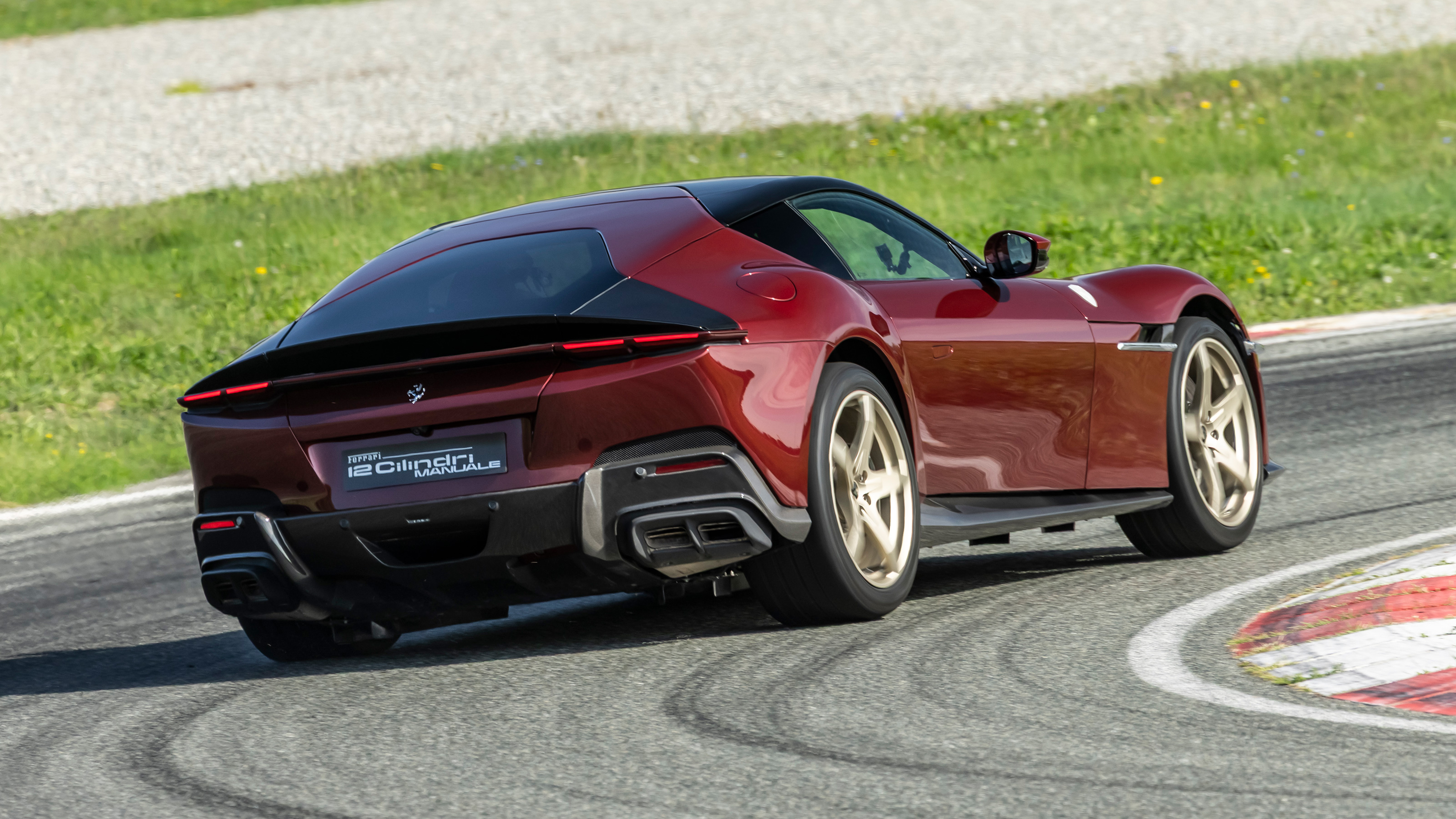
I think it’s a stroke of genius. I drove lap after lap of the Balocco test track just relishing the experience of driving a manual Ferrari, even enjoying the times I got it wrong, slotted fifth instead of third when down shifting from fourth. Because that’s the point of doing something yourself, it’s only worth doing if you have to work at it, to put the time and effort in to being good at it.
And smooth and flattering though it is, this is still a manual gearbox. So Ferrari has taken care to make it as involving as it can. I’m glad it doesn’t have rev matching because the position of brake and throttle is perfect for heel and toe. Plus a manual puts you in closer touch with the engine, allows you to be in complete control of the torque and revs.
So yeah, this is the 12Cilindri to have. With one very large proviso…
Money. At the moment this gearbox isn’t an option, but a separate standalone limited edition model. 1,499 are being built and it’s priced at £508,000. You get some extra unique features on the Manuale and every car goes through Ferrari’s Tailor Made department, but it’s £170k more than a regular Dodici Cilindri. No, that’s not a stray extra zero.
They’re obviously not saying at the moment, but I don’t think it’ll be a one-off. You don’t go to this much effort for 1,500 cars, not if you’ve got a cool piece of tech you could use elsewhere. This has been a four year project and the engineers admit that there’s nothing that particularly prevents it being used on other cars, even the hybrids. But this will be the first to have it fitted and that will likely give it a unique place in Ferrari’s storied history.
Koenigsegg got there first with its furiously complex Engaged Shift System, which we tried a couple of years back. But this is more of a marker. When Koenigsegg does something like this we gawp at the ingenuity and complexity, when Ferrari does it we ask ourselves when others will follow.
Because this is one of the very best gearboxes I’ve ever used in a car. You can dismiss it as a triumph of technology over genuine interactivity, but think about it – imagine if you could have this solution in a hot hatch, in a sports coupe? Car firms are under so much pressure that they’re killing the manual off and losing enthusiasts as a result. This tech could be the one gearbox solution we all want and reverse that trend.
This is one of the very best gearboxes I’ve ever used in a car
I’m sorry if you want to hate it. Go ahead, feel free. But it’s genius and it works brilliantly, adding more depth and texture to an already great car. Save your hate for the Luce.
Get all the latest news, reviews and exclusives, direct to your inbox.
