LAND ROVER
EV550 404kW First Edition 119kWh 4dr Auto
£157,545
Unmatched stretch between on-road luxury and off-road smarts, useful enough range and charging
Traditional Range Rover long-distance towing ability takes a hit
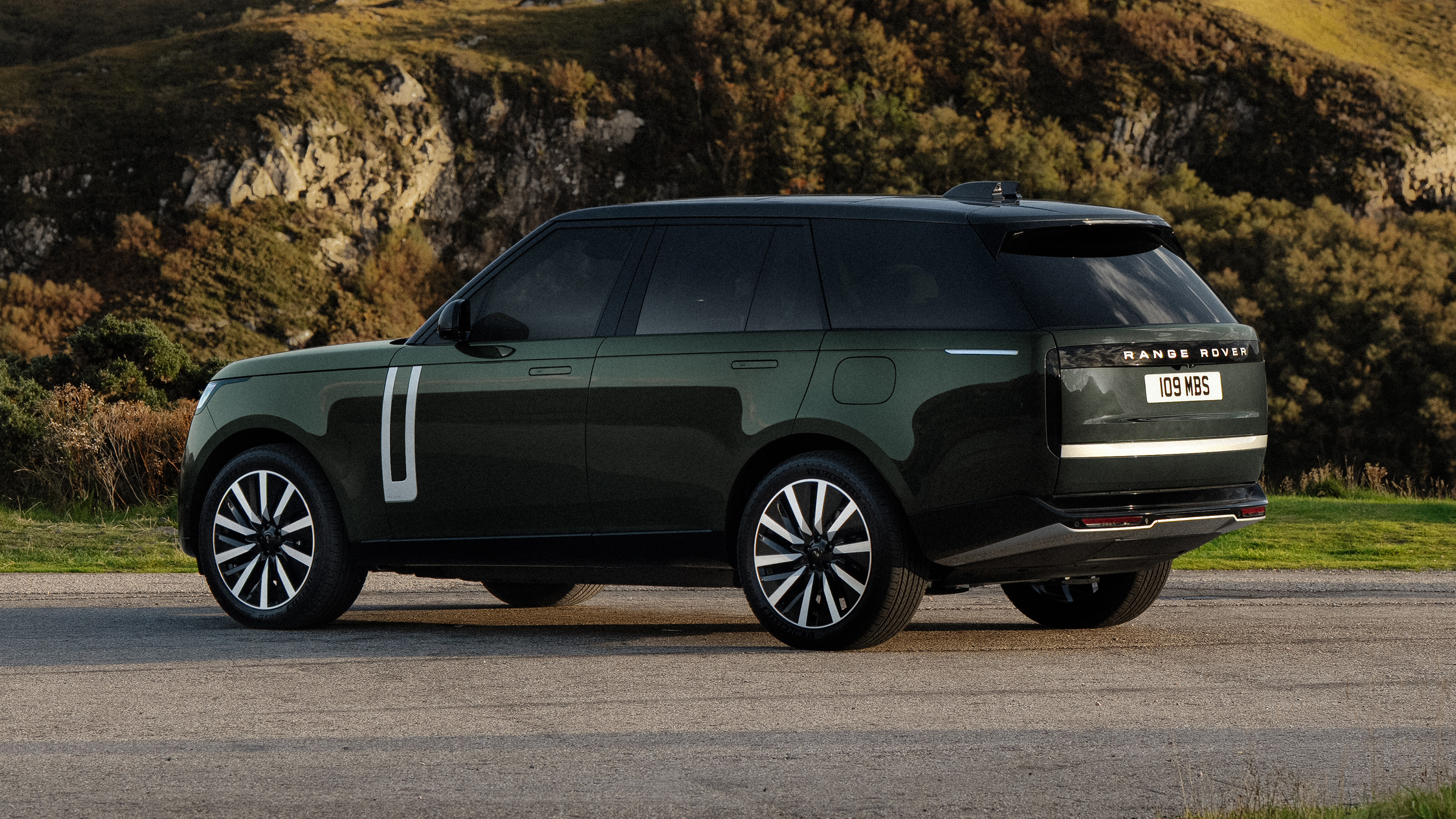
It's a Range Rover, given new life by a vital organ transplant. This is one of those cars that loses very little in the transition from petrol to electric, and gains much. Okay, okay, it's hard to argue this is an environmental choice – if you want low-impact driving then no Range Rover is a good place to start.
But among Range Rovers this is the greenest. Frankly it's also the best: the smoothest, quietest and quickest. Potentially far cheaper to run. And even more ridiculously over-endowed with off-road capability.
Unless of course you live in a land awash with cheap fuel, or you can't install a home charger, or you do a lot of towing. In those cases a petrol or especially diesel remains the Range Rover of choice.
Thanks to a pair of matched motors that between them summon up 550bhp, it gets to 62mph from zero in 4.5 seconds. It's a forceful surge, an airliner on the runway rather than a fast-twitch muscle.
Of course pushing a shape this stately through the air, and accelerating this much mass, depletes energy at a vast rate. So the Range Rover can store 118.5kWh in its pack, enough for 372 miles WLTP of range. We got a real 300 miles on mixed roads in coldish weather while paying precisely zero attention to driving economically.
It takes a while to recharge such a vast reserve of energy, but an 800V system takes good advantage of the best commonly available chargers – 22 minutes for 10-80 per cent, peaking at 350kW.
Difficult question. When, as long ago as 2015, the engineers first started thinking about the platform for this generation Range Rover (and RR Sport) they drew it to accept multitudinous power systems: petrol and diesel mid-hybrid, petrol PHEV, and full electric. The electric took time, while they scratch-built the motors, battery and inverters. Then the proposed induction-type front motor overheated in testing so they switched to using a PM type, like the rear motor. That cost another year.
Meanwhile lots of expensive EVs failed to sell in hoped-for numbers. As we write, global petrol costs have spiked. This is boosting demand for cheaper EVs, but if you can afford a Range Rover you can probably afford to slosh petrol into it.
Still, the electric and combustion Range Rovers all come down the same production line so production can flex to meet demand. Don't expect these to be over-produced and sold at distress prices.
A cell-to-pack battery lies under the floor. Both motors are permanent magnet, their rotors made up of ultra-thin laminations which improves efficiency. It all runs at 800V, for rapid charging and low losses. The pack can split into two 400V halves if you can find only a 400V charger, although those are usually less than 150kW so you probably wouldn't bother with them. Another efficiency booster is the clever multi-way heat pump under the bonnet for distributing thermal energy between motors, inverters, battery, and people. It warms things in winter and cools in summer.
Because this Range Rover generation was designed with electric drive in mind, there's no loss in passenger or boot space. The battery and high-voltage electronics almost manage to fit into the spaces liberated by evicting the fuel tank, exhaust, propshaft, gearbox and transfer case. The only overspill is downward, with a small 18mm loss of ground clearance.
So the carpet, seats and roof are the same distance from the ground as the petrol versions, and can rise or fall on the air suspension by the same amounts. The body drops to ease you getting in and out, and to reduce aero drag at speed, and it rises for off-road clearance. Read more on this car's tech-fest here.
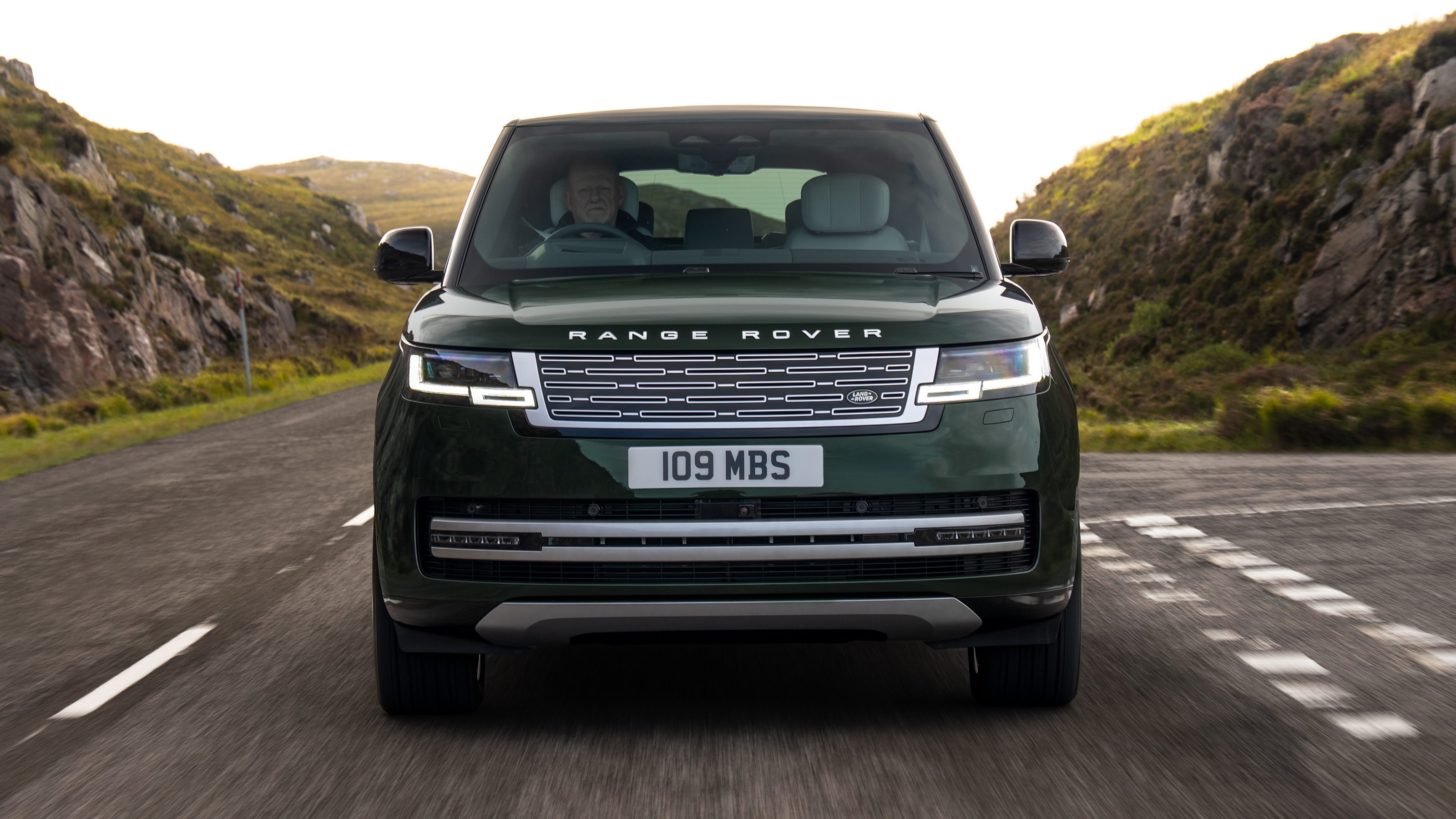
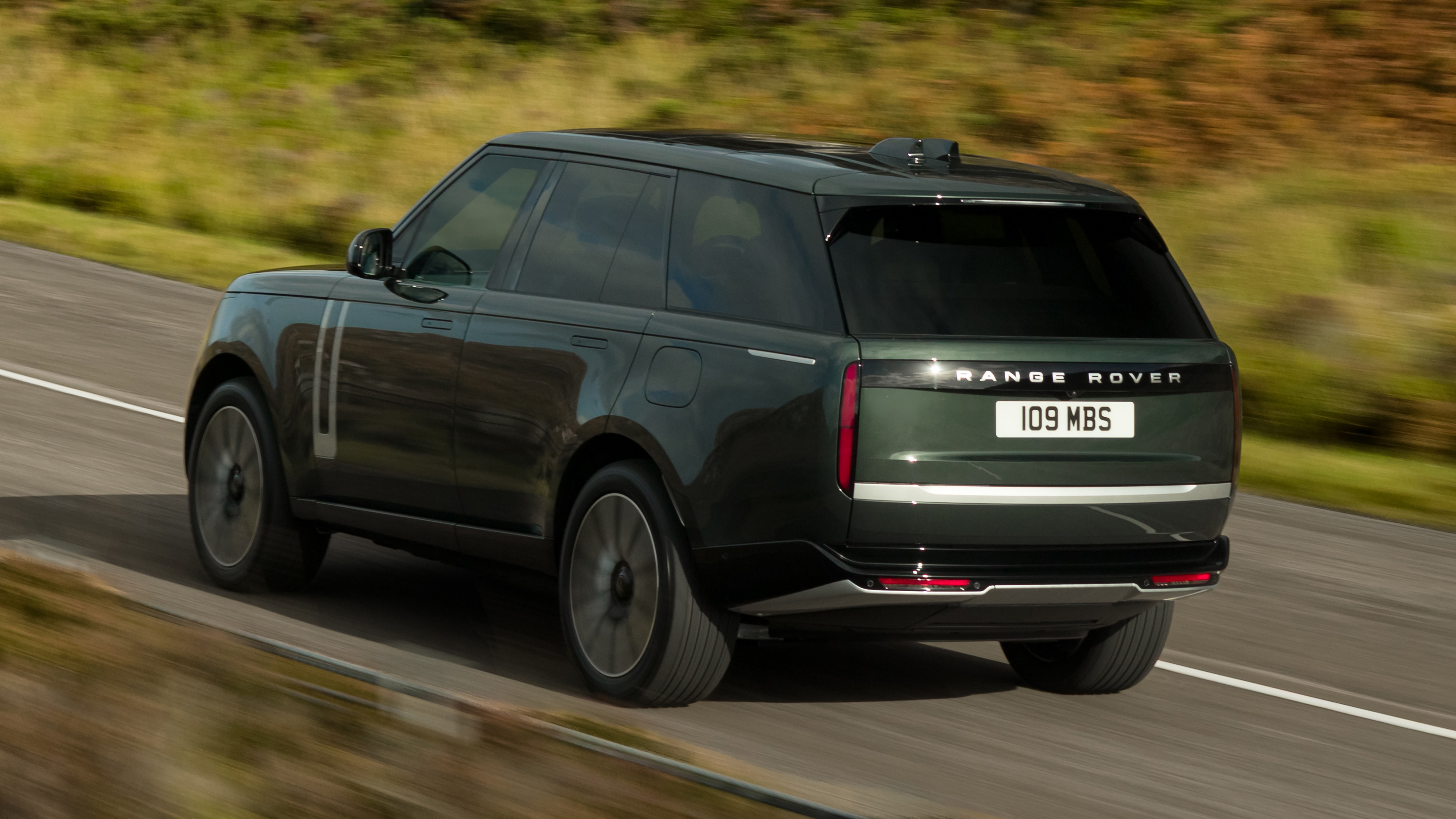
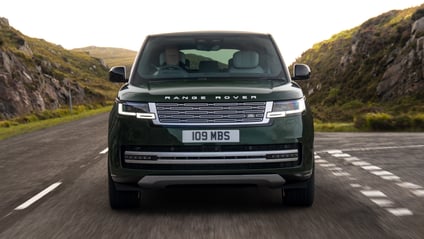
Just as the inside is no different from the petrol versions, nor is the outside, or at least not much. The 'grille' is a drag-cutting solid panel, and the wheels are smoother and there's no exhaust. If you were an earthworm you'd see underbody panels that add 10 miles of motorway range. Under the bonnet you won't find extra storage because the designers reason it's the dirtiest part of the car, so you wouldn't want to reach in.
Absolutely. The silence is striking – not just in the absence of motor noise, but also the lengths the engineers have gone to suppress the hum of high-voltage electronics and the whirr of drive gears. Wind and tyre roar are very low too. And the ride is more supple than any German luxury car or indeed a Bentley, and close to a Rolls-Royce.
Plus the Range Rover has one of the most beautiful and hedonistic interiors of any car. Seats are ridiculously comfortable, multi-way electrically adjustable and trimmed in lovely materials.
All of which makes this a profoundly relaxing vehicle to ride in, as you waft along and take in the views through the deep windows.
It makes genuinely quick progress with regal dignity, but there's no point in really pushing it. It's heavy and doesn't like sharp direction changes. But the easily dispensed power makes it a grand thing for wooshing out of corners, and the buttery steering is accurate and well-weighted and undisturbed by road bumps. So it isn't nervous, and because you can conduit it so accurately on narrow lumpy roads, it's handicapped by its width less than you might expect. Find lots more detailed test impressions in the Driving tab of this review.
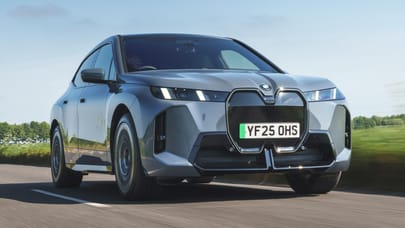
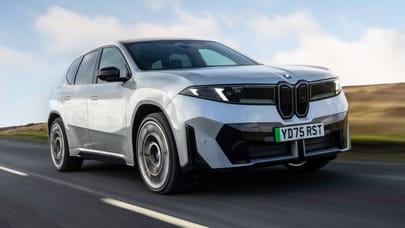
You could have a Mercedes EQS SUV or even the Maybach equivalent, but its advantage-slash-handicap is it just feels like any other Merc. A BMW iX has terrific comfort and an appealing interior, but little off-road ability. An electric Cayenne trends sporty and Range Rover has the Sport Electric to tackle that. Bentley's Torcal is closest in general attitude, but as we write we haven't tested it.
Some cars naturally suit electric power. They aren't about engine noise or powertrain involvement, so why not switch to electricity and look for smoothness and silence? And because it's an integrated and modern solution, not a post-hoc lash-up of a vehicle never designed for a battery pack, it works just as you'd hope.
It can go far enough and recharge fast enough that its electric limit of around 300 miles will be enough for almost any use except long-haul towing.
You already knew about the Range Rover. It has been one of the great constants in the kingdom of the car, a wonderfully relaxing vehicle because it's genuinely luxurious as well as useful. All this while possessed of an amazing trick up its sleeve: its off-road aptitude.
With the electric version you'd still be right about all that. It's better than ever.
Get all the latest news, reviews and exclusives, direct to your inbox.