




25
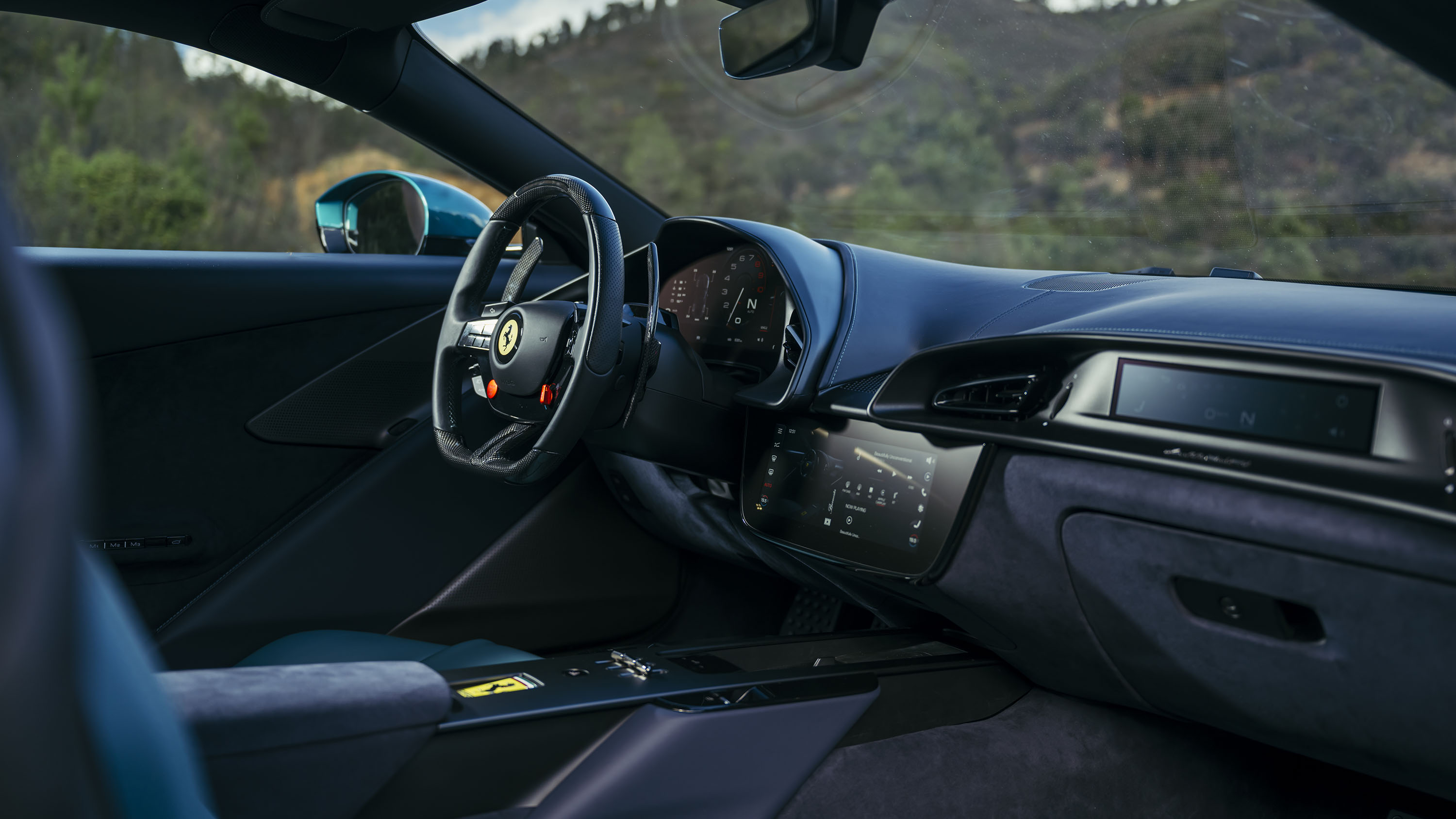
Chances are you’ll already have a grin on your face and a feeling of warm relief flooding your nervous system as the Amalfi thrums into life, because you’ve woken it up with an anodised crimson starter button, not a soulless touch-sensitive patch on the steering wheel. That’s already a big improvement from the capacitive control-infested Roma.
Then you notice your ears aren’t ringing, because the Amalfi has also banished the Roma’s low-rev engine drone. A flat-plane crank V8 is never the most musical engine, but the Roma’s 3.9-litre bi-turbo V8 over-compensated with a droney monotone that wandered between resonant and ‘has the neighbour drilled holes in his Civic’s exhaust again?’.
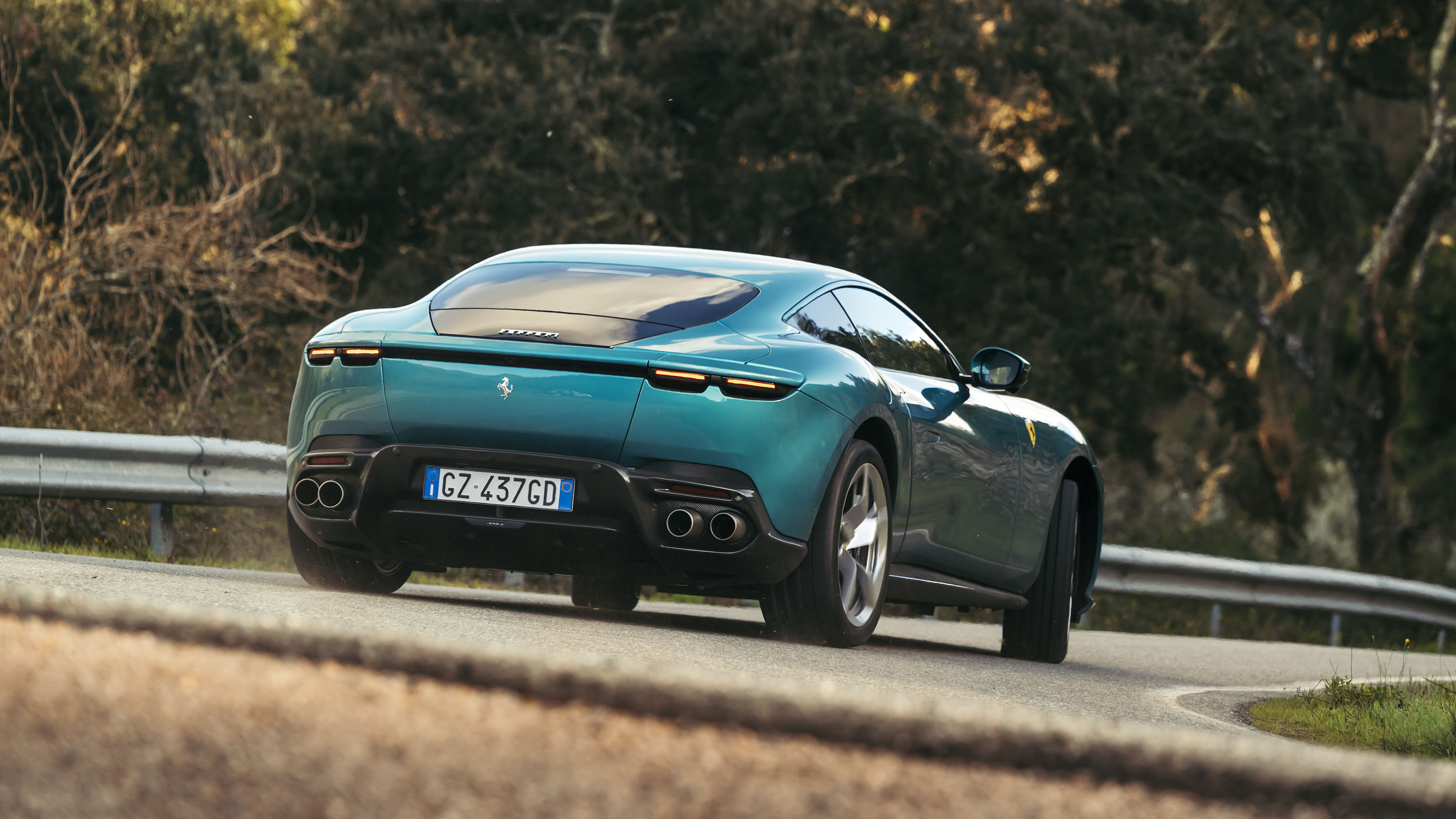
Partly the Amalfi’s more cultured idle is down to ever-more stringent noise limits for street cars, but new equal-length exhaust tracts and specific tuning of the exhaust system have resulted in a car it’s simply more pleasant to mooch about in.
If you’re after a daily driver you’ll also appreciate how outstandingly comfortable the Amalfi is at town speed. In Comfort mode, where the suspension defaults ‘Bumpy Road’ setting, it absorbs speed bumps with McLaren-like plushness.
Ferrari’s been clever here, using the ‘manettino’ mode switch to stretch the Amalfi’s bandwidth. Essentially, it’s even more docile than the Roma was in Wet and Comfort mode – traction and stability control assistance is heightened to red alert and the engine’s power delivery is mapped so as not to terrify those valuable new customers who’s never felt 631bhp – which is more than you got in the flagship 599 GTB or a 458 Speciale not a million years ago.
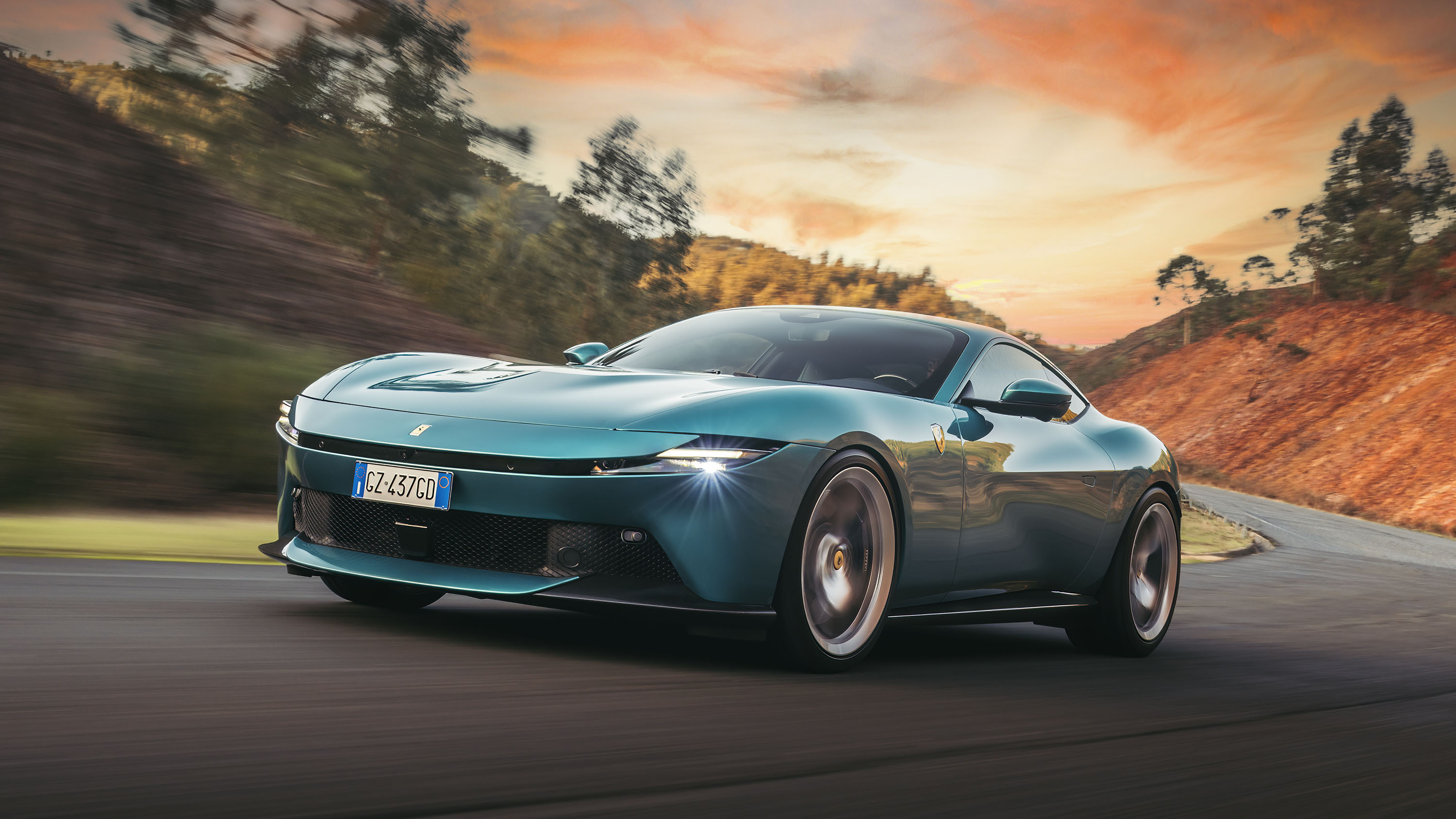
But don’t write the Amalfi off as a watered-down poseur’s Ferrari with the guardrails left in place. Sport and Race mode have gone in the other direction – more noise, more savagery, and the very latest v6.1 of Ferrari’s Side Slip Control unlocked to promote slidey corner exits and smoky launches.
Even the new active rear wing (three settings with up to 110kg of downforce at 155mph for a four per cent increase in drag) has been trained to maintain stability so the driver wants to push rather than saturating their semi-aniline seats in an unscheduled toilet stop.
Thing is, the Amalfi does without plenty of the tech Ferrari deploys elsewhere to make its cars ultra-edgy and thrilling. There is no rear-wheel steer. No instant electric boost, or Purosangue-style active roll-allergic dampers. The engineers call it their ‘back to basics’ car – pure V8, rear-wheel drive, and an inherently friendly balance. Calling it an Italian Mustang would be a stretch, but you get the idea. This is a Margherita pizza, not a Texas BBQ meat feast.
Sure, the steering’s still more reactive than a light switch and it’ll break traction in fourth gear if you run through a damp patch. It deserves respect, but it doesn’t hold you to ransom for it. And the result is a sports car that’s more natural-feeling when you’re cracking on than the bigger, V12-ier 12Cilindri.
The unsung hero of all modern Ferrari powertrains is the eight-speed twin-clutch gearbox mounted at the back. A polite auto in town, a rev-killing cruiser on the motorway, with shifts so swift and throttle blips so precise when demanded you can literally play tunes with the paddles. It’s world-class.
The hyperfast steering is more an exercise in trusting the front end will stick (it will) than outright feel, and if you’re stepping from the very latest Porsche 911 Turbo S with hybrid turbos then the throttle response will feel delayed and rounded-off. At the very top end of the rev-range, as blue shift lights blaze on the steering wheel, the V8 briefly howls with a faintly 458 Italia-ish tone – then you smash head-first into the redline.
It sounds and feels like it could (and should) rev higher, like there’s more for this engine to give… but then it would be too close for comfort to Ferrari’s pricier aristocracy. That’s what’s known in the trade as ‘The Cayman Conundrum’. Amalfi Competizione anyone?
Ah yes. Top Gear welcomes our new machine overlords. Because when you press the brake pedal in the Amalfi, it’s algorithms that you’re entrusting. Ones and zeroes do the stopping, not your foot on some hydraulic fluid.
Ferrari’s employed brake-by-wire for the Amalfi’s standard ceramic brakes, in the name of consistency and repeatability when caning the stoppers on track. Essentially, the car manages its brake temperatures and can stop the pedal going long and squidgy (which kills the driver’s confidence) for much longer than a ‘physical’ brake system.
Naturally, it’s also easier to integrate driver assists like adaptive cruise control. But the engineers we interviewed are adamant this is in no way the soft launch of the self-driving Ferrari. Brake-by-wire is here to ensure late brakers can push for longer on track – it was developed for the SF90 hybrid to balance re-gen with stopping power, and Modena liked the results, hence it’s being rolled out across the range.
Get all the latest news, reviews and exclusives, direct to your inbox.
